by Geroge Cornelius | 16, Mar 2026 | Bike Tours, Costa Blanca News
Top 10 Cycling Routes in Costa Blanca: A Complete Guide
Key Takeaways
| Quick Facts | Details |
|---|
| Best Season | October – May (15-25°C, 2,953 hours of sunshine a year per AEMET) |
| Top Route | Coll de Rates – 6.4km switchback climb, pro favorite |
| Hardest Climb | Xorret de Catí – 11.5% gradient, Vuelta a España stage |
| Beginner Pick | Calpe to Moraira coastal cruise – gentle 65km |
| Pro Spotting | Calpe (UAE Team Emirates train here), Coll de Rates |
| Safety Must | Helmets mandatory, high-vis gear, wind apps |
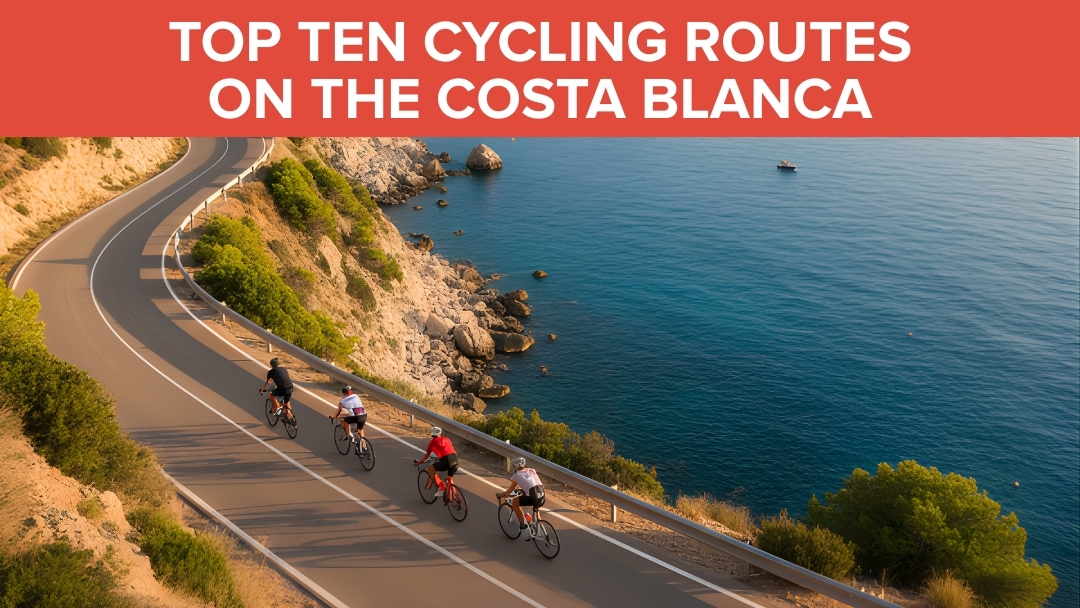
Costa Blanca has become Europe’s cycling paradise. The microclimate here means you can ride almost any day of the year, and the variety is real: a flat coastal cruise in the morning, mountain switchbacks by the afternoon, all without leaving the region. These ten routes represent the best the region offers, from gentle coastal cruises to brutal climbs that break professional pelotons.
Why Costa Blanca Dominates European Cycling Training
What makes Costa Blanca special? It’s not just the weather, though nearly 3,000 hours of sunshine a year definitely help. The variety here is incredible – you can start with a flat coastal ride and end up grinding through mountain switchbacks all in the same day.
UAE Team Emirates use these roads for winter training, and it shows: Tadej Pogačar set his Strava KOM on Coll de Rates during one such ride. See our Coll de Rates cycling guide and 5 Must-Ride Climbs for more on the region’s pro-cycling pedigree. The mix of challenging climbs, smooth tarmac, and relatively light traffic creates perfect training conditions. Most importantly, the gradients here build progressively – you won’t find yourself hitting a 20% wall without warning.
The infrastructure keeps improving too. New bike lanes connect major towns, and most climbs have been resurfaced in recent years. Local authorities actually listen to cycling groups, which makes a huge difference compared to other European destinations.
Download GPX files from Strava or Epic Road Rides before heading out, and check wind apps too – those coastal blasts can turn a pleasant ride into a proper battle. Spring brings wildflowers, fall offers perfect temperatures, and summer mornings beat the heat if you start early.
The Complete Costa Blanca Route Rankings
These rankings consider four key factors: popularity among pros and locals, difficulty balance, scenic value, and uniqueness. Each route has been tested multiple times in different conditions to give you the real story.
1. Coll de Rates: The Ultimate Costa Blanca Experience
This 6.4km climb from Parcent, averaging 5.5% gradient, represents everything great about Costa Blanca cycling. Endless hairpin turns sweep up through pine forests with perfect asphalt that makes you want to dance on the pedals.
Tadej Pogačar’s Strava KOM sits at 11:57, but don’t let that fool you into rushing. This climb rewards rhythm over power – find your groove and enjoy some of the most photographed switchbacks in Spain.
Why it tops our list: Vuelta a España legend status, unmatched popularity on Strava, and pure cycling joy without brutality. The 50km loop through valley vineyards and sea panoramas makes it perfect for any fitness level. Extend to Tarbena if you want more bite. See our full Coll de Rates guide for the complete breakdown.
Practical details: Start from Parcent for the classic approach, or drive 20 minutes from Calpe. Low traffic midweek, fantastic coffee stops in Parcent village. Best ridden October through May when temperatures stay comfortable.
The view from the top stretches across the entire Mediterranean coastline. On clear days, you can spot Ibiza on the horizon.
2. Xorret de Catí: Where Vuelta Dreams Die
This brutal 3.85km climb at 11.5% average gradient separates pretenders from contenders. Stage 8 of the 2023 Vuelta a España finished here, with Primož Roglič winning the GC battle and Sepp Kuss taking the race lead on those final ramps.
Starting from Boqueres, the climb begins innocuously before revealing its true nature. Single-lane roads mean no escape from the gradient – you either make it or you don’t. The 120km route via Alcoy adds beautiful meadows and plains views from the 1098m summit.
What makes it special: Genuine Vuelta history meets savage climbing. Pro training groups summit weekly, so don’t be surprised to find yourself chasing (or being dropped by) world-class riders. It’s exposed with no traffic, but that isolation adds to the challenge.
Start early and fuel properly in Boqueres – there’s nothing else until the top. Spring offers the best conditions, though winter rides can be magical if you dress appropriately. GPX files are available on Komoot for navigation.
The summit rewards suffer with panoramic views across Alcoy’s industrial plains. It’s not pretty, but it’s earned.
3. Port de Bernia: Freshly Paved Punishment
This climb from Calpe splits into distinct ramps and recovery sections, with the steepest stretches well past 15% – a proper leg-shredder that features in the Volta a la Comunitat Valenciana.
The 40km loop from Calpe hits Sierra de Bernia vistas over Altea and the Mediterranean. What’s striking is how quiet this climb stays despite its pro pedigree – most tourists stick to the coastal roads below.
Expert insight: Recent resurfacing has changed the descent – smooth tarmac now instead of the loose gravel that used to make it treacherous, though you still need caution on some corners.
Cafes in Bernia village provide perfect refueling stops, and the lack of through traffic makes it ideal for interval training. Avoid summer heat – this climb faces south and bakes in afternoon sun.
The technical nature rewards good bike handling. Short, steep ramps followed by brief recovery sections mean you need to manage effort carefully rather than just grinding away.
4. Puerto de Sa Creueta: The Perfect Recovery Ride
This gentle 7.5km climb at 3.4% average from Tarbena winds through almond groves to 800m+ Mediterranean views. It’s the perfect recovery after tackling Rates, offering stunning scenery without the leg-sapping gradients.
The 60km Jalón valley loop incorporating this climb has become legendary among local cycling groups. Rolling hills, zero traffic, and that final reward of sea views make it irresistible for weekend rides.
Hidden gem qualities: Very little traffic due to its remote location. The road surface is decent, and there are perfect picnic spots at the summit. Year-round riding conditions, though fall during harvest season adds special atmosphere.
Good as a warm-up before tackling harder climbs, or as a gentle introduction for visiting friends. The gradient never punishes, and the scenery keeps getting better as you climb higher.
Strava segments are easy to find, and the descent is fast enough to be fun without being dangerous. Almond blossom season in February transforms the entire valley into something magical.
5. Cumbre del Sol: The Coastal Wall of Fire
This demanding coastal grind near Benidorm features ramps that rival Xorret de Catí. Part of epic 123km routes with 1671m of climbing, it combines sea-hugging descents with brutal uphill sections through clifftop roads.
The Mediterranean backdrop makes every pedal stroke scenic, but don’t let the beauty distract you from those 8-10% ramps. This is expert-level riding that demands respect and preparation.
Strategic considerations: Lower sections get busy with tourist traffic, making weekends risky for serious training. However, cafes are plentiful for refueling, and winter riding offers calm seas and clear views.
The cliff-edge drama is genuinely unique in Costa Blanca. Most climbs head inland to mountains, but this one stays coastal while still providing serious elevation gain.
Sea breezes can help or hinder depending on direction. Check wind forecasts and plan your route timing accordingly – afternoon headwinds can turn challenging into impossible.
6. Calpe to Moraira and Jávea: Mediterranean Perfection
This 65km moderate roller from Calpe via Moraira to Jávea hugs the Mediterranean with the iconic Peñón de Ifach rock formation, beaches, and gentle hills mixing flats with manageable climbs.
Perfect for intermediate cyclists or as an active recovery ride, it showcases why Costa Blanca attracts cyclists of every level. Extend to Denia for a 50km historic add-on that includes some of the region’s best coastal scenery.
Accessibility factors: Cycle paths avoid the worst N-332 traffic, and beach cafes provide regular refueling opportunities. This route works any time of year, though sunrise rides offer the best light and minimal traffic.
A good recommendation for every first-time visitor because it captures Costa Blanca’s essence – stunning coastline, manageable challenges, and that perfect Mediterranean cycling atmosphere.
The Peñón de Ifach creates a natural landmark that’s visible for most of the ride, with dozens of photo opportunities along the way.
7. Vall de Gallinera: The Hidden Valley Secret
This poppy-lined 80km loop through the untouched Gallinera Valley features progressive climbs of 5-7% through olive terraces and past waterfalls. Rare traffic and genuine wildlife sightings including eagles make it feel like stepping back in time.
The valley remains largely unknown to cycling tourists, which preserves its authentic character. Stone villages, traditional farming methods, and roads that wind naturally with the landscape create a completely different Costa Blanca experience.
Off-the-beaten-path rewards: Pot-holed sections require cautious descending, but village tapas stops offer authentic local cuisine. Spring wildflower blooms peak in March and April. GPX files via Outdooractive help with navigation.
This represents ultimate uniqueness in our rankings – a genuine hidden gem that rewards adventurous cyclists. The climbing is steady rather than brutal, making it perfect for building endurance.
Eagle sightings are common, and the valley’s microclimate means comfortable riding even when coastal areas get too hot or windy.
8. Puerto de Tudons: Gateway to Aitana Epic
This 11km climb at 5.3% is the region’s busiest, leading toward Aitana, which featured as a summit finish in the 2016 Vuelta a España. The full 195km monster route with 7885m of climbing includes this section, taking riders through meadows to 1000m+ elevations.
What makes it special is the group ride culture – you’ll encounter more cyclists here than anywhere else in Costa Blanca. It’s become the unofficial meeting point for serious training rides.
Pro spotting central: Regular group rides attract ex-pros and current professionals during training camps. Water stops are sparse, so plan accordingly. Fall colors transform the entire landscape into something spectacular.
The Vuelta pedigree is real – Aitana has broken many professional cyclists over the years. The combination of length and sustained gradient creates cumulative fatigue that surprises many riders.
Meadow sections at higher elevations offer completely different scenery from coastal routes. It’s proper mountain climbing that rewards persistence over explosive power.
9. Sierra Mariola: Cultural History Meets Cycling
This 75km moderate-challenging route via Alcoy tunnels and bridges through Mariola Natural Park offers 90km circles with 1500m of climbing. Forest roads lead to sea views, creating unique variety in a single ride.
The historical elements set this apart – ancient bridges, tunnels carved through rock, and paths that have existed for centuries. It’s cycling through living history while getting a proper workout.
Year-round microclimate: Off-road options exist for variety, and low car traffic makes it family-friendly. The protected park status means consistent trail conditions regardless of season.
Cultural sites along the route include medieval bridges and traditional font areas – education and exercise combined, perfect for cyclists who appreciate context with their climbing.
Forest sections provide shade during summer months, making this one of the few routes that stays comfortable even in July and August.
10. Vall de Ebo and Coll de Garga: Pure Wild Adventure
This wild 70km route through Ebo gorge features ramps like 10% on hidden cols, transitioning from riverside sections to proper peaks. The Garga variant adds gravel options for adventure cyclists.
Remote terrain means carrying spare parts and tools – mechanical problems here require self-sufficiency. Wildlife alerts include wild boar sightings, though they typically avoid cyclists.
Ultimate undiscovered allure: Winter offers mild conditions perfect for exploration. Strava reveals hidden gem segments that few riders attempt. The combination of technical climbing and genuine wilderness creates unforgettable experiences.
This route demands preparation and respect. The rewards include complete solitude, challenging terrain, and bragging rights among local cyclists who know how difficult it can be.
Creek crossings and rock formations add adventure elements missing from more developed routes. It’s Costa Blanca’s answer to true mountain biking without leaving the road bike at home.
Looking for Something Easier? Two Relaxed Rides Worth Knowing About
Not every ride needs a Vuelta pedigree or double-digit gradients. If you want a gentler day in the saddle, or you’re breaking in a visiting friend who isn’t chasing KOMs, these two routes deliver Costa Blanca’s scenery without the suffering.
Orcheta Loop is a 40km circuit around the village of Orcheta, riding through a valley thick with almond and orange orchards. Elevation gain stays minimal throughout, which makes it one of the easiest full rides on this list. Spring is the sweet spot – the orchard blossom scents the whole valley – but it’s a pleasant, low-stress loop any time of year. Good for a recovery day, or as a first ride with someone new to cycling in the region.
The Alcoy to Gandia Greenway takes a different approach: a 75km former railway line converted into a dedicated cycle path, running from Alcoy down to the coast at Gandia. Old tunnels and bridges along the route add some character, and because it’s a disused railway, gradients stay gentle even though the distance is substantial. It’s longer than the Orcheta Loop and needs decent stamina to complete in one go, but the surface and traffic-free routing make it far less demanding than anything in the ranked list above.
Neither of these will get you Strava glory, but they’re worth knowing about for a lower-key day, or when you’re showing someone the region who isn’t after a Vuelta climb.
Quick Route Comparison and Selection Guide
Choosing the right route depends on your fitness level, time available, and what type of experience you want. Here’s how these routes stack up for different priorities:
For scenic beauty: Calpe to Moraira/Jávea offers unbeatable Mediterranean views, while Vall de Gallinera provides authentic Spanish countryside.
Difficulty progression: Start with Puerto de Sa Creueta (3.4%), advance to Coll de Rates (5.5%), then tackle Port de Bernia before attempting Xorret de Catí (11.5% average, with ramps well past 15%).
Pro spotting opportunities: Coll de Rates sees the most professional training activity, especially during winter months when teams establish Costa Blanca bases.
The variety ensures every cyclist finds their perfect challenge, from complete beginners to seasoned climbers.
Safety and Pro Tips for 2026 Costa Blanca Cycling
Safety comes first, especially on these challenging routes. Spanish road rules require lights at dusk, and high-visibility gear is strongly recommended even during daylight hours. Group riding is safer on major climbs where traffic exists.
Seasonal strategy: Winter stays dry with perfect temperatures, while summer demands pre-9AM starts to beat the heat. Afternoon July rides can turn a pleasant ride into a survival exercise.
Equipment essentials: EU road rules apply, meaning proper lighting systems and reflective gear. E-bikes are becoming hugely popular and make these routes accessible to many more cyclists. However, battery management on long climbs requires planning.
Navigation and technology: Strava segments provide excellent route planning, with KOM times showing what’s possible. Apps like Komoot offer offline GPX downloads essential for remote routes like Vall de Ebo. Always carry backup power for your cycling computer.
UAE Team Emirates use Coll de Rates for winter training, and Vuelta pros still use Catí and Aitana for altitude training during racing season.
The cycling infrastructure keeps improving each year. New bike lanes connect major towns, and climbing roads receive regular maintenance. Local cycling groups actively communicate with authorities, creating genuine improvements for riders.
Planning Your Costa Blanca Cycling Adventure
When planning your visit, consider that Calpe makes the perfect base for accessing most routes. Bike rental shops offer high-quality road bikes, and cycling friendly accommodations provide secure storage and washing facilities.
The Vuelta a España participants for 2025 will likely train on these same roads during winter months. It’s incredible motivation to ride where the world’s best prepare for their biggest races.
For beginners, start with our complete beginners guide before tackling major climbs. The progression from coastal routes to mountain climbing needs proper preparation.
Equipment needs vary significantly between routes. Top bike rental shops in Calpe stock everything from basic road bikes to high-end climbing machines. Choose equipment that matches your planned routes.
Consider combining multiple routes into longer adventures. The Jalon Valley scenic loop connects beautifully with several of our top ten picks for multi-day cycling tours.
Getting the Most from Your Costa Blanca Routes
These ten routes represent years of local knowledge and thousands of kilometers of testing. Each offers something unique, from the gentle beauty of coastal cruising to the savage punishment of Vuelta-grade climbing.
Remember that Costa Blanca’s magic lies in its variety. You can literally ride from sea level to 1000+ meters in a single day, experiencing completely different landscapes, climates, and challenges.
The pro cycling connection is real and growing. News about cycling developments shows continued investment in infrastructure and events that cement Costa Blanca’s reputation as Europe’s premier cycling destination.
Start planning your routes now, but remain flexible enough to adapt based on conditions and how you feel. Some days call for gentle coastal cruising, others demand mountain climbing punishment. Costa Blanca delivers both in spades.
Frequently Asked Questions
What’s the best time of year to cycle these Costa Blanca routes? October through May offers perfect conditions with temperatures between 15-25°C and minimal rainfall. Summer mornings work if you start before 9AM, but afternoon heat can be brutal on climbs.
Which route should complete beginners attempt first? The Calpe to Moraira/Jávea coastal route provides 65km of gentle rolling hills with spectacular scenery. Perfect introduction to Costa Blanca cycling without intimidating climbs.
Where do professional cyclists actually train in Costa Blanca? UAE Team Emirates use these roads during winter training camps. Coll de Rates is the climb most associated with pro training – Tadej Pogačar’s Strava KOM there was set on one such ride.
Do I need special equipment for these routes? Standard road bikes handle all routes, though climbing gears help on steeper sections. Helmets are mandatory in Spain, and high-vis gear plus proper lighting systems are strongly recommended.
How challenging is Xorret de Catí compared to famous European climbs? The 11.5% average with ramps well past 15% rivals anything in the Alps or Pyrenees. It’s genuinely Vuelta a España difficulty – shorter than major mountain passes but brutally steep.
Are these routes safe for solo cycling? Most routes are safe solo, though remote ones like Vall de Ebo require carrying spares and tools. Group riding is safer on busy climbs, and local cycling clubs welcome visitors.
What’s the cycling infrastructure like in Costa Blanca? Constantly improving with new bike lanes connecting towns and regular road maintenance on climbing routes. Local authorities actively support cycling tourism development.
Can I ride these routes on an e-bike? Absolutely – e-bikes are hugely popular and make challenging climbs accessible to more cyclists. Just plan battery management carefully on longer routes with significant elevation gain.
by Geroge Cornelius | 23, Feb 2026 | Cyclowax
Oficialmente la mejor cera caliente del mundo
Pruebas independientes lo confirman:
La pastilla de cera Cyclowax Race supera a cualquier cera caliente inmersiva del mercado.

Cuando Adam Kerin de Zero Friction Cycling realizó las pruebas de transmisión más exigentes e
independientes, los resultados fueron claros: la pastilla de cera Cyclowax Race Wax quedó en
primer lugar.
Desarrollada y perfeccionada junto al equipo profesional Lidl–Trek, nuestra nueva cera
ofrece una durabilidad, velocidad y protección que marcan récord.
“En las tres pruebas, la Race Wax de Cyclowax es ahora la cera caliente por inmersión líder.” —
Adam Kerin, Zero Friction Cycling
Respaldado por datos, no solo por afirmaciones
Después de años de pruebas y perfeccionamiento, nuestra pastilla Race Wax no se
creó a partir del marketing, sino a partir de un rendimiento medible.
Las pruebas de Single Application Longevity (SAL) de Zero Friction Cycling muestran
cuánto tiempo una sola aplicación de cera protege tu cadena — no durante minutos,
sino salida tras salida.
- Menor desgaste y fricción de la cadena
- Mayor vida útil de la transmisión
- Menos intervalos de reaplicación de cera
Diseñada para cada salida, en cualquier condición
Las pruebas extremas en polvo, tierra y lluvia demostraron lo que los profesionales ya
saben: esta cera sigue rindiendo cuando otras se quedan atrás.
- Superó a Silca Hot Melt, M-Speed Wax y Hot Wax X
- Funciona en gravel, MTB y carreteras húmedas de invierno
- Mantiene tu cadena limpia, silenciosa y rápida, salida tras salida
“El objetivo es ser el mejor equipo del mundo, así que tenemos que estar a la
vanguardia en innovación.” — Glen Leven, Head of Performance, Lidl–Trek
Suave desde la primera pedalada
Algunas ceras de larga duración se sienten pesadas al principio — esta no.
- Sin resistencia en la primera hora
- Sensación de asentamiento normal
Suavidad duradera muchos kilómetros después
Incluso después de 14 horas de pruebas en condiciones reales, las cadenas tratadas
con Race Wax se mantuvieron silenciosas, suaves y protegidas.
Desarrollada con los profesionales de Lidl–Trek
Creada y probada en bicicletas de competición reales, no solo en un laboratorio. Cada
versión se mejoró gracias a la retroalimentación de los profesionales, hasta cumplir con
el estándar más exigente: un rendimiento de clase mundial en competición.
Pedalea con la mejor cera caliente oficial del mundo
Consigue la misma tecnología que impulsa a Lidl–Trek. ¡Aquí mismo!
by Geroge Cornelius | 13, Feb 2026 | Costa Blanca News, Health
Cycling Holiday: Why It’s the Ultimate Boost for Body and Mind
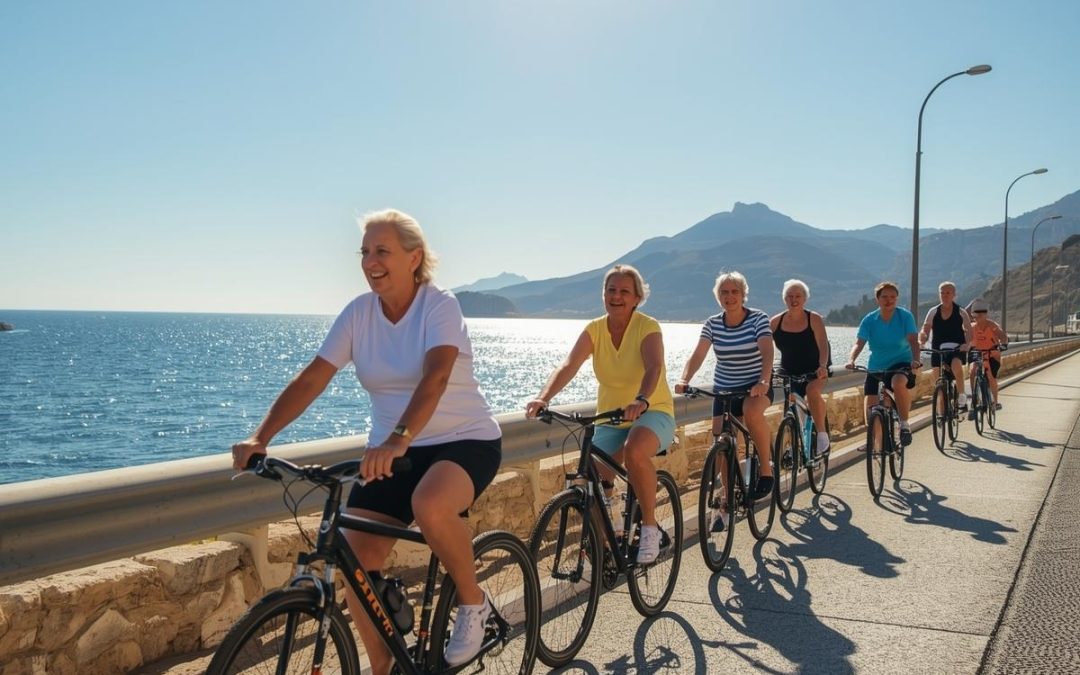
Picture a slow ride along the Costa Blanca coast, the Mediterranean on one side and orange groves on the other, with nowhere else to be. That’s the appeal of a cycling holiday on its own. But there’s also a real, well-documented case that cycling is one of the better things you can do for your long-term health, and a holiday is a genuinely good way to find out whether it’s for you.
One honest caveat before the numbers: most of the strongest research below comes from studies of people who cycle regularly, often as their daily commute, tracked over years. A single week of holiday riding won’t hand you the same risk reduction as a decade of commuting by bike. What it can do is show you what regular cycling actually feels like, and give you a realistic reason to keep some of it going once you’re home, which is exactly where the lasting benefit comes from.
| Area | What the research shows |
|---|
| Heart health | Cycle commuters have 41% lower all-cause mortality and 46% lower cardiovascular disease risk than non-active commuters (UK Biobank, 264,337 people) |
| A realistic starting dose | WHO Europe: cycling around 20 minutes most days is linked to at least 10% lower mortality risk overall |
| Diabetes risk | Committed commuter cyclists (150+ minutes/week) have 30% lower type 2 diabetes risk; even modest, occasional cycling shows a measurable reduction (Danish cohort, 52,513 people) |
| Mood and mental health | Research reviews consistently link cycling to improved mood and lower depression risk; high-mileage cycle commuters report meaningfully fewer sick days |
| Getting started | Benefits appear well before “fit”: consistency matters more than intensity, and starting later in life still shows real gains |
The Heart of the Matter: Cardiovascular Health
The best evidence here comes from a landmark UK Biobank study (Celis-Morales et al., published in the BMJ in 2017), which followed 264,337 UK adults for five years. People who cycled their full commute had a 41% lower risk of dying from any cause and a 46% lower risk of developing cardiovascular disease compared with people who didn’t actively commute at all. Those are genuinely large effects for a lifestyle change, and they hold up across a huge sample.
You don’t need to be riding at the pace of the pros in the Vuelta a España to see benefits start to appear. WHO Europe’s guidance is that roughly 20 minutes of cycling most days is associated with at least a 10% reduction in overall mortality risk, a dose that’s well within reach on an easy Costa Blanca coastal ride, not just a training camp.
The takeaway: the cardiovascular case for cycling is one of the stronger ones in preventive health research, and a holiday spent riding daily is a realistic taste of the habit that produces it, even if one week alone won’t replicate a five-year cohort effect.
Mental Recharge: Your Brain on Two Wheels
The mental health case for cycling is less headline-grabbing than the cardiovascular numbers, but it’s consistent across the research. Reviews of cycling intervention studies link regular riding to improved mood, reduced depression risk, and better subjective wellbeing, plausibly through a mix of moderate exercise, being outdoors, and the sense of covering real distance under your own effort.
There’s also a concrete workplace-health data point: a Finnish study following 28,485 public-sector employees found that the highest-mileage cycle commuters (30km or more a week) averaged 4.5 fewer sickness-absence days per year than passive commuters, with an 8-18% lower risk of extended sickness absence. That’s not proof that a week’s holiday delivers the same effect, but it’s a real signal that sustained cycling correlates with something beyond just fitness.
Riding the scenic routes around Costa Blanca adds something the sickness-absence data can’t measure directly: time away from screens, a change of scenery, and a physical rhythm that a lot of people find genuinely restorative. That’s worth taking seriously even without a specific number attached to it.
Metabolic Health: Diabetes Risk and Body Composition
A Danish cohort study (Rasmussen et al., PLOS Medicine, 52,513 people followed for 14 years) found that people who commuted by bike for 150 minutes or more a week had a 30% lower risk of developing type 2 diabetes than non-cyclists. Even modest, occasional cycling showed a measurable reduction, and people who started cycling partway through the study saw their risk drop by around 20% compared with those who stayed non-cyclists, rising to closer to 29% for people who kept it up.
Body composition is a fair question to ask about, and here the evidence is more mixed than the marketing language around cycling holidays usually admits. A recent controlled study of a 10-week commuter-cycling programme found real improvements in cardiovascular fitness but no measurable change in body fat percentage. Don’t book a cycling holiday expecting a visible transformation in a week; the diabetes and cardiovascular numbers above are where the genuine, well-documented payoff is.
If you’re starting out, family-friendly mountain bike trails are a good low-pressure way to build the habit without needing to be fit first.
Fitness Gains That Build Through Your Trip
What makes a cycling holiday different from a single gym session is the progressive element: the hill that felt hard on day one is usually more manageable by day three, and that’s a real, felt sense of improvement rather than a marketing line. Research across age groups consistently shows cardiorespiratory improvements from regular cycling, including in people who start later in life, so there’s no real age cutoff for seeing benefits.
The Costa Blanca’s range helps here too. You can work up toward genuinely tough terrain like Alto de Aitana, or stick to gentler ground like the coastal loop from Calpe to Denia, and your cardiovascular system adapts either way. There’s no fitness prerequisite for getting started, just a willingness to build up gradually over the days you’re here.
Common Concerns, Addressed
“I’m not fit enough.” The Danish diabetes cohort found that people who took up cycling partway through the study saw their type 2 diabetes risk drop by around 20% compared with people who stayed inactive, with no minimum fitness level required to start. E-bikes and rental services make hillier terrain accessible even if you’re starting from zero.
“It’s too expensive.” A 2025 study in PNAS modelled what would happen if cities worldwide raised their cycling infrastructure to Copenhagen’s level, and put the potential global health value at $435 billion a year, a reminder that cycling’s health case matters at a societal scale, not just a personal one. On the holiday-cost side specifically, a self-guided cycling trip often costs about the same as, or less than, a comparable beach holiday once you account for similar accommodation and meals.
“Weather and timing concerns.” Costa Blanca’s climate offers good riding conditions across most of the year, and our guide to cycling in hot weather covers how to handle the summer months if that’s when you’re visiting.
“I don’t know how to plan it.” Self-guided cycling tours remove most of the planning complexity while keeping the flexibility to ride at your own pace.
Getting Started: Your Beginner’s Action Plan
Choose your adventure level. Top bike rental shops in Calpe or Benidorm both offer e-bikes, which make hillier terrain accessible without needing to already be fit.
Build up gradually. Start with shorter, easier days and let your distance grow through the week rather than aiming for a big first-day ride. The Jalón Valley scenic loop is a good beginner-friendly distance with real scenery to show for it.
Keep equipment simple. A hybrid bike handles mixed terrain well, and packing for weather changes and staying hydrated matter more than having specialist gear. Short rides with breaks are entirely fine, you don’t need to ride continuously to benefit.
Plan for safety. Our safety tips for touring alone cover what to know before heading out solo, so the trip stays enjoyable rather than stressful.
Making the Benefits Last After Your Holiday
The honest version of “lasting benefit” isn’t that one week of holiday cycling rewires your health permanently, it’s that a holiday is a low-stakes way to find out whether you actually enjoy cycling enough to keep doing a version of it at home. The research above is overwhelmingly about people who ride regularly, so that’s the real target if you want the numbers in this article to apply to you.
Start small at home. You don’t need to replicate your holiday’s daily distance. Even a couple of short rides a week, commuting or otherwise, is closer to the doses used in the studies above than an occasional long weekend ride.
Find routes near home that give you a similar sense of exploration to what you had on holiday, even if the scenery can’t quite compete with the Mediterranean.
Connect with other riders. Cycling Clubs in Costa Blanca is worth a look if you’re planning a return trip and want to ride with people who know the roads, and joining a cycling community at home can help the habit stick the same way.
People who keep up even modest cycling after a holiday tend to hold on to more of the benefit than people who return to zero activity, which is really the whole case for trying it in the first place.
Frequently Asked Questions
How much cycling is needed to see health benefits? WHO Europe associates roughly 20 minutes of cycling most days with at least a 10% reduction in overall mortality risk. Bigger, more established benefits (the 41% mortality and 46% cardiovascular risk reductions from the UK Biobank study) come from sustained commuter-level cycling over years, not a single holiday.
Can complete beginners enjoy a cycling holiday safely? Yes. There’s no fitness threshold required to start seeing benefits from taking up cycling, and e-bikes plus supported or self-guided tours make it accessible at almost any starting fitness level.
What’s the difference between a cycling holiday and regular exercise for health? The underlying research is mostly about regular, sustained cycling, commuting in particular. A holiday won’t replicate years of that on its own, but it’s a genuinely good way to discover whether you’ll enjoy keeping some cycling going once you’re home, which is where the real long-term benefit comes from.
Does cycling help with weight or body composition? The evidence here is more mixed than for heart health or diabetes risk. A recent controlled study of a 10-week cycling programme found real fitness gains but no measurable change in body fat. Don’t expect visible body changes from a single trip; the cardiovascular and diabetes-risk numbers are where cycling’s evidence is strongest.
What if the weather isn’t ideal during my trip? Costa Blanca offers favourable cycling conditions across most of the year; our guide to cycling in hot weather covers how to manage the summer months if that’s when you’re visiting.
Should I book a self-guided or supported tour? Beginners often do well with supported tours that handle logistics, while more experienced riders may prefer the flexibility of a self-guided trip. Either way delivers the same underlying activity benefits.
by Geroge Cornelius | 10, Feb 2026 | Bike Tours, Costa Blanca News, Torrevieja, Torrevieja Cycling
The Best Cycling Routes in Torrevieja: Vía Verde, the Pink Lake and Beyond
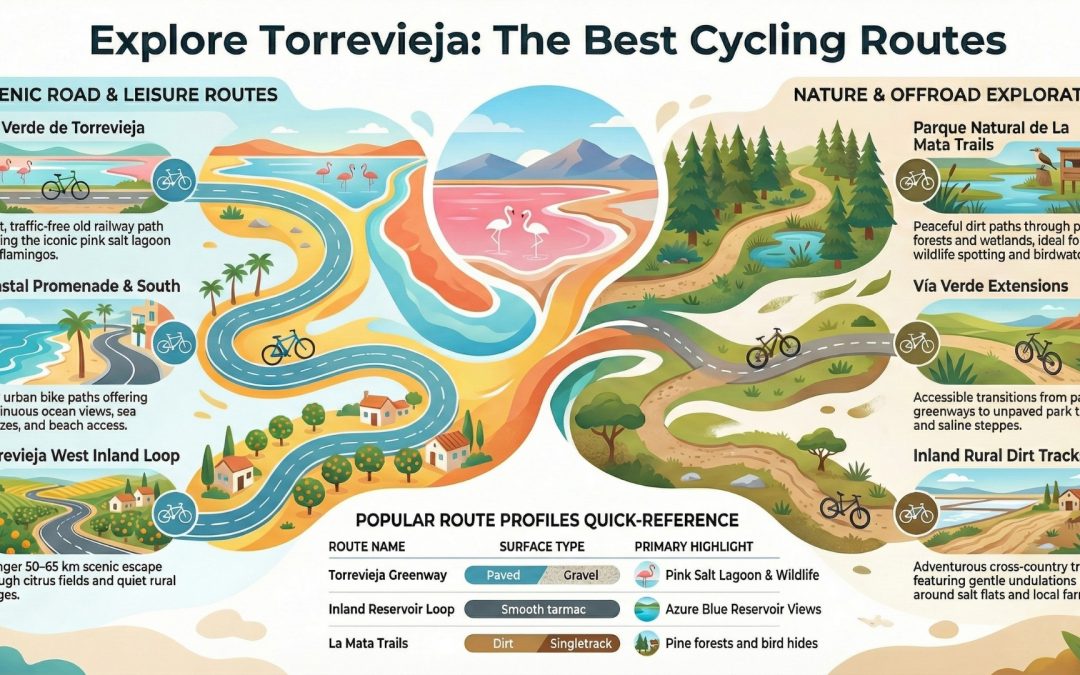
Torrevieja’s best-known ride is the Vía Verde de Torrevieja, a flat, traffic-free greenway that runs 6.7 km along the old Albatera-Torrevieja salt railway line, past the pink-hued Laguna Rosa. From there, riders can extend into a full loop around both the pink and blue lagoons of the Parque Natural de las Lagunas de La Mata y Torrevieja, head inland toward San Miguel de Salinas and the La Pedrera reservoir, or follow the coastal path south to Punta Prima and Orihuela Costa.
Unlike the northern Costa Blanca, where routes like the Coll de Rates climb draw road cyclists chasing elevation, Torrevieja is built for the opposite kind of ride: flat terrain, wide greenways and quiet rural roads that suit hybrids, gravel bikes, e-bikes and entry-level mountain bikes as much as road bikes. It’s a good fit for families, holidaymakers who haven’t ridden in a while, and anyone who’d rather look at flamingos than fight a gradient. This guide covers the main road and off-road routes around the town, with real distances, terrain notes and where to link them together for a longer day out.
Key Takeaways
| Route | Distance | Terrain | Best For |
|---|
| Vía Verde de Torrevieja (Pink Lake Greenway) | 6.7 km one-way (13.4 km there and back) | Flat, asphalt and paved, traffic-free | Families, first-timers, photographers |
| Parque Natural de las Lagunas Loop | 20-30 km | Flat, mixed paved and gravel park paths | Birdwatchers, nature-focused rides |
| Inland Loop to San Miguel de Salinas & La Pedrera | 50-65 km | Gentle rolling countryside, 300-500 m climbing | Road cyclists wanting distance without steep climbs |
| Coastal Ride to Punta Prima & Orihuela Costa | 20-40 km out-and-back | Flat, promenade and cycle path | Easy rides with café and swim stops |
| La Mata Natural Park MTB Trails | 10-25 km loops | Flat to gently rolling, sandy singletrack | Cross-country and gravel riders |
Why Torrevieja Rides Differently from the Rest of the Costa Blanca
The Costa Blanca’s northern towns, Calpe, Jávea, Dénia, are where the region’s climbing reputation comes from: the Coll de Rates, the Alto de Aitana and other Vuelta a España-tested ascents. Torrevieja, at the southern end near the Vega Baja, sits on flat coastal plain and salt-lake terrain instead. There’s no serious climbing to speak of here. What the area offers instead is a dense network of greenways, protected natural parks and quiet farm roads that reward distance and exploration rather than gradient, which is exactly why it’s become a favourite for leisure cyclists, touring groups and anyone building up base miles before tackling the hills further north.
Vía Verde de Torrevieja: The Pink Lake Greenway
This is Torrevieja’s signature ride, and for good reason. The Vía Verde follows the route of the old Albatera-Torrevieja salt railway, starting at the interpretation centre next to the restored railway buildings in town and running 6.7 km to the CV-945 road toward Los Montesinos. The surface is a mix of asphalt and paving through the urban section, then plain asphalt once you’re out past the edge of town, so it works for hybrids, gravel bikes, road bikes and e-bikes alike. Two rest areas break up the ride, and the route is officially open to hikers, cyclists and users with reduced mobility.
The main draw is the Laguna Rosa itself: the greenway runs right alongside the pink-tinted salt lagoon for much of its length, with reed beds on the fringes that attract flamingos and other wading birds. Most riders treat it as an out-and-back (13.4 km round trip), but you can turn it into a longer loop by connecting back into Torrevieja’s town cycle lanes rather than retracing the same path.
One thing worth flagging: several other sites describe this as a “12-15 km loop.” That figure doesn’t match the official measurement from FEMP (the Spanish Federation of Municipalities and Provinces, which documents the country’s Vías Verdes network) or the route as it’s actually signposted, which is 6.7 km point to point. If you’re planning your ride time around a published distance, use the 6.7 km figure and add on whatever loop-back you choose.
Explore Both Lagoons: The Parque Natural de las Lagunas de La Mata y Torrevieja Loop
Torrevieja actually sits between two lagoons, not one. The Laguna Rosa (pink, higher salinity) sits within the town itself, while the Laguna de la Mata (greener/blue, lower salinity) lies a few kilometres north. A loop connecting both, roughly 20-30 km depending on how much of the park perimeter you cover, takes in wetlands, bird hides and open viewpoints across the whole Parque Natural de las Lagunas de La Mata y Torrevieja. The terrain stays flat throughout, mixing paved sections with harder-packed gravel park paths.
Pick this one if birdwatching or photography matters more to you than mileage. The park protects wintering and migratory wetland species well beyond flamingos, and the interpretation centre near the Vía Verde start point has information panels on what’s around depending on the season.
Inland Loop: San Miguel de Salinas and the La Pedrera Reservoir
For riders who want more distance without hunting for hills, the inland loop out to San Miguel de Salinas and the La Pedrera reservoir runs roughly 50-65 km with gentle rolling terrain (around 300-500 m of total climbing across the whole loop, nothing sustained). The roads pass through citrus groves, small villages and open countryside before reaching La Pedrera’s distinctive blue water, then loop back toward the coast.
It’s a good training ride for anyone building endurance without wanting to deal with the steeper gradients further north, and quiet enough on weekdays that traffic isn’t a real concern outside the village centres.
Coastal Ride to Punta Prima and Orihuela Costa
Heading south along the coastal promenade from Torrevieja toward Punta Prima and on into Orihuela Costa gives you a flat, easy out-and-back of anywhere from 20 to 40 km depending on your turnaround point. It’s beachfront cycling the whole way: sea views, a steady run of cafés, and easy access down to the water if you want to stop and swim partway through. If you’re staying further south, bike hire in Orihuela Costa is worth checking so you’re not adding extra distance just to reach your starting point.
Best Off-Road and MTB Routes Near Torrevieja
Don’t expect technical downhill here. Torrevieja’s off-road riding is cross-country and gravel territory, spread across sandy park trails and rural farm tracks rather than concentrated in a dedicated bike park.
La Mata Natural Park Trails
The pine forest and dune sections of La Mata are the best local MTB riding on offer, with loop options typically running 10-25 km. Trailforks, the trail-mapping site, lists well over a hundred distinct trail segments across the park, mostly graded easy to intermediate. That’s a rough guide to how much of this terrain you can actually ride, rather than a fixed official route. Expect sandy singletrack, lagoon views and decent odds of spotting wildlife along the way.
Vía Verde Extensions and Park Paths
Beyond the main paved section, unpaved spurs off the Vía Verde connect through to saline steppe landscapes and reedbeds. These sections are a good introduction to off-road riding for anyone who hasn’t left tarmac before, since there’s nothing technical about them.
Inland Rural Tracks and Cañadas
Further out, the network of cañadas (traditional drover’s tracks) and farm roads toward San Miguel de Salinas and La Pedrera opens up longer exploratory rides of 20-50 km across salt flats and open farmland. These are used more by local riders than visitors, since they take some route-finding, but they’re a good option if you already know the area or are riding with someone who does.
Practical Cycling Tips for Torrevieja
October through May is the comfortable window. You can still ride in summer, but only early, since midday heat on the exposed greenway and coastal sections turns uncomfortable fast. Our guide to cycling in hot weather covers hydration and timing if you’re visiting in July or August.
Coastal wind is a real factor on the Punta Prima and Orihuela Costa rides in particular, so plan your out-and-back direction with the forecast in mind rather than assuming it’ll be calm both ways. Inside the natural parks, stick to marked paths, they’re protected habitat, not just scenery.
If you’re riding on Spanish roads for the inland loop, it’s worth knowing the current rules before you go; see our rundown of Spain’s cycling rules for 2026. And if you don’t have your own bike with you, bike hire in Torrevieja is the starting point, our broader guide to renting a bike on the Costa Blanca covers what to check before you book.
Where to Stay for These Routes
If you’re planning a multi-day cycling trip based around Torrevieja, cycling-friendly accommodation in Guardamar del Segura puts you within easy reach of both the Vía Verde and the inland loop toward San Miguel de Salinas, without needing to base yourself in the town centre.
FAQs: Cycling in Torrevieja
Is Torrevieja good for cycling beginners? Yes. The terrain is flat throughout, and the Vía Verde and coastal promenade are both traffic-free or low-traffic, which makes them a reasonable starting point for beginners, families or anyone returning to cycling after a break.
Can I cycle around the pink lake in Torrevieja? Yes. The Vía Verde runs alongside the Laguna Rosa for most of its 6.7 km length and is the most popular way to see it by bike. Treat it as an out-and-back or extend it into a loop using town cycle lanes.
Are there mountain bike trails in Torrevieja? Yes, mainly cross-country and gravel-friendly terrain in La Mata Natural Park and the inland cañadas, rather than technical downhill trails. Expect sandy singletrack and flat to gently rolling ground.
What is the best bike for cycling in Torrevieja? Hybrid, gravel, road bikes and e-bikes all suit the paved and semi-paved routes well. A cross-country mountain bike is the better choice if you’re planning to spend time on the sandier park and farm trails.
How long is the Vía Verde de Torrevieja? 6.7 km one-way, from the interpretation centre near Torrevieja’s old railway buildings to the CV-945 road toward Los Montesinos. That’s 13.4 km if you ride it there and back, longer if you loop back through town instead.
When is the best time of year to cycle in Torrevieja? October through May gives the most comfortable conditions. Summer riding is fine if you’re out early in the morning; midday heat on the exposed greenway and coastal sections can be tough from June through August.
Plan Your Ride
Bring your own bike or hire one locally in Torrevieja, then start with the Vía Verde before deciding whether to extend into the natural park loop, the inland ride to San Miguel de Salinas, or south along the coast to Punta Prima.
Research sources: Route distance and surface details for the Vía Verde de Torrevieja from the Spanish Federation of Municipalities and Provinces (FEMP) Vías Verdes documentation. Trail count and grading for La Mata Natural Park from Trailforks.