by Ralf Tenbrink | 15, Jul 2026 | Bike Tours, Costa Blanca News, Road Cycling Routes in Costa Blanca
Coll de Rates: The Complete Cyclist’s Guide to Costa Blanca’s Most Famous Climb
If you’ve spent any time on a road bike in the Marina Alta, you’ve heard people talk about Coll de Rates. It’s the pass between Parcent and Tàrbena that WorldTour teams use for winter training, the climb with a Strava leaderboard stacked with pro names, and, for a lot of visiting cyclists, the whole reason they picked Costa Blanca over anywhere else in Spain. It’s not the longest or the steepest climb in the region, but it’s become the one everyone rides at least once.
This guide covers everything you need to know before you go: the numbers, both sides of the climb, the Strava record chase that’s put it on the map, when to expect company from the pros, and how to be a good guest on their training roads.
Key Takeaways
| Aspect | Details |
|---|
| Location | Between Parcent and Tàrbena, Marina Alta, Alicante province (road CV-715) |
| Category | UCI Category 2 climb |
| Distance | 6.43 km (official Strava segment, from the edge of Parcent) |
| Average Gradient | 5.5%, unusually consistent for a Spanish climb |
| Elevation Gain | 275 m, topping out at 896 m |
| Extended Option | An optional, much steeper spur beyond the col, locally nicknamed “Super Rates” |
| Other Side | Coll de Tàrbena, 5.5 km, more exposed to wind, quieter |
| Best Season | November to February for pro-spotting; rideable year-round |
| Nearest Bases | Calpe, Benidorm, Altea, or the Jalón Valley |
Why Every Cyclist on the Costa Blanca Talks About This Climb
Coll de Rates isn’t a secret anymore. WorldTour squads including Tudor Pro Cycling, Soudal-QuickStep, Picnic PostNL, and Visma-Lease a Bike now build it into their winter training camps around Calpe, continuing a tradition that goes back more than a decade to when Astana and QuickStep first started basing riders here. Several Belgian and Dutch pros, including Remco Evenepoel and Mathieu van der Poel, own homes on the Costa Blanca and use the climb as a regular fixture during their winter blocks.
Part of the appeal is simply geography. It’s the closest proper climb to Calpe, with a gradient steady enough for structured training efforts and few enough corners to ride hard without constantly braking. As Tudor Pro Cycling’s Larry Warbasse told Cyclingnews earlier this year, “it’s become sort of ‘the’ climb in the area.” That reputation now pulls in amateur riders from across Europe hoping to ride the same tarmac, at the same time of year, as their favourite pros.
The Climb, Step by Step
Starting Out From Parcent
The official Strava segment begins just outside Parcent, right after a left turn at the edge of the village. Look for road signs marking it as a “Ruta Ciclista” and asking drivers to leave 1.5 metres when overtaking, a rule that’s now written into Spain’s 2026 cycling laws. If you want a coffee before you start, Musette Café near Parcent is worth the stop. Remco Evenepoel and Mathieu van der Poel have both been spotted there before a ride.
The Climb Itself
From the start, the road climbs gently through a few early hairpins under pine trees before settling into a long, near-straight stretch that hugs the hillside for close to two kilometres. This is the best part of the ride for scenery: on a clear day you can see the Mediterranean roughly 35 km away, and the hillside also shields you from any wind coming off the south. One final hairpin brings you up to the pass itself, marked by a gradient sign and a weathered “Coll de Rates” marker plastered in stickers from riders who’ve made it to the top.
At the col, a side road leads right to a restaurant with what might be the best lunch-stop view on the Costa Blanca. If you’re happy to stop there, that’s the classic ride done. If you want more, keep reading.
Surface, Traffic, and Water
Road surface is generally good tarmac the whole way up, with only occasional rough patches; most riders rate it as one of the better-maintained climbs in the area. Traffic is light. This is a quiet valley road rather than a through-route, though you should still expect the occasional car, especially near Parcent. There’s no reliable water stop between the start and the col itself, so fill your bottles before you leave. The restaurant at the top sells drinks if you need a refill for the descent.
Should You Ride to “Super Rates”?
Past the restaurant, a narrow lane continues to the true summit of the hill, an optional extension that local riders have nicknamed “Super Rates.” It’s short, but it’s brutal: a mix of broken tarmac and gravel with sustained double-digit gradients, dead-ending at a lookout point with nothing but a fire-watch post and, by most accounts, the best view of the whole ride. Because it’s a dead end, you’ll need to descend the same steep, loose surface you just climbed, so it’s really only worth it if you’re comfortable on a bike with wider tyres and don’t mind walking the odd section. Even a handful of pros, including Van der Poel and Thibau Nys, have ridden up out of curiosity rather than for training value.
If you skip it, don’t feel bad. The main climb to the col is the one that matters for Strava bragging rights, and it’s the one nearly everyone actually rides.
The Strava Battle: How Fast Is Fast?
Coll de Rates has one of the most closely watched Strava segments in professional cycling, and the record has changed hands several times over the years:
| Year | Rider | Time |
|---|
| 2018 | Jonas Vingegaard (then a Continental-level rider) | 13:02 |
| Early 2024 | Peter Øxenberg (now Ineos) | 12:38 |
| December 2024 | Tadej Pogačar (UAE Team Emirates-XRG) | 12:21 |
| December 2025 | Tadej Pogačar | 11:57, at an average speed of 32.3 km/h |
Puck Pieterse holds the women’s record at 14:45. The climb has even attracted its share of drama. A Strava account impersonating Vingegaard briefly appeared to beat Pogačar’s time this past winter before it turned out to be an obvious fake, almost certainly set from a motorbike or car rather than a bike.
For the rest of us, realistic targets look a little different. At a steady 15 km/h you’ll be at the top in around 38 minutes; push to 19 km/h and it’s closer to 30 minutes. Riding it comfortably at 11 km/h, a perfectly respectable pace for a first attempt, takes around 52 minutes. Nobody expects you to chase Pogačar’s time, and nobody will judge you for not trying.
Parcent or Tàrbena: Which Side Should You Climb?
The Parcent side is the classic, and the one described above: 6.43 km, a consistent 5.5%, sheltered from southerly wind, and the side almost every pro rides for training.
The other option is the Coll de Tàrbena, approached from the south and popular with riders based around Benidorm. It’s shorter at 5.5 km but more exposed, which makes it windier and slightly less predictable for structured efforts. That’s one reason it sees less pro traffic than the Parcent side, even though the views are just as good.
Strong riders often combine both: climb one side, descend the other, and loop back through the Jalón Valley. If that appeals, our Jalón Valley Scenic Loop route connects neatly with the Parcent approach and makes a satisfying half-day ride out of it.
Coll de Rates isn’t the only serious climb inland from the coast. Alto de Aitana, which featured as a Vuelta a España summit finish, is a longer and considerably harder option if you’re looking for a second target during the same trip.
Best Time to Ride (and When You’ll See the Pros)
Coll de Rates is rideable all year thanks to the Costa Blanca’s mild climate, but the timing changes what kind of ride you’ll get.
November through February is winter training camp season, when most WorldTour teams are based on the coast. If you want a chance of riding alongside professionals, aim for a mid-morning slot, say 10:30am to 1pm, when teams typically head out for their longer training rides. Just be aware this is also when the climb is busiest with amateur riders hoping for the same thing.
Spring and autumn offer near-identical weather with far fewer people on the road, which makes them the better choice if you’d rather ride the climb than watch other people ride it. Summer is manageable too, but with midday temperatures regularly above 30°C, an early start is worth planning around.
Etiquette: Sharing the Road With the Pros
Riding alongside professional cyclists is part of what makes Coll de Rates special, but it comes with some responsibility. Pro riders are on the coast to train, not to perform for an audience. Getting too close, tailing them for photos or video in particular, is more than just bad manners. Earlier this year, a high-profile rider was involved in a crash after being followed too closely by an amateur rider trying to film him, prompting his team to publicly ask fans for more space.
A few simple rules go a long way: keep a respectful distance, don’t draft off riders you don’t know, and remember that the same 1.5-metre passing rule that applies to cars applies to how you overtake other cyclists too. If you happen to end up next to a WorldTour rider at a junction, a nod or a hello is plenty. There’s no need to make it a moment.
Getting There and Where to Base Yourself
Parcent sits inland from the coast, roughly a 25–35 km ride from Calpe, Altea, or Benidorm depending on your route in, which makes any of the three a practical base for a Coll de Rates trip. Calpe is the most popular choice, partly because it’s the closest of the three and partly because it’s where most of the WorldTour teams themselves stay during winter camps.
If you’re travelling without your own bike, our guides to bike hire in Calpe, bike hire in Benidorm, and bike hire in Altea cover your options. Prices vary by bike type and season, with carbon road bikes costing more per day than hybrids and top-spec race bikes more again, so it’s worth comparing a couple of shops before you commit. Ask specifically for a bike set up with proper climbing gears.
If you’d rather have the whole route planned for you, our self-guided cycling tours guide is a good place to start. And if you’re staying more than a couple of nights, our roundups of cycling accommodation in Calpe and cyclist-friendly hotels in Calpe cover places set up for bike storage and early breakfasts. Both are useful if you’re planning a Coll de Rates attempt before the day heats up.
Gearing and Fitness: What You’ll Need
At a steady 5.5%, Coll de Rates doesn’t demand elite fitness. A reasonably active cyclist can complete it without drama. That said, a compact chainset (50/34) paired with a wide-range cassette (11-30 or 11-32) will make the climb far more comfortable, especially if you’re not used to sustained gradients. If you’re planning to tackle “Super Rates” too, treat it as a separate, much harder effort and budget extra recovery time before the descent.
If you’re riding a rental or a bike that’s flown out with you, it’s worth getting gears and brakes checked before you tackle a climb like this. Bike shops in Calpe can turn around a quick service the same day.
Frequently Asked Questions
How long is the Coll de Rates climb? The official Strava segment from Parcent is 6.43 km, with an average gradient of 5.5% and 275 m of elevation gain to the 896 m summit.
How hard is Coll de Rates for a beginner? It’s approachable for a reasonably fit rider. The gradient is steady rather than steep. If you’re newer to climbing, it’s a good introduction; just don’t feel obliged to add the “Super Rates” extension.
Who holds the Strava record on Coll de Rates? Tadej Pogačar set the current men’s record of 11:57 in December 2025. Puck Pieterse holds the women’s record at 14:45.
Which side should I ride, Parcent or Tàrbena? Parcent is the classic, sheltered side and the one most pros use. Tàrbena is shorter but windier and quieter, which some riders prefer.
When are professional cycling teams training on Coll de Rates? Mostly November through February, with late morning (roughly 10:30am–1pm) being the best window to spot them.
Can I ride Coll de Rates on a rental bike? Yes. Just make sure whichever bike hire shop you use sets you up with climbing gears rather than a flat-road setup.
Is there anywhere to eat near the top? Yes, there’s a restaurant right at the col with panoramic views, making it a popular stop even for non-cyclists.
Where exactly does the climb start? On the CV-715, just outside Parcent village in the Jalón (Xaló) Valley, Alicante province.
Research sources: Cyclingnews, “Why the Coll de Rates is the hottest climb in the cycling world right now” (Stephen Farrand, 27 Jan 2026); Climbfinder — Coll de Rates / Tossal dels Diners.
by Ralf Tenbrink | 7, Apr 2026 | Road Cycling Routes in Costa Blanca
Key Takeaways
| Aspect | Detail |
|---|
| Optimal Distance | 200m intervals are the most recommended short sprint distance |
| Training Pace | 3K to mile race pace or 80-85% effort level |
| Typical Volume | 8-10 repetitions building to 20-25 over time |
| Recovery Time | 200m easy jog or 100m walk between intervals |
| Weekly Frequency | 2-3 sprint sessions per week maximum |
| Surface Options | Track, flat roads, trails, or dedicated cycling paths |
| Progression | Start with 4 reps, build weekly to avoid overtraining |
| Workout Duration | 20-25 minute main sets with proper warm-up/cool-down |
Outline
Based on the Costa Blanca cycling routes and interval training research, this article will cover:
- Understanding Short Sprint Intervals – Foundation principles and benefits
- 200m Intervals: The Gold Standard – Why 200m dominates training programmes
- Setting Up Your Costa Blanca Sprint Routes – Local terrain advantages
- Progressive Training Programmes – Building from 4 to 25 repetitions safely
- Shorter Sprint Variations (10-150m) – Power and acceleration development
- Recovery Protocols and Timing – Maximising adaptation between efforts
- Location Selection and Route Planning – Finding ideal sprint segments
- Common Mistakes and Safety Considerations – Avoiding overtraining pitfalls
Short Sprint Routes for Interval Training: Your Complete Guide to Speed Development
Short sprint intervals transform cyclists into faster, more powerful riders. Unlike steady endurance work, these explosive efforts develop your anaerobic capacity and neuromuscular coordination. Why do sprint intervals matter so much? They bridge the gap between raw power and race-specific speed.
The beauty of sprint interval training lies in its simplicity. You need minimal equipment, short time commitments, and immediate feedback on your progress. Most cyclists can complete effective sprint sessions in 45 minutes total, including warm-up and recovery periods.
Sprint intervals work by targeting your phosphocreatine energy system. This system provides immediate power for efforts lasting 10-15 seconds. By repeatedly challenging this system with short, intense efforts, you increase your ability to produce maximum power when it counts most.
Recovery between efforts allows complete energy system replenishment. This differs fundamentally from threshold or tempo training, where you maintain sustained effort levels. Sprint intervals demand complete recovery to maintain quality throughout the session.
The Altea Hills Loop provides excellent flat sections for sprint interval work. Its varied terrain means you can warm up on gentle gradients before finding perfect sprint segments on the flatter coastal sections.
Modern cycling science confirms what coaches have known for decades. Short, high-quality efforts produce superior power gains compared to moderate-intensity work performed at higher volumes. This principle drives the effectiveness of sprint interval protocols.
200m Intervals: The Gold Standard for Sprint Development
200m intervals represent the sweet spot for sprint interval training. Research consistently shows this distance provides optimal stimulus for both power development and speed endurance adaptations. But why exactly does 200m work so well?
The distance perfectly matches your phosphocreatine energy system capacity. Most cyclists can maintain near-maximum effort for 200m before significant fatigue accumulates. This allows multiple high-quality repetitions within a single session.
Expert coaching guides recommend 8-10 x 200m intervals at 3K pace as the foundation protocol. You accelerate for the first 50 metres, then maintain speed through the remaining distance.
Training pace should match your 3K to mile race effort. This translates to approximately 80-85% of maximum effort – hard enough to challenge your systems without completely exhausting you. Many cyclists make the mistake of going too hard too early in these sessions.
Progressive overload drives adaptation in 200m interval training. Start with 4 repetitions in your first week, adding 2 reps weekly until you reach 8-10. Advanced cyclists can eventually handle 20-25 repetitions, though this takes months of consistent training.
Recovery between efforts typically involves 200m easy spinning or complete rest. Studies show 100m walking recovery allows ATP resynthesis and VO2 replenishment for subsequent high-quality efforts.
The Coastal Loop From Calpe To Denia offers multiple 200m sprint opportunities. The coastal road provides consistent flat sections with minimal traffic interruptions, perfect for maintaining interval quality.
Temperature affects 200m interval performance significantly. Costa Blanca’s mild climate allows year-round sprint training, unlike northern European locations where weather limits outdoor speed work for months.
Setting Up Your Costa Blanca Sprint Routes
Costa Blanca’s diverse terrain provides exceptional opportunities for sprint interval training. The region combines flat coastal roads, gentle inland valleys, and challenging mountain approaches – all within short distances of each other.
Coastal routes offer the most consistent surfaces for sprint work. The N-332 coastal highway features long, flat sections with wide shoulders perfect for interval training. Traffic volumes vary seasonally, so early morning sessions often provide the safest conditions.
Inland valleys present different advantages for sprint training. Routes like the Jalon Valley Scenic Loop provide sheltered conditions with minimal wind interference. Valley roads typically feature gentler gradients and less traffic than coastal alternatives.
Mountain access roads create opportunities for uphill sprint intervals. These efforts develop different physiological adaptations compared to flat sprints. The Benidorm To Guadalest Scenic Ride includes several short, steep sections ideal for power development.
Surface quality varies significantly across Costa Blanca routes. Newly resurfaced sections provide optimal sprint conditions, whilst older tarmac may present safety concerns at high speeds. Always scout potential sprint segments at moderate speeds before attempting full efforts.
Wind conditions dramatically impact sprint interval quality. Costa Blanca’s coastal location means prevailing winds from the Mediterranean. Plan your sprint directions to work with or against wind patterns depending on your training objectives.
Route selection should prioritise safety over convenience. The best sprint segments feature good visibility, minimal traffic, and safe runout areas. Many cyclists prefer dedicated cycle paths or quiet industrial estate roads for sprint work.
Recovery rides between sprint sessions benefit from Costa Blanca’s extensive network of quiet country roads. The Villajoyosa To Relleu Route provides gentle terrain perfect for active recovery spins.
Progressive Training Programmes for Sprint Development
Building sprint interval capacity requires systematic progression over weeks and months. Jumping straight into high-volume sprint sessions leads to overtraining, injury, or both. Smart progression prevents these issues whilst maximising adaptations.
Research-backed programmes typically follow a 4-6-8 repetition progression over the first three weeks. Week one starts with 4 x 200m intervals, week two increases to 6 repetitions, and week three builds to 8 intervals.
Weekly frequency matters as much as session volume. Most cyclists benefit from 2-3 sprint sessions per week maximum. More frequent sessions don’t allow adequate recovery for high-quality efforts. Less frequent sessions fail to provide sufficient stimulus for adaptation.
Here’s a proven 8-week progression protocol:
Weeks 1-2: 4 x 200m at 80% effort Weeks 3-4: 6 x 200m at 82% effort
Weeks 5-6: 8 x 200m at 85% effort Weeks 7-8: 10 x 200m at 85% effort
Recovery periods should match work intervals initially. As fitness improves, you can reduce recovery times slightly whilst maintaining effort quality. Never compromise interval quality for reduced recovery times.
Session timing within your weekly training schedule affects sprint quality significantly. Schedule sprint sessions after rest days when possible. Avoid placing sprint work immediately after long endurance rides or challenging climbs.
The Long Distance Ride Alicante To Calpe demonstrates how endurance and sprint training complement each other. Long base miles provide the foundation, whilst sprint intervals develop top-end speed.
Monitoring training stress prevents overreaching during sprint programmes. Heart rate recovery between intervals, perceived exertion scores, and power output consistency all indicate session quality. Declining metrics suggest inadequate recovery or excessive training load.
Advanced cyclists can eventually handle 20-25 x 200m intervals in single sessions. This progression takes 12-16 weeks minimum. Rushing this development increases injury risk without additional performance benefits.
Shorter Sprint Variations for Power and Acceleration
Whilst 200m intervals form the foundation of sprint training, shorter efforts develop specific aspects of cycling performance. Distances from 10-150m target different energy systems and neuromuscular adaptations.
10-30m acceleration sprints focus purely on power development and bike handling skills. These ultra-short efforts improve your ability to respond to attacks or close gaps quickly. Recovery should be 60 seconds per 10m of effort to allow complete energy system replenishment.
50m sprints with flying starts develop maximum velocity. The protocol involves 30m acceleration followed by 20m at maximum speed. This combination trains both acceleration and top-end velocity within single efforts. Recovery periods extend to 5-8 minutes between repetitions.
100-150m efforts bridge the gap between pure power and speed endurance. These distances challenge your lactate buffering capacity whilst maintaining high power outputs. They’re particularly valuable for cyclists who compete in criteriums or short circuit races.
Progressive overload applies to shorter sprints differently than 200m intervals. Instead of increasing repetitions dramatically, focus on maintaining maximum effort quality across 4-6 repetitions maximum. Quality trumps quantity in short sprint development.
Combining different sprint distances within single sessions provides varied training stimuli. A typical mixed session might include 3 x 30m accelerations, 4 x 100m efforts, and 6 x 200m intervals. This approach targets multiple energy systems efficiently.
Recovery requirements increase with sprint intensity and decrease with distance. Ultra-short efforts need minimal recovery, whilst longer sprints require proportionally more rest. This principle guides session planning and interval scheduling.
The Sierra Helada Natural Park Trail offers varied terrain perfect for different sprint distances. Short steep sections suit acceleration work, whilst longer flat segments accommodate speed endurance efforts.
Neuromuscular fatigue affects shorter sprints more than longer efforts. Your nervous system requires 48-72 hours recovery after intensive short sprint sessions. This timing consideration influences weekly training schedules significantly.
Recovery Protocols and Timing Between Sprint Efforts
Recovery between sprint intervals determines session quality and training adaptations. Too little recovery compromises subsequent efforts, whilst excessive rest wastes training time and reduces stimulus.
Complete recovery allows energy system replenishment between efforts. Your phosphocreatine stores replenish 95% within 3-5 minutes of complete rest. This scientific principle guides optimal recovery timing for sprint intervals.
Active recovery typically involves easy spinning at 30-40% effort. This approach maintains blood flow and removes metabolic byproducts faster than complete rest. However, the effort must remain genuinely easy to avoid interference with energy system recovery.
Recovery duration should match or exceed work interval duration initially. As fitness improves, you can gradually reduce recovery times whilst maintaining effort quality. Advanced cyclists often use 1:1 work-to-rest ratios successfully.
Heart rate recovery provides objective feedback on readiness for subsequent efforts. Most cyclists should see heart rate drop below 120bpm before attempting the next interval. Individual recovery patterns vary significantly, so learn your personal markers.
Environmental factors affect recovery requirements substantially. Hot conditions increase recovery needs due to elevated core temperature and dehydration rates. Costa Blanca’s mild climate generally reduces these complications compared to extreme environments.
Recovery nutrition becomes important during longer sprint sessions. Small amounts of carbohydrate between efforts help maintain blood glucose levels without causing gastric distress. A dilute sports drink provides adequate fueling for most sessions.
Mental recovery matters as much as physiological restoration. Sprint intervals demand intense focus and motivation. Brief mental breaks between efforts help maintain concentration quality throughout sessions. Many cyclists use recovery periods for positive self-talk or technique cues.
The Polop To Callosa Route provides natural recovery segments between sprint opportunities. The varied terrain allows easy spinning recovery whilst maintaining forward progress on your route.
Location Selection and Route Planning for Sprint Training
Successful sprint interval training depends heavily on route selection and environmental factors. The perfect sprint segment combines safety, appropriate distance markers, and consistent surface quality.
Safety considerations override all other factors in location selection. Wide shoulders, good visibility, and minimal traffic create ideal conditions. Many Costa Blanca cyclists prefer industrial estate roads during off-peak hours for sprint work.
Distance measurement accuracy affects training consistency and progression tracking. GPS devices provide reasonable accuracy for most training purposes, though track facilities offer superior precision. Many cyclists identify specific landmarks for consistent interval start/finish points.
Surface quality impacts both safety and performance during sprint efforts. Smooth tarmac allows maximum power transfer and reduces puncture risks. Avoid sections with loose gravel, potholes, or uneven surfaces when selecting sprint segments.
Gradient considerations vary depending on training objectives. Flat sections suit speed endurance development, whilst slight uphill gradients (2-4%) emphasise power production. Downhill sprints generally provide limited training benefit and increased safety risks.
Traffic patterns change dramatically throughout the day and season in Costa Blanca. Early morning sessions (6-8am) typically offer the safest conditions with minimal vehicle traffic. Tourist seasons bring additional complexity to route planning.
Wind conditions significantly affect sprint interval quality and safety. Consistent crosswinds create bike handling challenges at high speeds. Headwinds increase effort requirements, whilst tailwinds may provide false power readings.
Route variety prevents boredom whilst providing different training stimuli. The Javea To Cumbre Del Sol Route offers coastal and inland options within the same general area. This variety keeps training engaging across long-term programmes.
Emergency planning becomes crucial when training at high intensities in remote locations. Carry basic mechanical repair tools, emergency contact information, and consider riding with partners during sprint sessions. Mobile phone coverage varies across Costa Blanca’s more remote areas.
Common Mistakes and Safety Considerations in Sprint Training
Sprint interval training carries inherent risks that careful planning and execution can minimise. Understanding common mistakes helps cyclists avoid injuries and training setbacks whilst maximising performance gains.
Inadequate warm-up represents the most frequent sprint training error. Cold muscles and joints cannot handle sudden high-intensity efforts safely. Minimum warm-up should include 10-15 minutes easy spinning followed by progressive acceleration efforts.
Excessive starting intensity compromises session quality and increases injury risk. Many cyclists attempt maximum efforts from the first interval, leading to rapid fatigue and declining performance. Start at 80% effort and build intensity gradually across repetitions.
Poor pacing within individual intervals wastes training stimulus. The classic mistake involves sprinting the first 50m then fading dramatically. Proper 200m pacing requires controlled acceleration followed by sustained speed maintenance.
Recovery inadequacy between efforts reduces training quality significantly. Rushing into subsequent intervals before adequate recovery leads to declining power outputs and poor movement patterns. Respect recovery protocols regardless of time pressures.
Inappropriate gear selection affects sprint mechanics and safety. Too high gears cause muscle strain and poor acceleration. Too low gears limit top speed development. Most cyclists benefit from moderate gears (53×15-17) for sprint interval work.
Environmental awareness decreases during high-intensity efforts. Tunnel vision and reduced hearing create safety hazards in traffic or group situations. Always scout sprint routes thoroughly and avoid busy roads during sprint sessions.
Training load progression errors lead to overtraining or underperformance. Adding too many intervals too quickly overwhelms recovery capacity. Conversely, insufficient progression fails to drive adaptations. Follow systematic progression protocols consistently.
The Best Apps For Route Navigation include safety features useful for sprint training. Emergency contact integration and live tracking provide additional security during high-intensity solo sessions.
Mechanical reliability becomes crucial during sprint efforts. High torque loads can cause chain slips or wheel skips if equipment isn’t properly maintained. Regular bike maintenance prevents mid-sprint mechanical failures that could cause crashes.
Frequently Asked Questions
How often should I include sprint intervals in my training programme? Most cyclists benefit from 2-3 sprint sessions per week maximum. More frequent sessions prevent adequate recovery, whilst fewer sessions provide insufficient stimulus for adaptation. Space sessions 48-72 hours apart for optimal results.
Can I do sprint intervals on hills or must they be flat? Both flat and uphill sprints provide valuable training benefits. Flat efforts develop pure speed, whilst uphill sprints (2-4% gradient) emphasise power production. Avoid steep hills (>6%) as they change the energy system demands significantly.
What gear should I use for 200m sprint intervals? Most cyclists benefit from moderate gears around 53×15-17 for sprint intervals. This provides good acceleration without excessive muscle strain. Avoid very high gears that prevent proper acceleration or very low gears that limit top speed development.
How long does it take to see improvements from sprint interval training? Initial improvements typically appear within 2-3 weeks of consistent training. Significant power gains usually develop over 6-8 weeks of progressive sprint work. Maximum adaptations may take 12-16 weeks to fully manifest.
Should I do sprint intervals if I’m primarily an endurance cyclist? Yes, sprint intervals benefit endurance cyclists significantly. They improve neuromuscular coordination, increase lactate buffering capacity, and enhance your ability to respond to race situations. Even endurance specialists should include some sprint work.
What’s the difference between sprint intervals and threshold training? Sprint intervals target your phosphocreatine energy system with short, maximum efforts followed by complete recovery. Threshold training challenges your lactate buffering with sustained moderate-high efforts. Both serve different purposes in complete training programmes.
Can I combine sprint intervals with other training in the same session? Sprint intervals should typically be performed when fresh for maximum quality. Light endurance riding before or after sprint work is acceptable, but avoid combining with other high-intensity efforts in the same session.
How do I know if I’m recovering adequately between sprint sessions? Monitor heart rate recovery patterns, perceived exertion levels, and power output consistency across intervals. Declining performance, elevated resting heart rate, or persistent fatigue suggest inadequate recovery between sessions.
by Geroge Cornelius | 11, Mar 2026 | Bike Tours, Road Cycling Routes in Costa Blanca
Alicante to Calpe Ride / Key Takeaways
| Distance | 60-137km depending on route choice |
| Elevation Gain | 1,500-2,500m typical |
| Best Months | October-May (avoiding summer heat) |
| Difficulty | Intermediate to Advanced |
| Must-Do Climbs | Coll de Rates, Puerto de Tudons |
| Pro Training Season | January-April |
| Distance | 60-137km depending on route choice |
Ever wonder why pro cyclists flock to this corner of Spain every winter? Its not just the paella (though that helps). Costa Blanca gets about 300 days of sunshine each year – thats basically perfect riding weather when northern Europe is frozen solid.
The roads here? They’re butter smooth. Local governments actually invest in cycling infrastructure because they know riders bring serious money to the region. You’ll find dedicated bike lanes on major roads and drivers who actually respect cyclists – imagine that! Professional teams like Jumbo-Visma and UAE Team Emirates set up their winter camps here, so dont be surprised if you’re grinding up a climb and Tadej Pogačar flies past you.
What really sets this place apart from Mallorca or the Alps is the variety. You can hammer flat coastal roads in the morning, then tackle 1,000-meter climbs after lunch. The temperature rarely drops below 10°C in winter or exceeds 30°C in summer mornings. Plus, unlike touristy Mallorca, accomodation here won’t break the bank – you can find decent cyclist-friendly hotels for 50-70 euros a night.
The Classic Alicante to Calpe Coastal Route
Starting from Alicante’s marina, the most direct coastal route to Calpe stretches about 62 kilometers. But who wants direct when you can have spectacular? The smart move is taking the N-332 coastal road through El Campello and Villajoyosa to Relleu route for some inland variety.
First 20km out of Alicante are pancake flat – perfect for warming up those legs. You’ll roll through San Juan beach (grab a cortado at Café Racer if you need caffeine) then hit El Campello where the road starts getting interesting. The stretch between Villajoyosa and Benidorm throws in some punchy little climbs – nothing huge, maybe 3-4% gradients, but enough to wake up your legs.
Benidorm marks the halfway point. Yeah, its touristy as hell, but the cycling infrastructure here is top-notch. Wide bike lanes, plenty of water fountains, and if you need any bike repair services in Costa Blanca, there’s at least five shops within a kilometer of the main strip. From Benidorm to Altea, you’ve got two choices: stick to the coast (easier, more traffic) or take the CV-755 inland road (harder, way prettier).
The final push from Altea to Calpe is where things get spicy. That innocent-looking bump on your GPS? That’s the Puerto de Calpe – only 2km but it kicks up to 8% in places. Your reward? Rolling into Calpe with the massive Peñón de Ifach rock formation welcoming you like a giant limestone high-five.
Mountain Passes You’ll Conquer Between Alicante and Calpe
Lets talk about the climbs that make grown cyclists cry (in a good way). Coll de Rates is the superstar here – 6.3km of perfectly graded switchbacks averaging 5.8%. The locals call it “El Rates” and if you can do it in under 20 minutes, you’re flying. The road surface is pristine, and those hairpin turns? Chef’s kiss. Best part – there’s a restaurant at the top where they make killer bocadillos.
Puerto de Tudons is the beast everyone respects. Starting from sea level near Benidorm’s bike rental shops, you’ll climb for 20 straight kilometers. The gradient never gets stupid steep – hovering around 5% – but the sheer length will test your mental game. Pro tip: theres a water fountain at km 12 near the Confrides turn-off. Use it.
Port de Confrides might be the “easiest” of the big three at 7.5km and 5% average, but don’t let that fool you. The middle section has some sneaky 9% ramps that’ll have you searching for gears you dont have. What makes this climb special is the views – on clear days you can see all the way to Ibiza. The descent back toward Benidorm? Absolute rocket ship territory – I’ve hit 75km/h without even trying (please be careful though).
Then there’s the lesser-known Port de Sa Creueta from Tárbena. Only locals and cycling nerds know about this one. It’s quieter than a library, the road’s narrow but perfect, and you might see more goats than cars. At 7.5km with a mellow 3.4% average, its perfect for recovery days when you still want to bag a climb.
The 137km Puerto de Tudons Epic Loop
This route is what separates tourists from serious cyclists. Starting in Calpe’s cycling hub, you head south through Altea and Benidorm before the real fun begins. The first 30km are basically a warm-up – coastal roads, maybe a headwind if you’re unlucky, nothing too taxing.
Once you pass Benidorm and hit Finestrat, the landscape changes completely. Suddenly you’re surrounded by orange groves and almond trees, and that big mountain ahead? Yeah, you’re going up that. The climb through Finestrat to Sella is where you earn your pasta later. Its not just the gradient (averaging 6% for 8km) – its the way the road snakes through these ancient terraced hillsides that haven’t changed in centuries.
Sella to Castell de Castells is the route’s hidden gem. This 25km section rolls through proper Spanish countryside – the kind where old guys still ride donkeys and time forgot to show up. The road surface can be sketchy in places (watch for gravel in corners), but the lack of traffic makes up for it. There’s a bar in Castell de Castells that does the best tortilla española you’ll ever taste – seriously, its worth the climb just for that.
The return leg via Benigembla and Parcent is fast. Like, scary fast if you’re not careful. From Castell de Castells, you drop 600 meters in about 15km. The corners are well-marked but respect them – I’ve seen too many riders overcook that left-hander after the Benigembla church. Once you hit the valley floor near Jalón, its a gradual false flat back to Calpe. Total time? Budget 5-6 hours if you’re reasonably fit, longer if you stop for photos (and you will).
Alternative Routes: The Vall de Laguar Adventure
Want something different? The Vall de Laguar loop from Calpe is 104km of pure eye candy. This isnt about setting Strava records – its about riding through landscapes that look like someone cranked the saturation slider to maximum.
The route kicks off mellow enough, following the Jalón Valley scenic loop before things get serious. Between kilometer 20 and 40, you’re basically climbing non-stop from 200m to nearly 1,000m elevation. The road through Vall de Laguar itself is engineering porn – switchback after switchback carved into vertical canyon walls. In February and March, the whole valley explodes with cherry blossoms. Its so stupidly beautiful that you’ll forget your legs are screaming.
The technical crux comes around km 35 near Fleix. The road narrows to barely a car width, the gradient hits 12% for a few hundred meters, and there’s usually a headwind just to keep things interesting. But then you pop out on top of the ridge and BAM – Mediterranean views that make Instagram influencers weep with envy.
After conquering the valley, you still got Coll de Rates to deal with on the way back. By this point your legs are cooked, but approaching Rates from the Parcent side is actually easier than the classic Calpe approach. The descent back to Calpe via Jalón is fast and flowing – perfect for spinning out those tired legs. Pack extra food for this one – there’s limited resupply options in the valley villages.
Essential Stops and Refueling Points
Knowing where to refuel can make or break your ride. In Altea, Café Cycling (yes, thats really its name) on the main strip has become the unofficial cyclist HQ. They do proper coffee, have bike racks, and the owner – an ex-pro from Belgium – gives solid route advice.
The Petrol station at La Nucía (junction of CV-70 and CV-758) is clutch for long rides. They’ve got cold drinks, energy bars, and crucially, clean toilets. The attendant there has seen enough cyclists that he keeps extra water bottles in the fridge during summer. Between Sella and Relleu, there’s a natural spring fountain that locals have used for centuries – the water’s cold and tastes better than anything from a bottle.
For proper food, time your ride to hit Polop around lunchtime. Bar La Plaza does a menu del día for 12 euros that’ll properly refuel you – we’re talking proper Spanish portions here. If you’re doing the mountain routes, the restaurant at Coll de Rates summit is open most days and their tortilla sandwich has achieved legendary status among local cyclists. They also let you fill bottles for free, even if you dont buy anything.
Emergency bike repair spots along these routes include Bikes Benidorm (open 7 days), Ciclos Guerola in Altea (closed Sundays), and Natural Bikes in Calpe. Most carry basic spares and can handle common repairs while you wait.
Frequently Asked Questions
What’s the best time of year to cycle from Alicante to Calpe? October through May offers the best conditions. Summer (July-August) gets properly hot with temperatures hitting 35°C+ by midday. Spring (March-May) is perfect – warm but not hot, and everything’s green from winter rains.
Do I need a road bike or will a hybrid work? You really want a road bike for these routes. The climbs are long and a heavy hybrid will make them miserable. Most bike rental shops offer carbon road bikes from around 40-50 euros per day.
How fit do I need to be for these routes? For the direct coastal route, moderate fitness is fine. For the mountain loops, you should be comfortable riding 100km with 2,000m of climbing. If you can ride for 4-5 hours at home, you’ll manage here.
Is it safe to cycle alone in Costa Blanca? Generally very safe. Drivers are used to cyclists, crime is low, and there’s good mobile coverage almost everywhere. Still, tell someone your route and carry basic repair kit. Check out these safety tips for solo touring.
Where should I base myself for cycling in this area? Calpe is the traditional choice – central location, tons of bike shops, cyclist-friendly hotels. Altea works great too and is slightly less touristy. Benidorm has the most amenities but can be crowded.
Can I join group rides with locals? Absolutely! Most bike shops organize group rides. In Calpe, check out the Saturday morning ride from Ciclos Boluda – mixed abilities, super welcoming. Just rock up around 8:30am.
For cyclists travelling along the Costa Blanca, the journey from Alicante to Calpe is one of the most scenic coastal rides in the region. Rather than staying on the busy N-332, a safer cycling route uses a mix of coastal promenades, secondary roads, and cycle paths where available.
Route Overview
- Distance: approx. 72–78 km
- Elevation: Mostly rolling coastal terrain
- Difficulty: Moderate
- Surface: Tarmac (roads and promenades)
- Best bike: Road bike or gravel bike
Recommended Cycling Route
This route keeps cyclists away from the busiest traffic where possible.
- Alicante → Playa de San Juan
Use the coastal cycle paths leaving Alicante city and follow the seafront through San Juan Beach. - Playa de San Juan → El Campello
Dedicated cycle lanes and quieter coastal streets make this a relaxed start to the ride. - El Campello → Villajoyosa
Follow the coastal road sections parallel to the N-332. This stretch offers spectacular sea views. - Villajoyosa → Benidorm
A gentle rolling section with some climbs before descending into Benidorm. - Benidorm → Albir → Altea
Ride along the coast via Albir promenade and continue into the beautiful old town area of Altea. - Altea → Calpe
Quiet coastal roads with stunning views of the Mediterranean and the famous Peñón de Ifach as you approach Calpe.
Highlights Along the Ride
🚴 Coastal scenery almost the entire route
☕ Plenty of cafés and beach stops along the way
📸 Photo opportunities in Villajoyosa’s colourful harbour
🌅 Historic old town views in Altea
🪨 Finish beneath the iconic Peñón de Ifach rock in Calpe
Cycling Tips
- Start early morning to avoid traffic and heat.
- Avoid the N-332 main carriageway where possible.
- Carry two bottles — the coastal sun can be strong even in winter.
- Many cafés along the route are cyclist-friendly.
Cycling Route Disclaimer
The cycling routes, maps, GPX files, and information published by Bikes Costa Blanca are provided for general guidance and inspiration only.
While we aim to share enjoyable and practical cycling routes across the Costa Blanca, conditions on roads and trails can change at any time due to traffic, construction, weather, road surface conditions, or local regulations.
Cyclists choosing to follow any route featured on this website or associated materials do so entirely at their own risk.
Bikes Costa Blanca makes no guarantees that any route is completely accurate, suitable for all cyclists, or free from hazards. Route descriptions, distances, elevations, and safety information should be treated as approximate guidance only.
It is the responsibility of each rider to:
- Assess road and traffic conditions
- Ride within their own ability and fitness level
- Ensure their bicycle is in safe working condition
- Follow all local traffic laws and regulations
- Use appropriate safety equipment
By using any route, map, GPX file, or cycling information provided by Bikes Costa Blanca, you acknowledge that Bikes Costa Blanca and its contributors accept no liability for any injury, loss, damage, or inconvenience that may arise from the use of this information.
Cyclists should always use their own judgement and take appropriate precautions when riding.
by Ralf Tenbrink | 23, Feb 2026 | Bike Tours, Road Cycling Routes in Costa Blanca
Polop to Callosa Route
Key Takeaways
| Feature | Details |
|---|
| Distance from Coast | 25 minutes inland from Calpe |
| Main Climbs | Carretera de Xirles (2.5 miles, 4%), La Nucía (2.2 miles, 3.1%), Carrer Aitana (2 miles, 4.3%) |
| Highest Point | Alto de Aitana at 1,558 meters |
| Typical Elevation Gain | 2,275 meters over 132 kilometers |
| Hardest Climb | Port de Bernia – 5km at 12% average, peaks at 15% |
| Best Season | Winter and early spring when Alpine routes are snow-covered |
| Route Difficulty | Ranges from moderate training rides to challenging gran fondo routes |
| Road Conditions | Smooth, well-maintained asphalt with minimal traffic |
Why Cyclists Choose the Polop to Callosa Corridor
The Polop to Callosa route sits in a sweet spot for serious riders. Its just 25 minutes from Calpe but feels like a different world – no coastal traffic, no urban navigation headaches. You get proper climbing without the hassle of getting there. Local riders have known about this area for years, but it doesnt get the same crowds as routes starting from Benidorm or Calpe itself.
What makes this corridor special is the elevation profile. Even in January, you’re climbing above 1,000 meters when Alpine passes across Europe are buried under snow. Professional teams figured this out ages ago – they come here for winter training camps because the climbing is legit but the weather stays rideable. The roads wind through villages that havent changed much in decades, and you get those big Mediterranean views without the coastal development blocking your sight lines.
The area around Callosa d’en Sarria works as a base because you can design routes in multiple directions. Want a recovery ride? Theres options. Need to test your fitness? Theres climbs that’ll do that too. This flexibility matters when you’re planning a cycling holiday in Costa Blanca or just trying to get quality training done.
The Main Climbs You’ll Encounter
Three climbs define the Polop area, and each one has its own character. Carretera de Xirles via Polop stretches 2.5 miles with 531 feet of climbing at a 4% average gradient. Its steady rather than punchy – the kind of climb where pacing matters more than explosive power. La Nucía via Polop is shorter at 2.2 miles with 364 feet of vertical and a gentler 3.1% average. This one works well as a warmup or when you’re already tired from earlier efforts.
Carrer Aitana via Polop splits the difference – 2 miles, 453 feet of climbing, 4.3% average. None of these climbs will destroy you with steep ramps, but they add up quickly when you string them together. The asphalt quality is excellent throughout, which sounds boring but actually matters a lot when you’re grinding away for hours.
Then theres Coll de Rates, probably the most famous climb in Costa Blanca. Six kilometers at 6% average with switchbacks that photograph beautifully. The road surface is perfect, and the views keep you distracted from the effort. Its become a benchmark – if you can ride Coll de Rates comfortably, you can handle most of what Costa Blanca offers.
But the real test? Port de Bernia. Five kilometers at a 12% average grade, with the final 3.5 kilometers never dropping below 15%. They resurfaced it in 2019, and the professional Volta a Valenciana race included it shortly after. Its brutal. Your legs will remember it.
Understanding the Elevation Gains
Routes through the Polop-Callosa corridor deliver serious climbing numbers. The Gran Fondo Internacional La Nucía, designed by Miguel Indurain (yes, that Indurain – five-time Tour de France winner), covers 132 kilometers with 2,275 meters of elevation gain. That’s not a typo. The route starts with a 3.6-kilometer climb at 5.5% within the first 20 kilometers, just to get your legs warmed up.
The big one comes at 45 kilometers – Alto de Aitana, the highest point in Alicante province at 1,558 meters. The climb averages 3-4% with a descent halfway through that gives your legs a break before the final push. Its not steep by Alpine standards, but the sustained effort at altitude adds up. You feel it.
For comparison, a typical hard route like the Loop Sa Creueta and Bernia covers 97 kilometers with 1,617 meters of climbing. Port de Sa Creueta measures 7.5 kilometers at 3.4% – described by locals as “a nice climb away from traffic.” Port de Confrides, also 7.5 kilometers but at 5%, peaks at 970 meters with views across the Mediterranean that make you forget about the burning in your quads.
More ambitious loops can include three Category 1 climbs, two Category 3 climbs, and three Category 4 climbs within approximately 170 kilometers and 3,556 meters of elevation gain. Thats a full day in the saddle.
How the Calpe Connection Works
Most riders base themselves in Calpe because it has the infrastructure – bike rental shops, accommodations, cafes that understand cyclists. From there, its a short ride inland to Callosa d’en Sarria, where the real climbing begins. This connection creates natural loop routes that start and end at the coast but spend most of their distance in the mountains.
The loop structure matters because it gives you options. You can ride out through one valley, climb over the mountains, and descend through a different valley back to the coast. Or you can create figure-eight patterns that let you hit multiple climbs without repeating roads. The network of quiet roads through villages like Gorga, Balones, Benimassot, Fageca, Famorca, Castell de Castells, and Benigembla links together beautifully.
These aren’t main roads with heavy traffic. They’re the kind of roads where you might see more cyclists than cars on a Saturday morning. The villages themselves offer places to refill water bottles and grab a quick coffee, but they’re not tourist traps. They’re just… villages. People live there, go about their lives, and happen to have some of the best cycling roads in Europe running past their front doors.
Why Winter Riding Here Makes Sense
The Polop-Callosa corridor really shines from November through March. While riders in Northern Europe are stuck on trainers or battling ice, you’re climbing above 1,000 meters in sunshine. The Mediterranean moderates the temperature – its not tropical, but its rideable. You might need arm warmers in the morning, but by midday you’re in short sleeves.
Professional teams figured this out years ago. National squads from colder countries come here for training camps because they can get quality altitude work without extreme cold. The combination of elevation and mild weather is hard to find elsewhere in Europe during winter months.
The lack of forest cover on most climbs means you get constant views. This might sound like a small thing, but it makes a psychological difference. Alpine climbs often wind through dense forest where you can’t see anything except the next 50 meters of road. Here, you can see the Mediterranean, the coastal plains, the valleys below. It helps. Your brain has something to focus on besides the effort.
Different Routes for Different Riders
The corridor works for various fitness levels, which is rare for a climbing area. Gentle training rides exist – 7.5 to 20 kilometer climbs at 5-6% gradients that build fitness without destroying you. Then theres the “out-and-out walls” for testing yourself when you want to know where your fitness really stands.
Recreational riders can design routes through the quieter villages that combine short climbs with rolling terrain. These routes might only include 1,000-1,500 meters of climbing over 80-100 kilometers – still a solid day, but achievable if you’re not racing. The roads link together well, so you can create loops that bring you back to your starting point without complicated navigation.
For riders who want to suffer (and we all do sometimes), routes exist with 3,500+ meters of climbing over 170 kilometers. These routes include multiple Category 1 climbs and will take most of a day. You’ll need to start early, carry enough food, and pace yourself. But if you finish one of these routes, you’ve earned your post-ride beer.
The La Aitana Tour offers both a 90-kilometer media fondo and a 160-kilometer gran fondo option, giving riders a structured event experience if thats what they prefer over self-guided routes.
Comparing This Route to Other Costa Blanca Options
Routes starting from Calpe and Benidorm get more attention in guidebooks and online forums. They’re not bad routes – they’re actually quite good. But they come with compromises. You spend more time navigating through developed areas, dealing with traffic lights, and sharing roads with cars. The Polop-Callosa approach skips most of that.
From Callosa, you’re immediately on quiet roads heading into the mountains. The elevation gain starts right away and continues consistently throughout your ride. You’re not fighting through urban sprawl to reach the good stuff – you’re already there. This matters when you only have a few hours to ride or when you’re trying to maximize training quality.
The difficulty profiles are comparable to the more famous routes, but the experience feels different. Less commercial, fewer riders, more of that feeling of discovering something yourself even though locals have been riding these roads for decades. The inclusion of this area in major events like the UCI-sanctioned Gran Fondo La Nucía validates what local riders already knew – this is serious cycling territory.
Planning Your Ride Through This Area
The infrastructure for cycling tourism has improved significantly in recent years. Accommodations in Costa Blanca understand cyclists now – they offer secure bike storage, early breakfasts, and can recommend routes based on your fitness level. Bike shops throughout the area stock parts and can handle repairs if something goes wrong.
Starting from Callosa d’en Sarria gives you flexibility. You’re close enough to the coast to access services but far enough inland to avoid the coastal crowds. Routes can be designed as out-and-backs, loops, or point-to-point rides depending on your logistics. The roads are well-marked, though downloading routes to your GPS makes navigation easier.
Water and food availability varies. The villages have small shops and cafes, but don’t expect options every 10 kilometers. Carry enough water for the climbs, and plan your stops around the villages. Most riders carry at least two bottles and some food for longer routes.
Weather can change quickly in the mountains. Even on sunny days, temperatures drop on descents after long climbs. Carry a lightweight jacket. The roads drain well after rain, but some descents can be slippery when wet – take it easy on the switchbacks.
Frequently Asked Questions
What’s the best time of year to ride the Polop to Callosa route?
Winter and early spring (November through March) offer the best conditions. Temperatures stay mild, roads are quiet, and you avoid the summer heat that can make climbing uncomfortable. This is when professional teams visit for training camps.
How difficult is this route compared to famous Alpine climbs?
The gradients are generally more moderate (3-6% average) compared to Alpine climbs, but the sustained nature and cumulative elevation gain make it challenging. Port de Bernia at 12% average is an exception and rivals difficult Alpine sections.
Can I ride this route if I’m not a strong climber?
Yes, but choose your route carefully. Shorter loops with 1,000-1,500 meters of climbing exist for recreational riders. The key is pacing yourself and not trying to match the routes designed for gran fondo events.
Where should I base myself for riding this area?
Calpe offers the most infrastructure for cyclists – bike rental options, accommodations, and services. Its 25 minutes from Callosa d’en Sarria, making it an ideal base for accessing the climbing routes.
Are the roads safe for cycling?
Yes, the inland roads through this corridor are generally quiet with minimal traffic. Road surfaces are well-maintained, and drivers in the area are accustomed to cyclists. The main roads near the coast have more traffic, but the climbing routes themselves are excellent.
Do I need a guide or can I ride independently?
The routes are well-suited for independent riding if you’re comfortable with GPS navigation. However, guided cycling tours are available if you prefer structured support or want local knowledge about the best routes.
What kind of bike do I need?
A road bike with a compact or semi-compact chainset works best. Given the sustained climbs and some steep sections (particularly Port de Bernia), having an easy gear is important. Most riders use 50/34 or 52/36 chainrings with an 11-32 or 11-34 cassette.
Are there bike shops along the route if I have mechanical issues?
Bike shops in the coastal towns can handle most repairs, but options are limited once you’re in the mountains. Carry basic tools, spare tubes, and know how to handle common mechanical issues. Mobile bike repair services operate in the area for more serious problems.
by Ralf Tenbrink | 16, Feb 2026 | Bike Tours, Road Cycling Routes in Costa Blanca
Altea Hills Loop
Key Takeaways
| Aspect | Details |
|---|
| Location | Altea, between Benidorm and Calpe in Alicante province |
| Difficulty Level | Intermediate to Advanced |
| Route Distance | Approximately 1.9 miles (3 km) for main climb |
| Average Gradient | 6.8% – 8.1% |
| Maximum Gradient | 11.6% |
| Elevation Gain | Varies by specific route chosen |
| Best Season | Year-round (Mediterranean climate) |
| Skill Required | Moderate climbing experience recommended |
| Infrastructure | Well-marked routes, dedicated cycle lanes |
| Scenic Value | Coastal views, mountain landscapes, old town architecture |
Why Altea Hills Loop Is Perfect For Road Cyclists
Altea sits right between Benidorm and Calpe, and its become one of those places where cyclists just keep coming back. The weather stays pretty good all year – hot summers and winters that dont freeze you off your bike. What makes this place special isnt just one thing, its how everything comes together.
The coastal loop from Calpe to Denia gives you a taste of what this area offers, but the Altea Hills Loop takes it up a notch. You get proper climbs without having to travel hours into the mountains. The local government actually cares about cyclists here – they’ve put in dedicated cycle lanes and marked routes properly. You wont spend half your ride trying to figure out where you’re supposed to go.

Most people who ride here say the same thing – its the mix that works. You can do a gentle coastal ride one day, then tackle something that makes your legs burn the next. The infrastructure means you’re not constantly worried about traffic, and the views? Well, they make those tough climbs feel worth it when you stop to catch your breath.
Getting To Know The Altea Hills Terrain
The Panorámica Altea climb stretches about 1.9 miles with an 8.1% average gradient. That might not sound like much on paper, but when you’re actually riding it, you’ll feel every percent. Some sections near Altea Hills hit 11.6% maximum gradient over 1 kilometer – those bits will have you out of the saddle.
What catches people off guard is how the gradient changes. You’ll get a bit of relief, think “okay, this isn’t so bad,” then hit another steep section. The road surface is generally good though, so you can focus on your effort rather than dodging potholes.
Key terrain features:
- Switchbacks that require good bike handling
- Steep sections mixed with moderate climbs
- Generally well-maintained road surface
- Limited shade in summer months
- Coastal winds can affect your ride
The climb starts from sea level, which means you’re working against gravity from the start. Unlike some mountain climbs where you warm up gradually, this one gets serious pretty quick. If you’re coming from bike rental services in the area, make sure you get a bike with gearing that suits climbing.
Planning Your Altea Hills Loop Ride
You cant just show up and wing it – well, you can, but you’ll have a better time if you plan a bit. The loop works best if you start early, especially in summer. By 10am, the sun’s already pretty strong, and those exposed sections get hot.
Water is crucial. There’s not many places to refill once you’re on the climb, so carry more than you think you’ll need. I learned this the hard way on a July ride when I ran out halfway up and had to ration what was left. Not fun when you’re already struggling.
Pre-ride checklist:
- Check weather forecast (wind direction matters)
- Carry 2-3 bottles of water minimum
- Pack energy gels or bars
- Bring basic repair kit
- Download route to GPS device
- Tell someone your planned route
- Check bike gears work smoothly
The route connects well with other cycling routes in Costa Blanca, so you can extend your ride if you’re feeling strong. Some people combine it with the coastal route back to make a full day of it. Just remember – what goes up must come down, and you’ll need energy for the descent too.
What Makes This Climb Different From Others
Sierra de Bernia gets talked about more, but Altea Hills has its own character. The views hit different here – you’re climbing but the sea stays visible most of the way. That Mediterranean blue keeps you company as you grind up the gradient.
The switchbacks aren’t as tight as some mountain climbs, which is good if you’re not super confident with technical descending. You can carry more speed through the corners without feeling like you’re gonna fly off the edge. The road width is decent too – if a car needs to pass, there’s usually room without things getting sketchy.
What surprised me first time I rode it was how quiet it gets. You’d think being close to tourist towns it’d be busy, but once you’re properly into the climb, traffic drops off. You get this weird peaceful feeling, just you, your bike, and that burning in your legs.
Compared to the Jalon Valley scenic loop, Altea Hills is shorter but punchier. Jalon gives you rolling terrain, while this is more of a sustained effort. Both are great, just different challenges.
Training Tips For Tackling The Gradient
An 8.1% average gradient isn’t a joke if you’re not used to climbing. Your flat-land fitness wont translate directly. You need to train your body for sustained power output while your heart rate stays high.
Training approach:
- Build base endurance first (long, steady rides)
- Add hill repeats once a week
- Practice seated climbing (saves energy)
- Work on cadence control (don’t mash gears)
- Include some threshold intervals
- Practice eating while riding uphill
The biggest mistake people make is going too hard too early. You see the gradient, feel fresh, and attack it. Then halfway up you’re cooked and crawling. Better to start conservative, find your rhythm, then push harder if you’ve got energy left.
Your gearing matters more than you think. If you’re spinning out or grinding, you’re wasting energy. A compact chainset (50/34) with an 11-32 cassette works for most people. Don’t let pride keep you in harder gears – spin to win on climbs like this.
Recovery between efforts is important too. If you’re planning multiple days of riding around Costa Blanca, don’t hammer yourself into the ground on day one. The mountain biking trails nearby offer good active recovery options if you want to stay on the bike but take it easier.
Best Times Of Year To Ride Altea Hills
The Mediterranean climate means you can ride year-round, but some months are definitely better than others. Spring (March-May) is probably peak time – temperatures sit around 18-24°C, perfect for climbing. You’re warm enough that your muscles work properly, but not so hot that you’re melting.
Summer (June-August) gets properly hot. We’re talking 30°C+ regularly. If you’re riding then, start at sunrise. By 7am you can be halfway up before the real heat kicks in. Carry extra water and don’t be a hero – if you feel dizzy or sick, turn around.
Seasonal breakdown:
- Winter (Dec-Feb): Mild, 12-16°C, occasional rain, fewer tourists
- Spring (Mar-May): Perfect conditions, 18-24°C, busy with cycling groups
- Summer (Jun-Aug): Hot, 28-35°C, early morning rides essential
- Autumn (Sep-Nov): Good conditions return, 20-26°C, still busy
Autumn rivals spring for conditions. September can still be warm, but by October things cool down nicely. You get that sweet spot where its comfortable to climb but not cold on descents. Plus, the summer crowds have gone home, so roads are quieter.
Winter isn’t bad either, especially if you’re from northern Europe. What locals call “cold” is still warmer than most places. Just watch for rain – when it comes, it can make descents sketchy. The roads don’t have great drainage everywhere.
Connecting With Other Costa Blanca Routes
The beauty of Altea Hills is how it connects to other rides. You’re not stuck doing the same loop over and over. From the top, you can head inland toward Callosa or drop down to the coast and cruise to Calpe.
If you want a longer day, combine it with the Benidorm to Guadalest scenic ride. That adds serious distance and climbing, but the views up at Guadalest reservoir are worth it. Just make sure you’ve got the legs for it – that’s a proper full day in the saddle.
Popular route combinations:
- Altea Hills + coastal return to Calpe (50-60km)
- Altea Hills + Guadalest loop (100km+)
- Altea Hills + Callosa inland route (70km)
- Multiple laps of Altea Hills (for training)
The Villajoyosa to Relleu route is another good option if you want variety. It’s a different kind of climbing – more gradual but longer. Some days you want punchy climbs, other days you want sustained efforts. Having options keeps training interesting.
For something completely different, the long distance ride from Alicante to Calpe takes you through Altea. You could use the Hills loop as a detour or save it for another day. Point is, you wont get bored of riding around here.
What You’ll See Along The Way
The views are part of why people love this climb. You start down near sea level, old Altea town sitting pretty with its blue-domed church. As you climb, the perspective changes – suddenly you’re looking down on the town, the marina, the whole coastline stretching away.
The architecture changes too. Down in town its traditional Spanish buildings, whitewashed walls, narrow streets. Up in the hills you get modern villas, fancy houses with infinity pools. It’s interesting to see how the area’s developed, even if some of the new buildings aren’t exactly pretty.
On clear days (which is most days), you can see Benidorm’s skyscrapers to the south and Calpe’s Penon de Ifach rock to the north. The sea stays this incredible blue-green color that photographs never quite capture properly. You’ll want to stop for photos, but pick your spots – some corners don’t have much shoulder.
The vegetation is typical Mediterranean – pine trees, scrub, the occasional palm. Not lush like northern Europe, but it has its own beauty. In spring, wildflowers add splashes of color. By summer everything’s dried out and brown, but that’s part of the landscape’s character.
Practical Stuff: Where To Start And Finish
Most people start from Altea town itself. There’s parking near the old town, though it fills up quick in summer. Get there early or you’ll be circling looking for a spot. Some of the bike rental shops in town let you park if you’re renting from them, which is handy.
Starting point options:
- Altea old town (main option, parking available)
- Altea la Vella (quieter, less parking)
- Altea Hills itself (if staying nearby)
- Calpe (for longer loop version)
If you’re staying in Benidorm or Calpe, you can ride to the start. Adds distance but means no parking hassles. The coast road from Calpe is pretty straightforward – cycle lane most of the way, though watch for pedestrians near the beaches.
For food after, Altea old town has loads of cafes and restaurants. The climb finishes you’ll probably be hungry. There’s a few places up in Altea Hills too, though they’re pricier than down in town. Nothing beats a cold drink and some food after a hard ride though.
Toilets are available in town before you start. Once you’re on the climb, you’re on your own until you get back down. Plan accordingly – there’s not many discrete spots to stop if you need to.
Safety Considerations For The Descent
What goes up must come down, and the descent needs respect. That 11.6% maximum gradient works both ways – you can pick up serious speed if you’re not careful. The corners are generally safe if you take them right, but grab too much brake mid-corner and things can get interesting.
Descent safety tips:
- Check brakes before starting down
- Brake before corners, not in them
- Watch for gravel or debris
- Don’t cross center line on blind corners
- Keep weight back on steep sections
- Don’t follow too close to other riders
The road surface is mostly good, but there’s occasional rough patches. At speed, hitting a pothole can be nasty. Keep your eyes up, scan ahead, don’t fixate on your front wheel. If you see something sketchy, slow down before you reach it.
Traffic is usually light, but assume every corner has a car coming the other way. Some drivers take these roads quick, and they’re not always expecting cyclists. Bright clothing helps – you want to be seen from as far away as possible.
If you’re not confident descending, there’s no shame in taking it easy. You’ll still get down, just slower. Better that than crashing because you pushed beyond your skill level. The bike support services in the area are good, but you don’t want to need them.
Frequently Asked Questions
How hard is the Altea Hills Loop for a beginner cyclist? It’s challenging for beginners due to the sustained 8.1% gradient and steep sections up to 11.6%. If you’re new to cycling, build up your fitness with flatter routes first. The coastal routes offer easier alternatives to start with.
What kind of bike do I need for this route? A road bike with climbing gears works best. A compact chainset (50/34) and 11-32 cassette will make the steep sections manageable. Most bike rental shops in Calpe and Benidorm stock suitable bikes.
How long does the Altea Hills Loop take to complete? Depending on fitness and route variation, expect 1.5-3 hours. The main climb takes 15-30 minutes depending on your pace. Add time for the approach, descent, and any stops for photos or rest.
Is the route safe for solo cycling? Yes, its generally safe with good road conditions and light traffic. Tell someone your plans, carry a phone, and ride during daylight hours. The area has good mobile coverage if you need help.
What should I carry for this ride? Bring 2-3 water bottles, energy food, basic repair kit (spare tube, pump, tire levers), phone, and some cash. Sunscreen and sunglasses are essential in summer. A lightweight jacket is useful for the descent even on warm days.
Are there places to stop for food and water along the route? Options are limited once you’re on the climb itself. Stock up in Altea town before starting. There are some cafes in Altea Hills, but don’t rely on them being open. Carry everything you need.
Can I ride the Altea Hills Loop year-round? Yes, the Mediterranean climate allows year-round cycling. Spring and autumn offer the best conditions. Summer requires early starts to avoid extreme heat. Winter is mild but watch for occasional rain making descents slippery.
What’s the best direction to ride the loop? Most riders go clockwise, climbing from Altea town up to Altea Hills. This puts the main climb early in your ride when you’re fresh. The descent back is fast and fun as a reward for the hard work.
by Ralf Tenbrink | 9, Feb 2026 | Bike Tours, Road Cycling Routes in Costa Blanca
Javea to Cumbre del Sol Route
Key Takeaways
| Aspect | Details |
|---|
| Climb Distance | 4.5 kilometers with 7.3% average gradient |
| Maximum Gradient | 19% at steepest sections |
| Full Loop Distance | Approximately 110 kilometers |
| Total Elevation Gain | Over 1,500 meters for complete loop |
| Best Seasons | Spring and autumn for ideal conditions |
| Difficulty Level | Challenging – demands solid fitness |
| Key Highlights | Vuelta a España stage finish, Mediterranean views, professional training route |
| Starting Point | Calpe or Jávea (20 minutes from Cumbre del Sol) |
What Makes Cumbre del Sol Special for Cyclists
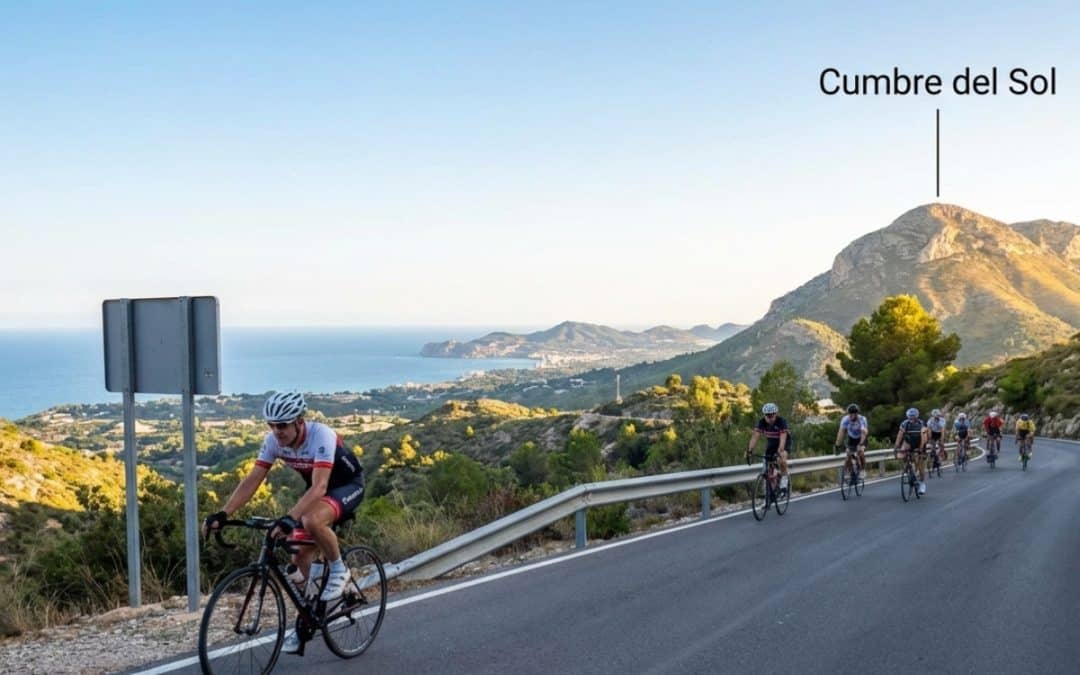
Cumbre del Sol isn’t just another hill. This climb hosted a stage finish in the 2015 Vuelta a España, which means you’re riding the same tarmac where professional racers pushed themselves to their limits. The climb starts steep and stays steep – there’s no gentle warm-up here. You’ll hit gradients of 18% before you even get halfway up, and the final sections near the red and white masts at the summit will test everything you’ve got.
The road itself is well-maintained, which is good because you’ll need all your concentration for the climbing. When you’re grinding up those 15% sections, you won’t want to worry about potholes or rough surfaces. The views? They’re incredible, but you might not notice them until you stop pedaling. Serra Gelada, Benidorm, Serra del Montgó – they’re all visible from up there, spread out below you like a map.
Why do cyclists love this climb so much? It’s short enough that you can repeat it if you’re training, but brutal enough that one attempt will leave you satisfied. Plus, it’s become a bit of a badge of honor among cyclists who visit the Costa Blanca.
Planning Your Route from Jávea to Cumbre del Sol
The classic loop starts in Calpe and covers about 110 kilometers total. But here’s the thing – you don’t have to do the whole loop. You can customize this road cycling route to fit your fitness level and time constraints. Some riders skip Cumbre del Sol entirely by staying on the CV-737, while others make it the main event and cut the rest short.
If you’re starting from Jávea, you’ll ride through some pretty typical Costa Blanca scenery first – semi-urban areas, residential developments, the usual stuff. The first 21 kilometers are relatively gentle, which gives you time to warm up before the real work begins. At Alcasar, you’ll reach a decision point: turn toward Cumbre del Sol or continue on the flatter route.
Route Options:
- Full 110km loop with all climbs
- 50-60km shortened version ending at Jávea
- Cumbre del Sol only with immediate return
- Skip the climb entirely via CV-737
I’ve ridden this route three times now, and each time I’ve done it slightly differently. The first time, I tried the full loop and bonked hard around kilometer 80. Second time, I skipped Playa de la Granadella and felt much better. Third time was the charm – I knew exactly what I was getting into.
Tackling the Cumbre del Sol Climb Itself
Those 4.5 kilometers are gonna hurt. The climb begins with a half-kilometer section that’s deceptively straightforward, then the road turns sharply right and the real climbing starts. You’ll pass a false summit – don’t get excited, there’s more to come. At the roundabout near a residential park marker, you might think you’re done. You’re not.
The final push includes a sharp left turn, and then you’re climbing toward those red and white masts that mark the actual summit. The gradient hits 19% in spots, which means if you’re not in your easiest gear, you’ll be walking. There’s no shame in that, by the way – I’ve seen plenty of experienced cyclists walking sections of this climb.
Climbing Strategy:
- Start conservatively – don’t blow up in the first kilometer
- Stay seated when possible to conserve energy
- Use the false summit as a mental checkpoint
- Save something for the final 500 meters
- Don’t forget to look at the views (when you stop)
The descent is steep but the road is wide, which helps. You’ll drop into Benitachell, and suddenly the landscape changes from exposed mountainside to residential areas. It’s a weird transition, honestly.
Beyond Cumbre del Sol: The Rest of the Loop
After you’ve conquered Cumbre del Sol, the route continues through some genuinely beautiful areas. Playa de la Granadella is worth the detour if you’ve got the energy – it’s a gorgeous beach that provides a nice mental break from all the climbing. Then you’ll roll through Jávea’s old town, which has those classic whitewashed buildings and cobbled streets that look great in photos.
The Montgó mountain pass comes next. It’s not as steep as Cumbre del Sol, but it’s longer, and if you’re tired from the earlier climbing, it’ll feel harder than it should. The Montgó massif dominates the skyline here – you can’t miss it. The climb takes you to the right of this massive rock formation, and the views down to the sea are spectacular.
From Dénia, the route turns inland and things get interesting. You’ll weave through small lanes past orange groves, which is a completely different experience from the coastal sections. The climbs up Teulada and Benimarco aren’t terrible, but they come at a point in the ride where your legs are already tired. The final descent into Calpe features dramatic views of Peñón de Ifach rock – it’s steep, so brake carefully.
When to Ride This Route
Spring and autumn are perfect. Summer gets brutally hot, especially on Cumbre del Sol where there’s almost no shade. I made the mistake of riding this in July once, and it was miserable. Winter is actually pretty good here – the weather’s milder than most of Europe, which is why professional teams come here for training camps.
Road conditions vary throughout the year, but generally the main roads are well-maintained. The sections through orange groves can have some rougher patches, but nothing that’ll damage your bike. Traffic is usually light on the climbs themselves, though the coastal sections can get busy during tourist season.
Seasonal Considerations:
- Spring (March-May): Perfect temperatures, fewer tourists
- Summer (June-August): Very hot, crowded, early morning rides recommended
- Autumn (September-November): Ideal conditions, professional teams training
- Winter (December-February): Mild but can be rainy, good for base miles
Why Professional Cyclists Choose This Area
Jávea has become a training paradise for pro cyclists, and it’s not hard to see why. The variety of terrain is incredible – you’ve got flat coastal roads for recovery rides, brutal climbs like Cumbre del Sol for intensity work, and everything in between. The Coll de Rates is probably the most famous training climb in the region, but Cumbre del Sol is right up there.
Professional teams come here because they can train year-round. The infrastructure is excellent – good roads, bike shops, repair services, and cycling-friendly accommodation. When you’re riding these routes, you’re literally on the same roads that prepare riders for Grand Tours. That’s pretty cool, even if you’re just a weekend warrior like me.
Practical Tips for Visiting Cyclists
Cumbre del Sol is only 20 minutes from central Jávea, which makes it super accessible. If you’re flying in without your bike, don’t worry – there are several bike rental shops in the area. Jávea Bike and Xàbia Bikes both get good reviews from other cyclists I’ve talked to. Bring your own helmet and cycling kit though – rental stuff never fits quite right.
The total elevation gain for the full 110-kilometer loop is over 1,500 meters. Cumbre del Sol itself accounts for 367 meters in just 3.8 kilometers, which gives you an idea of how steep it really is. Make sure you’re properly prepared – this isn’t a route for your first long ride of the season.
What to Bring:
- Two water bottles minimum (three in summer)
- Energy gels or bars
- Basic repair kit (spare tube, tire levers, CO2)
- Sunscreen (even in winter)
- Lightweight rain jacket (weather can change)
- Phone with route downloaded offline
- Emergency contact information
I always carry a bit more food than I think I’ll need. There aren’t many places to stop and buy supplies once you’re out on the route, especially if you’re riding early morning.
Alternative Routes and Variations
Not everyone wants to ride 110 kilometers, and that’s fine. You can create a much shorter route by riding from Jávea to Cumbre del Sol and back – that’s only about 40 kilometers total. Or you could do Cumbre del Sol plus the Teulada loop for a concentrated climbing session without the full coastal tour.
Some cyclists prefer to skip Cumbre del Sol entirely and focus on other cycling routes in the area. The Coll de Rates is longer and more consistent, which some people prefer over the short, brutal nature of Cumbre del Sol. The Jalon Valley offers scenic inland routes that are less challenging but still beautiful.
You could also combine this with other routes in the region. A coastal loop from Calpe to Denia works well, or if you’re feeling ambitious, try a long-distance ride from Alicante to Calpe. The options are pretty much endless.
Frequently Asked Questions
How difficult is the Cumbre del Sol climb for average cyclists?
It’s tough. If you can ride 100 kilometers on flat roads comfortably, you’ll probably survive Cumbre del Sol, but it won’t be easy. The 19% maximum gradient sections will hurt no matter how fit you are. I’d recommend having some climbing experience before attempting this route.
Can I rent a bike in Jávea for this route?
Yes, several shops offer bike rentals in the area. Make sure to book in advance during peak season (spring and autumn) because good bikes get reserved quickly. Most rental shops can provide route advice too.
Is the route safe for solo cyclists?
Generally yes, but take normal precautions. The roads are well-maintained and traffic is usually light on the climbs. Let someone know your route and expected return time. Carry a phone with emergency contacts. The descent from Cumbre del Sol is steep, so brake carefully.
What gear ratio do I need for Cumbre del Sol?
You’ll want your easiest gears. A compact chainset (50/34) with an 11-28 or 11-32 cassette is minimum. If you’ve got a 34/32 combo, you’ll be grateful for it on those 18-19% sections. Don’t try to be a hero with big gears.
Are there places to stop for food and water along the route?
There are cafes and shops in Jávea, Benitachell, and Dénia, but once you’re out on the climbs, there’s nothing. Carry enough water and food for the entire ride. I usually stop in Jávea for a quick coffee and refill before continuing.
How does Cumbre del Sol compare to other famous climbs?
It’s shorter than most famous climbs but steeper. Think of it as a mini Alpe d’Huez in terms of difficulty per kilometer. The Coll de Rates is longer and more consistent, while Cumbre del Sol is a short, sharp shock to your system.
What’s the best time of day to ride this route?
Early morning in summer (start by 7am to avoid heat), mid-morning in spring and autumn (9-10am start), and midday in winter. Avoid afternoon heat in summer – it’s genuinely dangerous on exposed climbs like Cumbre del Sol.
Do I need special insurance for cycling in Spain?
Travel insurance that covers cycling is recommended. Some credit cards include this, but check the fine print. If you’re renting a bike, the shop may offer insurance options. Medical care in Spain is good, but you’ll want coverage just in case.