by Ralf Tenbrink | 30, Mar 2026 | Cyclowax
How to Wax Your Chain in 10 Minutes: Fast Heating, Real Routine
Hot-waxing your chain has a reputation for being slow and complicated. In reality, once you’re set up, it can fit easily into a normal weeknight—about 10–15 minutes of actual hands-on time.
This guide shows you a realistic routine you can repeat over and over without feeling like you’ve taken on a second job.
Why hot wax doesn’t have to take ages
The first time you convert a chain to hot wax (deep cleaning, setting up a pot, etc.) takes longer. That’s normal.
But once you:
Have a dedicated wax pot,
Are using a fast-melting wax, and
Start with a chain that is already waxed and clean,
rewaxing becomes simple: warm, dip, hang, reinstall.
Most of the time the wax is heating, you’re free to do something else.
What “10 minutes” really means
When people say “10-minute chain wax,” they’re talking about active time:
Time your hands are actually touching the chain or wax.
There is also some passive time:
Waiting for the wax to melt fully,
Letting the chain cool and harden.
The key is to structure the routine so that passive time overlaps with things you’d do anyway—changing, showering, preparing food, or tidying the bike.
Think of it like this:
5–10 minutes of real work.
20–30 minutes of waiting where you’re doing other things.
Your weeknight waxing checklist
To keep it fast, have everything ready in one place:
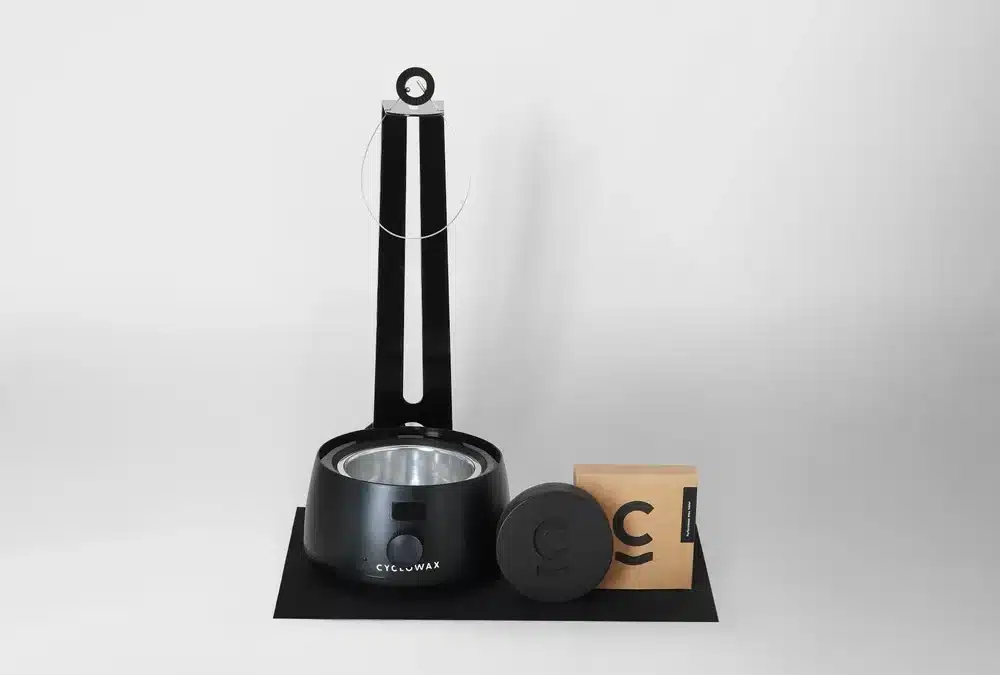
Dedicated wax pot / small slow cooker with wax already inside.
Quick-link tool (or chain tool) to remove and refit the chain.
Hook or hanger where the chain can drip and cool.
Clean rag for quick wipe-ups.
Optional: gloves and apron if you want to keep clothes spotless.
If you have to search the house for tools every time, the “10 minutes” turns into 30. A small, permanent waxing corner solves this.
Step-by-step: the 10-minute chain waxing routine
This assumes your chain is already converted to wax (clean and waxed from previous sessions). For a first-time conversion, use a full beginner guide.
Step 1 – Start heating the wax (1 minute)
Turn on your wax pot or heater so the wax starts melting.
You can do this as soon as you get home, before you even change.
Step 2 – Remove the chain (2 minutes)
Shift onto the smallest chainring and smallest cog.
Open the quick link and remove the chain from the bike.
Hang it on a hook or hold it ready.
Step 3 – Prepare the chain (1–2 minutes)
If it’s only lightly dusty, a quick shake or gentle wipe is enough.
No degreasing or heavy cleaning is required on a waxed chain.
Step 4 – Dip the chain in hot wax (2 minutes)
Once the wax is fully melted, lower the chain in.
Gently move it around for a minute or two so wax flows into all the links.
This is hands-on, but goes quickly once you’re used to it.
Step 5 – Let it drip and cool (passive time)
Lift the chain out and let excess wax drip back into the pot.
Hang it on a hook to cool and harden.
While it cools (10–20 minutes), you can shower, eat, or get your kit ready for the next ride.
Step 6 – Flex the links and refit (3–4 minutes)
Once cool, gently flex the chain to free up each link so it moves smoothly.
Refit the chain on the bike using the quick link.
Spin the cranks and shift through a few gears to make sure everything runs smoothly.
Total active time: around 10 minutes once you get into the rhythm.
How often you need to do this
Your waxing routine doesn’t need to happen after every ride.
In normal conditions, many riders re-wax:
Every 300–500 km on the road.
Every 2–3 big gravel rides in dusty conditions.
Every 1–2 weeks for commuting, depending on distance and weather.
That means your “10-minute routine” might only happen a few times per month—not every few days like oiling and scrubbing.
Common time-wasters to avoid
If hot wax feels slow, it’s usually because of one of these:
Setting everything up from scratch each time
Solution: keep a permanent waxing station with tools and pot ready.
Trying to deep-clean every time
Once the chain is converted to wax, you only need light prep before re-waxing.
Waiting next to the pot doing nothing
Treat wax melting and chain cooling as background time while you do other tasks.
Overthinking perfect timing
Don’t stress about precise minutes—melting and cooling for a bit longer is not a problem.
Remove these, and the process feels easy rather than like a “project.”
Making hot wax part of your normal riding rhythm
The secret is to tie waxing to an existing habit:
Always re-wax after a certain distance or number of rides.
Make it part of your “Sunday evening” routine or post-ride ritual.
Use a phone reminder or app to nudge you when the interval is up.
Once it becomes just another small step—like charging your lights or checking tyre pressure—hot wax stops feeling like extra work and starts feeling like the simplest way to keep your bike running beautifully.
A 10-minute routine every few weeks for a drivetrain that’s clean, quiet, fast, and long-lasting is a trade that most riders are very happy to make.
by Ralf Tenbrink | 30, Mar 2026 | 2026 Vuelta a España, Bike Tours
Ride the Vuelta 2026 Costa Blanca Queen Stage: GPX + Amateur Version
Key Takeaways
| Aspect | Details |
|---|
| Stage Profile | 187km from Villajoyosa to Alto de Aitana with 5,100m elevation gain |
| Difficulty Level | Queen stage with 6 categorised climbs including 20% gradients |
| Date | Sunday, August 30, 2026 |
| Key Climbs | El Miserat (Cat 1), Puerto de Tudons (Cat 2), Alto de Aitana finale |
| Amateur Options | Shortened 120km version with bailout points in Benidorm and Guadalest |
| Essential Stops | Guadalest village (water/food), Confrides (emergency services) |
| Best Starting Base | Villajoyosa or Benidorm for accommodation and bike rental access |
The Monster Stage That Defines the 2026 Vuelta
Stage 9 of the 2026 Vuelta a España stands as the race’s true queen stage. Why do riders fear this particular day more than any other? The numbers tell the story: 187 kilometres of punishing terrain with over 5,100 metres of climbing packed into a single day.
This isn’t just another mountain stage. Valencia News describes it as one of the hardest stages in Vuelta history, featuring six categorised climbs that will separate the wheat from the chaff. The route tackles two first-category ports and two second-category climbs before the brutal finale at Alto de Aitana.
Starting from the coastal town of Villajoyosa, riders face an immediate shock to the system. The early kilometres lull you into false security along the Mediterranean coastline, but this changes rapidly as the road turns inland. What makes this stage particularly savage is the relentless nature of the climbing – there’s barely a flat section once you leave the coast behind.
The Alto de Aitana stage guide breaks down exactly why this climb has earned its fearsome reputation among professional cyclists.
Professional Route Breakdown and GPX Data
Getting hold of accurate GPX data for Stage 9 proves tricky at this stage. Race organisers typically release detailed GPS files closer to the event date, and since we’re still months away from August 2026, official files remain under wraps.
However, experienced local cyclists have reconstructed the route based on official Vuelta stage information and decades of riding these same roads. The key sections break down as follows:
Kilometres 0-40: Rolling coastal terrain from Villajoyosa through Benidorm, gaining approximately 400 metres of elevation. This section feels deceptively easy – many amateur riders make the mistake of pushing too hard here.
Kilometres 40-85: The real climbing begins with El Miserat, the first Category 1 ascent. Expect sustained gradients of 6-8% with occasional ramps hitting double digits. The descent offers brief respite before Puerto de Tudons.
Kilometres 85-140: Puerto de Tudons (Category 2) followed by undulating terrain through the Valencia interior. This middle section catches riders off guard – it’s not flat, despite what the elevation profile suggests.
Kilometres 140-187: The finale. Alto de Aitana returns to the Vuelta after a ten-year absence, and it hasn’t gotten any easier. The final climb averages 7.2% but includes several sections exceeding 15%.
Professional teams spend months studying video footage and gradient data for stages like this. They know exactly where to position their climbers and when to launch decisive attacks.
The Killer Climbs: What You Need to Know
El Miserat stands as the stage’s first major test. This Category 1 climb stretches for 12.8 kilometres with an average gradient of 5.9%. Sounds manageable? The statistics lie. The climb includes several brutal ramps exceeding 12%, particularly in the final 4 kilometres where many riders crack completely.
Puerto de Tudons follows as the second major ascent. At 8.2 kilometres long with an average of 6.8%, this Category 2 climb often determines who survives for the finale. The road surface deteriorates in sections, adding technical challenges to the physical demands.
But it’s the finale that truly separates this stage from others. Alto de Aitana’s return after a decade means many current professionals have never raced up this beast. The climb spans 15.2 kilometres at an average gradient of 7.2%. Those percentages tell only part of the story.
The real killer comes in the final 8 kilometres – the Collado del Alguacil section. Here, gradients spike to 20% on multiple occasions. I’ve seen hardened climbers reduced to walking pace on these ramps. The road literally points skyward, and there’s nowhere to hide when your legs start screaming for mercy.
What makes Alto de Aitana particularly vicious is the false summit at kilometre 12. Many riders think they’ve conquered the beast, only to discover another 3 kilometres of punishment await. This psychological blow often proves more devastating than the physical demands.
Amateur-Friendly Route Modifications
Most recreational cyclists shouldn’t attempt the full professional route. The 5,100-metre elevation gain represents a serious challenge that requires months of specific preparation. Instead, here’s a sensible amateur version that captures the stage’s essence without the excessive punishment.
The 120km Amateur Version
Start in Benidorm rather than Villajoyosa, cutting 25 kilometres from the route. This modification eliminates some early rolling terrain while maintaining the stage’s character. From Benidorm, head inland toward Guadalest via the scenic CV-70.
Include El Miserat as your major climb – it’s essential for understanding what the professionals face. However, after conquering this beast, take the descent toward Guadalest rather than continuing to Puerto de Tudons. This cuts approximately 1,800 metres of elevation gain while preserving the authentic mountain experience.
The 80km Shorter Option
For cyclists wanting a taste of Vuelta terrain without the full commitment, start from Guadalest village. This picturesque mountain town sits at 400 metres elevation and provides easy access to the finale climb. The route becomes: Guadalest → Confrides → Alto de Aitana → return via the same route.
This version includes approximately 2,200 metres of climbing over 80 kilometres. It’s still a serious challenge but achievable for most cyclists with reasonable fitness levels. The Benidorm to Guadalest scenic ride offers similar terrain for training purposes.
Strategic Starting Points and Accommodation
Choosing the right base makes a massive difference for your Vuelta stage attempt. Villajoyosa works perfectly if you’re tackling the full professional route, but most amateur cyclists benefit from alternative starting points.
Benidorm: The Practical Choice
Benidorm offers the best combination of accommodation options, bike rental services, and route access. The city sits 15 kilometres into the professional route, making it ideal for shortened versions. Multiple bike rental shops in Benidorm stock quality road bikes suitable for mountain stages.
Hotel options abound, but cyclist-specific accommodation provides better value. Many establishments offer secure bike storage, early breakfast service, and packed lunches – essentials for tackling a monster stage like this.
Calpe: The Coastal Alternative
Calpe works well for cyclists planning multi-day adventures. The town’s cycling-friendly hotels cater specifically to serious riders. From Calpe, you can easily access Stage 9’s route while exploring other Costa Blanca climbs.
The drive to Villajoyosa takes 45 minutes, or you can start directly from Calpe and create your own version incorporating different terrain. Local knowledge proves invaluable here – speak to bike shop staff about route modifications that suit your ability level.
Guadalest: The Mountain Base
For the ultimate mountain experience, consider staying in Guadalest village itself. This stunning location puts you at the heart of the climbing action. Accommodation options are limited but atmospheric – you’ll wake up surrounded by the same peaks that challenge Vuelta professionals.
From Guadalest, you can attempt various segments of Stage 9 without committing to the full route. It’s also perfect for exploring other Costa Blanca mountain biking trails during your stay.
Essential Water Stops and Bailout Points
Proper planning separates successful stage attempts from disasters. Stage 9’s remote sections offer limited opportunities for resupply, making strategic water stops crucial.
Confirmed Water Stops
Benidorm (km 25): Multiple cafes, supermarkets, and bike shops. Stock up here if continuing inland – it’s your last major town for 60 kilometres.
Guadalest (km 65): Small village with basic facilities. The local cafe serves excellent coffee and simple food. Don’t expect extensive provisions, but you can refill bottles and grab energy bars.
Confrides (km 78): Tiny village with limited options, but there’s usually a small shop open during daylight hours. More importantly, this represents your last bailout point before the finale climb.
Emergency Bailout Routes
Smart amateur cyclists always plan escape routes. Stage 9’s remote terrain makes this planning essential rather than optional.
From Guadalest, you can descend back toward Benidorm via the CV-70. This route avoids the remaining major climbs while providing scenic mountain descents. Total distance from Guadalest back to Benidorm: 38 kilometres with predominantly downhill terrain.
From Confrides, the bailout becomes more complex. You’re committed to climbing at least part of Alto de Aitana or facing a very long descent back to civilisation. This is why most amateur attempts turn around at Guadalest unless specifically targeting the final climb.
The Polop to Callosa route offers similar mountain terrain with easier bailout options for training purposes.
Timing Your Attempt: Weather and Seasonal Considerations
Stage 9 takes place on August 30, 2026 – typically one of the year’s hottest periods in inland Valencia. Professional cyclists benefit from team support and early morning starts, but amateur riders face additional challenges.
Summer Heat Management
August temperatures routinely exceed 35°C in the valleys, while mountain peaks offer only modest relief. Starting at dawn becomes essential rather than optional. Plan to begin climbing El Miserat before 8 AM to avoid the worst heat.
Carry significantly more water than normal – at least 3 litres for the full route. The amateur version still requires 2+ litres, and mountain springs are unreliable during summer months. Heat exhaustion represents the biggest danger for recreational cyclists attempting this stage.
Alternative Seasons
October through April offers much better conditions for amateur attempts. October particularly shines – warm enough for comfortable climbing but without summer’s crushing heat. Many cyclists find March and April ideal, though afternoon thunderstorms can develop rapidly in the mountains.
Winter attempts are possible but require careful weather monitoring. Snow occasionally affects the higher elevations, particularly around Alto de Aitana’s summit. Always check local conditions before venturing into the mountains during cooler months.
The self-guided cycling tour planning guide provides detailed advice on seasonal considerations for Costa Blanca mountain cycling.
Training and Preparation for the Queen Stage
Attempting Stage 9 without proper preparation guarantees suffering. The professional route demands serious fitness, while even the amateur version requires targeted training.
Building Climbing Endurance
Most cyclists underestimate the demands of extended climbing. Stage 9 includes over 4 hours of sustained ascent for strong amateur riders – possibly 6+ hours for recreational cyclists. Your training must reflect these time demands.
Focus on rides lasting 4-6 hours with significant elevation gain. If you can’t access mountains, use indoor training with extended threshold intervals. But nothing truly prepares you for the real thing except actual mountain climbing.
Local Costa Blanca routes provide excellent training opportunities. The Jalon Valley scenic loop offers sustained climbing without Stage 9’s extreme gradients. Build your base fitness on routes like this before attempting the Vuelta stage.
Technical Preparation
Mountain cycling demands more than pure fitness. Gear selection becomes crucial on gradients exceeding 15%. Most amateur bikes carry insufficient low gearing for Stage 9’s steepest sections.
Consider a compact chainset (50/34) paired with an 11-32 or even 11-34 cassette. These combinations provide bailout gears for the steepest ramps. Don’t let pride prevent you from choosing appropriate gearing – walking sections of Alto de Aitana is embarrassing and dangerous.
Practice sustained climbing in the saddle. Many recreational cyclists rely too heavily on standing, which proves unsustainable on 15+ kilometre ascents. Learn to vary your position while maintaining efficient power transfer over extended periods.
Proper hot wax chain care becomes particularly important for mountain stages, where dirty chains can cost precious watts over extended climbs.
Frequently Asked Questions
When will official GPX files be released for Stage 9?
Race organisers typically release detailed GPS files 2-3 months before the event. Expect official GPX data to become available in May or June 2026. The official Vuelta website will host these files once available.
Can I ride the route year-round or only during summer?
The route remains accessible throughout the year, though conditions vary significantly. Summer brings extreme heat but guaranteed road access. Winter occasionally sees snow on Alto de Aitana’s upper sections. Spring and autumn offer the best conditions for amateur attempts.
What’s the minimum fitness level needed for the amateur version?
You should comfortably complete 100km rides with 2,000+ metres of climbing before attempting the amateur version. If you’ve never climbed for more than 90 minutes continuously, build more base fitness first. The full professional route requires significantly higher fitness levels.
Are there bike rental options specifically for mountain stages?
Yes, several Costa Blanca bike rental services offer road bikes with mountain-appropriate gearing. Book well in advance during peak season, and specify your need for low gearing when making reservations.
How does Stage 9 compare to other famous European climbs?
Stage 9’s accumulated difficulty rivals anything in the Tour de France or Giro d’Italia. The 5,100m elevation gain exceeds most single-day stages in these races. However, individual climbs like Alto de Aitana don’t match the sustained difficulty of Alpine or Pyrenean giants.
What happens if I get into trouble on the remote sections?
Mobile phone coverage can be spotty in the mountains, particularly between Guadalest and the Alto de Aitana summit. Always inform someone of your planned route and return time. Carry basic tools and know how to fix common mechanical issues. The safety tips for solo touring provide essential guidance for remote mountain cycling.
by Ralf Tenbrink | 30, Mar 2026 | Bike Tours, Self-Guided Cycling Tours in Costa Blanca
Self-Guided Cycling Tours in Costa Blanca: The Complete Packing List Guide
Key Takeaways
| Essential Category | Must-Have Items | Why It Matters |
|---|
| Cycling Clothing | 2 pairs bib shorts, 3 jerseys, cycling gloves | Comfort on 100km+ rides with proper chamois padding |
| Weather Layers | Light rain jacket, arm/leg warmers, fleece | Costa Blanca’s variable temperatures (10-30°C) |
| Repair Tools | Multitool, 3 spare tubes, mini pump | Sparse bike shops in mountain areas |
| Navigation | Smartphone + mount, offline GPS maps | Self-guided means no support vehicle |
| Sun Protection | SPF50+ sunscreen, lip balm, UV jerseys | Intense Mediterranean sun at altitude |
| Luggage Strategy | One 40L duffel + carry-on | Weight limits and daily transfers |
Getting ready for a self-guided cycling adventure in Costa Blanca? You’re in for an amazing ride through one of Spain’s most diverse cycling regions. But here’s the thing – packing for Costa Blanca isn’t like preparing for your local weekend rides. One minute you’re sweating on coastal flats, the next you’re climbing steep mountain passes where the temperature drops 15 degrees and the wind picks up.
I learned this the hard way on my first trip when I packed like I was going on a supported tour. Big mistake! Self-guided tours mean you’re on your own out there, especially in those remote mountain areas where bike shops are few and far between.
Understanding Costa Blanca’s Unique Cycling Demands
What makes Costa Blanca special for cyclists? It’s the incredible variety. You’ll ride from sea level beaches to mountain climbs over 1,500 meters, often in the same day. The weather can shift dramatically too – coastal areas might hit 30°C while mountain passes sit at 15°C with strong winds.
Tour operators typically provide basic gear like helmets, water bottles, and simple repair kits. They’ll also handle your luggage transfers between hotels. But don’t assume they’ve got everything covered. Most provide a multitool, one spare tube, and a basic pump – that’s it for repairs. When you’re 50km from the nearest bike shop on a mountain descent, you’ll want more than that.
The terrain demands respect too. Routes like Benidorm To Guadalest Scenic Ride include serious climbing with gradients that’ll test your gearing and your legs. Pack smart, because every gram counts when you’re grinding up those climbs.
Essential Cycling Gear That Can’t Be Compromised
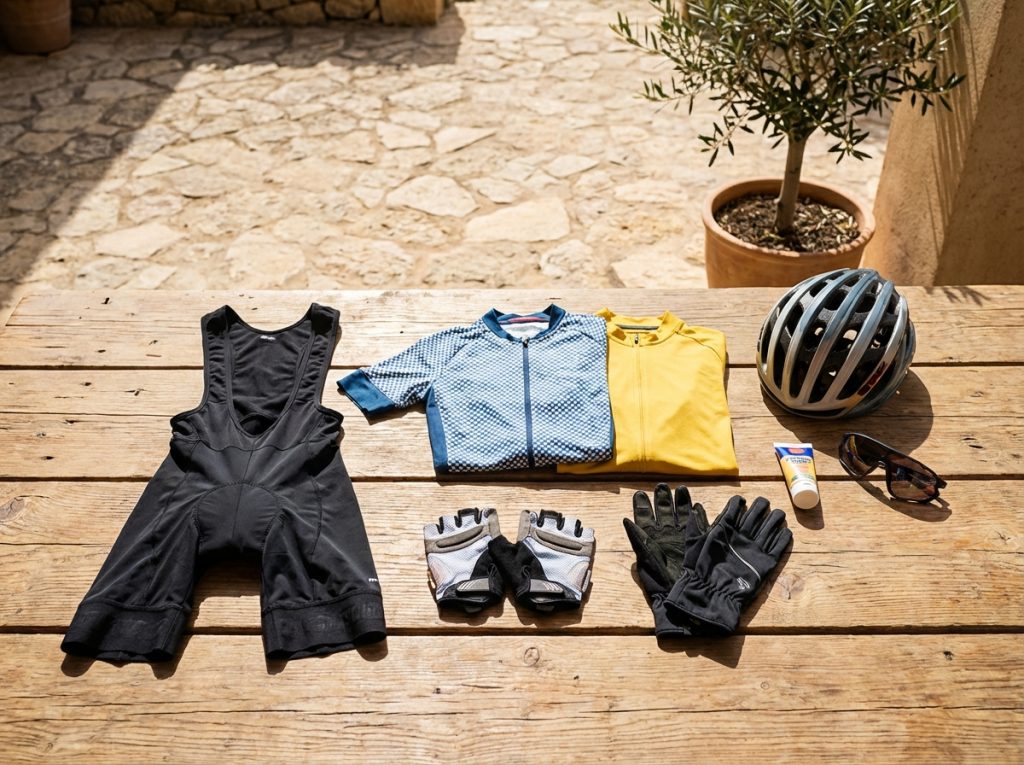
Let’s talk about the non-negotiables. First up – bib shorts with proper chamois padding. I can’t stress this enough. Regular athletic shorts might feel fine for your 20km weekend rides, but try wearing them on a 100km day with climbs like Cumbre del Sol and you’ll understand why every serious cyclist swears by bibs.
Pack two pairs minimum. Why two? Because you’ll want a clean pair while the other dries, and if one gets damaged or you have a chamois issue, you’re not stuck with regular shorts for the rest of your tour.
Your jersey selection matters just as much. Bring 2-3 breathable, quick-dry jerseys – preferably with good UV protection. Costa Blanca’s sun is intense, especially at altitude where you might not realize you’re getting burned until it’s too late. One long-sleeve jersey is worth its weight for sun protection on those exposed mountain climbs.
Cycling gloves are often overlooked but absolutely essential. Pack one fingerless pair for warm weather and one full-finger wind-resistant pair. Your hands take a beating on long rides, and blisters from poor grip can ruin your tour faster than a mechanical issue.
Don’t forget cycling shoes if you prefer clipless pedals. Most rental bikes come with basic platform pedals, but if you’re bringing your own pedals, make sure you have the right shoes to match.

Weather-Smart Layering for Variable Conditions
Costa Blanca’s weather variability is both a blessing and a challenge. Coastal temperatures range from 20-30°C, but head into the mountains and you might encounter 10-20°C with significant wind chill on descents.
Your rain jacket needs to be lightweight and packable – you don’t want bulk when it’s stuffed in a jersey pocket. Look for something with hi-vis elements too, because visibility matters when you’re navigating mountain roads with limited sight lines.
Arm and leg warmers are your secret weapons. They pack tiny but transform your comfort level when conditions change. I always bring two pairs because they’re so useful – you might want leg warmers for a cold morning start but arm warmers for a windy afternoon descent.
A lightweight fleece or vest works as your base layer for temperature regulation. Skip heavy jackets – they take up too much space and don’t offer the flexibility you need when conditions change rapidly.
For your extremities, pack waterproof overshoes (at least toe covers), a buff or neck warmer, and one pair of winter gloves. These small items make the difference between a comfortable ride and a miserable experience when weather turns.
Mechanical Preparedness for Remote Areas
Here’s where self-guided tours differ dramatically from supported ones. When you’re exploring routes like Mountain Biking Trails In Costa Blanca Finestrat Forest Trail, you might be hours from the nearest bike shop.
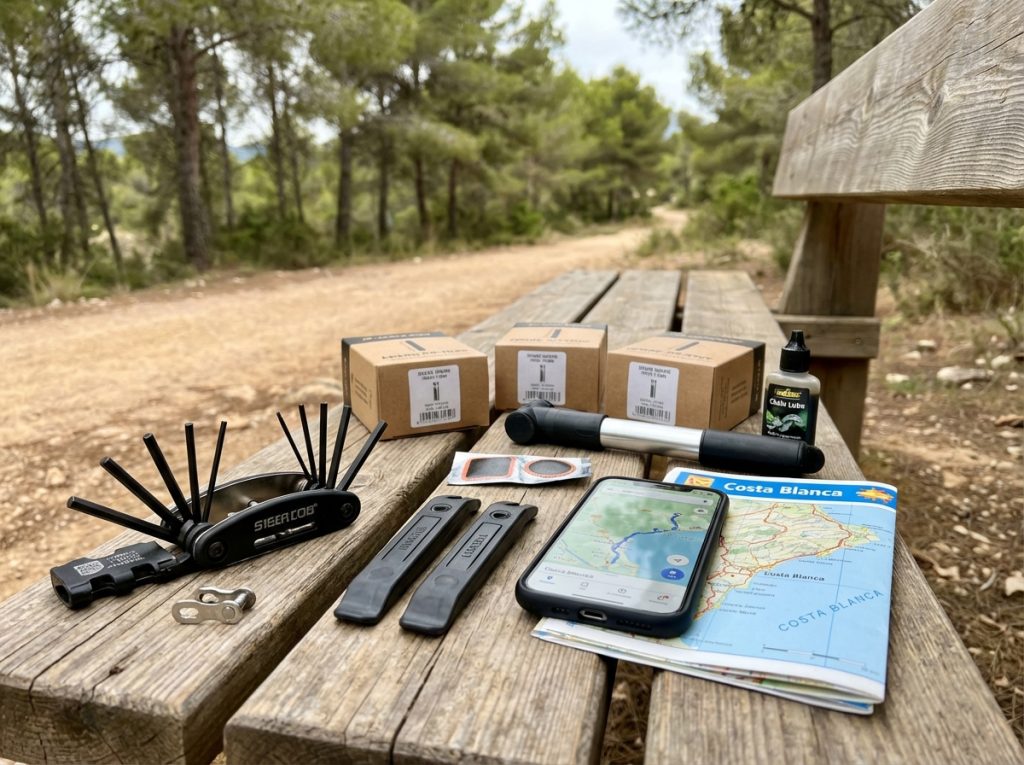
Your multitool should include all standard Allen keys plus a chain tool. Don’t rely on the basic tool provided by tour operators – it might not have everything you need for your specific bike setup.
Spare inner tubes are critical – pack 2-3 plus a patch kit. Costa Blanca’s roads can be rough, and mountain descents are hard on tires. Tire levers are essential too, because getting a tight tire off the rim with your hands alone is nearly impossible.
A quality mini pump or CO2 cartridges (bring 2-3) will save your ride. Test your pump with your valve type before you travel – there’s nothing worse than discovering incompatibility on a remote mountain road.
Chain lube and a quick-link are often overlooked but can save your tour if you have chain issues. Spare brake pads are worth considering too, especially for mountain routes where you’ll be doing a lot of braking on long descents.
Navigation and Safety for Independent Touring
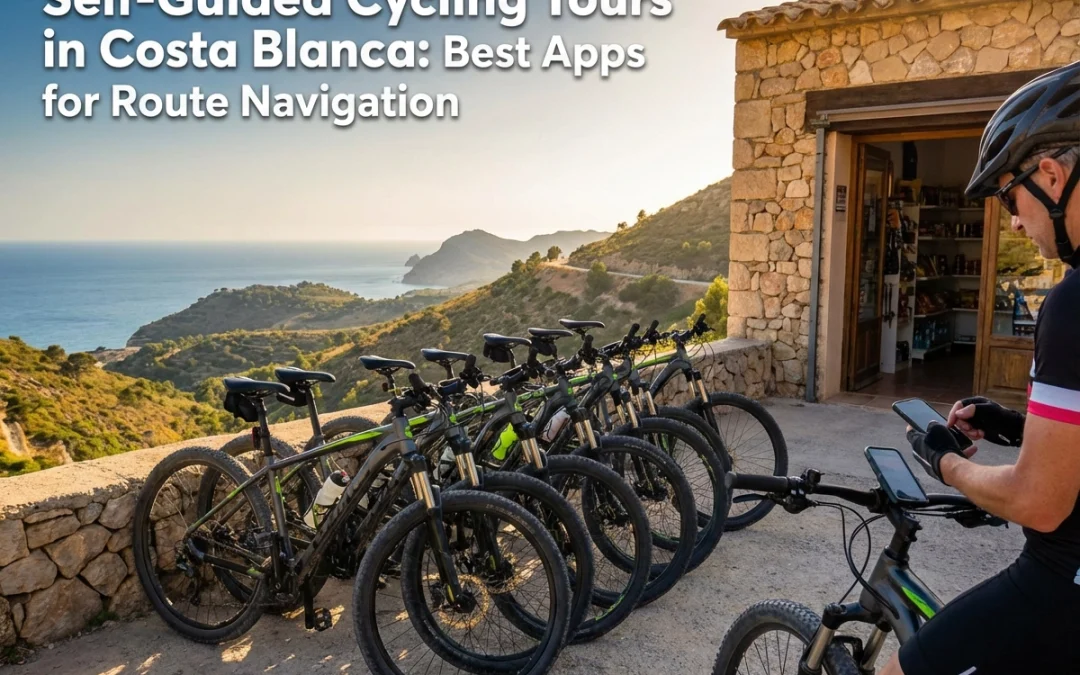
Self-guided means exactly that – you’re responsible for finding your way. Your smartphone with a quality mount is essential, but don’t rely on it exclusively. Download offline GPS tracks before you ride, because cell signal can be spotty in mountain areas.
Apps like Komoot work well for Costa Blanca’s marked and unmarked routes. Having backup paper maps isn’t old-fashioned – it’s smart planning for when technology fails.
Safety equipment should include hi-vis elements, especially if you might be riding into dusk. Basic lights can be lifesavers if you’re caught out longer than expected.
Most tour operators provide bike locks, but verify this beforehand. You’ll want security when stopping for meals or sightseeing breaks.
For routes that require extra planning, check out guides like Self Guided Cycling Tours In Costa Blanca How To Plan A Self Guided Tour for detailed preparation tips.
Personal Care Essentials for Mediterranean Cycling
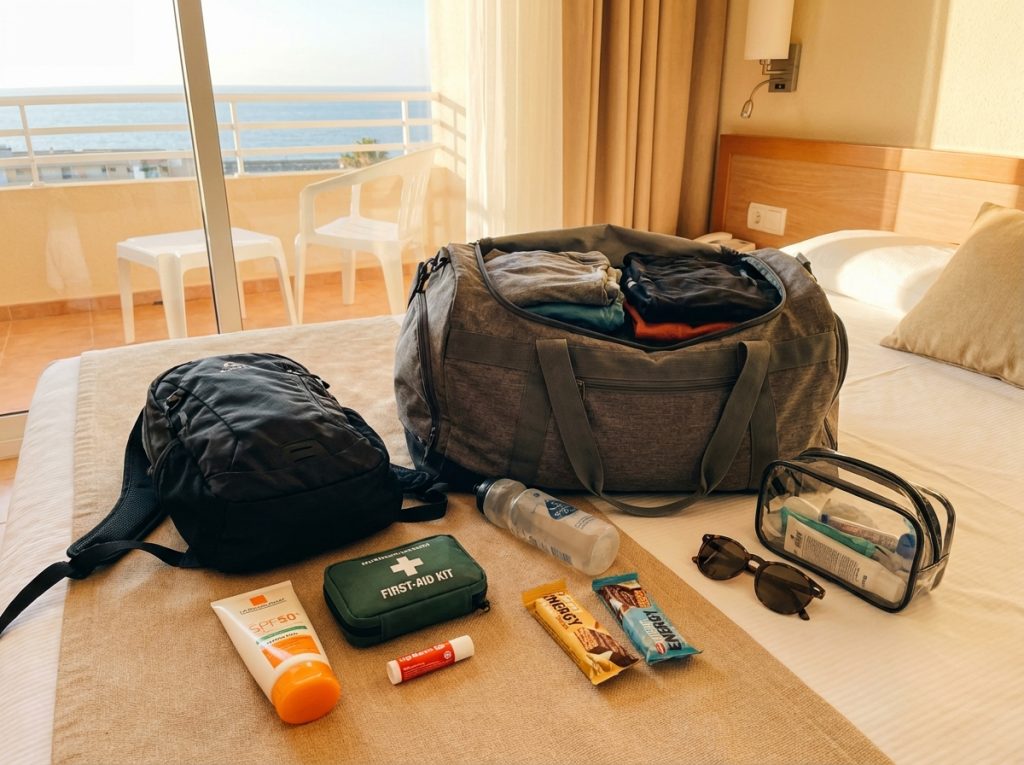
Costa Blanca’s intense Mediterranean sun demands serious protection. SPF50+ sunscreen isn’t overkill – it’s essential. Reapply every hour, especially on exposed climbs where the sun reflects off light-colored rocks.
Lip balm with UV protection is often forgotten but critical. Your lips are constantly exposed and burn easily at altitude.
Pack a compact first aid kit with basics: bandages, antiseptic wipes, pain relievers, and definitely chamois cream. Saddle sores can develop quickly on multi-day tours, and prevention is much easier than treatment.
Keep your personal medications in your carry-on bag, not your transferred luggage. If there’s a delay or mix-up with transfers, you’ll still have access to essential medications.
Consider the altitude factor too. Even moderate climbs in Costa Blanca can affect some riders, and the intense sun at elevation increases burn risk significantly.
Smart Off-Bike Clothing Strategy
Your evening wardrobe needs to be minimalist but functional. Stick to 2-3 days’ worth of casual clothing and plan to wash frequently. Most cycling-friendly accommodations have laundry facilities or quick-wash services.
Pack 2-3 comfortable t-shirts or polos – one short-sleeve, one long-sleeve for variety. One or two pairs of casual trousers or shorts will cover dinner and sightseeing needs.
Your sweater should be lightweight but warm enough for cooler mountain evenings. Coastal areas stay warm, but inland towns can get chilly after sunset.
Underwear and socks should be quick-dry materials – pack about 5 pairs of each. This gives you flexibility for washing schedules and ensures you always have dry options.
Footwear should be minimal: flip-flops for easy slip-on comfort and one pair of walking shoes for sightseeing. Don’t pack multiple shoe options – they take up too much space and weight.
A bathing suit is worth including, especially for coastal routes where you’ll have opportunities for Mediterranean swims between ride days.
Hydration and Nutrition Strategy
Dehydration hits fast in Costa Blanca’s heat and climbs. Most tour operators provide basic water bottles, but consider bringing insulated bottles for better temperature control.
Electrolyte tabs or powder are essential – you’ll lose significant sodium through sweat, especially on climbs. Pack enough for 4-6 servings per day.
Energy gels and bars should be brands you’ve tested at home. Costa Blanca’s climbing demands quick energy, and you don’t want to discover digestive issues mid-tour. The elevation gains on routes like the Inland Scenic Cycling Routes Jalon Valley Scenic Loop require proper fueling strategy.
Plan for about 1 liter of fluid per hour in Costa Blanca’s heat. That might sound like a lot, but it’s realistic for summer riding with significant climbing.
Luggage Optimization for Transfer Tours
Tour operators handle daily luggage transfers, but they have weight and size restrictions. Most limit bags to 20kg and prefer duffel bags over hard suitcases for easier handling.
Your main bag should be 40L maximum – enough for 5-7 days of cycling gear without excess bulk. Duffel bags work better than rigid suitcases because they’re easier for transfer staff to handle and fit better in support vehicles.
The daily carry bag is usually provided – typically a handlebar bag or small frame bag. This should hold your phone, snacks, basic tools, and emergency cash. Keep the weight under 2kg to avoid affecting bike handling.
Pack a small carry-on with essential items: one change of clothes, medications, important documents, and basic toiletries. This protects you if there are transfer delays or luggage mix-ups.
Label everything clearly. Tour operators usually provide luggage tags, but having backup identification helps prevent mix-ups between groups.
Travel Documents and Emergency Planning
Keep your passport or ID in a waterproof document pouch, along with copies of important papers. Travel insurance is mandatory, but make sure it specifically covers cycling activities.
Your insurance should include coverage for bike rental damage, medical evacuation, and trip interruption. Some policies exclude “adventure sports” which might include cycling.
Emergency contacts should include your home contact, tour operator, local emergency services (112 in Spain), and your insurance company’s 24-hour claim line.
Power banks and charging cables are essential for keeping your navigation devices running on long ride days. Pack universal adapters for European outlets.
Keep digital copies of important documents on your phone, backed up to cloud storage. If physical documents are lost or damaged, you’ll still have access to key information.
Store emergency cash in multiple locations – some in your daily bag, some in your main luggage, and some on your person. Small denominations are most useful for roadside stops or emergencies.
Frequently Asked Questions
What’s the most important item to pack for Costa Blanca cycling tours? Proper bib shorts with quality chamois padding are absolutely essential. Without them, long rides with significant climbing become uncomfortable or even impossible to complete.
How much clothing should I pack for a 7-day self-guided tour? Pack for 2-3 days and plan to wash regularly. This means 2 pairs of bib shorts, 3 cycling jerseys, and 2-3 days of casual evening wear. The key is quick-dry materials and frequent washing.
Do I need to bring my own bike repair tools? Yes, beyond the basics provided by tour operators. Pack additional spare tubes, a quality multitool, chain lube, and CO2 cartridges. Bike shops are scarce in mountain areas.
What’s the biggest packing mistake cyclists make for Costa Blanca? Overpacking and not preparing for variable weather. The temperature difference between coast and mountains can be 15°C or more, and weather changes quickly in mountain areas.
Should I bring clipless pedals and shoes? Only if you’re committed to using them and have the right shoes. Most rental bikes come with platform pedals, and clipless systems add complexity for luggage transfers.
How important is sun protection in Costa Blanca? Critical. Pack SPF50+ sunscreen, UV-protective clothing, and lip balm. The Mediterranean sun is intense, especially at altitude, and you’ll be exposed for hours during long rides.
by Ralf Tenbrink | 23, Mar 2026 | Bike Tours, Self-Guided Cycling Tours in Costa Blanca
Best Apps for Route Navigation
Key Takeaways
| Feature | Top Recommendation | Why It Matters |
|---|
| Best Overall App | Ride with GPS | Superior customization and browser-based planning |
| Best Offline Navigation | Komoot | Reliable offline maps for Costa Blanca’s remote areas |
| Best Community Routes | Bikemap | Millions of user-contributed routes with local insights |
| Best Free Option | Google Maps | Excellent bike routing with real-time hazard alerts |
| Best for Beginners | Cyclers | Personalized routes based on skill level and bike type |
| Essential Feature | Offline Downloads | Critical for signal-poor areas in Valencian mountains |
| Local Route Highlight | Blanca Bikes Café Trail | Popular 25km route through Parcent valley |
| Navigation Priority | Voice Guidance | Hands-free directions during challenging climbs |
Costa Blanca offers some of Spain’s most spectacular cycling terrain, from coastal paths hugging the Mediterranean to challenging mountain routes through Sierra de Aitana. With over 300 sunny days per year and 500 kilometers of coastline, this region has become a magnet for cycling enthusiasts. But what makes or breaks a self-guided tour isn’t just the weather – it’s having the right navigation tools to explore safely and efficiently.
Why do apps matter so much here? The terrain varies dramatically within short distances. You might start on flat coastal roads near Alicante and find yourself climbing 1000-meter peaks within an hour. GPS signal can drop in the mountain ravines, making offline capabilities essential. Plus, local knowledge about bike-friendly cafes, repair shops, and scenic detours can transform a good ride into an unforgettable experience.
Top Navigation Apps Ranked for Costa Blanca Cycling
Let me break down the best apps based on real-world testing in Costa Blanca’s unique conditions. Each has strengths that shine in different situations.
Ride with GPS takes the crown for serious cyclists who want complete control over their routes. The browser-based route builder lets you plot courses with incredible precision – crucial when navigating the winding roads around Guadalest or planning loops that avoid heavy traffic on the N-332 coastal highway. I’ve used it to create custom routes that hit three mountain villages in a single 80-kilometer ride, something that would be nearly impossible with basic mapping apps.
The community aspect proves invaluable too. Other cyclists share detailed routes with elevation profiles, surface conditions, and local tips. One popular route I discovered through their platform takes you from Benidorm to Guadalest with stops at traditional Spanish cafes that most tourists never find.
Komoot excels when you venture off the beaten path. Its topographic maps and offline capabilities saved me during a gravel ride through the Jalon Valley when cell service disappeared for 20 kilometers. The app’s voice navigation works brilliantly with bone conduction headphones, letting you hear traffic while getting turn-by-turn directions.
What sets Komoot apart is its point-of-interest database. It actually includes the famous Blanca Bikes Café route in Parcent – a 25-kilometer gem that winds through almond groves and offers stunning valley views. The app also suggests coffee stops, viewpoints, and even bike shops along your route.
Bikemap brings the power of community knowledge to your handlebars. With millions of user-contributed routes, you’ll find everything from family-friendly coastal paths to challenging mountain ascents. The surface information feature tells you whether you’re heading onto gravel, helping you choose the right bike and tires.
The premium version includes turn-by-turn navigation and offline maps, but even the free version provides route inspiration. I discovered several mountain biking trails in Costa Blanca through Bikemap that I never would have found otherwise.
Google Maps might seem basic, but don’t underestimate it for cycling in Costa Blanca. Its bike routing algorithm has improved dramatically, and the real-time hazard alerts can warn you about construction on busy roads like the CV-70 between Calpe and Altea. The elevation profiles help you prepare mentally for climbs, and the local business information ensures you’ll find that crucial café stop.
Cyclers deserves mention for its intelligent route personalization. Input your bike type, fitness level, and preferences, and it generates routes that match your capabilities. For beginners tackling Costa Blanca’s hills for the first time, this takes the guesswork out of planning.
Must-Ride Routes with App Recommendations
The Coastal Loop from Calpe to Denia showcases everything Costa Blanca offers cyclists. This 60-kilometer route combines flat coastal sections perfect for enjoying sea views with challenging climbs up to scenic viewpoints.
Starting from Calpe’s iconic Peñón de Ifach, you’ll pedal through traditional fishing villages and modern resort towns. The route includes several challenging sections where having reliable navigation becomes crucial. The climb out of Moraira toward Teulada gains 300 meters in just 5 kilometers – definitely not the place to take a wrong turn and add unnecessary climbing.
For this route, I recommend using Ride with GPS for the initial planning, then downloading the GPX file to both Komoot and Google Maps as backups. The coastal sections have excellent cell coverage, but the inland portions around Teulada can be spotty.
The Alicante to Calpe Long Distance Ride represents the ultimate Costa Blanca challenge. At 120 kilometers with over 1,800 meters of elevation gain, this epic journey takes you through five distinct climate zones and showcases the region’s incredible diversity.
The route begins in Alicante’s urban environment, crosses the salt flats near Santa Pola, climbs through the wine regions around Pinoso, and finishes with the dramatic coastal descent into Calpe. Navigation becomes critical through the middle sections where rural roads can confuse even experienced cyclists.
For routes of this magnitude, offline capability isn’t optional – it’s essential. I learned this the hard way during a ride through the mountains above Alcoy when my phone lost signal for 40 minutes. Having Komoot’s offline maps downloaded saved what could have been a very long and frustrating detour.
The Jalon Valley Scenic Loop offers something completely different. This 45-kilometer circuit takes you through traditional Spanish countryside, past almond groves, orange orchards, and whitewashed villages that seem frozen in time.
What makes this route special isn’t just the scenery – it’s the complete change of pace from coastal cycling. The roads are quieter, the gradients more forgiving, and the cultural experience more authentic. You’ll stop in villages where English isn’t spoken, making good navigation even more important.
I’ve spent countless hours testing these apps on Costa Blanca’s varied terrain, and the differences become apparent quickly. During a challenging ride from Villajoyosa to Relleu, Ride with GPS provided the most accurate elevation data, helping me pace the climb properly. The route included several unmarked turns that only appeared correctly in the GPS track – relying on road signs alone would have led to confusion.
Komoot’s strength showed during a gravel adventure in the Sierra de Aitana mountains. When the designated route became impassable due to recent rains, the app quickly recalculated an alternative that kept me on suitable surfaces. The voice navigation worked flawlessly even when wearing a helmet, and the offline maps meant no worrying about data charges while roaming.
One memorable test involved using different apps simultaneously during the same 80-kilometer ride from Benidorm to Guadalest and back. Google Maps excelled at finding bike-friendly routes through urban areas and provided excellent traffic updates. However, it struggled with the mountain sections where Komoot’s topographic data proved superior.
Bikemap surprised me with its community features. Other cyclists had marked road construction, dangerous intersections, and even the best viewpoints for photos. This crowdsourced information transformed a routine training ride into a mini adventure with discoveries I never would have made alone.
The battery usage comparison proved interesting too. Ride with GPS, running constantly with the screen on, consumed about 15% battery per hour. Komoot’s more efficient offline mode used roughly 8% per hour, while Google Maps fell somewhere between at 12% hourly consumption.
Essential Features for Costa Blanca Cycling
Offline capability tops every cyclist’s must-have list here. The mountainous terrain creates numerous dead zones where cell towers can’t reach. I’ve experienced signal drops lasting 30-45 minutes in areas like the Coll de Rates pass and the remote sections of the Villajoyosa to Relleu route.
Without offline maps, you’re essentially cycling blind through unfamiliar terrain. This isn’t just inconvenient – it can be dangerous when you’re on narrow mountain roads with limited visibility and no shoulder space.
Voice navigation becomes critical when tackling Costa Blanca’s challenging climbs. When you’re grinding up a 12% gradient with your heart rate in the red zone, the last thing you want is to stop and check your phone for directions. Quality voice guidance lets you focus on maintaining rhythm and staying safe.
The integration quality varies significantly between apps. Komoot’s voice prompts are clear and timely, giving you plenty of warning before turns. Google Maps sometimes provides directions too late, especially on fast descents where reaction time matters.
Elevation profiles and gradient warnings help tremendously with pacing and gear selection. Costa Blanca’s topology can be deceptive – what looks like a gentle rise on the map might be a leg-burning 15% ramp that requires completely different tactics.
Ride with GPS provides the most detailed elevation data, including grade percentages and maximum gradients for upcoming sections. This information proved invaluable during my first attempt at the notorious Port de Tudons climb near Callosa d’En Sarria.
Pro Tips for Self-Guided Costa Blanca Tours
Download multiple route options before heading out. Weather conditions, road closures, or simply feeling stronger or weaker than expected might require plan changes. Having alternatives already loaded prevents disappointing route modifications mid-ride.
I always prepare a shorter bailout option for longer routes. The Long Distance Ride Alicante to Calpe includes several towns with good train connections back to your starting point if needed.
Battery management becomes crucial on longer rides. Invest in a good power bank and consider using your phone’s power saving mode when navigating. Some cyclists prefer dedicated GPS devices, but smartphone apps offer much better route flexibility and community features.
Consider bringing backup navigation methods too. A basic cycling computer with breadcrumb navigation can get you home if your phone fails completely. It’s also worth writing down key turn directions and landmarks for critical route sections.
Weather integration shouldn’t be overlooked. Costa Blanca’s mountain weather can change rapidly, and what starts as a perfect sunny morning might turn into a challenging ride through fog or unexpected rain showers. Apps that integrate weather data help you make informed decisions about route timing and equipment choices.
The coastal winds here are particularly noteworthy. The famous “Levante” easterly wind can turn a pleasant coastal ride into a grueling battle, especially on exposed sections between Calpe and Altea. Planning your route direction based on wind forecasts makes a significant difference in ride enjoyment.
Safety Considerations and Emergency Features
Costa Blanca’s cycling popularity unfortunately doesn’t always translate to cycling awareness among drivers. The apps’ safety features become genuinely important, especially when navigating busy sections like the approach to Benidorm or the industrial areas around Elche.
Google Maps excels at highlighting bike lanes and safer route alternatives. It steered me away from a dangerous section of the N-332 near La Vila Joiosa during heavy traffic, routing me through quieter parallel roads that added only 2 kilometers but probably saved my life.
Emergency contact features deserve serious consideration. Several apps now include crash detection and can automatically alert emergency contacts if you stop moving suddenly. While these features can produce false alarms, they provide peace of mind when cycling solo in remote areas.
Komoot’s emergency contact sharing lets trusted friends track your location during longer rides. I use this feature religiously when tackling challenging mountain routes where help might be hours away if something goes wrong.
Route sharing capabilities also enhance safety. Sharing your planned route with accommodation hosts, local bike shops, or cycling buddies means someone knows where to look if you don’t return as expected. Most apps make this process simple with one-click sharing options.
For cyclists staying in one of the cycling friendly accommodations in Calpe, showing your route to hotel staff can provide valuable local insights about current road conditions or alternative routes.
2026 App Updates and Future Features
The cycling app landscape evolves rapidly, with 2026 bringing several exciting developments that benefit Costa Blanca cyclists specifically. Artificial intelligence integration is becoming more sophisticated, with apps learning your preferences and fitness patterns to suggest increasingly personalized routes.
Komoot’s latest AI features analyze your riding history and automatically suggest routes matching your current fitness level and preferred scenery types. After tracking several months of Costa Blanca rides, it now recommends routes with the perfect balance of coastal views and manageable climbing.
Enhanced weather integration represents another significant improvement. Modern apps don’t just show current conditions – they predict how weather changes will affect your specific route and timing. This proves particularly valuable in Costa Blanca’s microclimates where coastal conditions can differ dramatically from mountain weather just 20 kilometers inland.
Real-time surface condition reporting is expanding too. Cyclists can now report road conditions, construction, or hazards directly through apps, creating a constantly updated database of route intelligence. This crowdsourced information proves invaluable for avoiding problems before they ruin your ride.
Electric bike integration continues improving as well. Apps now include charging station locations, battery range calculations based on terrain, and even suggestions for e-bike friendly routes that maximize range while still providing engaging cycling experiences.
The integration with local services is expanding beyond basic points of interest. Some apps now connect directly with bike shops for maintenance scheduling, restaurant reservations, or even emergency mechanical support – particularly useful when you’re far from your base and need professional help.
Frequently Asked Questions
Which app works best without internet connection in Costa Blanca mountains? Komoot provides the most reliable offline navigation for mountain areas. Download maps for the entire Costa Blanca region before heading out, as signal drops are common in valleys and remote mountain sections. The offline maps include detailed topographic information crucial for mountain navigation.
Can I use these apps with a Spanish phone plan or do I need special data packages? Most Spanish phone plans include sufficient data for GPS navigation, but be aware that constant screen-on navigation consumes significant battery and data. Download offline maps when connected to WiFi to minimize data usage during rides.
How accurate are elevation profiles for Costa Blanca’s steep climbs? Ride with GPS provides the most accurate elevation data, often within 5-10 meters of actual gradients. This accuracy proves crucial for pacing efforts on challenging climbs like the Port de Tudons or the ascent to Guadalest castle.
Do these apps work with cycling computers and heart rate monitors? Yes, most apps integrate with popular cycling computers and fitness devices. Ride with GPS and Komoot both sync with Garmin devices, while smartphone apps typically connect via Bluetooth to heart rate monitors and power meters.
What’s the best app for finding bike-friendly cafes and rest stops? Komoot excels at finding cycling-specific points of interest, including the famous bike cafes scattered throughout Costa Blanca. The app includes user reviews and photos of stops, helping you plan rest breaks at cyclist-friendly locations.
How do I handle navigation if my phone battery dies during a long ride? Always carry a power bank on rides longer than 50 kilometers. Additionally, write down key navigation points and carry a basic paper map as backup. Some cyclists use dedicated GPS devices as secondary navigation systems.
Are there specific apps for mountain biking versus road cycling routes? While most apps handle both disciplines, Komoot provides superior trail information for mountain biking, including surface conditions and technical difficulty ratings. For road cycling, Ride with GPS offers better traffic-aware routing and performance analysis features.
How far in advance should I plan routes for Costa Blanca cycling tours? Plan major routes at least 24-48 hours in advance to allow time for offline map downloads and route alternatives research. Check local cycling forums and recent user reviews for current road conditions, especially during construction season from October through March.
by Ralf Tenbrink | 23, Mar 2026 | Cyclowax
Never Clean Your Chain Again’? What That Actually Means
You’ve probably seen the claim: “Hot wax means you never have to clean your chain again.”
It sounds like marketing hype. And honestly, it makes people roll their eyes. But there’s real truth behind it—if you understand what it’s actually replacing.
This article cuts through the exaggeration to show you exactly how hot wax changes your chain maintenance from weekly scrubbing battles to simple, predictable re-waxing.
The promise that sounds too good to be true
Traditional chain maintenance follows a vicious cycle:
- Lube the chain with oil or drip wax
- Ride a few days/100km
- Dirt sticks to the wet/sticky lube
- Degrease + scrub everything
- Repeat from step 1
Most riders spend more time fighting black grease than actually riding. Hot wax breaks this cycle completely.
The promise isn’t “zero maintenance.” It’s “no more scrubbing.” You trade messy cleaning sessions for occasional re-waxing.
Traditional oil maintenance vs hot wax reality
Here’s what changes:
| Maintenance task | Oil/Drip lube | Hot wax |
|---|
| Weekly cleaning? | ✅ Required | ❌ Never |
| Degreaser use | Every 1-2 weeks | One-time setup only |
| Scrub chain/cassette | Constant battle | Never |
| Time per “service” | 30-60 min scrubbing | 10-15 min re-wax |
| Frequency | Every ride or two | Every 300-500km |
| Mess level | High (grease everywhere) | Low (contained wax pot) |
The math: If you ride 200km/week, oil means 2-3 hours/month scrubbing. Hot wax means 30 minutes/month total maintenance.
What “no cleaning” actually replaces
“Never clean your chain again” means you stop these tasks forever:
- ✅ No more chain cleaner brushes
- ✅ No more scrubbing cassette with a toothbrush
- ✅ No more degreaser down the drain
- ✅ No more wiping black paste off frame/legs
- ✅ No more cursing at greasy quick links
What you do instead:
- Re-wax every few weeks (dip chain → hang → ride)
- Wipe exterior occasionally if visually dirty (rare)
The chain stays “visually clean” much longer because dry wax repels dirt instead of trapping it.
Your new simple maintenance calendar
Here’s what it looks like for typical European riders:
Weekend road rider (150km/week):
Week 1: Fresh wax → ride
Week 2: Ride
Week 3: Quick re-wax → ride
Repeat
Daily commuter (15km/day):
Monday-Friday: Ride
Weekend: 10-min re-wax
Gravel rider (dusty conditions):
Big ride → check chain feel → re-wax if noisy → ride
Total time: Less than 1 hour/month vs 3-4 hours/month scrubbing oil.
Why shops love waxed chains too
Bike shops notice the difference immediately:
- Cleaner workshops (no black grease on workstands)
- Happier customers (chains actually stay clean)
- New revenue stream (waxing service, ~€20-30)
- Fewer warranty drivetrain claims (components last longer)
Many shops now offer:
- Pre-waxed chain installation
- Re-wax service every 300-500km
- Waxing workshops for customers
Ask your local Spanish bike shop: “¿Ofrecen encerado de cadenas con Cyclowax?”
The one-time setup investment
The only “work” is your first chain prep:
- Option A: Buy pre-waxed chain (€60-80) → instant clean
- Option B: Deep-clean existing chain + wax (€30-40 kit)
After that? Just re-waxing. No scrubbing ever again.
Real cost math (1 year, 5,000km):
Oil routine: 12x degreaser + 12x lube + 24h labor = €120+
Hot wax: 1x kit + 12x wax blocks = €80 total
Savings: €40 + 20h of your time
Bottom line: dramatically less scrubbing
The “never clean again” claim translates to:
- 95% less scrubbing time
- No more chemical degreasers
- Cleaner bike, workshop, clothes
- Longer-lasting components
Hot wax doesn’t eliminate maintenance. It replaces a dirty, endless cycle with a clean, predictable routine.
If you’re tired of the grease war, your next chain service could be your last scrubbing session ever.
Ready to try? Start with Cyclowax waxing kits or ask your local shop for pre-waxed chain service.