by Ralf Tenbrink | 27, Jun 2025 | Costa Blanca News, Road Cycling Routes in Costa Blanca
Inland Scenic Cycling Routes: Jalon Valley Scenic Loop
Key Takeaways
- The Jalon Valley Scenic Loop is a 60km cycling route starting from Xalo (Jalon)
- The route features moderate difficulty with some challenging climbs, especially near Sierra de Bernia
- Best time to ride is spring (March-May) and autumn (September-November) when temperatures are mild
- The loop passes through quiet villages, vineyards, almond groves, and offers stunning mountain views
- Road conditions are generally good with low traffic, making it ideal for recreational cyclists
- Allow 3-4 hours to complete the route, depending on fitness level and number of stops
Now let’s dive into this amazing cycling route that I’ve personally ridden dozens of times!
Route Overview and Starting Point
The Jalon Valley Scenic Loop is one of the most beautiful inland cycling routes you’ll find on the Costa Blanca. I’ve been cycling this route for over 15 years, and it still takes my breath away every single time! The loop starts in the charming town of Xalo (also called Jalon), which sits about 25km inland from the Mediterranean coast.
This circular route is roughly 60km long and takes you through a hidden valley nestled between La Vall d’Ebo and Vall de Pop. What makes this route so special? It’s the perfect mix of challenging climbs, thrilling descents, and jaw-dropping scenery that changes with the seasons. Plus, the roads are quiet – you’ll often see more cyclists than cars!
The starting point is easy to find – just head to the main square in Jalon where you’ll find plenty of parking if you’re arriving by car. There’s also a few bike shops in town where you can rent bikes or get any last-minute supplies. I always recommend starting early in the morning, especially during summer months, to avoid the midday heat.

Route Details and Key Waypoints
From Jalon, the route heads north toward Alcalali, a tiny village with a distinctive tower. The road gently climbs as you leave Jalon, giving your legs a nice warm-up before the more challenging sections. After Alcalali, you’ll continue toward Parcent, where the scenery starts to change from vineyards to more mountainous terrain.
The key waypoints along this scenic loop include:
- Jalon (Xalo) – Starting point with cafes and bike shops
- Alcalali – Small village with historic tower
- Parcent – Gateway to the mountains
- Vall d’Ebo – Remote valley with stunning views
- Castell de Castells – Mountain village with ancient history
- Tarbena – Highest village on the route
- Bolulla – Charming village with narrow streets
- Xalo – Return to starting point
One thing I’ve learned from riding this route so many times is that each village has it’s own character. Parcent has a lovely square with a fountain where you can fill your water bottles. Vall d’Ebo feels like stepping back in time with its traditional architecture. And Tarbena? The views from up there are simply incredible – on a clear day, you can see all the way to the Mediterranean!
The route forms a natural loop, bringing you back to Jalon where you can celebrate with a glass of local Moscatel wine (after your ride, of course!). The total distance is about 60km, but don’t let that fool you – the elevation changes make it feel longer.
Elevation Profile and Difficulty Level
Let’s talk about the climbs, cause there’s no way to sugar-coat it – this route has some challenging sections! The total elevation gain is approximately 1,200 meters, which puts this firmly in the moderate-to-challenging category.
The most significant climb comes after Parcent as you head toward the Sierra de Bernia mountains. This section includes a 5km climb with an average gradient of 5-6%, with some sections hitting 8-9%. It’s not Tour de France level, but it’ll definitely get your heart pumping! The eastern approach to Sierra de Bernia is particularly steep, so pace yourself.
Here’s a breakdown of the main climbs:
- Jalon to Alcalali: Gentle warm-up (2-3% gradient)
- Parcent to Vall d’Ebo: Moderate climb (5-6% average)
- Approach to Sierra de Bernia: Challenging (sections of 8-9%)
- Tarbena descent: Technical with switchbacks
I remember my first time tackling the Sierra de Bernia climb – I wasn’t prepared for how long it would feel! But the reward at the top is worth every drop of sweat. The panoramic views of the valleys below are simply stunning, and the descent that follows is exhilarating.
For difficulty level, I’d rate this route as moderate for experienced cyclists and challenging for beginners. If your not used to climbing, you might want to build up to this route with some shorter rides first. The good news is that there are plenty of places to stop and rest along the way.
Scenic Highlights and Natural Attractions
The scenery along the Jalon Valley Scenic Loop is what makes this route truly special. The landscape changes dramatically throughout the year, offering a different experience each season.
In late January and February, the almond trees burst into bloom, covering the valleys with a blanket of white and pink blossoms. It’s like cycling through a painting! Spring brings wildflowers that dot the hillsides with splashes of color. Summer offers lush green vineyards, while autumn transforms the landscape with golden and amber hues.
Some of the scenic highlights include:
- Jalon Valley vineyards – Rows of grapevines stretching across the valley floor
- Almond groves – Particularly beautiful when in bloom
- Sierra de Bernia mountains – Dramatic rocky peaks that dominate the skyline
- Hidden valleys – Secluded areas that feel untouched by time
- Traditional farmhouses – Scattered throughout the countryside
- Olive terraces – Ancient terraced hillsides with gnarled olive trees
One of my favorite spots is a viewpoint just after the main climb out of Parcent. There’s a small area to pull over, and the view back down the valley is absolutely breathtaking. I’ve taken countless photos there, but none of them really capture how amazing it feels to stand there after conquering the climb.
The natural environment here is Mediterranean perfection – pine forests, rocky outcrops, flowing streams (depending on the season), and an incredible variety of birds and wildlife. Keep your eyes peeled for eagles soaring overhead – I’ve spotted them several times on clear days.
Road Conditions and Traffic Levels
Good news for cyclists – the roads on this route are generally in excellent condition! The main roads connecting the villages are well-maintained with smooth asphalt and clear markings. There are a few sections of narrower country roads, but even these are typically well-surfaced.
Traffic is one of the biggest advantages of this inland route compared to coastal rides. These roads see very little traffic, especially on weekdays. Weekends can be slightly busier with local traffic and other cyclists, but nothing compared to the busy coastal roads. The locals are used to seeing cyclists and are generally very respectful.
Here’s what to expect regarding road conditions:
- Main connecting roads: Excellent condition, good width
- Village sections: Sometimes narrower but well-maintained
- Descents: Good visibility on corners, some gravel possible after rain
- Signage: Clear directional signs to villages
I’ve found that the best time to ride in terms of traffic is early morning (before 10am) when the roads are almost deserted. The section between Jalon and Alcalali can get a bit busier as it’s a main connecting road, but after that, you’ll often have the roads to yourself.
One tip from my experience – be extra cautious on the descents after rain. Occasionally there can be small amounts of gravel washed onto the road, particularly on the tighter corners. Nothing dangerous if you’re aware of it, but worth keeping in mind.
Practical Tips for Cyclists
After countless rides on this route, I’ve gathered some practical tips that might help make your experience even better:
Best Time to Ride
The ideal months for this route are March to May and September to November. Summer (June-August) can be extremely hot, with temperatures often exceeding 30°C (86°F). If you must ride in summer, start very early! Winter rides (December-February) can be beautiful but bring layers as mornings can be chilly.
Water and Refueling
There are limited places to refill water bottles, so start with at least 2 full bottles. The villages of Parcent, Castell de Castells, and Tarbena all have public fountains where you can refill. For food, I recommend:
- Bar Aleluya in Jalon – Great for coffee before starting
- La Plaza in Parcent – Nice terrace for a mid-ride snack
- Casa Pinet in Tarbena – Amazing homemade food if you want a proper stop
Technical Considerations
- The descent from Tarbena has some technical sections with tight switchbacks
- Bring spare inner tubes and basic tools – bike shops are scarce once you leave Jalon
- Mobile phone coverage is generally good but can be patchy in some valley sections
One of my favorite spots to take a break is at the highest point after climbing from Parcent. There’s a small clearing with incredible views – perfect for catching your breath and taking some photos. I always pack some local almonds and dried fruit for a quick energy boost at this spot.
If your planning to ride this route, I’d recommend allowing 3-4 hours of cycling time, plus additional time for stops and photos. Trust me, you’ll want to stop for photos!
Comparing to Other Jalon Valley Routes
The Jalon Valley area offers several fantastic cycling routes, but how does this scenic loop compare to others? Having ridden most of the routes in this region, I can offer some perspective.
The Jalon Valley Scenic Loop stands out for its perfect balance of challenge, scenery, and accessibility. Here’s how it compares to other popular routes:
Jalon to Vall de Ebo Direct Route
- Shorter at around 30km
- Less elevation gain
- Misses some of the most scenic sections
- Good option if you’re short on time or energy
Jalon to Sierra de Bernia Loop
- More challenging with steeper climbs
- More technical descents
- Spectacular mountain scenery
- Better for experienced cyclists
Jalon to Guadalest Route
- Similar distance but more elevation
- Includes the famous Coll de Rates climb
- More popular with cycling groups
- Higher traffic levels near Guadalest
What makes the Jalon Valley Scenic Loop special is that it offers a bit of everything – vineyard views, mountain passes, quaint villages, and challenging but not extreme climbs. It’s the route I most often recommend to visitors who want to experience the “real” Costa Blanca away from the tourist areas.
I’ve noticed that many cycling holidays in the area include this loop or variations of it in their itineraries, which speaks to its popularity and appeal. If you’re staying in the area for several days, ride this loop first to get a good overview of the region, then explore some of the more specialized routes.
Seasonal Considerations and Weather
The Costa Blanca is famous for its climate – over 300 days of sunshine per year! But that doesn’t mean all days are equal for cycling this route. The seasonal variations dramatically affect your experience on the Jalon Valley Scenic Loop.
Spring (March-May)
This is my absolute favorite time to ride this route. The temperatures are perfect (15-25°C/59-77°F), the almond blossoms might still be visible in early March, and wildflowers carpet the hillsides. The landscape is lush and green following the winter rains. One caution – spring can occasionally bring unexpected rain showers, so check the forecast.
Summer (June-August)
Summers are hot, with temperatures regularly exceeding 30°C (86°F). If you ride in summer, start very early (6-7am) to avoid the midday heat. Carry extra water and use plenty of sunscreen. The advantage of summer is the long daylight hours and virtually guaranteed dry weather. The vineyards are in full leaf during this time, creating beautiful green valleys.
Autumn (September-November)
Another excellent time for this route. Temperatures cool down to comfortable levels, and the autumn colors begin to appear. September can still be quite warm, while November might require an extra layer in the morning. The grape harvest happens in early autumn, so you might see activity in the vineyards.
Winter (December-February)
Winter riding is underrated! Daytime temperatures typically range from 12-18°C (54-64°F) – perfect for cycling. The mountains might have snow on the highest peaks, creating spectacular backdrops. Morning rides can be chilly, so layers are essential. The almond blossoms start appearing in late January, transforming the valleys.
I’ve ridden this route in all seasons, and each offers something special. One winter ride stands out in my memory – the mountains had a dusting of snow, the air was crystal clear, and we had the roads completely to ourselves. Magical!
Frequently Asked Questions
How long does it take to complete the Jalon Valley Scenic Loop?
Most recreational cyclists complete the route in 3-4 hours of riding time. Adding stops for photos, refreshments, and rest, you should plan for 4-6 hours total.
Is the route suitable for beginners?
This route is best for intermediate cyclists with some experience of hills. Beginners might find the climbs challenging but could still enjoy it by taking plenty of breaks. E-bikes are also a great option for less experienced riders.
Where can I rent a bike for this route?
Several bike rental shops in Jalon and nearby towns offer quality road bikes. Booking in advance is recommended, especially during peak season.
Are there guided tours available for this route?
Yes, several local companies offer guided tours of the Jalon Valley Scenic Loop. These typically include a guide, support vehicle, and often lunch at a local restaurant.
What type of bike is best for this route?
A road bike or endurance bike is ideal. The roads are well-paved, so you don’t need a gravel or mountain bike. Make sure your bike has appropriate gearing for climbs.
Is there public transportation to get to Jalon?
Limited bus services connect Jalon to coastal towns like Denia and Calpe. However, schedules are infrequent, so check in advance. Many cyclists drive to Jalon and park in the town.
What should I bring on this ride?
Essential items include: at least 2 water bottles, energy snacks, spare inner tube and basic tools, sunscreen, cycling glasses, phone with offline maps, and some cash for village stops.
Are there any dangerous sections on the route?
The route is generally safe, but the descent from Tarbena requires caution due to some tight switchbacks. After rain, watch for occasional gravel on corners.
by Ralf Tenbrink | 23, Jun 2025 | Bike Tours, Costa Blanca News
Safety Tips for Cycling Alone in Costa Blanca
Key Takeaways
| Topic | What to Know |
|---|
| Helmets | Mandatory for all cyclists outside built-up areas from October 2026, no exemptions |
| Overtaking | Drivers must keep 1.5m clearance and reduce speed by 20 km/h on interurban roads |
| Lighting | Front and rear lights required at night and in tunnels; missing lights carries a fine of up to €200 |
| Road position | Riding centrally in the lane is safer and legally supported, not just tolerated |
| Emergencies | Spain’s emergency number is 112; operators generally speak English |
| Water | Some mountain sections run 30km between refill points; carry at least two bottles |
Cycling alone in the Costa Blanca is generally safe: locals cycle regularly, drivers are used to sharing the road, and the region has well-maintained roads throughout. The main risks for solo riders are the same ones that catch out any touring cyclist anywhere: being caught without the right equipment, misjudging a route’s difficulty, or not having a clear plan for what to do if something goes wrong, with no one else there to help. This guide covers Spain’s current traffic rules for cyclists (which changed substantially in 2026), the equipment worth carrying, and what to do in an emergency.
Spain’s 2026 Traffic Rules for Cyclists
Spain’s traffic regulations for cyclists changed significantly this year under Real Decreto 518/2026, with the cycling-specific provisions taking effect from October 2026. Full detail is in our dedicated article on the 2026 rules; the parts that matter most for solo touring:
Helmets are now mandatory for all cyclists on any road outside a built-up area, with no exemptions for heat, gradient, or anything else. This is a real change from the previous rule, which only required helmets for riders under 16. If you’re touring on interurban roads and mountain passes, which is most of what a Costa Blanca cycling holiday involves, wear a helmet before you leave town.
Overtaking rules got significantly tighter. On interurban roads, a driver overtaking a cyclist must now reduce speed by at least 20 km/h below the limit, keep at least 1.5 metres of lateral clearance, and change lanes completely where the road has more than one lane in each direction. A group of cyclists is treated as a single unit for overtaking purposes, so a driver can’t thread through gaps in a group.
In towns, cyclists have more clearly defined road space. You’re generally entitled to ride in the centre of the lane rather than hugging the kerb, and vehicles following a cyclist in the same lane must keep at least 5 metres back. Filtering past stationary traffic on either side is explicitly permitted in congested urban conditions.
Fines for common violations, cross-referenced against DGT’s published schedule: riding without a required helmet, up to €200; missing or uncertified lights, up to €200; using a phone or headphones while riding, €200; failing to signal a manoeuvre, €200; missing required reflective clothing, up to €100; cycling under the influence, €500-1,000; improper conduct at a pedestrian crossing, up to €200.
Essential Safety Equipment
Your safety kit for solo touring should include:
- A properly fitted helmet (now required outside towns regardless of age, as above)
- Front white light and rear red light, required at night and in tunnels
- Reflective strips or a vest for low-visibility conditions
- ID and emergency contact information
- Sunglasses, for both sun protection and debris
- Cycling gloves
- A bell or horn
Don’t skimp on lighting redundancy. Carrying a spare light or extra batteries is a small cost against a €200 fine and a real safety risk if your primary light fails after dark. Hydration and sun protection matter as much as visibility gear here: the Costa Blanca sun is stronger than most visitors from northern Europe expect, so carry at least two water bottles, high-factor sunscreen, and lip balm with SPF even on overcast days.
Road Positioning
Ride roughly a metre out from the road’s edge rather than hugging the shoulder. It feels counterintuitive if you’re used to riding close to the kerb, but it increases your visibility and discourages the close, dangerous passes that hugging the edge tends to invite, and it’s the position the new overtaking rules are effectively designed around. On roads with two lanes in the same direction, position yourself centrally in the right-hand lane rather than at its edge.
Roundabouts are common in Spain and can be intimidating for visiting cyclists. Signal clearly, take the lane when you need to, and remember vehicles already in the roundabout have priority. If you’re continuing past the first exit, stay in the outer lane and signal before you leave the roundabout.
If you’re riding with others, groups may ride two abreast but should return to single file in low visibility or when traffic builds up behind. Riding solo, you’re more exposed at junctions, which is where most cyclist-vehicle incidents happen, so treat every junction with extra caution regardless of who technically has priority.
Planning a Safer Solo Route
Consider traffic patterns when choosing a route: coastal roads get busy in summer, especially between the larger towns, while inland routes tend to be quieter. Our bike routes page has pre-planned options that balance scenery against traffic exposure.
Ride earlier in the day where possible. Traffic is lighter and temperatures are cooler before 9am, which matters even more in summer when afternoon heat becomes a genuine risk on top of a traffic risk.
A practical route-planning checklist for solo riders:
- Check road surface quality and avoid routes with known poor surfaces
- Identify refuelling points (cafés, water fountains) along the way
- Note potential shelter spots in case of sudden weather
- Mark bike shops along the route for mechanical issues
- Identify bail-out options: bus stops, train stations, towns with taxi services
- Share your planned route with someone before you set off
Start with shorter loops near your accommodation before attempting longer point-to-point rides, particularly if it’s your first time in the region. Staff at local bike shops are a good source of current road-condition and traffic advice that doesn’t always show up on a map.
Weather and Seasonal Safety
Summer (June-August) brings real heat risk: temperatures regularly exceed 30°C by midday, and asphalt radiates additional heat on top of the air temperature. Riding between roughly noon and 4pm in summer is worth avoiding altogether where your schedule allows it. A reasonable summer approach: start before 7am, favour routes with shade, carry extra water (at least 750ml per hour of riding), use electrolytes in at least one bottle, wear light-coloured clothing, and reapply sunscreen during any breaks.
Winter (December-February) is genuinely good cycling weather, typically 15-20°C during the day, but mornings can be cold, especially inland, so pack removable arm and leg warmers even when the forecast looks mild.
Spring and autumn carry a different risk: sudden rain showers, which make roads slippery, especially in the first 30 minutes after rain starts, when built-up oil residue hasn’t washed away yet. Check the forecast before departing and carry a packable rain jacket through these seasons.
The Levante, an easterly wind, can create serious crosswinds on coastal roads and mountain passes, typically strengthening through the day. Riding into the wind on the outward leg, so you get a tailwind on the way back when you’re more tired, is a reasonable default strategy. The AEMET app gives accurate local forecasts and weather warnings if you want to check before setting out.
Mechanical Preparedness
Punctures are the most common mechanical issue, particularly after windy or wet weather washes debris onto the road. Carry at minimum two spare inner tubes of the correct size, tyre levers, a multi-tool with a chain breaker, a mini-pump (CO2 inflators are convenient but can fail without a backup), a puncture repair kit, a quick link for chain repairs, electrical tape and cable ties.
Practise basic repairs, especially changing a tube, before you leave rather than for the first time on the roadside. If you’re bringing your own bike, give it a full check before travelling; if renting, test it thoroughly before accepting it. Bike repair services across the region can help with pre-ride checks.
A small first aid kit alongside your repair kit covers antiseptic wipes, adhesive bandages, pain relief, and any personal medication. Phone battery management matters too: GPS navigation drains a battery fast, especially at full brightness in direct sun, so a small power bank is worth carrying, and switching to airplane mode when you’re not actively navigating extends battery life considerably. For genuinely remote mountain routes with unreliable phone coverage, a satellite messenger device is worth considering, since it lets you call for help where a phone can’t.
Emergency Protocols
If you have a mechanical problem you can’t fix roadside, get yourself and your bike completely off the road first, ideally behind a barrier, before doing anything else. A small LED flasher you can attach to yourself or the bike is worth carrying for exactly this situation.
For medical emergencies, Spain’s emergency number is 112; operators generally speak English. Be ready to describe your location precisely, which is where knowing your route in advance pays off.
Emergency contact basics:
- Call 112 for serious emergencies
- Contact local police (Policía Local) for non-urgent issues
- Keep your accommodation’s phone number saved
- Save contact details for nearby bike support services
If you’re injured but mobile, assess whether you can reach the nearest town or bus stop safely. Public transport is generally bike-friendly but policies vary: the TRAM light rail permits bikes outside peak hours, and regional trains typically allow bicycles with some restrictions, so check specific carrier policies rather than assuming.
Know the signs of heat exhaustion (heavy sweating, rapid pulse, dizziness, nausea) and heatstroke (hot dry skin, confusion, rapid strong pulse). Heat exhaustion calls for stopping immediately in shade, drinking water, and cooling down; heatstroke is a medical emergency requiring immediate professional help, not self-treatment.
For theft prevention: never leave a bike unattended without locking it. If it’s stolen, report it to local police and your insurance company immediately, and take photos of your bike plus a note of its serial number before your trip, so you have that information ready if you need it.
Communication and Navigation Safety
Coverage is generally good along the coast and in towns, patchier in the mountains. Download offline maps before you set off; cycling-specific apps like Komoot or RideWithGPS offer better bike routing than general navigation apps and work without a live connection once routes are downloaded.
A reasonable navigation setup: a smartphone in a waterproof mount, offline maps downloaded in advance, a written cue sheet as backup, and a power bank for longer days. Manage battery by keeping the phone in airplane mode when you’re not actively navigating and the screen dimmed to a usable minimum.
Regular check-ins with someone who knows your route add a real safety layer: agree a rough schedule of messages at set points or times, with an understanding of what they should do (try to reach you, then alert authorities) if you go quiet past a certain point.
Keep a note of a few key Spanish emergency phrases even if you don’t speak the language: “Necesito ayuda” (I need help) and “Llame una ambulancia” (Call an ambulance) cover the essentials, and a translation app that works offline is worth having as backup.
Frequently Asked Questions
Is it safe to cycle alone in Costa Blanca? Generally, yes, with proper precautions. The region has cyclist-friendly roads and drivers accustomed to sharing them with cyclists. Solo riders should be more vigilant than they might be in a group about route planning, mechanical preparedness, and having a communication plan, since there’s no one else there if something goes wrong.
What changed in Spain’s cycling rules for 2026? Helmets are now mandatory for all cyclists outside built-up areas, with no exemptions. Overtaking on interurban roads now requires both 1.5m of lateral clearance and a 20 km/h speed reduction from drivers, plus a full lane change where the road allows it. See our full breakdown of the 2026 rules for the complete list.
What should I do if my bike breaks down in a remote area? Move completely off the road to a safe spot first. If you have phone signal, call for assistance from a bike support service. Without signal, you may need to walk toward the nearest town or wait for another cyclist to pass.
Do I need special insurance for cycling in Costa Blanca? It’s not legally required, but specialised cycling cover is worth having: check specifically whether it includes liability, medical costs, and bike theft or damage, since standard travel insurance often excludes cycling or limits what it covers.
Are bike repair shops available throughout the region? Yes, in every major town along the coast and in several inland areas. Bike shops across Costa Blanca lists current options; worth noting shop locations along your planned route in advance.
Can I take my bike on public transport? Most local buses don’t accommodate bikes, but the TRAM light rail allows them outside peak hours, and regional trains typically permit bikes with some restrictions. Check the specific carrier’s current policy before relying on public transport as a backup plan.
What should I do in extreme weather? For sudden rain or storms, shelter immediately in a café, bus shelter, or underpass. For extreme heat, stop in shade and hydrate rather than pushing through. Never continue riding if you see lightning or notice symptoms of heat exhaustion in yourself.
Before You Go
Read our guide to planning a self-guided tour for route and logistics planning, check Spain’s 2026 cycling rules in full, and see our main self-guided cycling tours guide for routes, costs and starting towns.
Research sources: Traffic law changes from Real Decreto 518/2026 (BOE) and the DGT press release, as also cited in our 2026 cycling rules article. Fine amounts cross-referenced against motor16.com’s summary of DGT’s cyclist fine schedule.
by Ralf Tenbrink | 14, Jun 2025 | Bike Tours, Costa Blanca News, Latest News
How to Plan a Self-Guided Tour
Key Takeaways
| Step | What to Decide |
|---|
| Routes | Pick a mix of coastal and mountain days; see our essential climbs for specifics |
| Season | February-November is the practical riding window; see Climate below |
| Navigation | GPX files plus offline maps as backup; mobile signal is patchy inland |
| Base | One town for day rides (simplest) or multiple towns with luggage transfer |
| Support level | Fully independent, à la carte (rental plus transfer), or a supported self-guided package |
| Budget | Roughly €1,000-1,500 per person for a week, excluding flights |
Planning a self-guided cycling tour of the Costa Blanca comes down to five decisions: which routes to ride, what time of year, how you’ll navigate, where you’ll base yourself, and how much support you want to pay for versus arrange yourself. None of it is complicated on its own. The region has well-marked major routes, widely available bike rental, and a long enough season that timing mistakes are rarely costly. This guide walks through each decision in order.
Choosing Your Routes
Start with the essential climbs and routes on our main self-guided tours guide, which covers Coll de Rates, Port de Confrides, Alto de Aitana and the rest in detail, plus our full Coll de Rates guide if that’s your main target climb.
A few other routes worth knowing about when you’re planning a mix of days:
- Xorret de Catí has two very different approaches, worth knowing before you pick one. From Castalla it’s a short, brutal 3.8 km at an average 11.6% gradient, with the steepest section averaging close to 19-20%. From Petrer it’s a longer, gentler 13.2 km at 5.3% average, topping out around 13.8% on its hardest ramp. Pro teams have used both for training; pick Castalla if you want a short leg-breaker, Petrer if you’d rather grind it out over distance.
- Sierra Mariola, up to the hilltop village of Banyeres de Mariola, runs through lavender fields and pine forest rather than the coastal terrain most first-time visitors expect. It’s a genuinely different character of ride from the Coll de Rates side of the region, worth including if you’re staying more than a few days.
- Alicante to Valencia, ridden in stages of 40-60 km a day, is the option if you want to cover ground and see more towns rather than repeat loops from one base.
Mix mountain days with flatter coastal or valley days. Costa Blanca’s terrain reads as deceptive on paper: a 60 km day on the map can take much longer than a flat 60 km once you add the climbing and heat, so plan distances around elevation gain, not just kilometres.
Picking Your Season
The practical riding season runs February to November, and the shoulder months either side of summer are generally considered the best combination of weather and quiet roads. Alicante-Elche Airport, the closest official weather station, averages 2,953 hours of sunshine a year, according to AEMET’s official 1981-2010 climate normal, among the highest totals in mainland Europe.
Winter (December-February) has cool mornings and mild afternoons, quiet roads, and is when professional teams often train here. Spring (March-May) brings wildflowers and almond blossom (February especially) alongside comfortable temperatures. Summer (June-September) gets genuinely hot, regularly into the low 30s°C by midday, so plan to start by 7am and treat the afternoon as recovery time rather than riding time. Autumn (September-November) mirrors spring, with warmer sea temperatures.
Accommodation prices follow the same pattern as everywhere in southern Europe: shoulder-season (spring, autumn) tends to offer the best combination of good weather and lower rates than peak summer.
Sorting Navigation
Free GPX routes are available from local cycling groups and bike shops, and apps like Komoot, Strava and RideWithGPS offer pre-made routes with turn-by-turn directions. Download routes before you set off. Mobile coverage is generally solid along the coast but genuinely patchy in the mountains, so relying on a live connection for navigation is a real risk on remote sections, not just a theoretical one. A physical backup map or a written cue sheet costs nothing and covers you if a device fails.
Choosing Where to Stay
You have two basic strategies: base yourself in one town and do day rides, or move between towns and use a luggage transfer service.
One base, day rides is the simpler logistics. Calpe, Denia and Altea are the most popular choices, all offering reasonable access to both coastal and mountain routes without needing a car. Our accommodation directory lists cyclist-friendly options; look for secure bike storage, early breakfast times, and laundry facilities if you’re touring for more than a few days.
Multiple bases, moving each day gives more variety but adds planning overhead. Luggage transfer services, including local operators like Caffee Cadanz, move your bags between hotels so you can ride with just the day’s essentials. If you’re booking a package through an operator such as Sierra Sports & Tours, transfers are usually included.
Either way, build a rest day or two into the itinerary that can move if the weather doesn’t cooperate. Flexibility is one of the real advantages of planning your own trip rather than following a fixed guided schedule.
Preparing Physically and Packing
Costa Blanca’s climbing rewards some hill training before you arrive. Reasonable fitness benchmarks: comfortable with 50 km on flat terrain for coastal routes, able to sustain a steady effort uphill for 30-45 minutes for the mountain routes, and roughly 2,000 m of weekly elevation gain in training if you’re aiming for mixed terrain across a full week.
For gear: a compact chainset (50/34) with a cassette of at least 32T handles the steeper gradients comfortably if you’re bringing your own bike or specifying a rental. Pack layers regardless of season, since mountain descents run noticeably cooler than the coast even in summer. Sun protection matters more than most visitors expect: bring high-factor sunscreen and good sunglasses, and carry at least two water bottles, since some mountain sections go 30 km between villages with a reliable refill point.
Spanish meal times run later than many visitors are used to: lunch from around 2-4pm, dinner rarely starting before 8:30pm. That doesn’t always line up neatly with a riding schedule, so carrying emergency snacks and using local bakeries for morning pastries covers the gap.
Deciding How Much Support You Want
Self-guided doesn’t have to mean entirely on your own. Three broad options:
Fully independent: you plan routes, book accommodation and rental bikes yourself, and handle logistics as you go. Cheapest, most flexible, most time to arrange.
À la carte support: you handle the core planning but pay for specific services, most commonly bike rental with delivery to your accommodation, a luggage transfer service between bases, or hiring a local guide for a specific challenging day.
A supported self-guided package: an operator plans the route, books accommodation, arranges transfers and provides an emergency contact number, while you still ride independently on your own schedule. Sierra Sports & Tours and Cycle Fiesta both run this kind of package for around €1,270-1,400 per person for a week; see our self-guided tours guide for a fuller price comparison.
Budgeting for a Week
As a rough planning guide for a mid-range week, excluding flights: accommodation runs roughly €50-100 a night, bike rental €150-300 for the week, food €30-50 a day, and luggage transfers (if you’re using them) around €15-20 per move. That puts a typical mid-range trip at roughly €1,000-1,500 per person. Budget self-catering options can bring that down toward €700-900; a fully supported package with premium accommodation can run past €2,000. Treat these as planning estimates rather than current quotes, since prices shift with the season and the specific operators you book.
Frequently Asked Questions
How difficult is Costa Blanca cycling for an intermediate rider? There’s a route for most ability levels. Coastal riding is generally moderate rolling terrain; the well-known mountain climbs like Coll de Rates are genuinely challenging but not extreme (around 5-6% average gradient). If you’re comfortable with 50-60 km and 500-800 m of climbing at home, you’ll find plenty here to enjoy without needing to push into the hardest routes.
What’s the best base for a first-time visit? Calpe, for its central location and access to both coastal and mountain routes, plus the widest choice of cyclist-friendly accommodation and bike shops. Denia and Altea are strong alternatives with their own character. Inland towns like Jalón are quieter but mean more climbing just to get started each day.
Do I need to speak Spanish? No. English is widely spoken in tourist areas and by cycling-focused businesses. A few basic phrases help in smaller inland villages, but you can plan and ride a self-guided tour without them.
What bike should I bring or rent? A road bike suits almost every route described here, since the vast majority of riding is on paved roads. If your plans include gravel paths or rougher mountain trails, a gravel bike or hardtail is the better call. For rentals, ask for a compact chainset and at least a 32T cassette if you’re tackling the steeper climbs.
How much should I budget for a week? See the Budgeting section above: roughly €1,000-1,500 per person mid-range, excluding flights, with budget and premium options on either side of that.
When’s the rainy season? October through December sees the most rainfall, though even then it tends to come in short, intense bursts rather than prolonged wet spells. Summer (June-September) is reliably dry.
Can I combine cycling with other activities? Yes. Most self-guided visitors plan 4-5 riding days within a week-long trip, leaving room for beach time, hiking, or exploring towns like Guadalest or Altea’s old town on rest days.
Next Steps
Once your route and season are settled, read our safety tips for touring alone if you’re riding solo, and check Spain’s 2026 cycling rules before you go, since several requirements (helmet use, overtaking distances) changed this year. For the full route and cost breakdown, see our main self-guided cycling tours guide.
Research sources: Climate figures from AEMET’s official climate normals for Alicante-Elche Airport, 1981-2010. Xorret de Catí climb data from climbfinder.com (Castalla and Petrer approaches). Tour operator pricing checked against Sierra Sports & Tours and Cycle Fiesta directly, September 2026.
by Ralf Tenbrink | 12, Jun 2025 | Costa Blanca News
Top Bike Rental Shops in Calpe
Key Takeaways
- Vuelta Turistica offers premium BMC bikes with tiered pricing for longer rentals
- Blanca Bikes combines rental services with a café and repair shop
- SolyBike provides accommodation packages with their rentals
- Most shops offer delivery to hotels and flexible pickup options
- Book at least 2-3 weeks ahead during peak season (February-May)
- High-end carbon road bikes typically cost €25-40 per day
- E-bikes are widely available for tackling Calpe’s challenging climbs
- Many shops have connections with pro cycling teams who train in the area
Outline
- Introduction to Calpe’s Cycling Scene
- Vuelta Turistica: Premium Fleet and Services
- Blanca Bikes: The Cyclist’s Hub
- SolyBike: Full-Service Cycling Experience
- Start with Bike: Budget-Friendly Options
- CCT Bike Rental: Specialized Expertise
- Comparing Prices and Bike Types
- Tips for Renting Bikes in Calpe
Introduction to Calpe’s Cycling Scene
Calpe sits in the heart of Costa Blanca, and it’s a total dream for cyclists. The weather’s amazing most of the year, with sunny days and mild temps that make biking possible even in January when the rest of Europe is freezing. Pro cycling teams figured this out years ago, and now they come here every winter to train. You’ll often see teams like Trek-Segafredo or Ineos Grenadiers riding the same roads as regular folks.

The terrain around Calpe is what makes it special. You got flat coastal roads if you want an easy day, but turn inland and boom – mountains everywhere! The famous Coll de Rates climb is just a short ride away, and there’s tons of other challenges like Cumbre del Sol or Puerto de Bernia. These climbs aren’t super long like in the Alps, but they’re steep and the views are incredible.
Because of all this cycling love, Calpe has developed a really good bike rental scene. There’s shops all over town offering everything from basic aluminum road bikes to fancy carbon machines that the pros use. Some shops are run by ex-pros or mechanics who worked for big teams, so they know their stuff.
If your planning a trip to Calpe for cycling, you should check out the biking routes on Costa Blanca to get some ideas for your rides. The best part about renting here is you don’t need to bring your own bike – just fly in, grab a rental, and hit the roads!
Vuelta Turistica: Premium Fleet and Services
Vuelta Turistica stands out as one of Calpe’s top bike rental shops, and they’ve earned that spot for good reason. Their bike fleet is seriously impressive – they focus on BMC bikes, which are Swiss-made premium machines that many pro teams use. You can rent everything from their Teammachine SLR road bikes to Roadmachine endurance models if you want something more comfy for long days.

What makes Vuelta Turistica different is their pricing structure. Most shops charge a flat daily rate, but these guys offer better deals the longer you rent. For example, a BMC Teammachine might cost €40 for one day, but if you rent for a week, the daily rate drops to about €30. This makes sense for most visitors since nobody comes to Calpe to ride for just one day!
Their service goes beyond just handing you a bike. They’ll deliver right to your hotel or apartment, which is super convenient if you don’t have a car. I rented from them last year and they brought the bike right to my hotel lobby, already set up with my pedals and adjusted to my height based on the measurements I sent ahead of time.
“We try to make it as easy as possible,” says Miguel, one of their mechanics. “Many of our customers are serious cyclists who know exactly what they want, so we make sure the bike is perfect before they even see it.”
Another cool thing about Vuelta Turistica is their bike holidays packages. They can arrange your entire trip including accommodation, airport transfers, and even guided rides if you want someone to show you the best routes. This is great if you’re visiting for the first time and don’t want to worry about the details.
They also offer mechanical support if something goes wrong during your rental. You can call them, and they’ll either talk you through a simple fix or come out to help if it’s something serious. This peace of mind is worth a lot when you’re riding unfamiliar roads in a foreign country.
Blanca Bikes: The Cyclist’s Hub
Blanca Bikes isn’t just a rental shop – it’s more like a complete cycling hub in the center of Calpe. What makes this place special is their combo of rental services with a café and full repair shop all in one spot. It’s become a meeting point for cyclists in the area, both locals and visitors.
Their bike selection is really good, with a focus on Specialized bikes. You can rent Tarmacs and Roubaixs for road riding, but they also have a decent selection of gravel bikes like the Specialized Diverge if you want to explore some of the dirt roads in the hills. E-bikes are available too, which is great if you’re riding with someone who might struggle on the climbs.
The café part of Blanca Bikes is what makes it unique. You can grab a coffee and pastry before your ride, or stop in for lunch when you get back. They make these amazing recovery smoothies that hit the spot after a long climb. The café has become a social spot where cyclists share route tips and stories.
“We wanted to create more than just a rental place,” explains Sara, one of the owners. “Cycling is social, so we built a space where people can hang out, not just pick up a bike and leave.”
Their repair service is top-notch too. The mechanics are trained by Specialized and can handle everything from basic adjustments to major overhauls. If you’re bringing your own bike to Calpe but need some work done, they’re a good option for bike repair in Costa Blanca.
Blanca Bikes offers some cool extras like route maps with QR codes that you can scan to load the route into your GPS device. They also organize group rides several times a week, which is a great way to meet other cyclists and discover new routes with someone who knows the area well.
The online booking system on their website makes it easy to reserve your bike ahead of time, which is important during busy periods. You can specify your pedal type, measurements, and any other preferences before you arrive.
SolyBike: Full-Service Cycling Experience
SolyBike takes the concept of bike rental to another level by offering complete cycling vacation packages. What’s really interesting about them is that the shop is run by former pro cyclists who know the area like the back of their hand. This gives them a unique perspective on what cyclists need.
Their bike fleet includes high-end Cervélo and Cannondale models, with everything from aero bikes like the Cervélo S5 to more comfortable endurance bikes like the Cannondale Synapse. They keep their fleet updated regularly, so you’re usually riding current or recent model year bikes.
What sets SolyBike apart is their accommodation options. They actually own and operate several cyclist-friendly apartments near their shop, which means you can book your bike and place to stay as a package. These apartments have secure bike storage, washing facilities for kit, and even basic tools for simple adjustments.
“After years of traveling as pro cyclists, we knew exactly what was missing from most cycling holidays,” says Carlos, one of the founders. “We built the service we always wished existed.”
Their guided rides are a big draw too. Unlike some shops that offer basic group rides, SolyBike’s guides are former pros who can show you hidden routes that tourists rarely find. They tailor the rides to your ability level, so you won’t get dropped or be bored if you’re a stronger rider.
SolyBike has strong connections with pro teams who train in Calpe during the winter. If you’re lucky, you might even get to join a ride with some current pros who are friends with the shop owners. Last winter, customers got to ride with several WorldTour riders who were staying nearby.
They offer a “concierge” service where they’ll stock your apartment with groceries before you arrive, arrange airport transfers, and even book restaurant reservations for you. It’s like having a cycling-focused travel agent handling all the details of your trip.
For those interested in more than just road cycling, SolyBike also offers mountain biking trails in Costa Blanca with appropriate bikes and guides who know the best off-road routes in the area.
Start with Bike: Budget-Friendly Options
Not everyone needs or wants to spend big money on a premium rental, and that’s where Start with Bike comes in. They’ve positioned themselves as the more affordable option in Calpe’s rental scene, making cycling accessible to more people without sacrificing too much quality.
Their fleet includes a mix of aluminum and carbon bikes, with brands like Giant and Trek making up most of their inventory. While you won’t find the absolute top-end models here, their bikes are well-maintained and perfectly suitable for enjoying the roads around Calpe. They have a particularly good selection of women-specific bikes, which some other shops lack.
“We believe cycling should be for everyone, not just those with big budgets,” says Marco, the shop manager. “Our bikes might be a bit heavier than the premium options, but they’ll get you up all the same climbs.”
Start with Bike has some of the best rates in town, with basic aluminum road bikes starting around €15-20 per day and carbon options from €25. They offer significant discounts for weekly rentals, making them popular with visitors staying for longer periods.
What’s cool about this shop is their flexibility. They’re more willing than some of the premium shops to accommodate last-minute rentals or unusual rental periods. If you only need a bike for a few hours or want to switch bike types mid-week, they’ll usually try to make it work.
They’ve got a small but efficient workshop for adjustments and repairs. While it’s not as comprehensive as some other shops, they can handle most common issues that might arise during your rental. The mechanics are friendly and happy to give advice about routes and local cycling etiquette.
Start with Bike is located a bit further from the main hotel zone than some other shops, but they offer free delivery for rentals of three days or more. They also have a simple online booking system that lets you reserve your bike with just a small deposit rather than paying the full amount upfront.
For families or casual cyclists, they have a good selection of hybrid bikes, city bikes, and even some kids’ bikes, making them a good option if you’re traveling with family members who aren’t serious cyclists but still want to enjoy some relaxed riding along the coast.
CCT Bike Rental: Specialized Expertise
CCT Bike Rental has carved out a niche in Calpe by specializing in Specialized bikes (yes, that’s a bit confusing!). They’re the go-to shop if you’re specifically looking to rent a Specialized bike, with one of the largest fleets of this popular brand in the area.
Their inventory includes the full range of Specialized road bikes, from the race-oriented Tarmac to the more comfortable Roubaix. They also have a good selection of the Specialized Shiv time trial bikes, which is quite rare among rental shops and makes them popular with triathletes training in the area.
What makes CCT stand out is their technical expertise. The staff includes former Specialized mechanics who really know these bikes inside and out. If you’re a Specialized owner at home and want the exact same fit on your rental, they can match it perfectly.
“We focus on one brand because it allows us to be true experts,” explains David, the head mechanic. “We know every model, every year, every component. There’s no learning curve when a bike comes in for service.”
CCT offers some unique services like professional bike fitting. If you’re staying in Calpe for a while and want to make sure your rental is perfectly set up, they can do a complete fitting session using the Specialized Body Geometry system. This is especially valuable for riders who suffer from discomfort on longer rides.
They’ve developed good relationships with many of the cycling-friendly accommodations in Costa Blanca, allowing them to offer package deals that include both bike rental and hotel stays. This can save you some money compared to booking everything separately.
CCT also organizes some of the most challenging guided rides in the area, targeting experienced cyclists who want to test themselves on the toughest local climbs. Their Thursday “Suffer Fest” ride has become somewhat infamous among visitors looking for a serious workout.
Their location is very convenient, right in the center of Calpe and close to many hotels. They have secure overnight storage if you don’t want to keep the bike in your hotel room, and they’re open early in the morning so you can get out before the heat of the day during summer months.
For tech-savvy cyclists, CCT offers rental bikes equipped with Garmin mounts and pre-loaded GPS units containing popular local routes. This is super helpful if you don’t want to rely on your phone for navigation or worry about international data charges.
Comparing Prices and Bike Types
When you’re trying to choose between Calpe’s many bike rental options, price and bike selection are usually the biggest factors. Let’s break down what you can expect to pay and what types of bikes are available across the different shops.

Here’s a simple comparison of daily rental rates for different bike categories:
| Bike Type | Budget Range | Mid-Range | Premium |
|---|
| Aluminum Road | €15-20 | €20-25 | €25-30 |
| Carbon Road | €25-30 | €30-35 | €35-45 |
| E-Bike | €35-40 | €40-50 | €50-60 |
| Gravel | €25-30 | €30-35 | €35-45 |
| MTB | €20-25 | €25-35 | €35-45 |
Remember that most shops offer discounts for multi-day rentals. The longer you rent, the better deal you’ll get. For example, a premium carbon road bike might cost €40 for one day, but only €30 per day if you rent for a week.
When it comes to bike types, road bikes are definitely the most popular in Calpe due to the amazing road cycling in the area. However, there’s been a big increase in gravel bike rentals over the past few years as people discover the network of dirt roads and paths in the mountains.
“We’ve doubled our gravel bike fleet in the last two years,” says a rental manager at Blanca Bikes. “People are looking to explore beyond the paved roads, and modern gravel bikes can handle both surfaces really well.”
E-bikes are another growing category, especially among mixed-ability groups or couples where one rider might need some assistance on the climbs. Most shops now offer high-quality e-road bikes from brands like Specialized, Cannondale, and BMC. These aren’t cheap to rent (usually €40-60 per day), but they can be a game-changer if you’re worried about the steep local climbs.
For mountain bikers, the selection is more limited than road bikes, but shops like SolyBike and Start with Bike have decent fleets of full-suspension MTBs. These are perfect for exploring the off-road mountain biking trails in Costa Blanca, which offer a completely different experience from road cycling.
When comparing shops, don’t just look at the daily rate. Consider what’s included – some shops include a helmet, pedals, spare tube, and mini-pump in the basic price, while others charge extra for these items. Similarly, some include insurance against damage while others have a hefty excess charge if anything happens to the bike.
It’s also worth checking the age of the rental fleet. Premium shops like Vuelta Turistica and CCT typically replace their bikes every 1-2 years, so you’re getting current or recent models. Budget options might have bikes that are 3-4 years old, which isn’t necessarily a problem but worth knowing.
Tips for Renting Bikes in Calpe
After talking to local shop owners and experienced visitors, I’ve put together some practical tips to help you get the most out of your bike rental experience in Calpe. These little bits of advice can make a big difference to your cycling holiday.
Book well in advance: This is probably the most important tip, especially if you’re visiting during peak season (February to May). The best bikes often get reserved weeks or even months ahead. “We’re usually fully booked for March by late January,” says one rental shop manager. If you have your heart set on a specific bike model or size, don’t leave it to chance.
Bring your own pedals and saddle: Most shops will install your pedals for free, and many will also swap the saddle if you bring your own. This can make a huge difference to comfort, especially on longer rides. Your backside is used to your own saddle, so bringing it along can prevent discomfort on unfamiliar terrain.
Be honest about your ability: When booking, shops will often ask about your experience level and the type of riding you plan to do. Be honest! If you overstate your abilities, you might end up with a super-stiff racing bike that’s uncomfortable for casual riding. Conversely, if you’re an experienced racer, you don’t want to be stuck with a heavy endurance bike.
Check the bike thoroughly: When you pick up your rental, take a few minutes to check it over. Make sure the brakes work properly, the gears shift smoothly, and there’s no damage that could be blamed on you later. Take photos of any existing scratches or issues so there’s no dispute when you return it.
Ask for local route recommendations: The shop staff know the area better than any guidebook or app. Ask them where to ride based on your ability and interests. They can warn you about roads with heavy traffic or sections that are currently under construction. As one local mechanic told me, “We ride these roads every day, we know which ones to avoid.”
Consider the weather: Calpe is generally sunny, but it can get very hot in summer and occasionally wet in winter. Ask the shop about the forecast and plan accordingly. Some routes are more exposed to sun or wind than others. If it’s going to be 35°C (95°F), you might want to start very early or choose a route with plenty of shade.
Learn basic Spanish bike terms: While most shop staff speak English, knowing a few key terms can be helpful if you need to describe a mechanical issue. Words like “freno” (brake), “cambio” (gear), “pinchado” (puncture), and “cadena” (chain) might come in handy.
Check opening hours: Many shops close for a few hours in the afternoon for siesta, typically from 2-5pm. If you have a mechanical issue or need to return your bike during this time, you might be stuck waiting. Plan accordingly or confirm if they have an emergency number you can call.
Ask about roadside assistance: Some premium rental shops offer roadside assistance if you have a mechanical problem or accident. This can be a lifesaver if you’re stranded 20km from town with a broken derailleur. It’s worth paying a little extra for this peace of mind.
Join a guided ride: Many shops offer free or low-cost guided group rides once or twice a week. This is a great way to discover new routes and meet other cyclists. The guides know all the best coffee stops too!
Frequently Asked Questions
How much does it cost to rent a bike in Calpe? Prices range from €15-20 per day for basic aluminum road bikes to €35-45 for premium carbon models. E-bikes typically cost €40-60 per day. Most shops offer discounts of 20-30% for weekly rentals.
Do I need to bring my own helmet? Most shops provide helmets with rentals, but if you’re particular about fit or hygiene, you might prefer to bring your own. Some premium shops have higher-end helmets available for an extra fee.
Can I get a bike delivered to my hotel? Yes, most rental shops in Calpe offer delivery to hotels and apartments, usually for free if you’re renting for multiple days. Some charge a small fee (€5-10) for delivery, especially for short rentals or locations outside Calpe.
What happens if the bike gets damaged or stolen? Policies vary between shops. Most require a credit card deposit or ID as security. Some include basic insurance in the rental price, while others offer it as an add-on. Ask about the excess (deductible) amount you’d be responsible for in case of damage.
Can I rent bikes for children? Yes, several shops including Start with Bike and Family Bike have children’s bikes, including small road bikes for older kids and basic bikes for younger children. Some also offer child seats, trailers, and tag-along attachments.
What’s the best time of year to cycle in Calpe? Spring (March-May) and autumn (September-November) offer ideal temperatures and less tourist traffic. Winter (December-February) is mild but can occasionally be wet. Summer (June-August) can be very hot, so early morning riding is recommended.
Do I need to be an experienced cyclist to enjoy riding in Calpe? Not at all! While there are challenging routes for experienced riders, there are also plenty of flat coastal roads perfect for beginners. E-bikes make the hillier routes accessible to less experienced cyclists.
Can I rent a bike for just half a day? Some shops offer half-day rentals, typically at about 60-70% of the full-day price. This is more common with the budget-friendly shops than the premium ones.
Are there any women-specific bikes available? Yes, most shops have women-specific models with appropriate sizing, saddles, and geometry. Blanca Bikes and Start with Bike have particularly good selections of women’s bikes.
Can I test ride a bike before committing to rent it? Most shops allow a quick test ride around the block before you complete the rental. Some premium shops like Vuelta Turistica offer a “try before you buy” program where you can apply one day’s rental fee toward the purchase of a new bike if you decide to buy.
by Ralf Tenbrink | 11, Jun 2025 | Costa Blanca News, Latest News
Denia Hosts World Record Cycling Spectacle by Mediterranean
The coastal city of Denia will transform into a global fitness destination this June as it welcomes over 1,500 cycling enthusiasts for an unprecedented outdoor spinning experience. The 14th annual Desafío Bestcycling, scheduled for Saturday, June 21st, 2025, promises to deliver the planet’s most ambitious open-air stationary cycling gathering along Spain’s Mediterranean coastline.
This remarkable fitness festival combines the intensity of indoor cycling classes with the breathtaking backdrop of the Mediterranean Sea, creating an unparalleled athletic experience that has captured international attention. The event’s unique concept of outdoor indoor cycling has revolutionized traditional fitness formats, establishing Denia as a premier destination for innovative sports tourism.
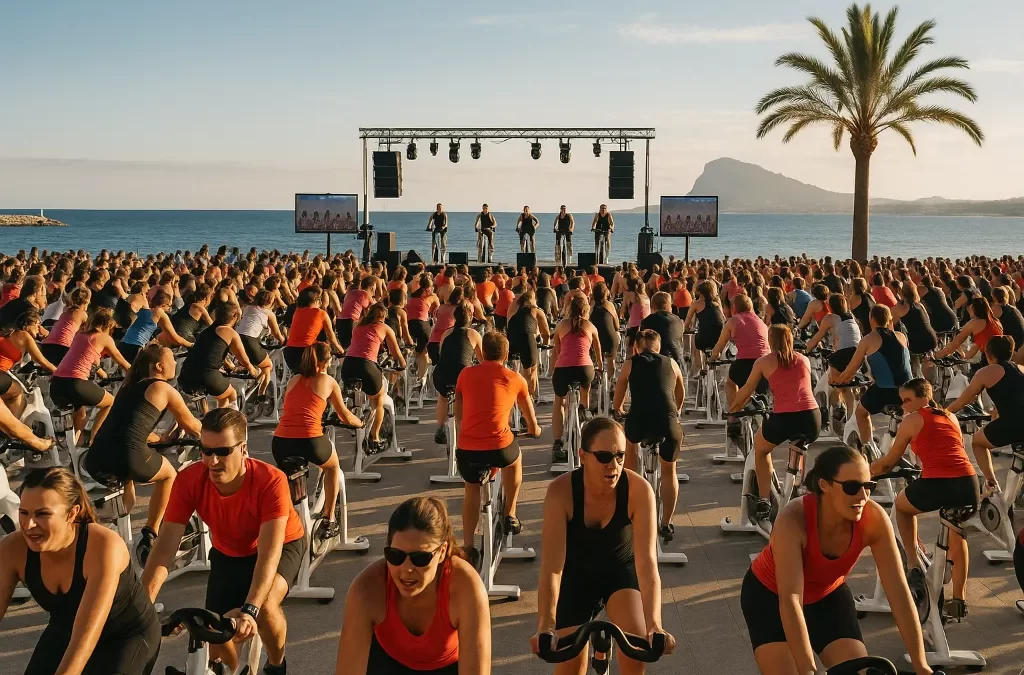
What sets Desafío Bestcycling apart is its groundbreaking approach to group fitness. Rather than confining spinning classes to indoor studios, organizers transport the entire experience outdoors, arranging hundreds of stationary bikes across Denia’s scenic Marina esplanade. This innovative format allows participants to enjoy high-energy cycling workouts while surrounded by ocean views and Mediterranean breezes.
The event’s creators, Bestcycling founders César and Nacho Bosquet, pioneered this outdoor indoor cycling concept in 1997. Their vision has grown into a record-breaking phenomenon that officially holds the Guinness World Record for simultaneous outdoor cycling participation. In 2014, they achieved this distinction in Valencia when 1,220 participants cycled together, surpassing Colombia’s previous record of 1,095 simultaneous cyclists.
The 2025 Denia edition will feature 800 premium stationary bikes strategically positioned to maximize both participant comfort and scenic views. This represents a carefully calibrated capacity designed to balance intimate community experience with large-scale spectacle.
Comprehensive day-long cycling journey awaits participants
The event unfolds as an immersive full-day experience rather than a single workout session. Beginning with registration at 8:30 AM, participants embark on a carefully structured cycling odyssey that spans from sunrise to sunset. The programming includes six distinct cycling sessions strategically spaced throughout the day, complemented by rest periods that allow for recovery, socializing, and enjoying local amenities.
Morning sessions feature three energetic classes designed to capitalize on cooler temperatures and fresh energy levels. A strategic three-hour midday break provides respite during peak sun hours while encouraging participants to explore Denia’s culinary offerings and rest areas. Afternoon programming resumes with three additional sessions, building toward the event’s crown jewel.
The sunset masterclass serves as the emotional climax of the entire experience. Timed perfectly with the Mediterranean sunset, this final session creates an unforgettable finale that participants consistently describe as deeply moving and inspirational. Professional instructors of international caliber guide each session, ensuring both safety and maximum engagement throughout the demanding schedule.
Complete festival experience extends beyond cycling
Desafío Bestcycling transcends typical athletic events by incorporating comprehensive hospitality elements. The €70 registration fee encompasses far more than cycling access, providing participants with a complete festival experience. Included amenities feature a traditional Spanish paella lunch, event beverages, and admission to the evening celebration at Zensa Marina.
This post-cycling party allows participants to decompress, celebrate their achievement, and connect with fellow cycling enthusiasts from around the world. The social component has become integral to the event’s appeal, fostering lasting friendships and international cycling connections.
Logistical considerations demonstrate the organizers’ commitment to participant experience. While the event provides all cycling equipment, participants may bring personal coolers with food and non-alcoholic beverages. Professional sound systems, large display screens, and sophisticated lighting create an immersive atmosphere that rivals major music festivals.
The Desafío Bestcycling generates substantial economic impact for Denia and surrounding communities. Municipal officials estimate that the event drives significant hotel occupancy increases throughout the weekend, while local restaurants, shops, and service providers experience notable revenue boosts. The influx of 1,500+ visitors fills streets with energy and activity, creating a vibrant atmosphere that benefits the entire city.
Beyond immediate economic effects, the event positions Denia strategically within the growing sports tourism market. International participants return home with positive impressions of the city’s lifestyle, natural beauty, culinary offerings, and outdoor recreation opportunities. This word-of-mouth marketing proves invaluable for long-term tourism development.
Live streaming coverage extends the event’s promotional value globally, showcasing Denia’s attractions to international audiences who may never have considered visiting otherwise. The municipal sports department actively supports the initiative, viewing it as perfectly aligned with their vision of Denia as an active, health-focused destination.
Registration demand exceeds capacity limitations
The 2025 edition sold out completely, demonstrating the event’s tremendous popularity and limited availability. This sellout occurred despite the expanded capacity, highlighting growing international interest in unique fitness experiences. Bestcycling has implemented a sophisticated waitlist system using SMS alerts to notify interested participants of potential last-minute cancellations.
Priority registration access goes to established Bestcycling subscribers with six or more months of membership, rewarding loyal community members while ensuring experienced participants maintain access. The registration system limits groups to four people maximum, helping maintain manageable group dynamics while accommodating friends and families.
The €70 fee structure represents exceptional value considering the comprehensive experience provided. When compared to typical fitness festivals or cycling events, participants receive remarkable benefits including professional instruction, premium equipment, full meal service, and entertainment access.
Legacy event strengthens Mediterranean cycling culture
Desafío Bestcycling’s 14-year evolution reflects the growing intersection of fitness, travel, and experiential entertainment. What began as an innovative cycling concept has matured into a signature Mediterranean event that attracts participants from across Europe and beyond. The consistent annual growth and immediate sellout status demonstrate the event’s successful formula.
The Marina de Denia location provides an ideal setting that competitors struggle to match. The combination of professional marina facilities, Mediterranean coastline, and supportive municipal infrastructure creates optimal conditions for large-scale outdoor fitness events. Participants consistently praise the venue’s beauty and accessibility.
As sports tourism continues evolving, Desafío Bestcycling represents a successful model for combining athletic challenge, scenic beauty, cultural immersion, and social connection. The event’s influence extends beyond cycling, inspiring similar initiatives that blend fitness with travel experiences. For 2025, all attention turns to June 21st when Denia once again becomes the global epicenter of outdoor indoor cycling innovation.