
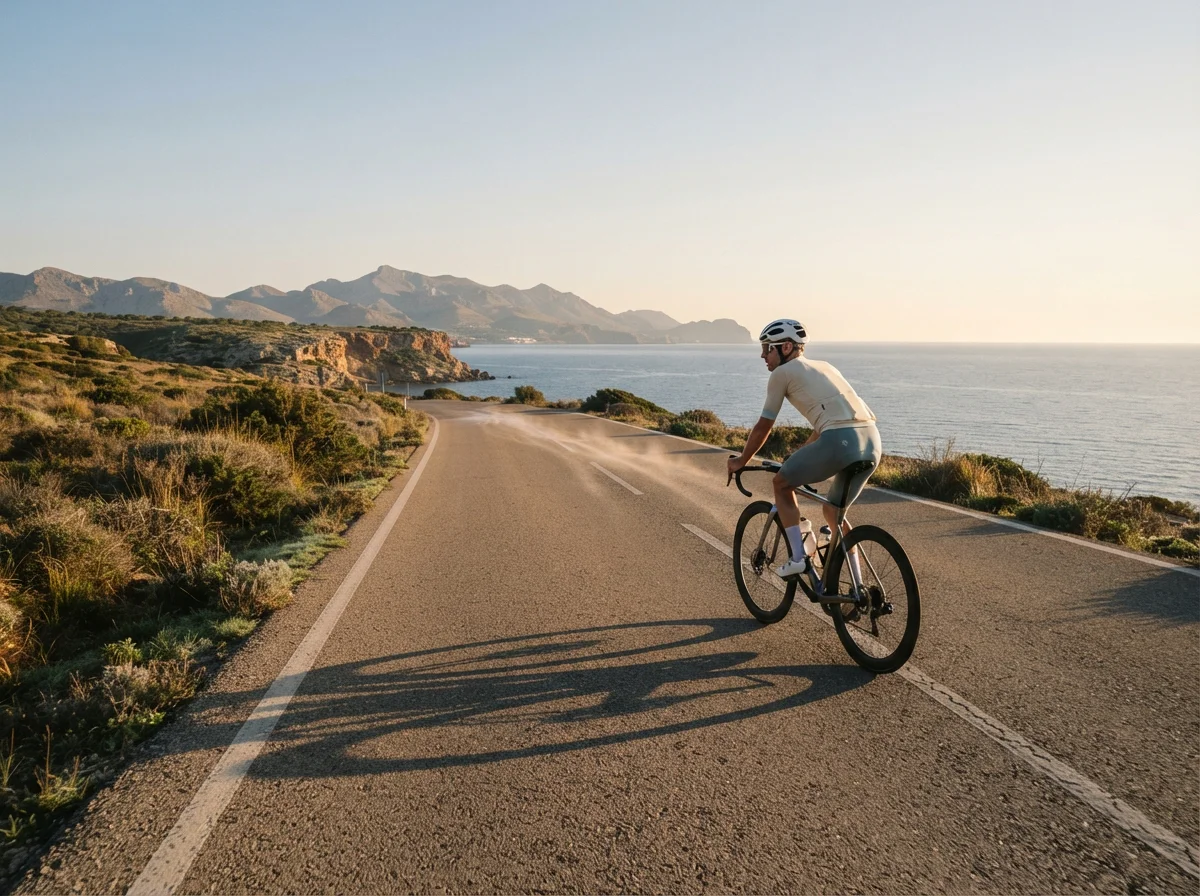
Cycling in the Heat: How to Ride Safely on the Costa Blanca in Summer
The Costa Blanca in July is not like cycling anywhere else in northern Europe. By 10am the tarmac is already hot enough to soften, the air above the coast road shimmers, and the temperature is pushing 34°C with no cloud cover in sight. Riders who flew in from Manchester or Amsterdam on Friday are on the bike by Saturday morning, and by Saturday afternoon some of them are learning a lesson that locals already know: summer cycling on the Costa Blanca is genuinely wonderful, but only if you respect the heat.
This is not a guide about avoiding cycling in summer. It is a guide to doing it properly. The sports science backs this up: according to research published in the Journal of Applied Physiology, trained cyclists can perform safely in high heat when they manage timing, hydration, and pacing correctly. The Costa Blanca’s dry heat is also more forgiving than humid tropical climates, sweat evaporates efficiently here, which makes cooling more effective than the raw temperature suggests. With the right approach, a 6am start on the roads above Calpe or Javea in July is one of the finest cycling experiences you will find anywhere. The air is still, the light is extraordinary, and the roads are yours. The goal is to be back at your accommodation before the heat becomes dangerous, not to battle through it.
What the heat actually does to your body on a bike
Understanding the physiology helps you make better decisions on the road. When you cycle in high temperatures, your body faces a dual demand: it needs blood at the muscles to sustain effort, and blood at the skin surface to cool you down through sweat. In extreme heat, these two demands compete, and your cardiovascular system starts to struggle.
Sweat rates on a hard ride in 35°C heat can exceed 1.5 litres per hour. If you are not replacing fluid at something approaching that rate, your blood volume decreases, your heart rate rises for the same power output, and your core temperature climbs. Heat exhaustion (heavy sweating, weakness, rapid pulse, nausea, and confusion) can develop faster than most cyclists expect. Heat stroke, where the body’s cooling system fails entirely and core temperature exceeds 40°C, is a medical emergency.
None of this should put you off riding. It should put you in the habit of treating hydration and timing as non-negotiable, not optional.
Rule one: ride with the sun, not against it
The single most effective thing you can do to cycle safely in summer on the Costa Blanca is to ride early. Very early.
The window is 6:00am to 10:00am. If you are hiring a bike for a summer trip, ask your provider whether they offer early-morning delivery. Most operators across Calpe, Javea, and Benidorm can have a bike at your villa door the evening before so you are not waiting for a 9am shop opening. During this window, temperatures are typically 22–27°C on the coast, roads are quiet, and a cooling breeze is usually still present. By 11:00am temperatures rise sharply and the breeze often drops. By 1:00pm riding in the sun is uncomfortable and potentially dangerous for unacclimatised visitors.
That means setting your alarm for 5:30am, having a light breakfast, and being clipped in before sunrise. It sounds extreme until you experience the first time you crest a climb on the Coll de Rates road at 7:00am with the bay below still in shadow and the whole day ahead of you. After that, it makes perfect sense.
If you can only ride once a day, make it the morning ride. If you want two sessions, a very early morning ride and a late-evening ride after 7:00pm (once the worst heat has passed) is a sustainable routine. The middle of the day is for recovery, not riding.
Hydration: more than you think, earlier than you think
Most cyclists know they should drink enough. Most cyclists underestimate how much that is in summer heat.
On a 3-hour ride in 30°C+ temperatures, you should be consuming between 750ml and 1 litre per hour depending on your sweat rate, intensity, and body size. That means leaving with at least two 750ml bottles and knowing where you can refill. On mountain routes in the Costa Blanca, many villages have public fountains with cold, drinkable water. Identify these before you leave.
Start drinking before you are thirsty. Thirst is a late indicator of dehydration. By the time you feel thirsty, you are already behind. Take a few sips every 10–15 minutes from the first kilometre, not just when you feel the need.
What to drink
Plain water is fine for rides under 90 minutes. For longer efforts, electrolytes, particularly sodium, are important. Sweat contains a significant amount of sodium, and replacing water without replacing electrolytes can lead to hyponatraemia, a dangerous drop in blood sodium levels. Use electrolyte tablets, a sports drink, or simply make sure your café stop includes some salty food alongside your espresso.
The evening before
If you are riding early the following morning, drink consistently through the afternoon and evening. Arriving at the start already slightly dehydrated makes the morning ride significantly harder and riskier.
What to wear in summer heat
Lightweight, light-coloured kit matters more than most riders realise. Dark colours absorb significantly more heat than light ones. White, cream, or pale colours reflect sunlight and make a measurable difference to your comfort on a long climb in direct sun.
Sun protection is the most underestimated piece of kit on the Costa Blanca. The UV index in July regularly reaches 9 or 10 (extreme), which means skin burns faster than most northern Europeans expect. Apply factor 50 to all exposed skin before you ride, and carry a small tube to reapply at your café stop. Pay particular attention to the back of your neck, the backs of your hands, and any gap between your jersey and shorts at the lower back.
A cycling cap under your helmet provides shade for your face and nose on exposed climbs and is worth its minimal weight. Some riders also use a damp buff or cloth around the neck as an additional cooling measure on very hot days.
Arm warmers have no place on a summer Costa Blanca ride, but a light gilet can be useful on early morning descents when the temperature at the summit is noticeably cooler than at sea level. Once the descent is done, pack it away.
Route selection: where to ride when it’s hot
Head inland, not along the coast
The coast road sounds appealing in theory: sea breeze, flat terrain. In practice the N-332 and the coastal route south of Calpe can be airless and exposed in the heat, with heavy traffic by late morning. Mountain roads above 500 metres are typically 3–6°C cooler than the coast, catch more breeze, and are far quieter.
Prioritise routes with shade
The roads through the Jalón Valley, the approach to Coll de Rates through Parcent, and the inland roads above Altea all pass through forested sections that provide genuine relief from direct sun. Plan your hardest climbing for the first hour, when you are freshest and temperatures are lowest.
Avoid exposed ridge roads after 9am in high summer
Routes like the Bernia road, which offers spectacular views but minimal shade, are best ridden in the very early morning or left for spring and autumn.
Build café stops into the plan
Choose a route with a natural halfway stop at a village bar or cycling café. Sitting in the shade for 20 minutes, drinking a cold water alongside your coffee, and letting your core temperature drop slightly before continuing makes the second half of any summer ride significantly more comfortable. It also gives you a moment to assess how you are feeling before committing to the return.
Our cycling routes section has detailed guides to the main roads around Calpe, Javea, Benidorm, and Altea, including notes on shade, water stops, and difficulty. The Cycling in Calpe guide is a good starting point for the best early-morning mountain routes, and the Altea Hills Loop is one of the shadiest routes on the coast.
Recognising heat exhaustion and what to do
Knowing the warning signs could save your ride, or someone else’s.
Heat exhaustion develops gradually. Signs include heavy sweating despite feeling cold or clammy, weakness or fatigue out of proportion to the effort, a rapid but weak pulse, nausea, headache, and dizziness. If you or a riding partner shows these signs, stop riding immediately.
Move to shade. Lie down with your legs elevated if possible. Drink cool water steadily (not ice-cold, which can cause cramping). Apply cool, damp cloths to the neck, armpits, and wrists. Rest until symptoms resolve, which usually takes 30–60 minutes. Do not continue the ride that day.
Heat stroke is more serious and requires emergency help. Signs include hot, dry or only slightly damp skin, confusion or disorientation, loss of coordination, and a very rapid strong pulse. Core temperature is dangerously elevated. Call 112 immediately, move the person to shade, cool them with whatever water is available, and stay with them until help arrives.
The key difference: heat exhaustion responds to rest and rehydration and is manageable in the field. Heat stroke does not. It is a medical emergency every time.
Acclimatisation: give yourself time
If you have just arrived from a northern climate, your body is not yet adapted to the heat. Acclimatisation takes roughly 10–14 days of regular exposure, during which your body increases its plasma volume, improves its sweating response, and becomes more efficient at cooling itself.
In practical terms, this means your first two or three rides in summer heat should be shorter and easier than you planned. Ride for 90 minutes rather than three hours. Stay on flatter terrain. Drink more than you think necessary. You will feel weaker than you do at home. This is normal and temporary.
By the end of the first week, most riders are performing noticeably better in the heat than they did on arrival. If you are planning a cycling holiday specifically around summer training, our cycling-friendly accommodation guide lists hotels with early breakfast service and secure bike storage, both important for 6am starts. Push the duration and intensity gradually, not all at once.
Before you ride: the summer checklist
Print this and pin it to the fridge:
- Alarm set for 5:30am — wheels rolling by 6:00am
- Two full bottles (750ml minimum each)
- Electrolyte tablets or sports mix for rides over 90 minutes
- Factor 50 suncream applied — small tube in back pocket to reapply
- Lightweight, light-coloured kit
- Route planned with shade and at least one water/café stop
- Someone knows your route and expected return time
- Fully charged phone with emergency number saved (112 is the Spanish emergency services)
- Cash or card for café stop
Bike hire in summer: what to know
If you are hiring a bike for a summer trip, book well in advance. July and August are the busiest months for hire operators across the Costa Blanca, and the best carbon road bikes and e-bikes in the most popular frame sizes are reserved weeks ahead.
When the bike is delivered or collected, ask the shop to check tyre pressure specifically. Tyres lose pressure faster in high heat, and a soft tyre in 35°C is not just slower, it is a puncture risk. If you are riding mountain or gravel routes, also check that the brakes are properly adjusted before you leave, as heat affects rim braking performance on long descents.
Our bike hire directory for the Costa Blanca covers all operators across Benidorm, Calpe, Javea, Altea, Denia, and Torrevieja, with current pricing and delivery options. Town-specific guides are also available:
Frequently asked questions
Is it safe to cycle on the Costa Blanca in July and August? Yes, if you ride early. The 6:00am–10:00am window offers quiet roads, manageable temperatures, and beautiful light. Avoid riding between 11:00am and 5:00pm in peak summer.
How much water should I carry on a summer ride? A minimum of 1.5 litres for rides up to two hours. For longer mountain rides, carry 2 litres and plan your route around water refill points. Electrolyte tabs are worth adding for rides over 90 minutes.
What temperature is too hot to cycle? There is no single threshold, but above 38°C ambient temperature, the risk of heat illness increases significantly for unacclimatised riders. At those temperatures, experienced local cyclists switch to indoor training or limit outdoor riding to pre-dawn hours. If you are newly arrived from a cooler climate, be more conservative. 32°C can feel extreme in your first few days.
Should I use an e-bike in summer to reduce effort? An e-bike is a sensible choice in summer, particularly for the hotter parts of the day or for riders who are less fit. Motor assistance reduces your exertion level, which means less heat generated internally and a lower sweat rate. If you are planning rides in warmer parts of the day, an e-bike is worth considering. See our bike hire guides for e-bike availability across the Costa Blanca.
Can I ride through the heat as long as I drink enough? Hydration helps significantly, but fluid replacement alone does not fully offset the physiological cost of exercising in extreme heat. Your cardiovascular system is under stress regardless of how much you drink. The early morning window exists for a reason. Use it.
What should I eat before an early morning ride? Keep it light and digestible: a banana, a slice of toast with honey, or a small bowl of oats. You do not have enough time to fully digest a large meal before a 6:00am start, and riding on a heavy stomach in heat compounds the discomfort. Save the larger meal for post-ride recovery.