
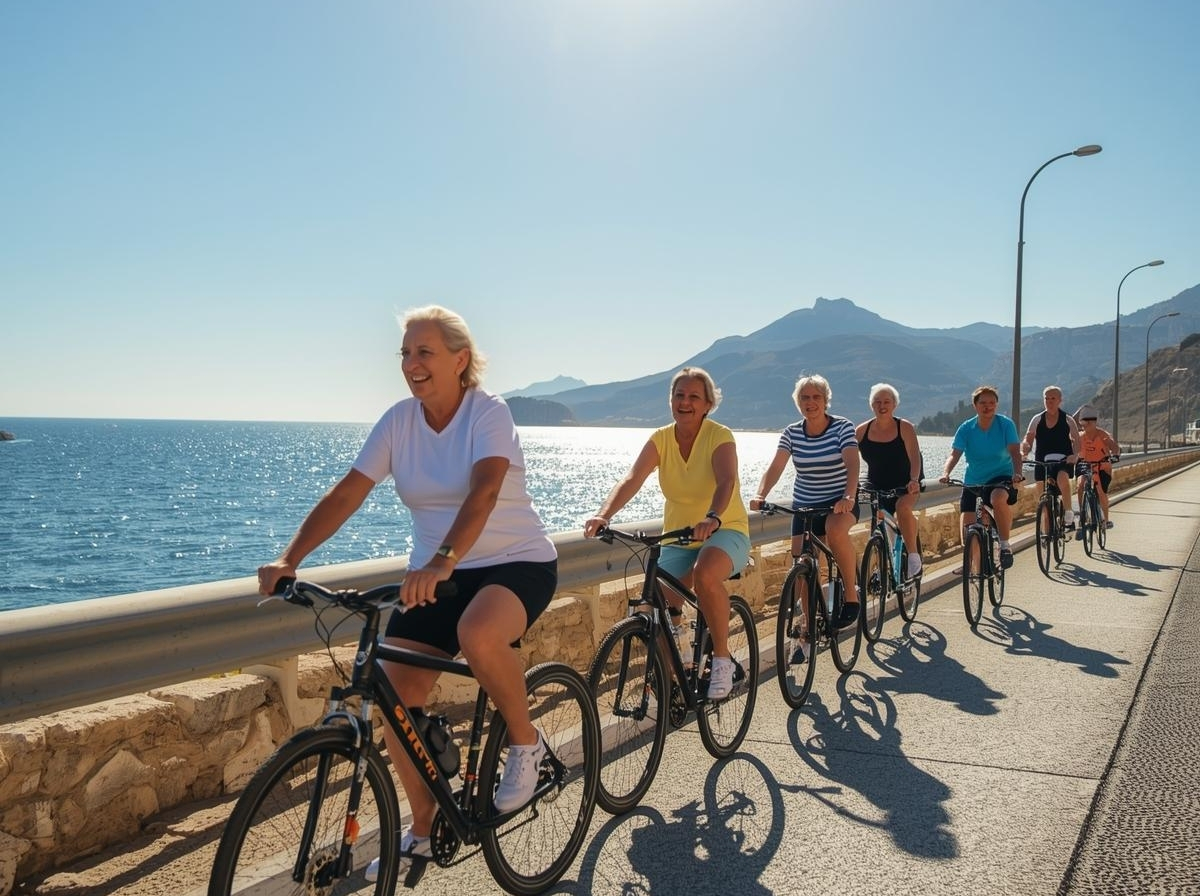
Cycling Holiday: Why It’s the Ultimate Boost for Body and Mind
Picture a slow ride along the Costa Blanca coast, the Mediterranean on one side and orange groves on the other, with nowhere else to be. That’s the appeal of a cycling holiday on its own. But there’s also a real, well-documented case that cycling is one of the better things you can do for your long-term health, and a holiday is a genuinely good way to find out whether it’s for you.
One honest caveat before the numbers: most of the strongest research below comes from studies of people who cycle regularly, often as their daily commute, tracked over years. A single week of holiday riding won’t hand you the same risk reduction as a decade of commuting by bike. What it can do is show you what regular cycling actually feels like, and give you a realistic reason to keep some of it going once you’re home, which is exactly where the lasting benefit comes from.
| Area | What the research shows |
|---|---|
| Heart health | Cycle commuters have 41% lower all-cause mortality and 46% lower cardiovascular disease risk than non-active commuters (UK Biobank, 264,337 people) |
| A realistic starting dose | WHO Europe: cycling around 20 minutes most days is linked to at least 10% lower mortality risk overall |
| Diabetes risk | Committed commuter cyclists (150+ minutes/week) have 30% lower type 2 diabetes risk; even modest, occasional cycling shows a measurable reduction (Danish cohort, 52,513 people) |
| Mood and mental health | Research reviews consistently link cycling to improved mood and lower depression risk; high-mileage cycle commuters report meaningfully fewer sick days |
| Getting started | Benefits appear well before “fit”: consistency matters more than intensity, and starting later in life still shows real gains |
The Heart of the Matter: Cardiovascular Health
The best evidence here comes from a landmark UK Biobank study (Celis-Morales et al., published in the BMJ in 2017), which followed 264,337 UK adults for five years. People who cycled their full commute had a 41% lower risk of dying from any cause and a 46% lower risk of developing cardiovascular disease compared with people who didn’t actively commute at all. Those are genuinely large effects for a lifestyle change, and they hold up across a huge sample.
You don’t need to be riding at the pace of the pros in the Vuelta a España to see benefits start to appear. WHO Europe’s guidance is that roughly 20 minutes of cycling most days is associated with at least a 10% reduction in overall mortality risk, a dose that’s well within reach on an easy Costa Blanca coastal ride, not just a training camp.
The takeaway: the cardiovascular case for cycling is one of the stronger ones in preventive health research, and a holiday spent riding daily is a realistic taste of the habit that produces it, even if one week alone won’t replicate a five-year cohort effect.
Mental Recharge: Your Brain on Two Wheels
The mental health case for cycling is less headline-grabbing than the cardiovascular numbers, but it’s consistent across the research. Reviews of cycling intervention studies link regular riding to improved mood, reduced depression risk, and better subjective wellbeing, plausibly through a mix of moderate exercise, being outdoors, and the sense of covering real distance under your own effort.
There’s also a concrete workplace-health data point: a Finnish study following 28,485 public-sector employees found that the highest-mileage cycle commuters (30km or more a week) averaged 4.5 fewer sickness-absence days per year than passive commuters, with an 8-18% lower risk of extended sickness absence. That’s not proof that a week’s holiday delivers the same effect, but it’s a real signal that sustained cycling correlates with something beyond just fitness.
Riding the scenic routes around Costa Blanca adds something the sickness-absence data can’t measure directly: time away from screens, a change of scenery, and a physical rhythm that a lot of people find genuinely restorative. That’s worth taking seriously even without a specific number attached to it.
Metabolic Health: Diabetes Risk and Body Composition
A Danish cohort study (Rasmussen et al., PLOS Medicine, 52,513 people followed for 14 years) found that people who commuted by bike for 150 minutes or more a week had a 30% lower risk of developing type 2 diabetes than non-cyclists. Even modest, occasional cycling showed a measurable reduction, and people who started cycling partway through the study saw their risk drop by around 20% compared with those who stayed non-cyclists, rising to closer to 29% for people who kept it up.
Body composition is a fair question to ask about, and here the evidence is more mixed than the marketing language around cycling holidays usually admits. A recent controlled study of a 10-week commuter-cycling programme found real improvements in cardiovascular fitness but no measurable change in body fat percentage. Don’t book a cycling holiday expecting a visible transformation in a week; the diabetes and cardiovascular numbers above are where the genuine, well-documented payoff is.
If you’re starting out, family-friendly mountain bike trails are a good low-pressure way to build the habit without needing to be fit first.
Fitness Gains That Build Through Your Trip
What makes a cycling holiday different from a single gym session is the progressive element: the hill that felt hard on day one is usually more manageable by day three, and that’s a real, felt sense of improvement rather than a marketing line. Research across age groups consistently shows cardiorespiratory improvements from regular cycling, including in people who start later in life, so there’s no real age cutoff for seeing benefits.
The Costa Blanca’s range helps here too. You can work up toward genuinely tough terrain like Alto de Aitana, or stick to gentler ground like the coastal loop from Calpe to Denia, and your cardiovascular system adapts either way. There’s no fitness prerequisite for getting started, just a willingness to build up gradually over the days you’re here.
Common Concerns, Addressed
“I’m not fit enough.” The Danish diabetes cohort found that people who took up cycling partway through the study saw their type 2 diabetes risk drop by around 20% compared with people who stayed inactive, with no minimum fitness level required to start. E-bikes and rental services make hillier terrain accessible even if you’re starting from zero.
“It’s too expensive.” A 2025 study in PNAS modelled what would happen if cities worldwide raised their cycling infrastructure to Copenhagen’s level, and put the potential global health value at $435 billion a year, a reminder that cycling’s health case matters at a societal scale, not just a personal one. On the holiday-cost side specifically, a self-guided cycling trip often costs about the same as, or less than, a comparable beach holiday once you account for similar accommodation and meals.
“Weather and timing concerns.” Costa Blanca’s climate offers good riding conditions across most of the year, and our guide to cycling in hot weather covers how to handle the summer months if that’s when you’re visiting.
“I don’t know how to plan it.” Self-guided cycling tours remove most of the planning complexity while keeping the flexibility to ride at your own pace.
Getting Started: Your Beginner’s Action Plan
Choose your adventure level. Top bike rental shops in Calpe or Benidorm both offer e-bikes, which make hillier terrain accessible without needing to already be fit.
Build up gradually. Start with shorter, easier days and let your distance grow through the week rather than aiming for a big first-day ride. The Jalón Valley scenic loop is a good beginner-friendly distance with real scenery to show for it.
Keep equipment simple. A hybrid bike handles mixed terrain well, and packing for weather changes and staying hydrated matter more than having specialist gear. Short rides with breaks are entirely fine, you don’t need to ride continuously to benefit.
Plan for safety. Our safety tips for touring alone cover what to know before heading out solo, so the trip stays enjoyable rather than stressful.
Making the Benefits Last After Your Holiday
The honest version of “lasting benefit” isn’t that one week of holiday cycling rewires your health permanently, it’s that a holiday is a low-stakes way to find out whether you actually enjoy cycling enough to keep doing a version of it at home. The research above is overwhelmingly about people who ride regularly, so that’s the real target if you want the numbers in this article to apply to you.
Start small at home. You don’t need to replicate your holiday’s daily distance. Even a couple of short rides a week, commuting or otherwise, is closer to the doses used in the studies above than an occasional long weekend ride.
Find routes near home that give you a similar sense of exploration to what you had on holiday, even if the scenery can’t quite compete with the Mediterranean.
Connect with other riders. Cycling Clubs in Costa Blanca is worth a look if you’re planning a return trip and want to ride with people who know the roads, and joining a cycling community at home can help the habit stick the same way.
People who keep up even modest cycling after a holiday tend to hold on to more of the benefit than people who return to zero activity, which is really the whole case for trying it in the first place.
Frequently Asked Questions
How much cycling is needed to see health benefits? WHO Europe associates roughly 20 minutes of cycling most days with at least a 10% reduction in overall mortality risk. Bigger, more established benefits (the 41% mortality and 46% cardiovascular risk reductions from the UK Biobank study) come from sustained commuter-level cycling over years, not a single holiday.
Can complete beginners enjoy a cycling holiday safely? Yes. There’s no fitness threshold required to start seeing benefits from taking up cycling, and e-bikes plus supported or self-guided tours make it accessible at almost any starting fitness level.
What’s the difference between a cycling holiday and regular exercise for health? The underlying research is mostly about regular, sustained cycling, commuting in particular. A holiday won’t replicate years of that on its own, but it’s a genuinely good way to discover whether you’ll enjoy keeping some cycling going once you’re home, which is where the real long-term benefit comes from.
Does cycling help with weight or body composition? The evidence here is more mixed than for heart health or diabetes risk. A recent controlled study of a 10-week cycling programme found real fitness gains but no measurable change in body fat. Don’t expect visible body changes from a single trip; the cardiovascular and diabetes-risk numbers are where cycling’s evidence is strongest.
What if the weather isn’t ideal during my trip? Costa Blanca offers favourable cycling conditions across most of the year; our guide to cycling in hot weather covers how to manage the summer months if that’s when you’re visiting.
Should I book a self-guided or supported tour? Beginners often do well with supported tours that handle logistics, while more experienced riders may prefer the flexibility of a self-guided trip. Either way delivers the same underlying activity benefits.