
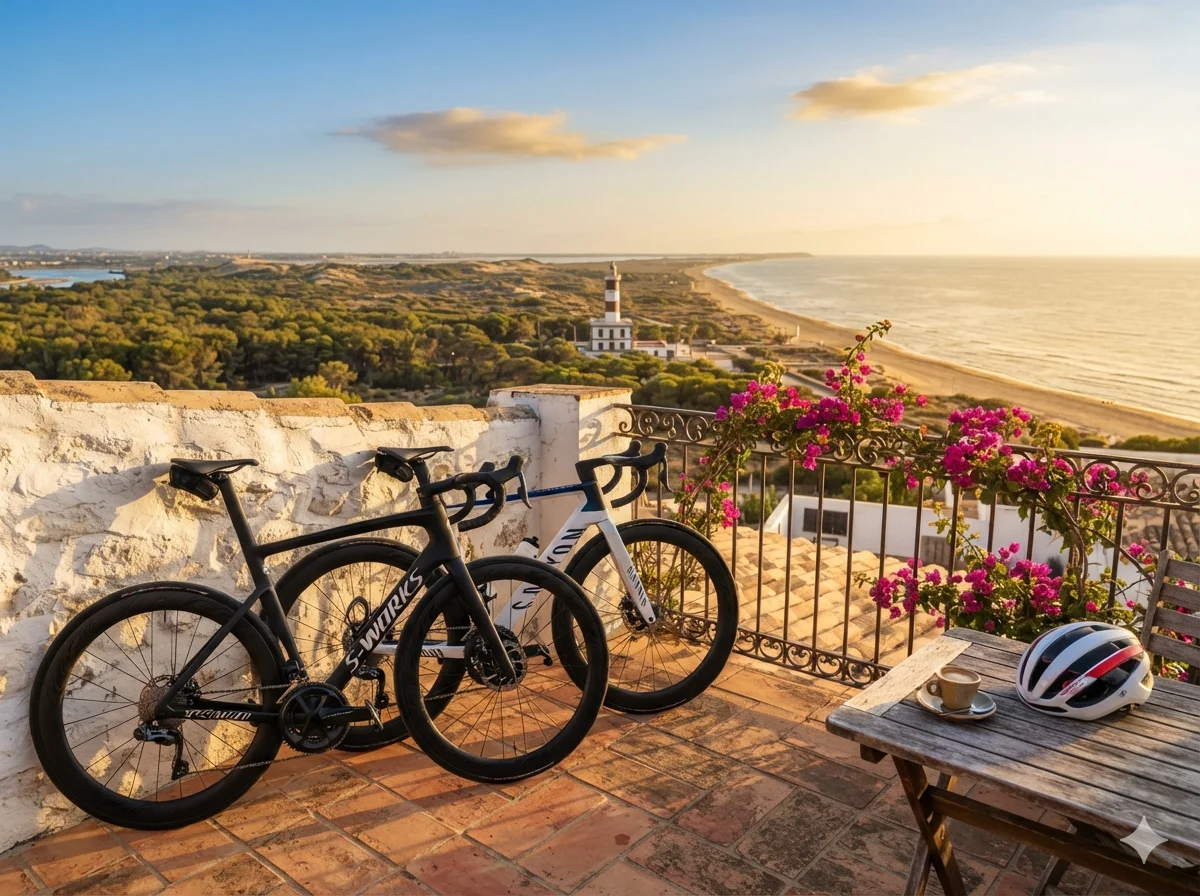
Cycling Accommodation in Guardamar del Segura: Where Cyclists Stay on the Costa Blanca
If your idea of a good cycling day involves flat, wind-in-your-face coastal roads rather than another 8% gradient, Guardamar del Segura is the part of the Costa Blanca you’ve probably been overlooking. It sits at the southern end of the province, where the terrain flattens out into pine forest, river paths, and a dune-backed coastline, a deliberate contrast to the mountain passes further north around Calpe and the Marina Alta.
Choosing where to stay here matters more than it might in a big cycling hub like Calpe, simply because there’s so little dedicated cycling infrastructure in the town yet. One hotel has actually built for cyclists. Everything else is a guess.
Key Takeaways
| Question | Quick Answer |
|---|---|
| Best base for cyclists in Guardamar? | Hotel Meridional, official Bike Friendly certification, secure storage, wash and repair facilities |
| What’s the terrain like? | Flat to gently rolling, coastal roads, river paths, pine forest tracks, hills rarely exceed 100m |
| How many official cycling routes are there? | 8, mapped and published by the Guardamar tourist board, all beginner to intermediate |
| Best for climbers too? | Not really. Save the mountain passes for a base near Calpe or Coll de Rates instead |
| When to visit? | Year-round riding is realistic here; spring and autumn are most comfortable, summer needs an early start |
| How far to the nearest big climbs? | Roughly an hour north by car to the Coll de Rates / Aitana area |
Why Stay in Guardamar del Segura for Cycling?
Most of the Costa Blanca’s cycling reputation is built on its mountains: Coll de Rates, the Alto de Aitana, Xorret de Catí. Guardamar is the opposite proposition, and that’s exactly its appeal. The town sits at the mouth of the Río Segura, backed by an 800-hectare pine forest and protected dune system that covers roughly 80% of its coastal territory, and the terrain barely rises above 100 metres for kilometres in every direction.
That flatness is deliberate riding, not a compromise. It’s where cyclists from the mountain towns come to recover, where families and less experienced riders can cover real distance without real climbing, and where winter-sun visitors can put in long, steady base-mileage weeks without a single punishing gradient. The Guardamar Tourist Board publishes eight official walking and cycling routes for exactly this kind of riding, from a short out-and-back along the dunes to longer loops through the Vega Baja farmland and connections to the neighbouring Torrevieja coastline.
Guardamar also benefits from something few Costa Blanca towns can offer: a purpose-built, traffic-free cycling corridor. The pinewoods route running from town to the Río Segura covers 3.3km where motorised traffic is banned outright, except for emergency services, and a dedicated bike lane runs along the N-332 coastal road connecting Guardamar directly to Torrevieja, passing the La Mata Salt Lake Lagoon Natural Park on the way.
What Cyclists Should Look For in Accommodation
None of this matters much if your hotel treats a bike as an inconvenience. A handful of things separate proper cycling-friendly accommodation from a hotel that just happens to be near some roads.
Secure, dedicated bike storage matters more here than the marketing suggests. A bike left in a standard room or an unlocked garage overnight is a bike at risk, and after a day riding sandy, salt-air coastal paths, you want somewhere it can actually be stored upright and locked rather than propped against a wardrobe.
Wash-down and repair facilities solve a problem specific to this part of the coast. The dune and pinewood routes kick up sand and grit that road cycling further north simply doesn’t produce, so a pressure washer and basic workshop tools on-site save you turning up at your next stop with a gritty drivetrain.
Early breakfast is worth checking before you book, especially outside the winter months. Guardamar’s flat routes are pleasant riding at 8am and considerably less pleasant at midday in July, so accommodation that can feed you and get you out the door early is doing you a real favour.
Local route knowledge at reception is rarer than you’d expect. Because Guardamar isn’t yet a well-established cycling base the way Calpe is, staff who can point you to the tourist board’s official route map, rather than a generic “the beach is that way,” are worth seeking out specifically.
Types of Cycling Accommodation in Guardamar del Segura
Cycling-certified hotels are, at the time of writing, represented by exactly one property in this town: a hotel with an official third-party Bike Friendly certification, purpose-built storage, and repair facilities. This is the safest option if bike security and support matter to your trip.
Self-catering apartments and villas are plentiful in Guardamar generally, since it’s a well-established Spanish and northern European retirement and holiday market, but very few advertise themselves as cycling-specific. If you go this route, confirm bike storage arrangements directly with the owner before booking rather than assuming a balcony or communal hallway will do.
Budget and mid-range hotels exist throughout the town but, beyond the one certified property above, none currently market dedicated cycling facilities. Fine for a short stopover, less ideal if you’re carrying an expensive bike and want peace of mind overnight.
Best Areas to Stay in Guardamar del Segura
The seafront and Marina de las Dunas area puts you closest to the dune routes and the river-mouth loop, and it’s where the town’s one cycling-certified hotel is based. Good for riders who want to roll straight out onto traffic-free paths.
The town centre, around the Tourist Information Office and the old quarter near Guardamar Castle, gives easier access to restaurants and everyday services, with the pinewoods route reachable in a few minutes by bike.
Just north toward Los Montesinos and the N-332 corridor suits riders planning to use the dedicated Guardamar-Torrevieja bike lane as a training route rather than a leisure ride, though accommodation options here lean more towards long-stay apartments than hotels.
Accommodation Near Popular Cycling Routes
Guardamar’s own route network is compact and largely rideable straight from the seafront: the 3.2km dunes and river-mouth loop, the 3.3km traffic-free pinewoods route, and the longer Vega Baja farmland routes that connect toward Rojales and the historic irrigation channels inland. All eight official routes are detailed on the Guardamar tourist board’s own route map, which is worth downloading before you arrive.
For riders who want a change of terrain without moving hotels, the dedicated bike lane along the N-332 connects directly to Torrevieja’s cycling routes, and bike hire in Torrevieja or bike hire in Orihuela Costa are both realistic day-trip options if your accommodation doesn’t offer rentals directly.
If you’re staying longer and want a serious climbing day, the Coll de Rates and Alto de Aitana area is roughly an hour north by car. Our complete guide to Coll de Rates covers what to expect if you make the trip.
Accommodation for Different Cyclists
Solo Riders and Couples
Guardamar’s flat, well-signed routes and short distances between town, beach, and pinewoods make it an easy solo or two-person base. The certified hotel’s sea-view rooms and on-site dining mean you don’t need a car for a comfortable few days.
Groups and Clubs
The Vega Baja routes and the Torrevieja connector give a club enough combined mileage for a proper training block without repeating the same loop daily. Confirm group bike storage capacity directly with any hotel before booking. Vertical storage racks hold a limited number of bikes at once.
Training Camps
This is arguably where Guardamar earns its keep. Flat, low-traffic, mild-winter riding is exactly what a training camp needs for base-building weeks, and the wider Costa Blanca does get over 300 days of sunshine most years, according to regional tourism figures. Just don’t expect the climbing volume a camp based near Calpe would offer. Treat this as a complementary base, not a substitute.
Families
The pinewoods route’s ban on motorised traffic (aside from emergency vehicles) and the flat dune and riverbank paths make this one of the safer family cycling bases on the Costa Blanca, better suited to younger or less confident riders than the mountain routes further north.
Long-Stay Winter Cyclists
Guardamar’s flat terrain is kinder on ageing joints and recovering injuries than repeated climbing, which is part of why the wider area has a strong long-stay northern European retiree market already in place. Long-stay discounts are worth asking about directly with accommodation, since they’re rarely advertised upfront outside peak season.
Accommodation Prices in Guardamar del Segura
Exact rates weren’t available to verify at the time of writing, so treat this as relative guidance rather than fixed figures. As with most of the Costa Blanca, expect the highest rates in July and August, when demand is driven by beach tourism rather than cycling, and Guardamar’s beaches are a major regional draw in their own right. Spring and autumn offer the best balance of good riding weather and lower rates. Winter is typically the cheapest season here despite being perfectly rideable, since Guardamar doesn’t yet attract the same winter training-camp demand that pushes prices up in Calpe. Long-stay and group bookings are worth negotiating directly, particularly outside July and August.
Insider Tips for Cyclists Staying in Guardamar del Segura
Download the official route map before you arrive. The tourist board’s PDF covers all eight routes with distances and start points, and it’s far more reliable than assuming a route exists on a generic mapping app.
Ride early in summer. With less tree cover than the pinewoods further inland and long exposed stretches along the dunes and coast, midday heat here is a real factor from June through September.
Don’t expect Calpe-level cycling infrastructure yet. Guardamar is a solid flat-riding base, but it doesn’t have Calpe’s density of bike shops, rental outlets, or cycling-specific hotels. Bring or hire what you need before you arrive if possible.
Use the Torrevieja bike lane as your link route. It’s one of the only stretches of properly protected, dedicated cycling infrastructure in this part of the province, worth building a longer ride around rather than ignoring.
Check tide and wind conditions on the exposed coastal sections. The dune and river-mouth routes run close to open water, and a strong Levante wind can make the return leg considerably harder than the outbound one.
Featured Cycling Accommodation in Guardamar del Segura
Hotel Meridional (GastroHotel Meridional), seafront hotel, Guardamar del Segura. The only accommodation in town with an official Bike Friendly certification. Facilities include vertical bike storage racks with independent locks, a pressure washer, and a workshop stocked for minor repairs. Reception provides information on self-guided routes departing directly outside the hotel and can arrange bike rental. Recently renovated sea-view rooms, a full breakfast buffet, two on-site restaurants (including one recommended by the Repsol Guide in 2024 and 2025), and a rooftop Sky Bar looking out over the beach, Santa Pola Bay, and Tabarca Island. Best suited for solo riders, couples, and small groups who want a properly equipped cycling base rather than a generic beach hotel. Visit Hotel Meridional.
Own a cycling-friendly property in Guardamar del Segura? We currently list exactly one verified cycling accommodation option for this town, which means there’s real, uncontested visibility available here for the right property. Get in touch to list your business and reach cyclists specifically looking for a flat-riding, southern Costa Blanca base.
Compare Cycling Accommodation in Guardamar del Segura
With only one verified cycling-specific option currently available, the comparison in Guardamar is less about choosing between properties and more about deciding whether this town fits your trip at all. If flat, low-traffic riding and easy access to Torrevieja’s routes appeal to you, Hotel Meridional is a straightforward, well-equipped choice. If you’re planning a climbing-focused trip, you’ll get more from our Calpe accommodation guide or a base nearer Coll de Rates instead. Either way, request availability directly through our directory before you book.
Related Cycling Resources
- Cycling Accommodation in Calpe
- Cycling in Alicante
- Bike Hire in Torrevieja
- Bike Hire in Orihuela Costa
- Bike Hire in Alicante
- Best Cycling Routes in Torrevieja
- Top 10 Cycling Routes in Costa Blanca: A Complete Guide
- Coll de Rates Cycling Guide
- Self-Guided Cycling Tours in Costa Blanca
- Bike Rentals for Groups and Families
- Spain’s New Cycling Rules in 2026
- Cycling in Hot Weather
FAQ
What is the best cycling hotel in Guardamar del Segura? Hotel Meridional is currently the only accommodation in Guardamar with official Bike Friendly certification and purpose-built storage, wash, and repair facilities.
Does Guardamar del Segura have cycling-specific accommodation? Yes, but only one verified option at present. Most other accommodation in the town doesn’t market itself specifically to cyclists.
Is Guardamar del Segura good for cycling? Yes, particularly for flat, low-traffic riding. The town has eight official cycling routes published by the local tourist board, plus a traffic-free pinewoods path and a dedicated bike lane connecting to Torrevieja.
Is Guardamar suitable for serious climbers? Not really. The terrain here stays close to sea level. Climbers should base themselves further north, closer to Calpe or the Coll de Rates and Aitana area.
Can accommodation in Guardamar arrange bike rentals? Hotel Meridional can arrange rentals through reception. Beyond that property, check directly with individual hotels or apartments, as rental partnerships aren’t standard across the town.
Is Guardamar del Segura good for winter cycling? Yes. The flat terrain and mild coastal climate make it a realistic year-round riding base, and it’s more affordable in winter than more established cycling towns further north.
How far is Guardamar from the nearest big climbs? Roughly an hour by car to the Coll de Rates and Alto de Aitana area, which is too far for a casual day loop but manageable as an occasional day trip.
Are the cycling routes in Guardamar official or informal? Official. The Guardamar Tourist Board publishes and maps eight walking and cycling routes with a downloadable PDF guide.
What should cyclists look for in accommodation here specifically? Secure bike storage, a wash-down facility for sand and grit from the dune routes, and early breakfast service, since the best riding conditions in summer are before mid-morning.
Is there public cycling infrastructure connecting Guardamar to nearby towns? Yes. A dedicated bike lane runs along the N-332 coastal road between Guardamar and Torrevieja, passing the La Mata Salt Lake Lagoon Natural Park.
Research sources: Guardamar Tourist Board – Walking and Cycling Routes, Hotel Meridional – Costa Blanca: The Best Spot for Bike Touring, Hotel Meridional official site.