
Cycling in Alicante: The Complete Local Guide
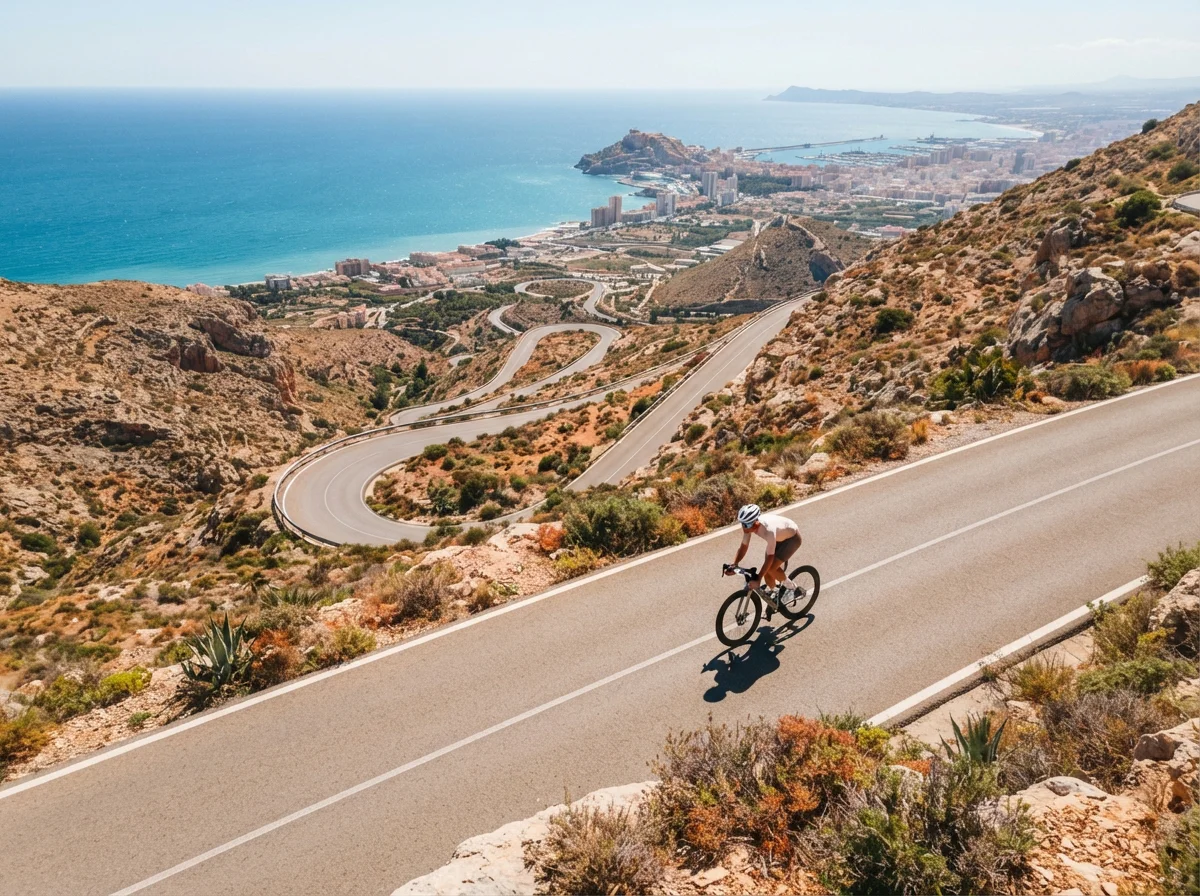
Alicante does not have the pro team glamour of Calpe or the boutique cycling infrastructure of Javea, but cycling in Alicante has its own appeal. The city sits at the southern end of the Costa Blanca, with the Sierra de Aitana to the north, the salt flats of Santa Pola to the south, and dozens of kilometres of coastal road running in both directions. The climbing, when you go looking for it, is serious: the Puerto de la Carrasqueta at 1,024 metres is one of the most respected ascents on the entire Costa Blanca, and the roads inland past Tibi and Castalla are consistently good.
Alicante is also the easiest arrival point on the Costa Blanca. The airport handles direct flights from across the UK, and the city centre is 15 minutes away. For cyclists who want to combine easy coastal days with harder mountain rides, it is a practical base that does not get enough attention.
According to the Alicante Tourism Board, cycling is one of the main active tourism draws in the province, with the area’s road infrastructure and year-round climate making it a growing destination for training camps and cycling holidays.
Why Alicante works as a cycling base
The terrain around Alicante is more varied than the city’s flat coastal profile suggests. Within 30 kilometres you can be on mountain roads with minimal traffic and serious climbing. The coastal routes, particularly north towards El Campello and Villajoyosa, are gentle enough for any fitness level. The roads inland towards the Sierra del Maigmo and the Carrasqueta pass are in good condition and largely quiet outside of local commuter hours.
The city itself is reasonably well set up for cyclists. Bike lanes run along several main routes, the seafront promenade is accessible by bike early in the morning, and the port area has several hire shops within walking distance of the main hotels and apartments.
Best cycling routes from Alicante
| Route | Distance | Elevation | Difficulty |
|---|---|---|---|
| Puerto de la Carrasqueta | 90km | 1,400m | Hard |
| Sierra del Maigmo loop | 60km | 900m | Moderate–Hard |
| Coastal north to El Campello and Villajoyosa | 50km | 200m | Easy–Moderate |
| Santa Pola and the salt flats | 35km | 100m | Easy |
| Tibi reservoir | 55km | 700m | Moderate |
1. Puerto de la Carrasqueta (90km, 1,400m)
This is the ride that defines cycling in Alicante. The Puerto de la Carrasqueta sits at 1,024 metres in the mountains behind Alcoy, roughly 45 kilometres from the coast, and the climb from the Ibi side is about 13 kilometres of sustained effort averaging 5% with a few steeper ramps near the top. It has been used as a stage finish in the Vuelta a España and is well known to serious cyclists across the Costa Blanca.
The standard loop from Alicante heads northwest through Mutxamel and San Vicente del Raspeig, picks up the road towards Castalla and Ibi, and climbs from the Ibi side. The descent towards Alcoy on the far side is long, fast, and rewarding, with views into the steep valley below. The return via Agost adds a second, gentler climb and brings you back through the wine country south of Alicante. Allow four to five hours for the full loop.
2. Sierra del Maigmo loop (60km, 900m)
The Sierra del Maigmo is a less-known but excellent alternative to the Carrasqueta for riders who want a mountain day without committing to 90 kilometres. The route heads west from Alicante through Agost and climbs into the sierra on roads that see almost no traffic during the week. The summit area sits above 1,200 metres and the views back towards the coast are worth the climb on their own.
The descent into Tibi is fast and well-surfaced. From Tibi the road connects through the Castalla valley and back towards Mutxamel and the coast. A solid three-hour ride for a fit cyclist, and manageable on a mid-level hire bike with the right gearing.
3. Coastal north: Alicante to El Campello and Villajoyosa (50km, 200m)
The coastal road north of Alicante runs through El Campello and up towards Villajoyosa, a stretch of about 25 kilometres each way that is mostly flat, well-surfaced, and pleasant. El Campello is a natural coffee stop with a good waterfront. Villajoyosa, with its distinctive painted house fronts and seafront promenade, is worth the extra 10 kilometres if you have the time.
This is the best route for riders who want easy mileage, a first-day spin to get used to a hire bike, or a simple morning outing before the heat builds. Our coastal guide from Alicante to Calpe extends this same road all the way north for riders who want the full day out.
4. Santa Pola and the salt flats (35km, 100m)
South of Alicante, the road towards Santa Pola runs through the protected salt flats of the Parque Natural de las Salinas, a completely flat landscape with wide roads and very little traffic outside of rush hour. Santa Pola itself is a fishing port with a good selection of waterfront cafes. The return via Elche and the palm groves adds a few kilometres but is more interesting than simply reversing the same road.
This is the most accessible route from Alicante for leisure cyclists, families, or anyone on an e-bike. The terrain asks nothing of you, and the distance is short enough to finish before midday even in summer.
5. Tibi reservoir (55km, 700m)
The road to Tibi reservoir north of Alicante is a quiet inland route that does not appear on many cycling maps but delivers steady climbing and almost no traffic. The reservoir itself is one of the oldest dams in Europe, built in the 16th century, and the road above it continues into the hills towards Castalla. It pairs well with the Maigmo loop as a second-day ride if you want variety without repeating the same roads.
When is the best time to cycle in Alicante?
October to April is the reliable window. Alicante is slightly hotter and drier than Calpe further north, which means summer heat arrives earlier and lingers longer. October through to early April offers consistently good riding weather, with temperatures between 15°C and 22°C for most of that period.
January and February bring the coolest days and occasionally some rain. The mountain routes above 800 metres can be cold at the summit and a light base layer or gilet is worth carrying. Coastal and low-elevation routes are generally fine.
May is excellent: warm enough to ride in a short-sleeve jersey from the start, cool enough to tackle the Carrasqueta without suffering too much.
June to September requires the same approach as the rest of the Costa Blanca: very early starts, plenty of water, and finishing by 10am. The Alicante coastal area can feel more humid than the northern Costa Blanca during July and August, which makes the early-morning discipline even more important. The Costa Blanca summer cycling guide covers the full approach to riding in the heat.
Hiring a bike in Alicante
Alicante has a good range of hire options, concentrated mainly around the port and city centre. Road bikes, e-bikes, hybrids, and mountain bikes are all available, and most operators offer hotel and apartment delivery across the city and surrounding areas.
What bikes are available
Road bikes are the most popular hire choice. Aluminium options start at around €25–35 per day and are well suited to the coastal routes and the Tibi reservoir road. Carbon road bikes with Shimano Ultegra or equivalent groupsets are available at €45–65 per day and are the right choice for the Carrasqueta. Most shops carry 105- and Ultegra-level bikes in a reasonable spread of frame sizes.
E-bikes have become increasingly popular for the Alicante mountain routes. An e-road bike at €40–55 per day makes the Carrasqueta accessible to riders who want the mountain experience without the training miles. Leisure e-bikes suited to the flat coastal rides and the Santa Pola route are available at €30–40 per day.
Mountain bikes (hardtail and full suspension) are available for the Sierra del Maigmo and surrounding trails at €25–40 per day depending on spec.
Hybrid and city bikes suit the coastal routes and the salt flats. These are the most affordable option, typically €15–25 per day, and are ideal for relaxed riding or families.
Most operators include a helmet, lock, and basic toolkit with every hire. Ask about saddle bags and route maps when you book — many shops provide both. For multi-day hires of four days or more, most operators offer a weekly discount.
Book at least a week ahead between March and May and at least two weeks ahead in July and August. Carbon road bikes in popular frame sizes fill up quickly during peak season. For a full list of current operators, pricing, and delivery coverage, see our bike hire in Alicante guide.
If you need a bike delivered to your hotel or villa, most Alicante hire operators cover the city, El Campello, Playa de San Juan, and the surrounding areas. Confirm delivery availability and lead times when you book, particularly during July and August.
Where to stay in Alicante for cycling
The old town and port area put you close to the hire shops and the coastal routes. Hotels in the Playa de San Juan area, about 8 kilometres north of the centre, give you slightly easier access to the coastal route north and are a good option if you have your own bike and want to avoid the city centre traffic in the morning.
For cyclists who prefer a villa or apartment, the areas around Mutxamel and El Campello offer quick access to the northern coastal road and the inland mountain routes without navigating city traffic.
Our cycling-friendly accommodation guide lists options across the area with notes on bike storage facilities and early breakfast availability.
Practical tips for cycling in Alicante
Get through the city early
Alicante city traffic is heavier than in smaller Costa Blanca towns. Leaving before 7am means you clear the urban section quickly and reach the mountain or coastal roads before the heat builds.
The Carrasqueta needs proper preparation
If the Puerto de la Carrasqueta is on your list, treat it with respect. It is 13 kilometres of climbing to over 1,000 metres. Carry two full bottles from the base in Ibi, a gilet for the descent, and a downloaded route on your GPS or phone. The descent towards Alcoy is fast and long, so check your brakes before you start, not at the top.
The salt flats get windy
The Santa Pola route along the coast and through the nature park is flat, but the open landscape means a headwind on the return is almost guaranteed in the afternoon. Head south in the morning and come back with the wind behind you.
Use an e-bike for the mountain routes if you are not a regular climber
The Carrasqueta and the Maigmo are not forgiving on a casual rider. An e-road bike makes both routes genuinely enjoyable rather than a suffer-fest. Most Alicante hire operators carry e-road bikes alongside standard road bikes.
Featured bike hire and shops in Alicante
- Browse bike hire options in Alicante — compare operators, pricing, and delivery areas
- List your bike hire business — if you operate in Alicante and want to reach more cyclists
Related cycling resources
- Long distance: Alicante to Calpe — the full coastal route north
- Cycling in Calpe — the complete guide to the northern Costa Blanca hub
- Cycling in the heat: summer guide — essential reading for summer visitors
- All bike hire on the Costa Blanca — full rental directory
- Cycling-friendly accommodation — hotels and villas for cyclists
Frequently asked questions
Is Alicante good for road cycling? Yes, if you choose the right routes. The coastal roads are good for easy or moderate riding, and the mountain roads inland, particularly towards the Carrasqueta and the Sierra del Maigmo, are excellent for serious climbing. The city itself requires a short urban section to exit, but this clears quickly once you head north along the coast or inland towards the hills.
What is the main cycling climb near Alicante? The Puerto de la Carrasqueta, at 1,024 metres, is the most significant climb accessible from Alicante. It is about 45 kilometres from the city and the approach from the Ibi side is roughly 13 kilometres at an average of 5%. It has been used as a Vuelta a España stage finish and is well known to cyclists across the region.
Do I need to bring my own bike to Alicante? Not at all. Road bikes, e-bikes, MTBs, and hybrids are available for hire in the city, with most operators offering hotel and apartment delivery. See our bike hire in Alicante page for current options and pricing.
Is it safe to cycle in Alicante city? The city has dedicated bike lanes on several main routes and the seafront is accessible by bike. The main challenge is traffic around the city centre, best avoided by riding early in the morning. Once you are on the coastal road or heading inland, traffic thins quickly.
How does Alicante compare to Calpe for cycling? Calpe has more concentrated access to climbing within a shorter distance and a stronger cycling café culture. Alicante has better transport links, easier flat riding to the south, and the Carrasqueta, one of the finest climbs on the Costa Blanca. The two complement each other rather than compete. If you are doing a week on the Costa Blanca, a couple of days based in Alicante alongside the main Calpe block works well.
Can I ride from Alicante to Calpe? Yes. The coastal route north from Alicante to Calpe is about 80 kilometres, passing through El Campello, Villajoyosa, Benidorm, and Altea. Our Alicante to Calpe route guide covers the full route with notes on road conditions and stops.
Can I hire an e-bike in Alicante? Yes. Most hire operators in Alicante carry e-bikes alongside standard road bikes. E-road bikes are particularly popular for riders planning the Carrasqueta or the Maigmo without the fitness load of a pure road bike. Check our bike hire in Alicante directory for current availability.