by Geroge Cornelius | 13, Feb 2026 | Costa Blanca News, Health
Cycling Holiday: Why It’s the Ultimate Boost for Body and Mind
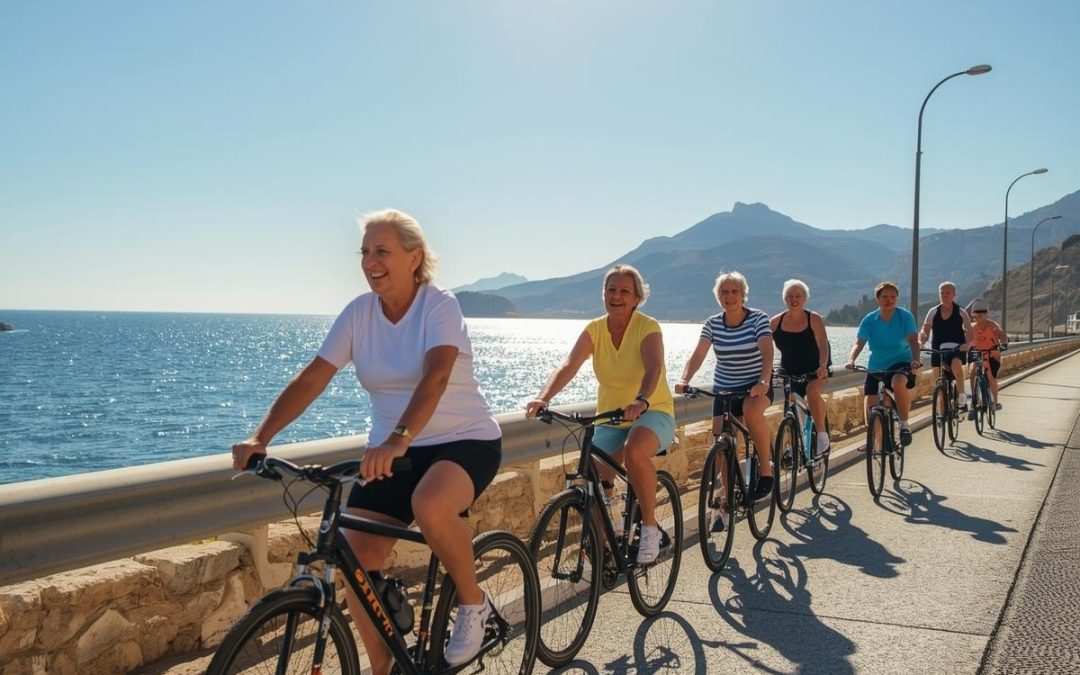
Picture a slow ride along the Costa Blanca coast, the Mediterranean on one side and orange groves on the other, with nowhere else to be. That’s the appeal of a cycling holiday on its own. But there’s also a real, well-documented case that cycling is one of the better things you can do for your long-term health, and a holiday is a genuinely good way to find out whether it’s for you.
One honest caveat before the numbers: most of the strongest research below comes from studies of people who cycle regularly, often as their daily commute, tracked over years. A single week of holiday riding won’t hand you the same risk reduction as a decade of commuting by bike. What it can do is show you what regular cycling actually feels like, and give you a realistic reason to keep some of it going once you’re home, which is exactly where the lasting benefit comes from.
| Area | What the research shows |
|---|
| Heart health | Cycle commuters have 41% lower all-cause mortality and 46% lower cardiovascular disease risk than non-active commuters (UK Biobank, 264,337 people) |
| A realistic starting dose | WHO Europe: cycling around 20 minutes most days is linked to at least 10% lower mortality risk overall |
| Diabetes risk | Committed commuter cyclists (150+ minutes/week) have 30% lower type 2 diabetes risk; even modest, occasional cycling shows a measurable reduction (Danish cohort, 52,513 people) |
| Mood and mental health | Research reviews consistently link cycling to improved mood and lower depression risk; high-mileage cycle commuters report meaningfully fewer sick days |
| Getting started | Benefits appear well before “fit”: consistency matters more than intensity, and starting later in life still shows real gains |
The Heart of the Matter: Cardiovascular Health
The best evidence here comes from a landmark UK Biobank study (Celis-Morales et al., published in the BMJ in 2017), which followed 264,337 UK adults for five years. People who cycled their full commute had a 41% lower risk of dying from any cause and a 46% lower risk of developing cardiovascular disease compared with people who didn’t actively commute at all. Those are genuinely large effects for a lifestyle change, and they hold up across a huge sample.
You don’t need to be riding at the pace of the pros in the Vuelta a España to see benefits start to appear. WHO Europe’s guidance is that roughly 20 minutes of cycling most days is associated with at least a 10% reduction in overall mortality risk, a dose that’s well within reach on an easy Costa Blanca coastal ride, not just a training camp.
The takeaway: the cardiovascular case for cycling is one of the stronger ones in preventive health research, and a holiday spent riding daily is a realistic taste of the habit that produces it, even if one week alone won’t replicate a five-year cohort effect.
Mental Recharge: Your Brain on Two Wheels
The mental health case for cycling is less headline-grabbing than the cardiovascular numbers, but it’s consistent across the research. Reviews of cycling intervention studies link regular riding to improved mood, reduced depression risk, and better subjective wellbeing, plausibly through a mix of moderate exercise, being outdoors, and the sense of covering real distance under your own effort.
There’s also a concrete workplace-health data point: a Finnish study following 28,485 public-sector employees found that the highest-mileage cycle commuters (30km or more a week) averaged 4.5 fewer sickness-absence days per year than passive commuters, with an 8-18% lower risk of extended sickness absence. That’s not proof that a week’s holiday delivers the same effect, but it’s a real signal that sustained cycling correlates with something beyond just fitness.
Riding the scenic routes around Costa Blanca adds something the sickness-absence data can’t measure directly: time away from screens, a change of scenery, and a physical rhythm that a lot of people find genuinely restorative. That’s worth taking seriously even without a specific number attached to it.
Metabolic Health: Diabetes Risk and Body Composition
A Danish cohort study (Rasmussen et al., PLOS Medicine, 52,513 people followed for 14 years) found that people who commuted by bike for 150 minutes or more a week had a 30% lower risk of developing type 2 diabetes than non-cyclists. Even modest, occasional cycling showed a measurable reduction, and people who started cycling partway through the study saw their risk drop by around 20% compared with those who stayed non-cyclists, rising to closer to 29% for people who kept it up.
Body composition is a fair question to ask about, and here the evidence is more mixed than the marketing language around cycling holidays usually admits. A recent controlled study of a 10-week commuter-cycling programme found real improvements in cardiovascular fitness but no measurable change in body fat percentage. Don’t book a cycling holiday expecting a visible transformation in a week; the diabetes and cardiovascular numbers above are where the genuine, well-documented payoff is.
If you’re starting out, family-friendly mountain bike trails are a good low-pressure way to build the habit without needing to be fit first.
Fitness Gains That Build Through Your Trip
What makes a cycling holiday different from a single gym session is the progressive element: the hill that felt hard on day one is usually more manageable by day three, and that’s a real, felt sense of improvement rather than a marketing line. Research across age groups consistently shows cardiorespiratory improvements from regular cycling, including in people who start later in life, so there’s no real age cutoff for seeing benefits.
The Costa Blanca’s range helps here too. You can work up toward genuinely tough terrain like Alto de Aitana, or stick to gentler ground like the coastal loop from Calpe to Denia, and your cardiovascular system adapts either way. There’s no fitness prerequisite for getting started, just a willingness to build up gradually over the days you’re here.
Common Concerns, Addressed
“I’m not fit enough.” The Danish diabetes cohort found that people who took up cycling partway through the study saw their type 2 diabetes risk drop by around 20% compared with people who stayed inactive, with no minimum fitness level required to start. E-bikes and rental services make hillier terrain accessible even if you’re starting from zero.
“It’s too expensive.” A 2025 study in PNAS modelled what would happen if cities worldwide raised their cycling infrastructure to Copenhagen’s level, and put the potential global health value at $435 billion a year, a reminder that cycling’s health case matters at a societal scale, not just a personal one. On the holiday-cost side specifically, a self-guided cycling trip often costs about the same as, or less than, a comparable beach holiday once you account for similar accommodation and meals.
“Weather and timing concerns.” Costa Blanca’s climate offers good riding conditions across most of the year, and our guide to cycling in hot weather covers how to handle the summer months if that’s when you’re visiting.
“I don’t know how to plan it.” Self-guided cycling tours remove most of the planning complexity while keeping the flexibility to ride at your own pace.
Getting Started: Your Beginner’s Action Plan
Choose your adventure level. Top bike rental shops in Calpe or Benidorm both offer e-bikes, which make hillier terrain accessible without needing to already be fit.
Build up gradually. Start with shorter, easier days and let your distance grow through the week rather than aiming for a big first-day ride. The Jalón Valley scenic loop is a good beginner-friendly distance with real scenery to show for it.
Keep equipment simple. A hybrid bike handles mixed terrain well, and packing for weather changes and staying hydrated matter more than having specialist gear. Short rides with breaks are entirely fine, you don’t need to ride continuously to benefit.
Plan for safety. Our safety tips for touring alone cover what to know before heading out solo, so the trip stays enjoyable rather than stressful.
Making the Benefits Last After Your Holiday
The honest version of “lasting benefit” isn’t that one week of holiday cycling rewires your health permanently, it’s that a holiday is a low-stakes way to find out whether you actually enjoy cycling enough to keep doing a version of it at home. The research above is overwhelmingly about people who ride regularly, so that’s the real target if you want the numbers in this article to apply to you.
Start small at home. You don’t need to replicate your holiday’s daily distance. Even a couple of short rides a week, commuting or otherwise, is closer to the doses used in the studies above than an occasional long weekend ride.
Find routes near home that give you a similar sense of exploration to what you had on holiday, even if the scenery can’t quite compete with the Mediterranean.
Connect with other riders. Cycling Clubs in Costa Blanca is worth a look if you’re planning a return trip and want to ride with people who know the roads, and joining a cycling community at home can help the habit stick the same way.
People who keep up even modest cycling after a holiday tend to hold on to more of the benefit than people who return to zero activity, which is really the whole case for trying it in the first place.
Frequently Asked Questions
How much cycling is needed to see health benefits? WHO Europe associates roughly 20 minutes of cycling most days with at least a 10% reduction in overall mortality risk. Bigger, more established benefits (the 41% mortality and 46% cardiovascular risk reductions from the UK Biobank study) come from sustained commuter-level cycling over years, not a single holiday.
Can complete beginners enjoy a cycling holiday safely? Yes. There’s no fitness threshold required to start seeing benefits from taking up cycling, and e-bikes plus supported or self-guided tours make it accessible at almost any starting fitness level.
What’s the difference between a cycling holiday and regular exercise for health? The underlying research is mostly about regular, sustained cycling, commuting in particular. A holiday won’t replicate years of that on its own, but it’s a genuinely good way to discover whether you’ll enjoy keeping some cycling going once you’re home, which is where the real long-term benefit comes from.
Does cycling help with weight or body composition? The evidence here is more mixed than for heart health or diabetes risk. A recent controlled study of a 10-week cycling programme found real fitness gains but no measurable change in body fat. Don’t expect visible body changes from a single trip; the cardiovascular and diabetes-risk numbers are where cycling’s evidence is strongest.
What if the weather isn’t ideal during my trip? Costa Blanca offers favourable cycling conditions across most of the year; our guide to cycling in hot weather covers how to manage the summer months if that’s when you’re visiting.
Should I book a self-guided or supported tour? Beginners often do well with supported tours that handle logistics, while more experienced riders may prefer the flexibility of a self-guided trip. Either way delivers the same underlying activity benefits.
by Ralf Tenbrink | 14, Jun 2025 | Bike Tours, Costa Blanca News, Latest News
How to Plan a Self-Guided Tour
Key Takeaways
| Step | What to Decide |
|---|
| Routes | Pick a mix of coastal and mountain days; see our essential climbs for specifics |
| Season | February-November is the practical riding window; see Climate below |
| Navigation | GPX files plus offline maps as backup; mobile signal is patchy inland |
| Base | One town for day rides (simplest) or multiple towns with luggage transfer |
| Support level | Fully independent, à la carte (rental plus transfer), or a supported self-guided package |
| Budget | Roughly €1,000-1,500 per person for a week, excluding flights |
Planning a self-guided cycling tour of the Costa Blanca comes down to five decisions: which routes to ride, what time of year, how you’ll navigate, where you’ll base yourself, and how much support you want to pay for versus arrange yourself. None of it is complicated on its own. The region has well-marked major routes, widely available bike rental, and a long enough season that timing mistakes are rarely costly. This guide walks through each decision in order.
Choosing Your Routes
Start with the essential climbs and routes on our main self-guided tours guide, which covers Coll de Rates, Port de Confrides, Alto de Aitana and the rest in detail, plus our full Coll de Rates guide if that’s your main target climb.
A few other routes worth knowing about when you’re planning a mix of days:
- Xorret de Catí has two very different approaches, worth knowing before you pick one. From Castalla it’s a short, brutal 3.8 km at an average 11.6% gradient, with the steepest section averaging close to 19-20%. From Petrer it’s a longer, gentler 13.2 km at 5.3% average, topping out around 13.8% on its hardest ramp. Pro teams have used both for training; pick Castalla if you want a short leg-breaker, Petrer if you’d rather grind it out over distance.
- Sierra Mariola, up to the hilltop village of Banyeres de Mariola, runs through lavender fields and pine forest rather than the coastal terrain most first-time visitors expect. It’s a genuinely different character of ride from the Coll de Rates side of the region, worth including if you’re staying more than a few days.
- Alicante to Valencia, ridden in stages of 40-60 km a day, is the option if you want to cover ground and see more towns rather than repeat loops from one base.
Mix mountain days with flatter coastal or valley days. Costa Blanca’s terrain reads as deceptive on paper: a 60 km day on the map can take much longer than a flat 60 km once you add the climbing and heat, so plan distances around elevation gain, not just kilometres.
Picking Your Season
The practical riding season runs February to November, and the shoulder months either side of summer are generally considered the best combination of weather and quiet roads. Alicante-Elche Airport, the closest official weather station, averages 2,953 hours of sunshine a year, according to AEMET’s official 1981-2010 climate normal, among the highest totals in mainland Europe.
Winter (December-February) has cool mornings and mild afternoons, quiet roads, and is when professional teams often train here. Spring (March-May) brings wildflowers and almond blossom (February especially) alongside comfortable temperatures. Summer (June-September) gets genuinely hot, regularly into the low 30s°C by midday, so plan to start by 7am and treat the afternoon as recovery time rather than riding time. Autumn (September-November) mirrors spring, with warmer sea temperatures.
Accommodation prices follow the same pattern as everywhere in southern Europe: shoulder-season (spring, autumn) tends to offer the best combination of good weather and lower rates than peak summer.
Sorting Navigation
Free GPX routes are available from local cycling groups and bike shops, and apps like Komoot, Strava and RideWithGPS offer pre-made routes with turn-by-turn directions. Download routes before you set off. Mobile coverage is generally solid along the coast but genuinely patchy in the mountains, so relying on a live connection for navigation is a real risk on remote sections, not just a theoretical one. A physical backup map or a written cue sheet costs nothing and covers you if a device fails.
Choosing Where to Stay
You have two basic strategies: base yourself in one town and do day rides, or move between towns and use a luggage transfer service.
One base, day rides is the simpler logistics. Calpe, Denia and Altea are the most popular choices, all offering reasonable access to both coastal and mountain routes without needing a car. Our accommodation directory lists cyclist-friendly options; look for secure bike storage, early breakfast times, and laundry facilities if you’re touring for more than a few days.
Multiple bases, moving each day gives more variety but adds planning overhead. Luggage transfer services, including local operators like Caffee Cadanz, move your bags between hotels so you can ride with just the day’s essentials. If you’re booking a package through an operator such as Sierra Sports & Tours, transfers are usually included.
Either way, build a rest day or two into the itinerary that can move if the weather doesn’t cooperate. Flexibility is one of the real advantages of planning your own trip rather than following a fixed guided schedule.
Preparing Physically and Packing
Costa Blanca’s climbing rewards some hill training before you arrive. Reasonable fitness benchmarks: comfortable with 50 km on flat terrain for coastal routes, able to sustain a steady effort uphill for 30-45 minutes for the mountain routes, and roughly 2,000 m of weekly elevation gain in training if you’re aiming for mixed terrain across a full week.
For gear: a compact chainset (50/34) with a cassette of at least 32T handles the steeper gradients comfortably if you’re bringing your own bike or specifying a rental. Pack layers regardless of season, since mountain descents run noticeably cooler than the coast even in summer. Sun protection matters more than most visitors expect: bring high-factor sunscreen and good sunglasses, and carry at least two water bottles, since some mountain sections go 30 km between villages with a reliable refill point.
Spanish meal times run later than many visitors are used to: lunch from around 2-4pm, dinner rarely starting before 8:30pm. That doesn’t always line up neatly with a riding schedule, so carrying emergency snacks and using local bakeries for morning pastries covers the gap.
Deciding How Much Support You Want
Self-guided doesn’t have to mean entirely on your own. Three broad options:
Fully independent: you plan routes, book accommodation and rental bikes yourself, and handle logistics as you go. Cheapest, most flexible, most time to arrange.
À la carte support: you handle the core planning but pay for specific services, most commonly bike rental with delivery to your accommodation, a luggage transfer service between bases, or hiring a local guide for a specific challenging day.
A supported self-guided package: an operator plans the route, books accommodation, arranges transfers and provides an emergency contact number, while you still ride independently on your own schedule. Sierra Sports & Tours and Cycle Fiesta both run this kind of package for around €1,270-1,400 per person for a week; see our self-guided tours guide for a fuller price comparison.
Budgeting for a Week
As a rough planning guide for a mid-range week, excluding flights: accommodation runs roughly €50-100 a night, bike rental €150-300 for the week, food €30-50 a day, and luggage transfers (if you’re using them) around €15-20 per move. That puts a typical mid-range trip at roughly €1,000-1,500 per person. Budget self-catering options can bring that down toward €700-900; a fully supported package with premium accommodation can run past €2,000. Treat these as planning estimates rather than current quotes, since prices shift with the season and the specific operators you book.
Frequently Asked Questions
How difficult is Costa Blanca cycling for an intermediate rider? There’s a route for most ability levels. Coastal riding is generally moderate rolling terrain; the well-known mountain climbs like Coll de Rates are genuinely challenging but not extreme (around 5-6% average gradient). If you’re comfortable with 50-60 km and 500-800 m of climbing at home, you’ll find plenty here to enjoy without needing to push into the hardest routes.
What’s the best base for a first-time visit? Calpe, for its central location and access to both coastal and mountain routes, plus the widest choice of cyclist-friendly accommodation and bike shops. Denia and Altea are strong alternatives with their own character. Inland towns like Jalón are quieter but mean more climbing just to get started each day.
Do I need to speak Spanish? No. English is widely spoken in tourist areas and by cycling-focused businesses. A few basic phrases help in smaller inland villages, but you can plan and ride a self-guided tour without them.
What bike should I bring or rent? A road bike suits almost every route described here, since the vast majority of riding is on paved roads. If your plans include gravel paths or rougher mountain trails, a gravel bike or hardtail is the better call. For rentals, ask for a compact chainset and at least a 32T cassette if you’re tackling the steeper climbs.
How much should I budget for a week? See the Budgeting section above: roughly €1,000-1,500 per person mid-range, excluding flights, with budget and premium options on either side of that.
When’s the rainy season? October through December sees the most rainfall, though even then it tends to come in short, intense bursts rather than prolonged wet spells. Summer (June-September) is reliably dry.
Can I combine cycling with other activities? Yes. Most self-guided visitors plan 4-5 riding days within a week-long trip, leaving room for beach time, hiking, or exploring towns like Guadalest or Altea’s old town on rest days.
Next Steps
Once your route and season are settled, read our safety tips for touring alone if you’re riding solo, and check Spain’s 2026 cycling rules before you go, since several requirements (helmet use, overtaking distances) changed this year. For the full route and cost breakdown, see our main self-guided cycling tours guide.
Research sources: Climate figures from AEMET’s official climate normals for Alicante-Elche Airport, 1981-2010. Xorret de Catí climb data from climbfinder.com (Castalla and Petrer approaches). Tour operator pricing checked against Sierra Sports & Tours and Cycle Fiesta directly, September 2026.
by Ralf Tenbrink | 5, Jun 2025 | Bike Tours, Costa Blanca News, Latest News, Road Cycling Routes in Costa Blanca
Coastal Loop from Calpe to Denia: The Ultimate Biking Adventure
Key Takeaways
- The Calpe to Denia coastal loop spans 75-100km with breathtaking Mediterranean views
- Best cycling season is November-March with temperatures of 15-20°C and dry roads
- Famous climbs include Cumbre del Sol (4km at 7% gradient) and routes through Montgó Natural Park
- Numerous bike-friendly accommodations available in Calpe, Javea, and Albir
- WorldTour pro teams regularly train on these routes during winter months
- Local coffee shops and restaurants cater specifically to cyclists’ needs
The Perfect Coastal Cycling Adventure
Have you ever dreamed of pedaling along stunning coastlines while challenging yourself on pro-level climbs? The Costa Blanca coastal loop from Calpe to Denia is exactly that dream come true. This route ain’t just popular with holiday cyclists – it’s where the big pro teams come to train during winter months.
The coastal loop offers something special that many cycling destinations don’t – variety. You can ride flat sections along beautiful beaches or challenge yourself on tough climbs with amazing views. What makes this route so good? It’s the perfect mix of hard bits and easy bits, with roads that are smoother than you’d expect.
“I’ve cycled all over Europe, but there’s sumthing magical about the Calpe to Denia loop,” says Miguel, a local cycling guide. “Where else can you climb the same mountains as Tour de France winners in the morning and be relaxing on a beach by afternoon?”
Biking Routes on Costa Blanca offers more detailed information about various cycling options in the region, not just this specific coastal loop. The website features comprehensive maps and elevation profiles that help riders plan their adventures better.
Route Overview and Key Sections
The basic route follows the coastline from Calpe through Moraira, Javea, and finally to Denia. Depending on which detours and climbs you choose, the total distance varies between 75-100km. The beauty of this route is you can make it as hard or easy as you want.
Starting in Calpe, you’ll head northeast along the coast. The road hugs the shoreline for several kilometers, giving you amazing views of the Mediterranean on your right. As you approach Moraira, the terrain gets a bit more rolling, with short climbs that aren’t too difficult.
After Moraira, you’ll continue toward Javea, where things get more interesting. Here, you can choose to take the coastal road or head inland for some challenging climbs. The coastal option is flatter but still has some small hills to keep things interesting.
From Javea to Denia, you’ll pass through some of the most beautiful scenery in Costa Blanca. The road winds through orange groves and past small villages before reaching Denia, where you can stop for lunch before heading back.
Exploring Costa Blanca: Top 5 Scenic Bike Routes for Every Cyclist provides additional information about other beautiful cycling routes in the region that might complement your coastal loop experience.
Famous Climbs and Challenges
What makes this route special? The climbs! The most famous is Cumbre del Sol, a 4km beast with an average gradient of 7%. This climb has been featured in La Vuelta a España multiple times, and it’s where riders like Tom Dumoulin and Primož Roglič have battled it out.
The climb starts gently but quickly ramps up. The middle section is the toughest, with gradients reaching over 15% in places. But the pain is worth it – the views from the top are absolutely stunning. You can see the entire coastline stretching out below you, with the Mediterranean sparkling in the distance.
Another challenging section is the climb through Parc Natural del Montgó near Denia. While not as steep as Cumbre del Sol, it offers a different kind of challenge with its winding roads and technical descents. The park itself is a protected area, so the roads are quiet and the scenery is unspoiled.
For those who want an even bigger challenge, there’s the option to add the Col de Rates, which isn’t directly on the coastal route but can be included as a detour. This climb is about 6.5km long with an average gradient of 5%, making it a good test without being too brutal.
Stage 8 Denia Xorret de Cati Costa Blanca Interior 164.8km provides insights into how professional races utilize these challenging terrains during competitions like La Vuelta.
Best Time to Cycle the Coastal Loop
When should you plan your trip? The Costa Blanca has an amazing climate that makes cycling possible year-round, but some seasons are better than others.
The prime cycling season runs from November to March. During these months, temperatures typically range from 15-20°C – perfect for riding without overheating or freezing. The roads are usually dry, and there’s minimal rainfall. This is why so many professional teams choose Costa Blanca for their winter training camps.
Summer months (June to September) can be very hot, with temperatures often exceeding 30°C. If you do ride during summer, start early in the morning to avoid the midday heat. Always carry plenty of water, as the combination of heat and climbing can lead to dehydration quickly.
Spring (April-May) and autumn (October) offer a nice middle ground, with pleasant temperatures and fewer tourists than the peak summer season. The landscape is particularly beautiful in spring, with wildflowers blooming along the roadsides.
“The best thing about Costa Blanca is you can escape bad weather back home and find perfect riding conditions here almost any time of year,” says Anna, a cycling tour operator based in Calpe. “Just don’t forget your sunscreen, even in winter!”
La Vuelta 2023 Spain: A Map of the Route shows how professional races are scheduled to take advantage of the region’s favorable climate conditions.
Bike-Friendly Accommodations Along the Route
One of the best things about cycling in Costa Blanca is the amazing infrastructure for cyclists. There are loads of bike-friendly hotels and accommodations that cater specifically to cyclists’ needs.
In Calpe, several hotels offer secure bike storage, maintenance areas, and even laundry services for cycling clothes. Some hotels have partnerships with local bike rental shops, making it easy to rent a quality bike if you don’t bring your own.
Javea has become a cycling hotspot in recent years, with Blanca Bikes Rental offering not just bikes but also accommodation options. Their boutique hotel provides a perfect base for exploring the coastal loop, with knowledgeable staff who can suggest routes based on your fitness level and interests.
Albir, located between Calpe and Benidorm, is another great option for cyclists. The Albir Playa Hotel & Spa is particularly popular with cycling groups and even professional teams. They offer secure bike storage, a workshop area, and easy access to the coastal route.
“What I love about staying in these cycling-focused hotels is the community,” says Mark, a regular visitor from the UK. “You meet other cyclists at breakfast, share route tips, and sometimes even find new riding buddies for the day.”
Most of these accommodations offer cyclist-friendly meals with early breakfast options and energy-rich foods. Some even prepare packed lunches that you can take on your ride, saving you the trouble of finding food along the way.
Local Amenities and Cyclist-Friendly Spots
The Costa Blanca region has embraced cycling culture, and you’ll find many businesses catering specifically to cyclists’ needs. From coffee shops to restaurants, there are plenty of places where lycra is welcome and bike parking is available.
Coffee stops are an important part of any cycling trip, and Costa Blanca doesn’t disappoint. In Javea, there are several cafes where you’ll spot cyclists refueling with espresso and pastries. D’Origen Coffee Roasters is particularly popular, known for its specialty coffees and cyclist-friendly atmosphere.
For lunch stops, the coastal towns offer plenty of options. In Denia, you can find restaurants serving fresh seafood right by the harbor – perfect for a midday break before heading back to Calpe. Pasta & Pasta near Albir is a family-run restaurant known for its handmade pasta dishes that provide the perfect carb loading for cyclists.
Bike shops are plentiful in the region, so you don’t need to worry if you have mechanical issues. Most towns along the route have at least one shop where you can get repairs or buy spare parts. Some even offer rental services if you prefer not to bring your own bike.
“The local businesses here understand cyclists,” explains Carlos, a shop owner in Moraira. “We know you might come in sweaty and in cycling shoes, and that’s completely fine. We’re just happy to see you enjoying our beautiful region.”
Cycling Costa Blanca: A Beginner’s Guide to Enjoying the Ride offers additional tips for newcomers about local amenities and cyclist-friendly establishments throughout the region.
Training Like a Pro: WorldTour Teams in Costa Blanca
Did you know that many WorldTour professional cycling teams choose Costa Blanca for their winter training camps? Teams like Ineos Grenadiers, Jumbo-Visma, and UAE Team Emirates have all been spotted on these roads, preparing for the upcoming season.
The appeal for pro teams is obvious – reliable good weather, varied terrain, and excellent infrastructure. When you ride the coastal loop, you’re literally following in the tire tracks of Tour de France winners and world champions.
Pro teams typically arrive in December and January, setting up base in hotels around Calpe and Denia. If you visit during this time, it’s not uncommon to see groups of professional cyclists out on training rides. Some teams even organize fan meets or open training sessions where amateur cyclists can watch them in action.
“It’s surreal to be climbing Cumbre del Sol and suddenly have Tadej Pogačar zoom past you,” laughs David, a cycling enthusiast from Germany. “But that’s what makes Costa Blanca special – you’re riding the same roads as your cycling heroes.”
The presence of professional teams has helped improve the cycling infrastructure in the region. Roads are well-maintained, drivers are accustomed to sharing the road with cyclists, and there’s a general respect for the sport throughout the area.
La Vuelta 2023 Spain Finishes in Madrid September 17th 2023 provides insights into how professional races showcase the region’s cycling infrastructure on a global stage.
Safety Tips and Local Regulations
Safety should always be your top priority when cycling, especially in an unfamiliar area. The good news is that Costa Blanca is generally very cyclist-friendly, but there are still some things to keep in mind.
Spanish traffic laws require cyclists to ride single file when necessary for safety, though riding two abreast is permitted when conditions allow. Helmets are mandatory for cyclists on interurban roads (outside built-up areas) but optional in urban areas for adults. However, it’s always recommended to wear one regardless of the legal requirements.
The roads along the coastal loop are generally in good condition, but some sections can have tight corners, especially on descents. Always ride within your limits and be cautious on unfamiliar descents.
“The most dangerous thing I see tourists do is not drinking enough water,” warns Elena, a local cycling guide. “The sun here is stronger than many people realize, even when it’s not super hot. Always carry more water than you think you’ll need.”
Be aware that during summer months, traffic can increase significantly due to tourism. If possible, start your rides early in the morning to avoid the busiest times on the road. Also, some of the smaller coastal roads can get congested during peak season.
It’s also worth noting that some areas have implemented changes to cycling infrastructure, so it’s always good to check the latest information before planning your route.
Extending Your Adventure: Beyond the Coastal Loop
While the Calpe to Denia coastal loop is amazing on its own, there are plenty of ways to extend your cycling adventure in Costa Blanca. The region offers countless routes that can complement your coastal experience.
If you’re looking for more climbing challenges, head inland to tackle the Col de Rates or the Puerto de Confrides. These climbs offer different scenery from the coastal route, taking you through olive groves, almond orchards, and traditional Spanish villages.
For those interested in mountain biking, Costa Blanca also offers excellent off-road options. The Ultimate Guide to Mountain Biking Adventures in Costa Blanca provides detailed information about trails and routes that showcase a different side of the region.
Many cyclists combine their road cycling trip with other activities. The beaches along the coast are perfect for relaxing after a hard ride, and the clear Mediterranean waters are ideal for swimming. Towns like Denia and Javea also offer water sports such as sailing and paddleboarding.
“What I love about Costa Blanca is the variety,” says Sophie, a cycling tour guide. “One day you can do the coastal loop, the next day climb mountains inland, and the day after that go for an easy recovery ride along flat roads. You never get bored here.”
For hikers, there’s also the option to explore some of the same areas on foot. The Coastal Loop from Calpe to Denia: The Ultimate Hiking Adventure offers a different perspective on this beautiful stretch of coastline.
Frequently Asked Questions
How difficult is the Calpe to Denia coastal loop? The basic route is moderate in difficulty, suitable for recreational cyclists with some experience. However, the route can be made more challenging by adding climbs like Cumbre del Sol. The total elevation gain ranges from 800m to 1,500m depending on your chosen route.
What type of bike is best for this route? A road bike is ideal for the coastal loop. The roads are generally well-paved, and a lightweight bike with good gearing will help on the climbs. If you plan to explore some of the optional gravel sections, a gravel bike or endurance road bike with wider tires would be better.
Where can I rent a bike in Costa Blanca? There are numerous rental shops in Calpe, Javea, and Denia. Blanca Bikes Rental offers quality road bikes and can deliver to your accommodation. Many hotels also have partnerships with rental companies.
Is it safe to cycle on the roads in Costa Blanca? Yes, the roads are generally safe for cycling. Spanish drivers are accustomed to cyclists, especially in this region. However, always remain vigilant, particularly during the busy tourist season when there are more rental cars on the road.
When is the best time of year to cycle this route? The prime cycling season is from November to March, with pleasant temperatures and dry roads. Spring and autumn are also good options. Summer can be very hot, so early morning rides are recommended if you visit during June-September.
Do I need to be super fit to enjoy this route? No, one of the beauties of this route is its flexibility. You can make it as challenging or as easy as you want. The basic coastal route is accessible to most cyclists with a reasonable level of fitness, while the additional climbs cater to those looking for more of a challenge.
Are there guided tours available for the coastal loop? Yes, several companies offer guided cycling tours of the Costa Blanca, including the coastal loop. These can range from single-day guided rides to week-long packages with accommodation included. This is a great option if you’re unfamiliar with the area.
What should I pack for cycling in Costa Blanca? Essentials include sunscreen (even in winter), sunglasses, a windproof/light rain jacket (just in case), and plenty of water. If cycling in winter, arm warmers and leg warmers are useful for early morning starts when it might be cooler.
Photo by Alain ROUILLER on Unsplash