by Ralf Tenbrink | 13, Aug 2026 | 2026 Vuelta a España, Costa Blanca News, La Vuelta Femenina
¿Qué es la Vuelta Femenina? Introducción a la gran vuelta ciclista femenina de España
Read this article in English
Hace diez años, la Vuelta Femenina era una sola tarde de carrera por las calles de Madrid. En 2026, fueron siete días de competición por Galicia y Asturias, con final en el Alto de l’Angliru, uno de los puertos más duros y temidos del ciclismo profesional. Esa es la historia completa de la carrera en una frase: una prueba de un día para velocistas que, año tras año, se convirtió en una de las vueltas más exigentes del calendario.
Si sigues la Vuelta a España masculina, y has leído nuestra cobertura de la brutal etapa 9 de este año con final en Aitana, esta es la versión femenina de la misma carrera, organizada por la misma empresa, y cada año más exigente.
Lo esencial
| Pregunta | Respuesta rápida |
|---|
| ¿Qué es? | La gran vuelta ciclista femenina de España, organizada por Unipublic, la misma empresa que organiza la Vuelta masculina |
| ¿Cuándo empezó? | En 2015, como una prueba de un día llamada Madrid Challenge |
| ¿Cómo ha cambiado? | Pasó de un día a una vuelta por etapas completa, sumando etapas casi cada año |
| Fechas en 2026 | Del 3 al 9 de mayo de 2026 |
| Recorrido en 2026 | De Galicia a Asturias, 7 etapas, con final en el Alto de l’Angliru |
| Ganadora en 2026 | Paula Blasi Cairol, la primera corredora española en ganar la carrera |
| ¿Qué cambia a partir de ahora? | La carrera pasa a septiembre en 2027, justo después de la Vuelta masculina por primera vez |
De un sprint de un día en Madrid a una vuelta por etapas completa
La Vuelta Femenina no empezó como una gran vuelta. Nació en 2015 como la Madrid Challenge, una sola jornada de carrera en un circuito urbano pensado para velocistas, y su primera ganadora fue la estadounidense Shelley Olds. La belga Jolien D’Hoore ganó las dos ediciones siguientes, en 2016 y 2017, consolidando la fama inicial de la prueba como una carrera de sprinters.
El cambio llegó poco a poco. En 2018, el recorrido se amplió por primera vez más allá del centro de Madrid, con la incorporación de una contrarreloj por equipos, y Ellen van Dijk se llevó la general. En 2019, esa primera etapa pasó a ser una contrarreloj individual, y la alemana Lisa Brennauer, ex campeona del mundo en esa modalidad, la ganó dos años seguidos. En 2020, la carrera se expandió a Castilla-La Mancha y creció a tres etapas.
La verdadera transformación llegó en 2021, cuando la carrera se trasladó a Galicia para una edición de cuatro etapas que incluyó la primera cronoescalada de su historia, ganada por Annemiek van Vleuten. Desde entonces, la carrera no ha dejado de sumar etapas, dificultad y finales en alto casi cada año, pasando de ser un escaparate para velocistas a una auténtica batalla por la clasificación general, el mismo camino que recorrió la Vuelta masculina décadas antes.
La edición de 2026
La carrera de 2026 se disputó del 3 al 9 de mayo, siete etapas, con salida en Marín (Galicia) y final en el Alto de l’Angliru (Asturias), un puerto tan exigente que su presencia en el recorrido se trata casi como un acontecimiento, tanto si lo visita la carrera masculina como la femenina. El recorrido pasó por Salvaterra de Miño, San Cibrao das Viñas, A Coruña, Antas de Ulla, Astorga y Nava antes de la etapa reina final.
Paula Blasi Cairol ganó la clasificación general, con solo 24 segundos de ventaja sobre Anna van der Breggen y 49 segundos sobre Marion Bunel, que además se llevó el maillot blanco de mejor joven. Lotte Kopecky ganó la clasificación por puntos, y el Team SD Worx-ProTime se llevó la clasificación por equipos. Fue, solo por diferencia de tiempo, uno de los finales más ajustados de la historia de la carrera. Hemos dedicado un artículo completo al podio, con la historia de cómo Blasi se convirtió en la primera corredora española en ganar su propia vuelta.
Por qué importa el final en l’Angliru
El Alto de l’Angliru no es un puerto cualquiera. Es uno de los mitos del ciclismo español, conocido por rampas que superan regularmente el 20% y una reputación que ha hecho bajarse de la bici a más de un profesional. Terminar una gran vuelta femenina ahí, en lugar de en un final más suave, es en sí mismo una declaración de lo lejos que ha llegado la carrera desde sus orígenes como circuito de sprint en Madrid. Es el tipo de final que antes se reservaba únicamente para la carrera masculina.
Hacia dónde va la carrera
A partir de 2027, la Vuelta Femenina abandona su tradicional cita de primavera y pasa a septiembre, disputándose justo después de la Vuelta a España masculina por primera vez, un cambio confirmado por la UCI dentro de su calendario World Tour de 2027. Todavía no existe un recorrido para esa edición. En cuanto se anuncie, probablemente junto con la presentación del recorrido masculino de 2027, lo cubriremos en un artículo aparte.
Recursos relacionados sobre ciclismo
Preguntas frecuentes
¿Qué es la Vuelta Femenina? La gran vuelta ciclista femenina de España, organizada por Unipublic, la misma organización que está detrás de la Vuelta a España masculina.
¿Cuándo empezó la Vuelta Femenina? En 2015, como una prueba de un día llamada Madrid Challenge, disputada en un circuito urbano en la capital española.
¿La Vuelta Femenina forma parte del UCI Women’s WorldTour? Sí, es una de las grandes vueltas por etapas del calendario.
¿Quién ganó la Vuelta Femenina 2026? Paula Blasi Cairol, la primera corredora española en ganar la carrera, con 24 segundos de ventaja sobre Anna van der Breggen.
¿Cuánto dura la Vuelta Femenina? La edición de 2026 tuvo 7 etapas en 7 días. La carrera ha crecido en duración casi cada año desde 2015.
¿Por dónde pasa la Vuelta Femenina? El recorrido cambia cada año. En 2026 discurrió por Galicia y Asturias, con final en el Alto de l’Angliru.
¿Está relacionada la Vuelta Femenina con la Vuelta a España masculina? Sí, ambas carreras las organiza Unipublic. A partir de 2027 se disputarán de forma consecutiva por primera vez, con la carrera femenina justo después de la masculina en septiembre.
¿Por qué se traslada la carrera a septiembre en 2027? Es un cambio confirmado por la UCI dentro de la reorganización de su calendario World Tour para 2027, situando la carrera femenina inmediatamente después de la Vuelta masculina en lugar de en su tradicional cita de primavera.
Fuentes: página oficial de historia de la Vuelta Femenina, clasificaciones oficiales de la Vuelta Femenina 2026, web oficial de la Vuelta Femenina 2026, Domestique Cycling, “UCI confirms 2027 WorldTour calendars as Vuelta España Femenina moves to September”.
by Ralf Tenbrink | 13, Aug 2026 | 2026 Vuelta a España, Costa Blanca News, La Vuelta Femenina
What Is La Vuelta Femenina? A Complete Introduction to Spain’s Women’s Grand Tour
Leer este artículo en español
Ten years ago, La Vuelta Femenina was a single afternoon of racing around the streets of Madrid. In 2026, it was seven days of racing across Galicia and Asturias, finishing on the Alto de l’Angliru, one of the hardest and most feared climbs in professional cycling. That’s the shape of the race’s whole story: a sprinters’ curtain-raiser that grew, year by year, into one of the toughest grand tours on the calendar.
If you follow the men’s Vuelta a España, and you’ve read our coverage of this year’s brutal stage 9 finish at Aitana, this is the women’s equivalent race, organized by the same people, and increasingly just as demanding.
Key Takeaways
| Question | Quick Answer |
|---|
| What is it? | Spain’s women’s professional grand tour, organized by Unipublic (the same organizer as the men’s Vuelta) |
| When did it start? | 2015, as a one-day race called the Madrid Challenge |
| How has it changed? | Grew from one day to a full multi-stage grand tour, adding stages almost every year through the 2020s |
| 2026 dates | May 3-9, 2026 |
| 2026 route | Galicia to Asturias, 7 stages, finishing on the Alto de l’Angliru |
| 2026 winner | Paula Blasi Cairol, the first Spanish rider ever to win the race |
| What’s changing next? | The race moves to September in 2027, running immediately after the men’s Vuelta for the first time |
From a One-Day Sprint in Madrid to a Full Grand Tour
La Vuelta Femenina didn’t start as a grand tour. It began in 2015 as the Madrid Challenge, a single day of racing on an urban circuit built for sprinters, and its first winner was the American rider Shelley Olds. Belgium’s Jolien D’Hoore won the next two editions, in 2016 and 2017, and the race’s early reputation as a sprinters’ event stuck.
The shift wasn’t sudden. In 2018, the route extended beyond central Madrid for the first time, adding a team time trial, and Ellen van Dijk took the overall win. In 2019, the race switched that opening stage to an individual time trial, and Germany’s Lisa Brennauer, a former World Time Trial Champion, won it twice in a row. By 2020, the race had expanded into neighboring Castilla-La Mancha and grown to three stages.
The biggest change came in 2021, when the race moved into Galicia for a four-stage edition that included its first-ever mountain time trial, won by Annemiek van Vleuten. From there, the race kept adding stages, difficulty, and mountain finishes almost every year, evolving from a sprinters’ showcase into a genuine general classification battle, the same shift the men’s Vuelta made decades earlier.
The 2026 Edition
The 2026 race ran May 3 to 9, seven stages, starting in Marín in Galicia and finishing on the Alto de l’Angliru in Asturias, a climb so difficult it’s treated as a landmark occasion whenever either the men’s or women’s race visits it. The route moved through Salvaterra de Miño, San Cibrao das Viñas, A Coruña, Antas de Ulla, Astorga, and Nava before the final mountain stage.
Paula Blasi Cairol won the general classification, finishing just 24 seconds ahead of Anna van der Breggen and 49 seconds ahead of Marion Bunel, who also took the young rider’s white jersey. Lotte Kopecky won the points classification, and Team SD Worx-ProTime won the team classification. It was, by margin alone, one of the closest finishes in the race’s history. We’ve written a full profile of the podium, including how Blasi became the first Spanish rider ever to win her home tour, in a separate piece.
Why the Angliru Finish Matters
Twenty-percent gradients aren’t a rare feature of the Alto de l’Angliru, they’re the norm for long stretches of it, and the climb has a reputation for making grown professionals talk about walking their bikes. Finishing a women’s grand tour there, rather than on a gentler summit, says a lot about how far the race has come from its Madrid sprint-circuit origins. It’s the kind of finish that used to be reserved for the men’s race alone.
Where the Race Is Headed
Starting in 2027, La Vuelta Femenina moves from its traditional spring slot to September, running immediately after the men’s Vuelta a España for the first time, confirmed by the UCI as part of its 2027 WorldTour calendar changes. No route details exist yet for that edition. Once they’re announced, likely around the same time as the men’s 2027 route reveal, we’ll cover it separately.
Related Cycling Resources
FAQ
What is La Vuelta Femenina? Spain’s women’s professional cycling grand tour, organized by Unipublic, the same organization behind the men’s Vuelta a España.
When did La Vuelta Femenina start? 2015, as a one-day race called the Madrid Challenge, held on an urban circuit in the Spanish capital.
Is La Vuelta Femenina part of the UCI Women’s WorldTour? Yes, it’s one of the calendar’s major stage races.
Who won La Vuelta Femenina 2026? Paula Blasi Cairol, the first Spanish rider ever to win the race, finishing 24 seconds ahead of Anna van der Breggen.
How long is La Vuelta Femenina? The 2026 edition ran 7 stages over 7 days. The race has grown in length almost every year since 2015.
Where does La Vuelta Femenina take place? The route changes each year. In 2026 it ran through Galicia and Asturias, finishing on the Alto de l’Angliru.
Is La Vuelta Femenina related to the men’s Vuelta a España? Yes, both races are organized by Unipublic. Starting in 2027, they’ll run back-to-back for the first time, with the women’s race following the men’s in September.
Why did the race move to September for 2027? Confirmed by the UCI as part of the 2027 WorldTour calendar changes, positioning the women’s race immediately after the men’s Vuelta rather than in its traditional spring slot.
Research sources: La Vuelta Femenina official history page, La Vuelta Femenina 2026 official rankings, La Vuelta Femenina 2026 official homepage, Domestique Cycling, “UCI confirms 2027 WorldTour calendars as Vuelta España Femenina moves to September”.
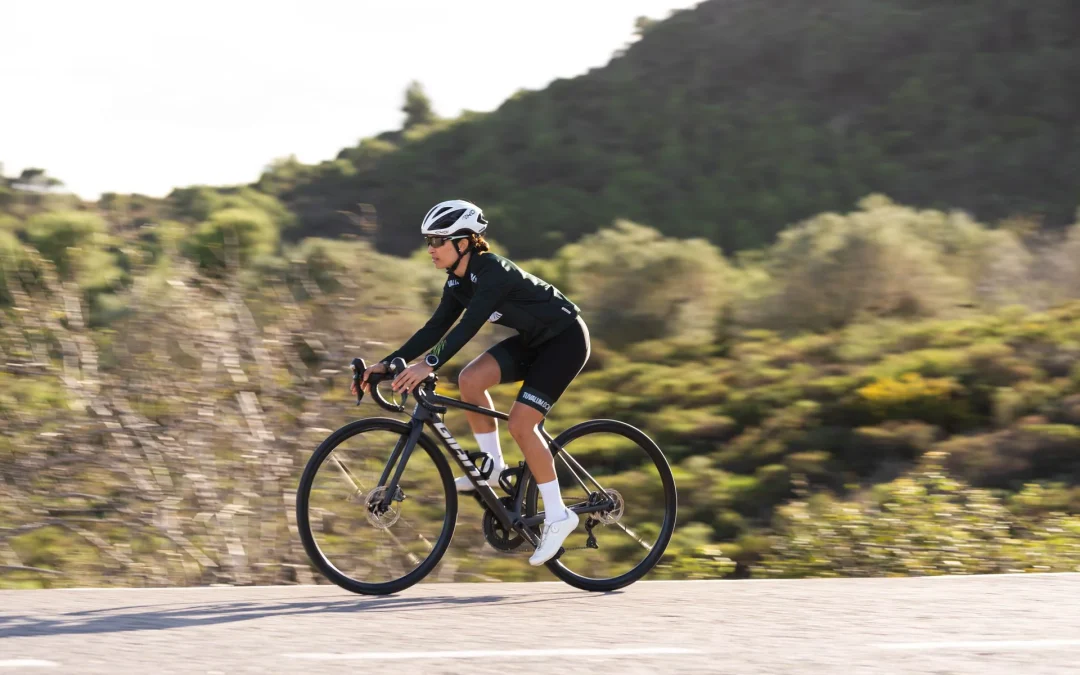
Photo by Tuvalum from Pexels: https://www.pexels.com/photo/woman-cycling-on-road-17239284/
by Ralf Tenbrink | 20, Jul 2026 | Costa Blanca News, Cycling Accommodation Costa Blanca
Cycling Accommodation in Guardamar del Segura: Where Cyclists Stay on the Costa Blanca
If your idea of a good cycling day involves flat, wind-in-your-face coastal roads rather than another 8% gradient, Guardamar del Segura is the part of the Costa Blanca you’ve probably been overlooking. It sits at the southern end of the province, where the terrain flattens out into pine forest, river paths, and a dune-backed coastline, a deliberate contrast to the mountain passes further north around Calpe and the Marina Alta.
Choosing where to stay here matters more than it might in a big cycling hub like Calpe, simply because there’s so little dedicated cycling infrastructure in the town yet. One hotel has actually built for cyclists. Everything else is a guess.
Key Takeaways
| Question | Quick Answer |
|---|
| Best base for cyclists in Guardamar? | Hotel Meridional, official Bike Friendly certification, secure storage, wash and repair facilities |
| What’s the terrain like? | Flat to gently rolling, coastal roads, river paths, pine forest tracks, hills rarely exceed 100m |
| How many official cycling routes are there? | 8, mapped and published by the Guardamar tourist board, all beginner to intermediate |
| Best for climbers too? | Not really. Save the mountain passes for a base near Calpe or Coll de Rates instead |
| When to visit? | Year-round riding is realistic here; spring and autumn are most comfortable, summer needs an early start |
| How far to the nearest big climbs? | Roughly an hour north by car to the Coll de Rates / Aitana area |
Why Stay in Guardamar del Segura for Cycling?
Most of the Costa Blanca’s cycling reputation is built on its mountains: Coll de Rates, the Alto de Aitana, Xorret de Catí. Guardamar is the opposite proposition, and that’s exactly its appeal. The town sits at the mouth of the Río Segura, backed by an 800-hectare pine forest and protected dune system that covers roughly 80% of its coastal territory, and the terrain barely rises above 100 metres for kilometres in every direction.
That flatness is deliberate riding, not a compromise. It’s where cyclists from the mountain towns come to recover, where families and less experienced riders can cover real distance without real climbing, and where winter-sun visitors can put in long, steady base-mileage weeks without a single punishing gradient. The Guardamar Tourist Board publishes eight official walking and cycling routes for exactly this kind of riding, from a short out-and-back along the dunes to longer loops through the Vega Baja farmland and connections to the neighbouring Torrevieja coastline.
Guardamar also benefits from something few Costa Blanca towns can offer: a purpose-built, traffic-free cycling corridor. The pinewoods route running from town to the Río Segura covers 3.3km where motorised traffic is banned outright, except for emergency services, and a dedicated bike lane runs along the N-332 coastal road connecting Guardamar directly to Torrevieja, passing the La Mata Salt Lake Lagoon Natural Park on the way.
What Cyclists Should Look For in Accommodation
None of this matters much if your hotel treats a bike as an inconvenience. A handful of things separate proper cycling-friendly accommodation from a hotel that just happens to be near some roads.
Secure, dedicated bike storage matters more here than the marketing suggests. A bike left in a standard room or an unlocked garage overnight is a bike at risk, and after a day riding sandy, salt-air coastal paths, you want somewhere it can actually be stored upright and locked rather than propped against a wardrobe.
Wash-down and repair facilities solve a problem specific to this part of the coast. The dune and pinewood routes kick up sand and grit that road cycling further north simply doesn’t produce, so a pressure washer and basic workshop tools on-site save you turning up at your next stop with a gritty drivetrain.
Early breakfast is worth checking before you book, especially outside the winter months. Guardamar’s flat routes are pleasant riding at 8am and considerably less pleasant at midday in July, so accommodation that can feed you and get you out the door early is doing you a real favour.
Local route knowledge at reception is rarer than you’d expect. Because Guardamar isn’t yet a well-established cycling base the way Calpe is, staff who can point you to the tourist board’s official route map, rather than a generic “the beach is that way,” are worth seeking out specifically.
Types of Cycling Accommodation in Guardamar del Segura
Cycling-certified hotels are, at the time of writing, represented by exactly one property in this town: a hotel with an official third-party Bike Friendly certification, purpose-built storage, and repair facilities. This is the safest option if bike security and support matter to your trip.
Self-catering apartments and villas are plentiful in Guardamar generally, since it’s a well-established Spanish and northern European retirement and holiday market, but very few advertise themselves as cycling-specific. If you go this route, confirm bike storage arrangements directly with the owner before booking rather than assuming a balcony or communal hallway will do.
Budget and mid-range hotels exist throughout the town but, beyond the one certified property above, none currently market dedicated cycling facilities. Fine for a short stopover, less ideal if you’re carrying an expensive bike and want peace of mind overnight.
Best Areas to Stay in Guardamar del Segura
The seafront and Marina de las Dunas area puts you closest to the dune routes and the river-mouth loop, and it’s where the town’s one cycling-certified hotel is based. Good for riders who want to roll straight out onto traffic-free paths.
The town centre, around the Tourist Information Office and the old quarter near Guardamar Castle, gives easier access to restaurants and everyday services, with the pinewoods route reachable in a few minutes by bike.
Just north toward Los Montesinos and the N-332 corridor suits riders planning to use the dedicated Guardamar-Torrevieja bike lane as a training route rather than a leisure ride, though accommodation options here lean more towards long-stay apartments than hotels.
Accommodation Near Popular Cycling Routes
Guardamar’s own route network is compact and largely rideable straight from the seafront: the 3.2km dunes and river-mouth loop, the 3.3km traffic-free pinewoods route, and the longer Vega Baja farmland routes that connect toward Rojales and the historic irrigation channels inland. All eight official routes are detailed on the Guardamar tourist board’s own route map, which is worth downloading before you arrive.
For riders who want a change of terrain without moving hotels, the dedicated bike lane along the N-332 connects directly to Torrevieja’s cycling routes, and bike hire in Torrevieja or bike hire in Orihuela Costa are both realistic day-trip options if your accommodation doesn’t offer rentals directly.
If you’re staying longer and want a serious climbing day, the Coll de Rates and Alto de Aitana area is roughly an hour north by car. Our complete guide to Coll de Rates covers what to expect if you make the trip.
Accommodation for Different Cyclists
Solo Riders and Couples
Guardamar’s flat, well-signed routes and short distances between town, beach, and pinewoods make it an easy solo or two-person base. The certified hotel’s sea-view rooms and on-site dining mean you don’t need a car for a comfortable few days.
Groups and Clubs
The Vega Baja routes and the Torrevieja connector give a club enough combined mileage for a proper training block without repeating the same loop daily. Confirm group bike storage capacity directly with any hotel before booking. Vertical storage racks hold a limited number of bikes at once.
Training Camps
This is arguably where Guardamar earns its keep. Flat, low-traffic, mild-winter riding is exactly what a training camp needs for base-building weeks, and the wider Costa Blanca does get over 300 days of sunshine most years, according to regional tourism figures. Just don’t expect the climbing volume a camp based near Calpe would offer. Treat this as a complementary base, not a substitute.
Families
The pinewoods route’s ban on motorised traffic (aside from emergency vehicles) and the flat dune and riverbank paths make this one of the safer family cycling bases on the Costa Blanca, better suited to younger or less confident riders than the mountain routes further north.
Long-Stay Winter Cyclists
Guardamar’s flat terrain is kinder on ageing joints and recovering injuries than repeated climbing, which is part of why the wider area has a strong long-stay northern European retiree market already in place. Long-stay discounts are worth asking about directly with accommodation, since they’re rarely advertised upfront outside peak season.
Accommodation Prices in Guardamar del Segura
Exact rates weren’t available to verify at the time of writing, so treat this as relative guidance rather than fixed figures. As with most of the Costa Blanca, expect the highest rates in July and August, when demand is driven by beach tourism rather than cycling, and Guardamar’s beaches are a major regional draw in their own right. Spring and autumn offer the best balance of good riding weather and lower rates. Winter is typically the cheapest season here despite being perfectly rideable, since Guardamar doesn’t yet attract the same winter training-camp demand that pushes prices up in Calpe. Long-stay and group bookings are worth negotiating directly, particularly outside July and August.
Insider Tips for Cyclists Staying in Guardamar del Segura
Download the official route map before you arrive. The tourist board’s PDF covers all eight routes with distances and start points, and it’s far more reliable than assuming a route exists on a generic mapping app.
Ride early in summer. With less tree cover than the pinewoods further inland and long exposed stretches along the dunes and coast, midday heat here is a real factor from June through September.
Don’t expect Calpe-level cycling infrastructure yet. Guardamar is a solid flat-riding base, but it doesn’t have Calpe’s density of bike shops, rental outlets, or cycling-specific hotels. Bring or hire what you need before you arrive if possible.
Use the Torrevieja bike lane as your link route. It’s one of the only stretches of properly protected, dedicated cycling infrastructure in this part of the province, worth building a longer ride around rather than ignoring.
Check tide and wind conditions on the exposed coastal sections. The dune and river-mouth routes run close to open water, and a strong Levante wind can make the return leg considerably harder than the outbound one.
Featured Cycling Accommodation in Guardamar del Segura
Hotel Meridional (GastroHotel Meridional), seafront hotel, Guardamar del Segura. The only accommodation in town with an official Bike Friendly certification. Facilities include vertical bike storage racks with independent locks, a pressure washer, and a workshop stocked for minor repairs. Reception provides information on self-guided routes departing directly outside the hotel and can arrange bike rental. Recently renovated sea-view rooms, a full breakfast buffet, two on-site restaurants (including one recommended by the Repsol Guide in 2024 and 2025), and a rooftop Sky Bar looking out over the beach, Santa Pola Bay, and Tabarca Island. Best suited for solo riders, couples, and small groups who want a properly equipped cycling base rather than a generic beach hotel. Visit Hotel Meridional.
Own a cycling-friendly property in Guardamar del Segura? We currently list exactly one verified cycling accommodation option for this town, which means there’s real, uncontested visibility available here for the right property. Get in touch to list your business and reach cyclists specifically looking for a flat-riding, southern Costa Blanca base.
Compare Cycling Accommodation in Guardamar del Segura
With only one verified cycling-specific option currently available, the comparison in Guardamar is less about choosing between properties and more about deciding whether this town fits your trip at all. If flat, low-traffic riding and easy access to Torrevieja’s routes appeal to you, Hotel Meridional is a straightforward, well-equipped choice. If you’re planning a climbing-focused trip, you’ll get more from our Calpe accommodation guide or a base nearer Coll de Rates instead. Either way, request availability directly through our directory before you book.
Related Cycling Resources
FAQ
What is the best cycling hotel in Guardamar del Segura? Hotel Meridional is currently the only accommodation in Guardamar with official Bike Friendly certification and purpose-built storage, wash, and repair facilities.
Does Guardamar del Segura have cycling-specific accommodation? Yes, but only one verified option at present. Most other accommodation in the town doesn’t market itself specifically to cyclists.
Is Guardamar del Segura good for cycling? Yes, particularly for flat, low-traffic riding. The town has eight official cycling routes published by the local tourist board, plus a traffic-free pinewoods path and a dedicated bike lane connecting to Torrevieja.
Is Guardamar suitable for serious climbers? Not really. The terrain here stays close to sea level. Climbers should base themselves further north, closer to Calpe or the Coll de Rates and Aitana area.
Can accommodation in Guardamar arrange bike rentals? Hotel Meridional can arrange rentals through reception. Beyond that property, check directly with individual hotels or apartments, as rental partnerships aren’t standard across the town.
Is Guardamar del Segura good for winter cycling? Yes. The flat terrain and mild coastal climate make it a realistic year-round riding base, and it’s more affordable in winter than more established cycling towns further north.
How far is Guardamar from the nearest big climbs? Roughly an hour by car to the Coll de Rates and Alto de Aitana area, which is too far for a casual day loop but manageable as an occasional day trip.
Are the cycling routes in Guardamar official or informal? Official. The Guardamar Tourist Board publishes and maps eight walking and cycling routes with a downloadable PDF guide.
What should cyclists look for in accommodation here specifically? Secure bike storage, a wash-down facility for sand and grit from the dune routes, and early breakfast service, since the best riding conditions in summer are before mid-morning.
Is there public cycling infrastructure connecting Guardamar to nearby towns? Yes. A dedicated bike lane runs along the N-332 coastal road between Guardamar and Torrevieja, passing the La Mata Salt Lake Lagoon Natural Park.
Research sources: Guardamar Tourist Board – Walking and Cycling Routes, Hotel Meridional – Costa Blanca: The Best Spot for Bike Touring, Hotel Meridional official site.
by Ralf Tenbrink | 18, Jul 2026 | Costa Blanca News, Cycling Accommodation Costa Blanca
Cycling Accommodation in Denia: Where Cyclists Stay on the Costa Blanca
Denia doesn’t get talked about as much as Calpe, but ask around at any Costa Blanca training camp and you’ll find plenty of cyclists who rate it just as highly, if not more. It’s one of only two towns on this coast that WorldTour teams treat as a genuine winter base, and the accommodation built around that reputation is some of the most cycling-specific you’ll find in Spain: bike storage rooms sized for entire teams, workshops with proper tools, and breakfasts timed for early starts rather than late check-outs.
Choosing where to stay matters more here than in most holiday towns. Denia sits at the northern tip of the Marina Alta, with climbs like Coll de Rates, Vall de Gallinera, and Vall d’Ebo all within a short ride inland, and a very different kind of riding along the coast toward Xàbia. Get your base wrong and you’ll spend half your trip driving to the good roads instead of riding them.
Key Takeaways
| Aspect | Details |
|---|
| Best for | Winter training, road climbing, coastal riding, longer stays |
| Nearby climbs | Coll de Rates (~25 km), Vall de Gallinera, Vall d’Ebo, Cumbres del Sol |
| Pro training season | December–January (WorldTour and Continental teams) |
| Amateur high season | February–April |
| Climate | Mediterranean, around 300 sunny days a year, mild winters |
| Accommodation currently listed | La Sella Resort, Marina Beach 38 |
| Nearest bases for comparison | Calpe |
Why Stay in Denia for Cycling?
Denia and Calpe are the two towns most closely associated with professional cycling’s Costa Blanca winter migration, and Denia gets the bigger share of it. Multiple WorldTour and Continental teams base their pre-season camps here every December and January, drawn by the same things that make it work for the rest of us: reliable winter weather, quiet inland roads, and quick access to serious climbing without a long drive to get there.
Cycling Weekly has covered Denia and Calpe together as a matched pair for exactly this reason, and the Comunitat Valenciana tourism board promotes the area specifically around its cycling appeal rather than as a general beach destination. That’s a fairly unusual thing for a regional tourism board to lead with, and it says something about how established the town’s reputation is among riders.
The climate does a lot of the work. Denia sees around 300 days of sunshine a year and mild winters that draw Northern European cyclists escaping the cold, while summer temperatures in the mid-to-high 20s make early starts the norm rather than the exception. Inland, the roads climbing toward Vall de Gallinera and Vall d’Ebo are quiet enough that you can ride for long stretches without seeing a car, and the terrain ranges from flat coastal spinning to some of the region’s best-known climbs.
What Cyclists Should Look For in Accommodation
A hotel that’s merely close to good roads isn’t the same as one that’s actually built for cyclists. A few things are worth checking before you book:
Secure bike storage. A locked room, not a corridor or a balcony. If you’ve flown a bike out or you’re on a rental with decent components, this matters more than almost anything else on this list.
Bike storage capacity and setup. Some properties go well beyond a spare room. The La Sella Bike Centre, for example, is a purpose-built 100 m² facility with individually lockable boxes for up to 20 bikes, a bike wash area, and a water bottle filling station, exactly the kind of infrastructure a training group needs.
Workshop facilities. A track pump and a repair stand on-site save you a trip into town for something minor.
Laundry. If you’re riding daily, you’re going through kit fast. Same-day laundry is a small thing that makes a week-long trip much easier to pack for.
Early breakfast. Beat the heat in summer or make the most of short winter daylight, and a 7am or 6:30am breakfast service (rather than a standard hotel’s 8am start) is a real, practical difference.
Recovery facilities. A pool, sauna, or on-site massage isn’t essential, but it matters more on a training-focused trip than a sightseeing one.
Airport transfers and bike box storage. Useful if you’re flying in with your own bike and don’t want to build it the moment you land.
Bike rental partnerships. Not every visitor brings a bike. Accommodation with a direct link to a local rental provider, or that rents bikes itself, removes a real logistical headache.
Types of Cycling Accommodation in Denia
Cycling-specific hotels and resorts. Built or adapted specifically around cyclists, usually with the fullest range of facilities: dedicated storage, workshops, and staff who understand training schedules. The trade-off is usually price and a more structured, less flexible stay.
Boutique cycling B&Bs. Smaller and more personal, often run by cyclists themselves. You lose some of the scale of a full resort but gain a more tailored experience, sometimes including house bikes and local route knowledge that’s hard to get anywhere else.
Apartments. Good for longer stays or groups who want their own space and kitchen. Bike storage varies a lot property to property, so it’s worth confirming before booking rather than assuming.
Villas. The best option for larger groups or families mixing cycling with a broader holiday, though you’ll typically need to arrange your own bike storage and servicing rather than relying on hotel infrastructure.
Denia’s current listed accommodation on this site leans toward the resort and boutique-B&B end of that range. If you’re specifically after an apartment or villa, our Denia bike shops and bike hire pages are still useful for sorting out storage, servicing, and rental bikes independently of where you stay.
Best Areas to Stay in Denia
Near the port and town centre. Convenient for food, bike shops, and Cafe Ciclista, a long-established meeting point for both amateur and pro riders in the area. Good if you want easy access to daily life alongside your riding.
Beachfront, toward Las Marinas. Flatter, quieter roads right from your door, useful if you’re building up base miles or riding with less experienced companions before tackling the inland climbs.
Inland toward La Sella and Jesús Pobre. Closer to the climbing. This is where most of the pro-team-standard accommodation sits, and it puts you within a short ride of Coll de Rates, Vall de Gallinera, and Vall d’Ebo without the coastal traffic of the town centre.
Which one suits you depends on what kind of trip you’re planning. A training camp focused on climbing points inland; a family trip mixing beach time with occasional rides points toward the coast.
Accommodation Near Popular Cycling Routes
Denia’s real advantage is what’s within reach without a long transfer. Coll de Rates, arguably the most famous training climb on the Costa Blanca (see our full climb guide), sits roughly 25 km inland. Vall de Gallinera and Vall d’Ebo extend that same ride into a proper half-day loop, and Cumbres del Sol, a three-time Vuelta a España stage finish, anchors a well-known 67 km circular route from the town.
Staying inland toward La Sella cuts the ride to all of these down significantly. Marina Beach 38, one of the two properties currently listed for Denia, specifically markets its position around access to Vall d’Ebo, Vall de Gallinera, and Coll de Rates, which gives you a sense of how central those three routes are to why cyclists choose this town at all.
Coastal riders have their own draw: the coastal loop from Calpe to Denia connects the two towns directly, and if you’d rather explore the Jalón valley side of the Marina Alta, our Jalón Valley Scenic Loop is a short transfer from either base.
Accommodation for Different Cyclists
Solo Riders
A boutique B&B like Marina Beach 38 tends to suit solo travellers well: smaller, more personal, and often with house bikes available so you’re not committed to your own equipment for the whole trip.
Couples
Beachfront or town-centre accommodation gives you a mix of riding and normal holiday time, which usually matters more to a couple than being within a five-minute ride of the hardest climb.
Groups and Clubs
Look for storage capacity, not just storage existence. A facility like La Sella’s, built for up to 20 bikes, is designed around exactly this kind of group, and having everyone’s bikes in one secure space simplifies group logistics considerably.
Training Camps
Inland, near La Sella, for the shortest possible transfer to the climbs, combined with proper recovery facilities. This is also where you’re most likely to be staying alongside an actual WorldTour team during December and January.
Families
Coastal accommodation with flatter riding nearby works better than a climbing-focused base, especially if only part of the group is cycling seriously.
Long-Stay Winter Cyclists
Denia’s mild winters make it a genuine long-stay destination, not just a week-long training camp town. Apartments generally offer better value than hotel rooms for stays of several weeks or more, though you’ll want to confirm bike storage arrangements directly rather than assuming a standard apartment listing includes it.
Accommodation Prices in Denia
Exact pricing changes too often and too property-by-property to print reliable numbers here, but the seasonal pattern is consistent and worth planning around.
December–January is peak demand from professional teams, and rooms at cycling-specific properties get booked up well in advance. If you’re planning a winter trip specifically to ride alongside the pros, book early.
February–April is the busiest amateur season, as clubs and groups follow the same weather window the professionals use, so prices and availability tighten up here too, just with a broader mix of guests.
Late spring and autumn tend to offer the best value: same climate benefits, noticeably fewer bookings.
Summer is quieter for cycling-specific accommodation, since the heat pushes serious training elsewhere, which can make it a good time for a more relaxed, less crowded trip if you don’t mind riding early.
Long stays are generally where you’ll find the most room to negotiate, particularly for winter-season apartment bookings, since owners would rather fill a property for two months than leave it empty between shorter bookings.
Insider Tips for Cyclists Staying in Denia
Book winter well ahead. If you want to be in Denia during pro training season, treat December and January bookings the way you’d treat a major race weekend: early.
Don’t underestimate the wind on coastal routes. The flat roads toward Las Marinas look easy on a map, but they’re exposed, and a headwind out can mean a genuinely hard ride back.
Coll de Rates gets crowded at exactly the time you’d expect. Late morning during the winter training window is when you’re most likely to see professional teams, and also when the climb is busiest with amateurs hoping for the same thing.
Don’t skip Cafe Ciclista. It’s a genuine local institution for cyclists in the area, not just a tourist recommendation, and a good first stop for local route knowledge if you’re new to town.
Confirm bike storage before you book, not after. Not every apartment or villa in Denia is set up for it, even if the listing doesn’t mention it either way.
Featured Cycling Accommodation in Denia
La Sella Resort Type: Golf and sports resort Location: Inland, near Jesús Pobre, a short ride from Coll de Rates and the Marina Alta climbs Cycling features: Purpose-built La Sella Bike Centre with secure storage for up to 20 bikes, bike wash area, water bottle filling station Best suited for: Training camps, clubs, and groups wanting resort-level facilities Visit the listing
Marina Beach 38 Type: Cycling B&B Location: Near the beach, close to Centro Deportivo Cycling features: House Trek Madone SL6 bikes available, secure storage, fully equipped workshop, early local breakfasts, optional fitness dinners Best suited for: Solo riders, couples, and smaller groups wanting a more personal, cyclist-run stay Visit the listing
Own or manage a cycling-friendly property in Denia? These are currently the only two listed for the town, which means there’s real visibility to be had here for apartments, villas, and budget options that aren’t represented yet. Get in touch to be featured.
Compare Cycling Accommodation in Denia
Both La Sella Resort and Marina Beach 38 serve cyclists well, but they suit different trips: one is built for training-camp scale, the other for a smaller, more personal stay. Before booking, it’s worth checking current availability directly with each property, since winter dates fill up fastest.
Browse all Denia cycling accommodation to compare both listings side by side, or get in touch if you’d like help matching your trip to the right base.
Related Cycling Resources
Frequently Asked Questions
What is the best cycling hotel in Denia? La Sella Resort is the largest and most facility-rich option currently listed, with a purpose-built bike centre for up to 20 bikes. Marina Beach 38 is the better fit if you want a smaller, more personal cycling B&B with house bikes included.
Do cycling hotels in Denia provide bike storage? The properties listed here do. La Sella’s bike centre is a dedicated 100 m² facility with individually lockable storage; Marina Beach 38 offers secure storage alongside a workshop. Always confirm storage directly with any property before booking.
Can accommodation in Denia arrange bike rentals? Marina Beach 38 provides house bikes to guests. If you’re staying somewhere without bikes included, our Denia bike hire guide covers independent rental options.
Is Denia good for winter cycling? Yes. Along with Calpe, it’s one of the two Costa Blanca towns that WorldTour and Continental pro teams treat as a genuine winter training base, thanks to mild temperatures and roughly 300 days of sunshine a year.
How far is the nearest major climb from Denia? Coll de Rates is around 25 km inland. Vall de Gallinera and Vall d’Ebo are reachable in the same ride, and Cumbres del Sol, a three-time Vuelta a España stage finish, anchors a 67 km circular route from the town.
What facilities should cyclists look for in Denia accommodation? Secure bike storage, workshop access, early breakfast options, and laundry are the essentials. Recovery facilities and airport transfers matter more for longer or training-focused trips.
When do professional cycling teams stay in Denia? Mainly December and January. Amateur clubs and groups follow in February through April, so both windows see tighter availability than the rest of the year.
Is Denia better than Calpe for a cycling trip? Neither is objectively better; they suit slightly different trips. Both are established pro training bases with similar climates. See our Cycling Accommodation in Calpe guide to compare directly.
Can I stay in Denia long-term as a winter cyclist? Yes, and the mild winter climate makes it a genuine option for stays of several weeks or more, not just a one-week training camp. Confirm bike storage arrangements directly for longer apartment stays.
Is Denia accommodation expensive during pro training season? December and January see the highest demand from professional teams, so cycling-specific properties book up early. Late spring and autumn typically offer the best value for similar weather.
Research sources: Cycling Weekly, “Cycling in Costa Blanca: a cyclist’s guide to Denia and Calpe”; Comunitat Valenciana tourism board, “La Sella Cycling Experience”; La Sella Golf Resort, cycling facilities page; Denia.net, “Why Cycling in Dénia and the Region”; accommodation listings from bikescostablanca.com’s Denia accommodation directory.
by Ralf Tenbrink | 15, Jul 2026 | Bike Tours, Costa Blanca News, Road Cycling Routes in Costa Blanca
Coll de Rates: The Complete Cyclist’s Guide to Costa Blanca’s Most Famous Climb
If you’ve spent any time on a road bike in the Marina Alta, you’ve heard people talk about Coll de Rates. It’s the pass between Parcent and Tàrbena that WorldTour teams use for winter training, the climb with a Strava leaderboard stacked with pro names, and, for a lot of visiting cyclists, the whole reason they picked Costa Blanca over anywhere else in Spain. It’s not the longest or the steepest climb in the region, but it’s become the one everyone rides at least once.
This guide covers everything you need to know before you go: the numbers, both sides of the climb, the Strava record chase that’s put it on the map, when to expect company from the pros, and how to be a good guest on their training roads.
Key Takeaways
| Aspect | Details |
|---|
| Location | Between Parcent and Tàrbena, Marina Alta, Alicante province (road CV-715) |
| Category | UCI Category 2 climb |
| Distance | 6.43 km (official Strava segment, from the edge of Parcent) |
| Average Gradient | 5.5%, unusually consistent for a Spanish climb |
| Elevation Gain | 275 m, topping out at 896 m |
| Extended Option | An optional, much steeper spur beyond the col, locally nicknamed “Super Rates” |
| Other Side | Coll de Tàrbena, 5.5 km, more exposed to wind, quieter |
| Best Season | November to February for pro-spotting; rideable year-round |
| Nearest Bases | Calpe, Benidorm, Altea, or the Jalón Valley |
Why Every Cyclist on the Costa Blanca Talks About This Climb
Coll de Rates isn’t a secret anymore. WorldTour squads including Tudor Pro Cycling, Soudal-QuickStep, Picnic PostNL, and Visma-Lease a Bike now build it into their winter training camps around Calpe, continuing a tradition that goes back more than a decade to when Astana and QuickStep first started basing riders here. Several Belgian and Dutch pros, including Remco Evenepoel and Mathieu van der Poel, own homes on the Costa Blanca and use the climb as a regular fixture during their winter blocks.
Part of the appeal is simply geography. It’s the closest proper climb to Calpe, with a gradient steady enough for structured training efforts and few enough corners to ride hard without constantly braking. As Tudor Pro Cycling’s Larry Warbasse told Cyclingnews earlier this year, “it’s become sort of ‘the’ climb in the area.” That reputation now pulls in amateur riders from across Europe hoping to ride the same tarmac, at the same time of year, as their favourite pros.
The Climb, Step by Step
Starting Out From Parcent
The official Strava segment begins just outside Parcent, right after a left turn at the edge of the village. Look for road signs marking it as a “Ruta Ciclista” and asking drivers to leave 1.5 metres when overtaking, a rule that’s now written into Spain’s 2026 cycling laws. If you want a coffee before you start, Musette Café near Parcent is worth the stop. Remco Evenepoel and Mathieu van der Poel have both been spotted there before a ride.
The Climb Itself
From the start, the road climbs gently through a few early hairpins under pine trees before settling into a long, near-straight stretch that hugs the hillside for close to two kilometres. This is the best part of the ride for scenery: on a clear day you can see the Mediterranean roughly 35 km away, and the hillside also shields you from any wind coming off the south. One final hairpin brings you up to the pass itself, marked by a gradient sign and a weathered “Coll de Rates” marker plastered in stickers from riders who’ve made it to the top.
At the col, a side road leads right to a restaurant with what might be the best lunch-stop view on the Costa Blanca. If you’re happy to stop there, that’s the classic ride done. If you want more, keep reading.
Surface, Traffic, and Water
Road surface is generally good tarmac the whole way up, with only occasional rough patches; most riders rate it as one of the better-maintained climbs in the area. Traffic is light. This is a quiet valley road rather than a through-route, though you should still expect the occasional car, especially near Parcent. There’s no reliable water stop between the start and the col itself, so fill your bottles before you leave. The restaurant at the top sells drinks if you need a refill for the descent.
Should You Ride to “Super Rates”?
Past the restaurant, a narrow lane continues to the true summit of the hill, an optional extension that local riders have nicknamed “Super Rates.” It’s short, but it’s brutal: a mix of broken tarmac and gravel with sustained double-digit gradients, dead-ending at a lookout point with nothing but a fire-watch post and, by most accounts, the best view of the whole ride. Because it’s a dead end, you’ll need to descend the same steep, loose surface you just climbed, so it’s really only worth it if you’re comfortable on a bike with wider tyres and don’t mind walking the odd section. Even a handful of pros, including Van der Poel and Thibau Nys, have ridden up out of curiosity rather than for training value.
If you skip it, don’t feel bad. The main climb to the col is the one that matters for Strava bragging rights, and it’s the one nearly everyone actually rides.
The Strava Battle: How Fast Is Fast?
Coll de Rates has one of the most closely watched Strava segments in professional cycling, and the record has changed hands several times over the years:
| Year | Rider | Time |
|---|
| 2018 | Jonas Vingegaard (then a Continental-level rider) | 13:02 |
| Early 2024 | Peter Øxenberg (now Ineos) | 12:38 |
| December 2024 | Tadej Pogačar (UAE Team Emirates-XRG) | 12:21 |
| December 2025 | Tadej Pogačar | 11:57, at an average speed of 32.3 km/h |
Puck Pieterse holds the women’s record at 14:45. The climb has even attracted its share of drama. A Strava account impersonating Vingegaard briefly appeared to beat Pogačar’s time this past winter before it turned out to be an obvious fake, almost certainly set from a motorbike or car rather than a bike.
For the rest of us, realistic targets look a little different. At a steady 15 km/h you’ll be at the top in around 38 minutes; push to 19 km/h and it’s closer to 30 minutes. Riding it comfortably at 11 km/h, a perfectly respectable pace for a first attempt, takes around 52 minutes. Nobody expects you to chase Pogačar’s time, and nobody will judge you for not trying.
Parcent or Tàrbena: Which Side Should You Climb?
The Parcent side is the classic, and the one described above: 6.43 km, a consistent 5.5%, sheltered from southerly wind, and the side almost every pro rides for training.
The other option is the Coll de Tàrbena, approached from the south and popular with riders based around Benidorm. It’s shorter at 5.5 km but more exposed, which makes it windier and slightly less predictable for structured efforts. That’s one reason it sees less pro traffic than the Parcent side, even though the views are just as good.
Strong riders often combine both: climb one side, descend the other, and loop back through the Jalón Valley. If that appeals, our Jalón Valley Scenic Loop route connects neatly with the Parcent approach and makes a satisfying half-day ride out of it.
Coll de Rates isn’t the only serious climb inland from the coast. Alto de Aitana, which featured as a Vuelta a España summit finish, is a longer and considerably harder option if you’re looking for a second target during the same trip.
Best Time to Ride (and When You’ll See the Pros)
Coll de Rates is rideable all year thanks to the Costa Blanca’s mild climate, but the timing changes what kind of ride you’ll get.
November through February is winter training camp season, when most WorldTour teams are based on the coast. If you want a chance of riding alongside professionals, aim for a mid-morning slot, say 10:30am to 1pm, when teams typically head out for their longer training rides. Just be aware this is also when the climb is busiest with amateur riders hoping for the same thing.
Spring and autumn offer near-identical weather with far fewer people on the road, which makes them the better choice if you’d rather ride the climb than watch other people ride it. Summer is manageable too, but with midday temperatures regularly above 30°C, an early start is worth planning around.
Etiquette: Sharing the Road With the Pros
Riding alongside professional cyclists is part of what makes Coll de Rates special, but it comes with some responsibility. Pro riders are on the coast to train, not to perform for an audience. Getting too close, tailing them for photos or video in particular, is more than just bad manners. Earlier this year, a high-profile rider was involved in a crash after being followed too closely by an amateur rider trying to film him, prompting his team to publicly ask fans for more space.
A few simple rules go a long way: keep a respectful distance, don’t draft off riders you don’t know, and remember that the same 1.5-metre passing rule that applies to cars applies to how you overtake other cyclists too. If you happen to end up next to a WorldTour rider at a junction, a nod or a hello is plenty. There’s no need to make it a moment.
Getting There and Where to Base Yourself
Parcent sits inland from the coast, roughly a 25–35 km ride from Calpe, Altea, or Benidorm depending on your route in, which makes any of the three a practical base for a Coll de Rates trip. Calpe is the most popular choice, partly because it’s the closest of the three and partly because it’s where most of the WorldTour teams themselves stay during winter camps.
If you’re travelling without your own bike, our guides to bike hire in Calpe, bike hire in Benidorm, and bike hire in Altea cover your options. Prices vary by bike type and season, with carbon road bikes costing more per day than hybrids and top-spec race bikes more again, so it’s worth comparing a couple of shops before you commit. Ask specifically for a bike set up with proper climbing gears.
If you’d rather have the whole route planned for you, our self-guided cycling tours guide is a good place to start. And if you’re staying more than a couple of nights, our roundups of cycling accommodation in Calpe and cyclist-friendly hotels in Calpe cover places set up for bike storage and early breakfasts. Both are useful if you’re planning a Coll de Rates attempt before the day heats up.
Gearing and Fitness: What You’ll Need
At a steady 5.5%, Coll de Rates doesn’t demand elite fitness. A reasonably active cyclist can complete it without drama. That said, a compact chainset (50/34) paired with a wide-range cassette (11-30 or 11-32) will make the climb far more comfortable, especially if you’re not used to sustained gradients. If you’re planning to tackle “Super Rates” too, treat it as a separate, much harder effort and budget extra recovery time before the descent.
If you’re riding a rental or a bike that’s flown out with you, it’s worth getting gears and brakes checked before you tackle a climb like this. Bike shops in Calpe can turn around a quick service the same day.
Frequently Asked Questions
How long is the Coll de Rates climb? The official Strava segment from Parcent is 6.43 km, with an average gradient of 5.5% and 275 m of elevation gain to the 896 m summit.
How hard is Coll de Rates for a beginner? It’s approachable for a reasonably fit rider. The gradient is steady rather than steep. If you’re newer to climbing, it’s a good introduction; just don’t feel obliged to add the “Super Rates” extension.
Who holds the Strava record on Coll de Rates? Tadej Pogačar set the current men’s record of 11:57 in December 2025. Puck Pieterse holds the women’s record at 14:45.
Which side should I ride, Parcent or Tàrbena? Parcent is the classic, sheltered side and the one most pros use. Tàrbena is shorter but windier and quieter, which some riders prefer.
When are professional cycling teams training on Coll de Rates? Mostly November through February, with late morning (roughly 10:30am–1pm) being the best window to spot them.
Can I ride Coll de Rates on a rental bike? Yes. Just make sure whichever bike hire shop you use sets you up with climbing gears rather than a flat-road setup.
Is there anywhere to eat near the top? Yes, there’s a restaurant right at the col with panoramic views, making it a popular stop even for non-cyclists.
Where exactly does the climb start? On the CV-715, just outside Parcent village in the Jalón (Xaló) Valley, Alicante province.
Research sources: Cyclingnews, “Why the Coll de Rates is the hottest climb in the cycling world right now” (Stephen Farrand, 27 Jan 2026); Climbfinder — Coll de Rates / Tossal dels Diners.
by Ralf Tenbrink | 13, Jul 2026 | Costa Blanca News
Cycling in Alicante: The Complete Local Guide
Alicante does not have the pro team glamour of Calpe or the boutique cycling infrastructure of Javea, but cycling in Alicante has its own appeal. The city sits at the southern end of the Costa Blanca, with the Sierra de Aitana to the north, the salt flats of Santa Pola to the south, and dozens of kilometres of coastal road running in both directions. The climbing, when you go looking for it, is serious: the Puerto de la Carrasqueta at 1,024 metres is one of the most respected ascents on the entire Costa Blanca, and the roads inland past Tibi and Castalla are consistently good.
Alicante is also the easiest arrival point on the Costa Blanca. The airport handles direct flights from across the UK, and the city centre is 15 minutes away. For cyclists who want to combine easy coastal days with harder mountain rides, it is a practical base that does not get enough attention.
According to the Alicante Tourism Board, cycling is one of the main active tourism draws in the province, with the area’s road infrastructure and year-round climate making it a growing destination for training camps and cycling holidays.
Why Alicante works as a cycling base
The terrain around Alicante is more varied than the city’s flat coastal profile suggests. Within 30 kilometres you can be on mountain roads with minimal traffic and serious climbing. The coastal routes, particularly north towards El Campello and Villajoyosa, are gentle enough for any fitness level. The roads inland towards the Sierra del Maigmo and the Carrasqueta pass are in good condition and largely quiet outside of local commuter hours.
The city itself is reasonably well set up for cyclists. Bike lanes run along several main routes, the seafront promenade is accessible by bike early in the morning, and the port area has several hire shops within walking distance of the main hotels and apartments.
Best cycling routes from Alicante
| Route | Distance | Elevation | Difficulty |
|---|
| Puerto de la Carrasqueta | 90km | 1,400m | Hard |
| Sierra del Maigmo loop | 60km | 900m | Moderate–Hard |
| Coastal north to El Campello and Villajoyosa | 50km | 200m | Easy–Moderate |
| Santa Pola and the salt flats | 35km | 100m | Easy |
| Tibi reservoir | 55km | 700m | Moderate |
1. Puerto de la Carrasqueta (90km, 1,400m)
This is the ride that defines cycling in Alicante. The Puerto de la Carrasqueta sits at 1,024 metres in the mountains behind Alcoy, roughly 45 kilometres from the coast, and the climb from the Ibi side is about 13 kilometres of sustained effort averaging 5% with a few steeper ramps near the top. It has been used as a stage finish in the Vuelta a España and is well known to serious cyclists across the Costa Blanca.
The standard loop from Alicante heads northwest through Mutxamel and San Vicente del Raspeig, picks up the road towards Castalla and Ibi, and climbs from the Ibi side. The descent towards Alcoy on the far side is long, fast, and rewarding, with views into the steep valley below. The return via Agost adds a second, gentler climb and brings you back through the wine country south of Alicante. Allow four to five hours for the full loop.
2. Sierra del Maigmo loop (60km, 900m)
The Sierra del Maigmo is a less-known but excellent alternative to the Carrasqueta for riders who want a mountain day without committing to 90 kilometres. The route heads west from Alicante through Agost and climbs into the sierra on roads that see almost no traffic during the week. The summit area sits above 1,200 metres and the views back towards the coast are worth the climb on their own.
The descent into Tibi is fast and well-surfaced. From Tibi the road connects through the Castalla valley and back towards Mutxamel and the coast. A solid three-hour ride for a fit cyclist, and manageable on a mid-level hire bike with the right gearing.
3. Coastal north: Alicante to El Campello and Villajoyosa (50km, 200m)
The coastal road north of Alicante runs through El Campello and up towards Villajoyosa, a stretch of about 25 kilometres each way that is mostly flat, well-surfaced, and pleasant. El Campello is a natural coffee stop with a good waterfront. Villajoyosa, with its distinctive painted house fronts and seafront promenade, is worth the extra 10 kilometres if you have the time.
This is the best route for riders who want easy mileage, a first-day spin to get used to a hire bike, or a simple morning outing before the heat builds. Our coastal guide from Alicante to Calpe extends this same road all the way north for riders who want the full day out.
4. Santa Pola and the salt flats (35km, 100m)
South of Alicante, the road towards Santa Pola runs through the protected salt flats of the Parque Natural de las Salinas, a completely flat landscape with wide roads and very little traffic outside of rush hour. Santa Pola itself is a fishing port with a good selection of waterfront cafes. The return via Elche and the palm groves adds a few kilometres but is more interesting than simply reversing the same road.
This is the most accessible route from Alicante for leisure cyclists, families, or anyone on an e-bike. The terrain asks nothing of you, and the distance is short enough to finish before midday even in summer.
5. Tibi reservoir (55km, 700m)
The road to Tibi reservoir north of Alicante is a quiet inland route that does not appear on many cycling maps but delivers steady climbing and almost no traffic. The reservoir itself is one of the oldest dams in Europe, built in the 16th century, and the road above it continues into the hills towards Castalla. It pairs well with the Maigmo loop as a second-day ride if you want variety without repeating the same roads.
When is the best time to cycle in Alicante?
October to April is the reliable window. Alicante is slightly hotter and drier than Calpe further north, which means summer heat arrives earlier and lingers longer. October through to early April offers consistently good riding weather, with temperatures between 15°C and 22°C for most of that period.
January and February bring the coolest days and occasionally some rain. The mountain routes above 800 metres can be cold at the summit and a light base layer or gilet is worth carrying. Coastal and low-elevation routes are generally fine.
May is excellent: warm enough to ride in a short-sleeve jersey from the start, cool enough to tackle the Carrasqueta without suffering too much.
June to September requires the same approach as the rest of the Costa Blanca: very early starts, plenty of water, and finishing by 10am. The Alicante coastal area can feel more humid than the northern Costa Blanca during July and August, which makes the early-morning discipline even more important. The Costa Blanca summer cycling guide covers the full approach to riding in the heat.
Hiring a bike in Alicante
Alicante has a good range of hire options, concentrated mainly around the port and city centre. Road bikes, e-bikes, hybrids, and mountain bikes are all available, and most operators offer hotel and apartment delivery across the city and surrounding areas.
What bikes are available
Road bikes are the most popular hire choice. Aluminium options start at around €25–35 per day and are well suited to the coastal routes and the Tibi reservoir road. Carbon road bikes with Shimano Ultegra or equivalent groupsets are available at €45–65 per day and are the right choice for the Carrasqueta. Most shops carry 105- and Ultegra-level bikes in a reasonable spread of frame sizes.
E-bikes have become increasingly popular for the Alicante mountain routes. An e-road bike at €40–55 per day makes the Carrasqueta accessible to riders who want the mountain experience without the training miles. Leisure e-bikes suited to the flat coastal rides and the Santa Pola route are available at €30–40 per day.
Mountain bikes (hardtail and full suspension) are available for the Sierra del Maigmo and surrounding trails at €25–40 per day depending on spec.
Hybrid and city bikes suit the coastal routes and the salt flats. These are the most affordable option, typically €15–25 per day, and are ideal for relaxed riding or families.
Most operators include a helmet, lock, and basic toolkit with every hire. Ask about saddle bags and route maps when you book — many shops provide both. For multi-day hires of four days or more, most operators offer a weekly discount.
Book at least a week ahead between March and May and at least two weeks ahead in July and August. Carbon road bikes in popular frame sizes fill up quickly during peak season. For a full list of current operators, pricing, and delivery coverage, see our bike hire in Alicante guide.
If you need a bike delivered to your hotel or villa, most Alicante hire operators cover the city, El Campello, Playa de San Juan, and the surrounding areas. Confirm delivery availability and lead times when you book, particularly during July and August.
Where to stay in Alicante for cycling
The old town and port area put you close to the hire shops and the coastal routes. Hotels in the Playa de San Juan area, about 8 kilometres north of the centre, give you slightly easier access to the coastal route north and are a good option if you have your own bike and want to avoid the city centre traffic in the morning.
For cyclists who prefer a villa or apartment, the areas around Mutxamel and El Campello offer quick access to the northern coastal road and the inland mountain routes without navigating city traffic.
Our cycling-friendly accommodation guide lists options across the area with notes on bike storage facilities and early breakfast availability.
Practical tips for cycling in Alicante
Get through the city early
Alicante city traffic is heavier than in smaller Costa Blanca towns. Leaving before 7am means you clear the urban section quickly and reach the mountain or coastal roads before the heat builds.
The Carrasqueta needs proper preparation
If the Puerto de la Carrasqueta is on your list, treat it with respect. It is 13 kilometres of climbing to over 1,000 metres. Carry two full bottles from the base in Ibi, a gilet for the descent, and a downloaded route on your GPS or phone. The descent towards Alcoy is fast and long, so check your brakes before you start, not at the top.
The salt flats get windy
The Santa Pola route along the coast and through the nature park is flat, but the open landscape means a headwind on the return is almost guaranteed in the afternoon. Head south in the morning and come back with the wind behind you.
Use an e-bike for the mountain routes if you are not a regular climber
The Carrasqueta and the Maigmo are not forgiving on a casual rider. An e-road bike makes both routes genuinely enjoyable rather than a suffer-fest. Most Alicante hire operators carry e-road bikes alongside standard road bikes.
Featured bike hire and shops in Alicante
Frequently asked questions
Is Alicante good for road cycling? Yes, if you choose the right routes. The coastal roads are good for easy or moderate riding, and the mountain roads inland, particularly towards the Carrasqueta and the Sierra del Maigmo, are excellent for serious climbing. The city itself requires a short urban section to exit, but this clears quickly once you head north along the coast or inland towards the hills.
What is the main cycling climb near Alicante? The Puerto de la Carrasqueta, at 1,024 metres, is the most significant climb accessible from Alicante. It is about 45 kilometres from the city and the approach from the Ibi side is roughly 13 kilometres at an average of 5%. It has been used as a Vuelta a España stage finish and is well known to cyclists across the region.
Do I need to bring my own bike to Alicante? Not at all. Road bikes, e-bikes, MTBs, and hybrids are available for hire in the city, with most operators offering hotel and apartment delivery. See our bike hire in Alicante page for current options and pricing.
Is it safe to cycle in Alicante city? The city has dedicated bike lanes on several main routes and the seafront is accessible by bike. The main challenge is traffic around the city centre, best avoided by riding early in the morning. Once you are on the coastal road or heading inland, traffic thins quickly.
How does Alicante compare to Calpe for cycling? Calpe has more concentrated access to climbing within a shorter distance and a stronger cycling café culture. Alicante has better transport links, easier flat riding to the south, and the Carrasqueta, one of the finest climbs on the Costa Blanca. The two complement each other rather than compete. If you are doing a week on the Costa Blanca, a couple of days based in Alicante alongside the main Calpe block works well.
Can I ride from Alicante to Calpe? Yes. The coastal route north from Alicante to Calpe is about 80 kilometres, passing through El Campello, Villajoyosa, Benidorm, and Altea. Our Alicante to Calpe route guide covers the full route with notes on road conditions and stops.
Can I hire an e-bike in Alicante? Yes. Most hire operators in Alicante carry e-bikes alongside standard road bikes. E-road bikes are particularly popular for riders planning the Carrasqueta or the Maigmo without the fitness load of a pure road bike. Check our bike hire in Alicante directory for current availability.