by Ralf Tenbrink | 29, Jul 2025 | Costa Blanca News, Latest News, Road Cycling Routes in Costa Blanca
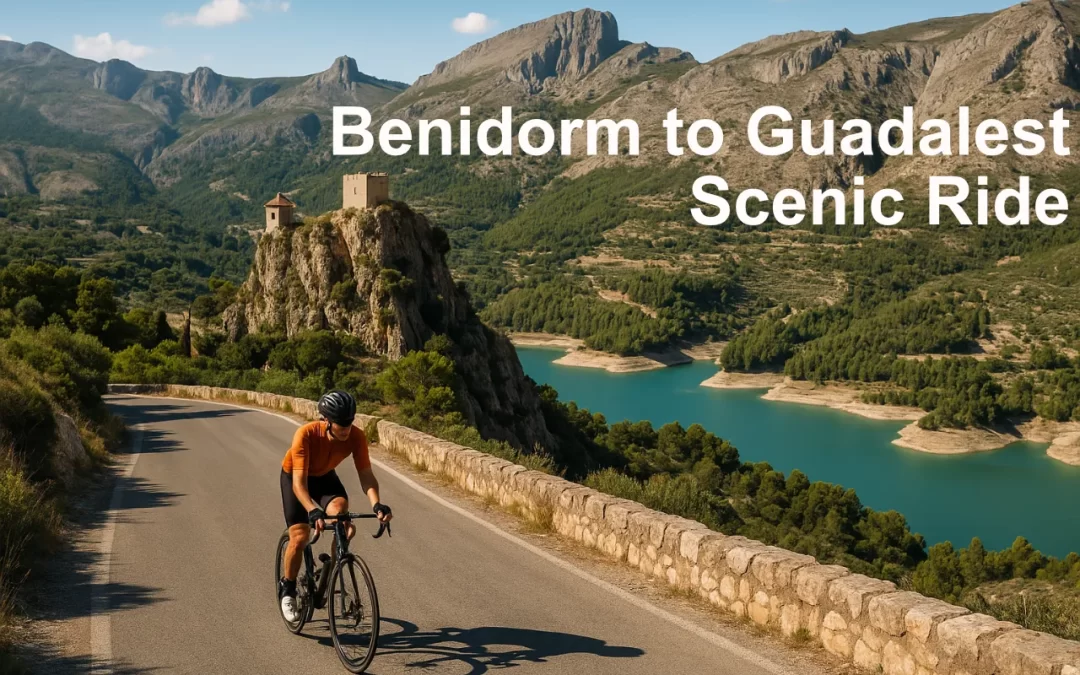
Road Cycling Routes in Costa Blanca: Benidorm to Guadalest Scenic Ride
Key Takeaways
- The Benidorm to Guadalest route offers three main options: a short 22.5km climb, a mid-length 60km loop, or a full-day 150km circuit
- Guadalest Castle provides stunning views of the reservoir and surrounding mountains
- The route features Category 3 climbs including Guadalest (6.3km at 4%) and Coll de Rates (15.3km at 3%)
- Most roads are paved, but some sections include unpaved tracks (about 2% of the full route)
- Best starting points are Benidorm’s Tram Station or Plaza de La Era
- GPX files are available on platforms like CyclingLocations and Bikemap
Outline
- Introduction to the Benidorm-Guadalest Route
- Route Options and Variations
- Key Climbs and What to Expect
- Scenic Highlights Along the Way
- Planning Your Ride: Practical Tips
- Best Seasons and Weather Considerations
- Post-Ride Attractions and Recovery
- Equipment and Preparation Recommendations
- Frequently Asked Questions
Introduction to the Benidorm-Guadalest Route
Have you ever wanted to escape the busy beaches of Costa Blanca and discover the real Spain? I’ve been cycling these roads for over 15 years, and the Benidorm to Guadalest route is still my favorite. It’s got everything – coastal views, mountain climbs, cute villages, and that amazing feeling when you reach Guadalest Castle and see the whole valley below you.
This route is special cuz it connects the touristy coast with the authentic Spanish interior. You start in Benidorm with its skyscrapers and beaches, then suddenly your climbing into quiet mountains where locals still make olive oil the old way. The contrast is amazing!

The roads are mostly good quality, but there’s enough variety to keep things interesting. Some parts are busy near the coast, but once you hit the climbs, traffic drops off and you can enjoy the ride. I remember my first time doing this route – I wasn’t prepared for how beautiful the reservoir would be when it suddenly appears around a corner. That moment still gives me goosebumps even after dozens of rides.
Route Options and Variations
Depending on your fitness and time, you’ve got three main choices for tackling this route. Which one sounds best to you?
Short Uphill Climb (22.5km)
This is perfect if you just want a taste of the mountains without committing to a full day. You’ll start at Benidorm’s Tram Station and head straight to Guadalest Castle, gaining 686m in elevation. The steepest part is on Montgo with a 5% gradient that’ll get your heart pumping. I often do this version when I’m short on time but need my mountain fix.
Mid-Length Loop (60km)
My personal favorite! This 60km route with 1,550m of climbing gives you a bit of everything. You’ll ride through Beniardá and along the Guadalest River on a mix of paved and asphalt roads. The views are incredible, and there’s a lovely cafe in Beniardá where the owner always remembers returning cyclists. Their tortilla is the best I’ve ever tasted!
Full-Day Adventure (150km)
For the hardcore cyclists, this 150km circuit with 2,120m of climbing takes you through Denia, Calpe, and Altea. You’ll conquer famous climbs like Coll de Rates (15.3km at 3%) and Guadalest (6.3km at 4%). I did this with a group last summer and we still talk about it – especially the ice-cold drinks we had in Calpe’s harbor!
The beauty of these options is you can start with the short route and work your way up as your fitness improves. Many of my bike rental customers start with the short climb and come back the next year ready for the full loop!
Key Climbs and What to Expect
Let’s talk about the climbs – they’re challenging but totally doable if you pace yourself. Here’s what you’ll face:
Guadalest Climb
- Distance: 6.3km
- Average Gradient: 4%
- Category: 3
- What to expect: A steady climb with a few steeper sections. The views get better with every turn, and there’s a natural spring about halfway up where locals fill water bottles. I always stop here to splash some cold water on my face!
Coll de Rates
- Distance: 15.3km
- Average Gradient: 3%
- Category: 3
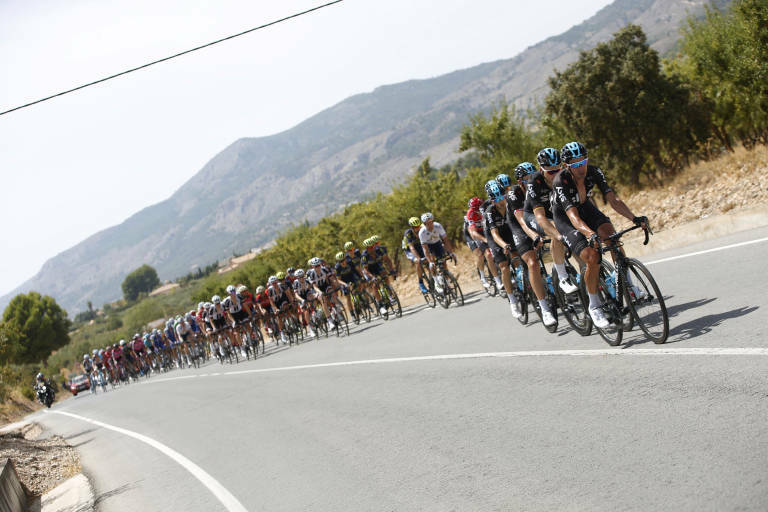
- What to expect: A longer but gentler climb that’s popular with pro teams training in the area. The road surface is excellent, and there’s a restaurant at the top with amazing paella. I once saw Team Ineos training here – they made it look so easy!
Montgo
- Distance: 3.3km
- Average Gradient: 5%
- Category: 3
- What to expect: The steepest of the main climbs, but also the shortest. There’s a tricky hairpin about two-thirds of the way up where I always see cyclists struggling. The trick is to swing wide before the corner to maintain momentum.
The road surfaces vary throughout the route. On the full 150km loop, you’ll find:
- Asphalt roads: 26%
- Paved roads: 29%
- Unpaved tracks: 2%
- Busy roads: 62% (mostly near coastal sections)
I always tell people to save something for the final few kilometers to Guadalest – the gradient kicks up just when your legs are getting tired, but the castle view at the top makes it all worthwhile!
Scenic Highlights Along the Way
The scenery on this route is so good it’s hard to keep your eyes on the road! Here are the spots where you’ll definitely want to stop for photos:
Guadalest Castle and Reservoir
This medieval fortress sits dramatically on a cliff edge, with views that’ll make your jaw drop. The emerald-green reservoir below looks like something from a fantasy movie. I’ve cycled all over Europe, and this view still ranks in my top five. The castle itself dates back to the 11th century and somehow survived earthquakes and wars.
Coastal Towns
If you’re doing the longer route, you’ll pass through Denia, Calpe, and Altea. Each has its own character:
- Denia: Great seafood restaurants and a historic castle
- Calpe: Dominated by the Ifach Rock, a mini Gibraltar
- Altea: White-washed buildings and a beautiful blue-domed church
I love stopping in Altea’s old town square for coffee – there’s a little place where the owner is a former cyclist and always has the latest racing news.
Beniardá Valley
This is the hidden gem most tourists never see. Quiet roads wind through olive groves and along the Guadalest River. In spring, the almond trees bloom with pink and white flowers that make the whole valley look like it’s covered in snow. I once got caught in a light rain shower here, and the smell of the wet earth and herbs was incredible – one of those moments that remind you why cycling is so special.
The contrast between the busy coast and these peaceful inland valleys is what makes this route so special. You feel like you’ve discovered a secret Spain that most visitors never experience.
Planning Your Ride: Practical Tips
Wanna make sure your ride goes smoothly? Here’s what I’ve learned from years of guiding cyclists on this route:
Navigation and Route Planning
Download GPX files before you go – mobile coverage can be patchy in the mountains. Good sources include:
I prefer Komoot because it gives you turn-by-turn directions and warns you about steep sections coming up. The app once saved me when a road was closed due to landslide and suggested a perfect alternative route.
Starting Points
The two best places to start are:
- Benidorm’s Tram Station: Easy to find and plenty of parking
- Plaza de La Era: Quieter and gives you direct access to the climbs
If your staying in bike-friendly accommodation, ask the staff which starting point they recommend based on current road conditions.
Timing Your Ride
Start early, especially in summer! The heat can be brutal after 11am. I usually aim to be at Guadalest by 10:30am to avoid both the heat and the tourist buses that arrive around 11am. The castle opens at 10am if you want to visit.
Water and Supplies
There are fountains in most villages, but carry at least two large bottles. Food options include:
- Guadalest: Several cafes near the castle
- Beniardá: Small shop and cafe
- Coastal towns: Plenty of options
I always pack extra energy bars just in case – once I bonked badly on the return from Guadalest because I underestimated how much the heat would affect me. Not a mistake I’ve made twice!
Best Seasons and Weather Considerations
When’s the best time to tackle this route? I’ve ridden it in all seasons, and here’s my honest advice:
Spring (March-May)
Absolutely perfect! Temperatures range from 15-25°C (59-77°F), wildflowers carpet the valleys, and the reservoirs are usually full after winter rains. The almond blossom in February and March is spectacular. Easter can be busy with Spanish tourists, so avoid that week if possible.
Summer (June-September)
Early morning only! Start at dawn (around 6:30am) and aim to finish by 11am before the heat becomes unbearable. Temperatures regularly exceed 30°C (86°F) by midday. I’ve seen too many cyclists suffering from heat exhaustion in August – it’s no joke. Always carry extra water.
Autumn (October-November)
My personal favorite time. The summer crowds have gone, temperatures are pleasant (18-25°C/64-77°F), and the light has a golden quality that’s perfect for photos. The sea is still warm enough for a post-ride swim too!
Winter (December-February)
Surprisingly good! Daytime temperatures usually reach 15-18°C (59-64°F) – perfect for climbing. The roads are quiet, and you’ll have Guadalest almost to yourself. Pack a windproof jacket for descents and watch out for occasional rain. I’ve only been caught in snow once in 15 years, and that was a freak event.
The Costa Blanca has over 300 sunny days per year, which is why pro teams train here in winter. Just check the forecast for strong winds – the “Levante” wind can make coastal sections challenging.
Post-Ride Attractions and Recovery
You’ve conquered the climbs – now what? Here’s how to make the most of your achievement:
In Guadalest
If you’ve got time, the castle is worth exploring (€4 entry). There’s also a quirky museum of miniatures that’s strangely fascinating. My favorite recovery spot is the terrace at Casa Orduña – their fresh orange juice and Spanish tortilla are perfect cyclist fuel.
Back in Benidorm
The old town has some excellent tapas bars away from the tourist strips. I recommend Taberna El Casco for authentic food at reasonable prices. Their patatas bravas and local Alicante wines are the perfect recovery meal.
For recovery, nothing beats a dip in the Mediterranean! Levante Beach gets crowded, but Poniente Beach is usually quieter and just as nice for a refreshing swim to ease tired legs.
Recovery Tips
- Hydrate immediately – the climate is drier than you think
- Find shade – even in winter, the sun is strong
- Elevate your legs for 10 minutes to help recovery
- Try a local horchata drink – it’s sweet but surprisingly refreshing
I always tell my cycling groups to book a restaurant for after the ride – having that reward waiting helps on the tough climbs, and Spanish food tastes even better when you’ve earned it!
Equipment and Preparation Recommendations
What should you bring for this route? Based on guiding hundreds of cyclists, here’s my essential list:
Bike Setup
- Compact chainset (50/34) recommended for the climbs
- Cassette with at least a 28T sprocket (32T if you’re not confident on climbs)
- 25mm or 28mm tires for comfort on varied road surfaces
- Check your brakes before descents – they get a good workout!
I once had a client who ignored my gearing advice and brought a standard 53/39 chainset. He had to walk sections of Guadalest – don’t be that person!
What to Carry
- At least 2 water bottles (750ml each)
- Energy bars/gels – one per hour plus a spare
- Windproof jacket (even in summer for descents)
- Sunscreen – the Spanish sun is deceptively strong
- Phone with downloaded maps
- ID and some cash for village stops
Training Tips
If you’re specifically preparing for this route, focus on:
- Sustained climbs of 20-30 minutes
- Heat acclimatization if coming in summer
- Back-to-back riding days if attempting the full loop
I always recommend doing some hill repeats before your trip. Even a short local hill done multiple times can prepare your legs for the longer Costa Blanca climbs.
The most common mistake I see is people going too hard at the beginning. The climbs aren’t super steep, but they’re long enough that pacing is crucial. As we say in Spain, “tranquilo” (take it easy) – start slower than you think you should.
Frequently Asked Questions
How difficult is the Benidorm to Guadalest route?
The short route (22.5km) is moderate – suitable for regular cyclists with some hill experience. The full 150km loop is challenging and requires good fitness and endurance. The climbs aren’t extremely steep (mostly 4-5%) but they’re sustained.
Can I rent a bike locally for this route?
Yes! Several bike shops in Costa Blanca offer quality road bike rentals. Book in advance during peak season (March-May and September-October). Expect to pay €25-40 per day for a good carbon road bike.
Are there guided tours available?
Several companies offer guided rides on this route. Prices range from €50-80 for a day ride including support vehicle. If it’s your first time in the area, a guide can be worth it for local knowledge and mechanical support.
What if I have a mechanical problem?
Villages along the route have limited bike services. Carry basics (spare tube, mini-pump, multi-tool). For serious issues, there are bike repair services in Benidorm and larger coastal towns.
Is the route well-marked?
Main roads are well-signed, but some smaller turns can be easy to miss. A GPS device or phone with the route loaded is highly recommended. Cell service can be patchy in mountain areas, so download maps beforehand.
Can I do this route on a hybrid or mountain bike?
Absolutely! You’ll be slower on the climbs and descents with wider tires, but the route is entirely on paved roads. I’ve guided several people on hybrids who enjoyed the more relaxed riding position for taking in the views.
What’s the best time of year for this ride?
April-May and September-October offer ideal temperatures and fewer tourists. Summer (June-August) can be extremely hot – start very early if riding then. Winter (November-February) is often pleasant but bring layers for descents.
Are there places to refill water bottles?
Yes, most villages have public fountains with drinking water. Guadalest, Beniardá, and Callosa all have easily accessible water sources. Still, start with two full bottles, especially in summer.
by Ralf Tenbrink | 14, Jun 2025 | Bike Tours, Costa Blanca News, Latest News
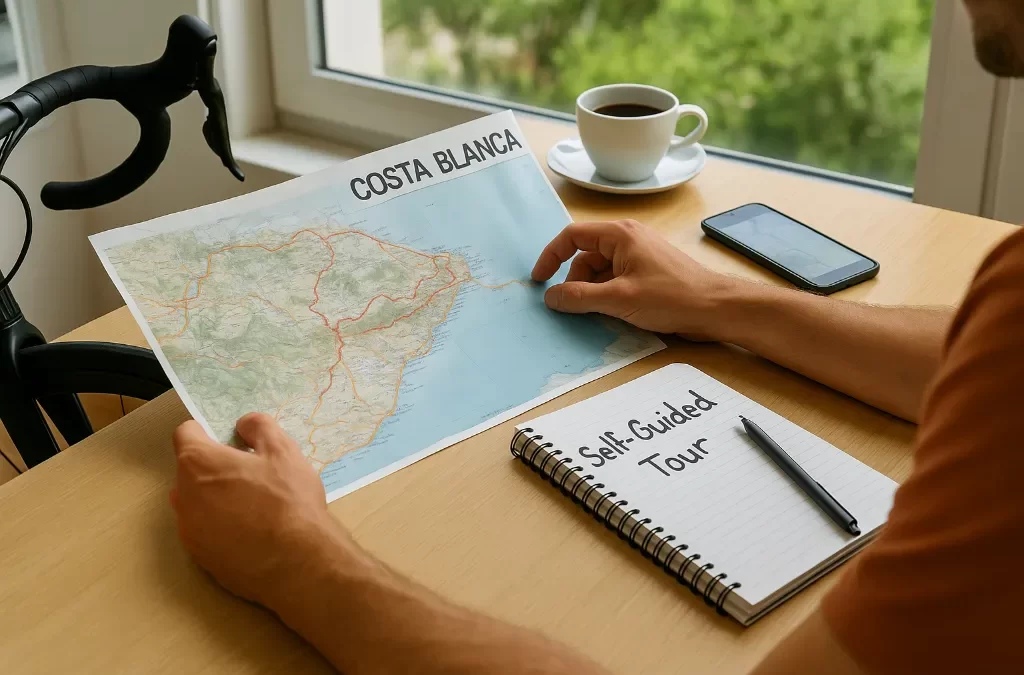
How to Plan a Self-Guided Tour
Key Takeaways
| Step | What to Decide |
|---|
| Routes | Pick a mix of coastal and mountain days; see our essential climbs for specifics |
| Season | February-November is the practical riding window; see Climate below |
| Navigation | GPX files plus offline maps as backup; mobile signal is patchy inland |
| Base | One town for day rides (simplest) or multiple towns with luggage transfer |
| Support level | Fully independent, à la carte (rental plus transfer), or a supported self-guided package |
| Budget | Roughly €1,000-1,500 per person for a week, excluding flights |
Planning a self-guided cycling tour of the Costa Blanca comes down to five decisions: which routes to ride, what time of year, how you’ll navigate, where you’ll base yourself, and how much support you want to pay for versus arrange yourself. None of it is complicated on its own. The region has well-marked major routes, widely available bike rental, and a long enough season that timing mistakes are rarely costly. This guide walks through each decision in order.
Choosing Your Routes
Start with the essential climbs and routes on our main self-guided tours guide, which covers Coll de Rates, Port de Confrides, Alto de Aitana and the rest in detail, plus our full Coll de Rates guide if that’s your main target climb.
A few other routes worth knowing about when you’re planning a mix of days:
- Xorret de Catí has two very different approaches, worth knowing before you pick one. From Castalla it’s a short, brutal 3.8 km at an average 11.6% gradient, with the steepest section averaging close to 19-20%. From Petrer it’s a longer, gentler 13.2 km at 5.3% average, topping out around 13.8% on its hardest ramp. Pro teams have used both for training; pick Castalla if you want a short leg-breaker, Petrer if you’d rather grind it out over distance.
- Sierra Mariola, up to the hilltop village of Banyeres de Mariola, runs through lavender fields and pine forest rather than the coastal terrain most first-time visitors expect. It’s a genuinely different character of ride from the Coll de Rates side of the region, worth including if you’re staying more than a few days.
- Alicante to Valencia, ridden in stages of 40-60 km a day, is the option if you want to cover ground and see more towns rather than repeat loops from one base.
Mix mountain days with flatter coastal or valley days. Costa Blanca’s terrain reads as deceptive on paper: a 60 km day on the map can take much longer than a flat 60 km once you add the climbing and heat, so plan distances around elevation gain, not just kilometres.
Picking Your Season
The practical riding season runs February to November, and the shoulder months either side of summer are generally considered the best combination of weather and quiet roads. Alicante-Elche Airport, the closest official weather station, averages 2,953 hours of sunshine a year, according to AEMET’s official 1981-2010 climate normal, among the highest totals in mainland Europe.
Winter (December-February) has cool mornings and mild afternoons, quiet roads, and is when professional teams often train here. Spring (March-May) brings wildflowers and almond blossom (February especially) alongside comfortable temperatures. Summer (June-September) gets genuinely hot, regularly into the low 30s°C by midday, so plan to start by 7am and treat the afternoon as recovery time rather than riding time. Autumn (September-November) mirrors spring, with warmer sea temperatures.
Accommodation prices follow the same pattern as everywhere in southern Europe: shoulder-season (spring, autumn) tends to offer the best combination of good weather and lower rates than peak summer.
Sorting Navigation
Free GPX routes are available from local cycling groups and bike shops, and apps like Komoot, Strava and RideWithGPS offer pre-made routes with turn-by-turn directions. Download routes before you set off. Mobile coverage is generally solid along the coast but genuinely patchy in the mountains, so relying on a live connection for navigation is a real risk on remote sections, not just a theoretical one. A physical backup map or a written cue sheet costs nothing and covers you if a device fails.
Choosing Where to Stay
You have two basic strategies: base yourself in one town and do day rides, or move between towns and use a luggage transfer service.
One base, day rides is the simpler logistics. Calpe, Denia and Altea are the most popular choices, all offering reasonable access to both coastal and mountain routes without needing a car. Our accommodation directory lists cyclist-friendly options; look for secure bike storage, early breakfast times, and laundry facilities if you’re touring for more than a few days.
Multiple bases, moving each day gives more variety but adds planning overhead. Luggage transfer services, including local operators like Caffee Cadanz, move your bags between hotels so you can ride with just the day’s essentials. If you’re booking a package through an operator such as Sierra Sports & Tours, transfers are usually included.
Either way, build a rest day or two into the itinerary that can move if the weather doesn’t cooperate. Flexibility is one of the real advantages of planning your own trip rather than following a fixed guided schedule.
Preparing Physically and Packing
Costa Blanca’s climbing rewards some hill training before you arrive. Reasonable fitness benchmarks: comfortable with 50 km on flat terrain for coastal routes, able to sustain a steady effort uphill for 30-45 minutes for the mountain routes, and roughly 2,000 m of weekly elevation gain in training if you’re aiming for mixed terrain across a full week.
For gear: a compact chainset (50/34) with a cassette of at least 32T handles the steeper gradients comfortably if you’re bringing your own bike or specifying a rental. Pack layers regardless of season, since mountain descents run noticeably cooler than the coast even in summer. Sun protection matters more than most visitors expect: bring high-factor sunscreen and good sunglasses, and carry at least two water bottles, since some mountain sections go 30 km between villages with a reliable refill point.
Spanish meal times run later than many visitors are used to: lunch from around 2-4pm, dinner rarely starting before 8:30pm. That doesn’t always line up neatly with a riding schedule, so carrying emergency snacks and using local bakeries for morning pastries covers the gap.
Deciding How Much Support You Want
Self-guided doesn’t have to mean entirely on your own. Three broad options:
Fully independent: you plan routes, book accommodation and rental bikes yourself, and handle logistics as you go. Cheapest, most flexible, most time to arrange.
À la carte support: you handle the core planning but pay for specific services, most commonly bike rental with delivery to your accommodation, a luggage transfer service between bases, or hiring a local guide for a specific challenging day.
A supported self-guided package: an operator plans the route, books accommodation, arranges transfers and provides an emergency contact number, while you still ride independently on your own schedule. Sierra Sports & Tours and Cycle Fiesta both run this kind of package for around €1,270-1,400 per person for a week; see our self-guided tours guide for a fuller price comparison.
Budgeting for a Week
As a rough planning guide for a mid-range week, excluding flights: accommodation runs roughly €50-100 a night, bike rental €150-300 for the week, food €30-50 a day, and luggage transfers (if you’re using them) around €15-20 per move. That puts a typical mid-range trip at roughly €1,000-1,500 per person. Budget self-catering options can bring that down toward €700-900; a fully supported package with premium accommodation can run past €2,000. Treat these as planning estimates rather than current quotes, since prices shift with the season and the specific operators you book.
Frequently Asked Questions
How difficult is Costa Blanca cycling for an intermediate rider? There’s a route for most ability levels. Coastal riding is generally moderate rolling terrain; the well-known mountain climbs like Coll de Rates are genuinely challenging but not extreme (around 5-6% average gradient). If you’re comfortable with 50-60 km and 500-800 m of climbing at home, you’ll find plenty here to enjoy without needing to push into the hardest routes.
What’s the best base for a first-time visit? Calpe, for its central location and access to both coastal and mountain routes, plus the widest choice of cyclist-friendly accommodation and bike shops. Denia and Altea are strong alternatives with their own character. Inland towns like Jalón are quieter but mean more climbing just to get started each day.
Do I need to speak Spanish? No. English is widely spoken in tourist areas and by cycling-focused businesses. A few basic phrases help in smaller inland villages, but you can plan and ride a self-guided tour without them.
What bike should I bring or rent? A road bike suits almost every route described here, since the vast majority of riding is on paved roads. If your plans include gravel paths or rougher mountain trails, a gravel bike or hardtail is the better call. For rentals, ask for a compact chainset and at least a 32T cassette if you’re tackling the steeper climbs.
How much should I budget for a week? See the Budgeting section above: roughly €1,000-1,500 per person mid-range, excluding flights, with budget and premium options on either side of that.
When’s the rainy season? October through December sees the most rainfall, though even then it tends to come in short, intense bursts rather than prolonged wet spells. Summer (June-September) is reliably dry.
Can I combine cycling with other activities? Yes. Most self-guided visitors plan 4-5 riding days within a week-long trip, leaving room for beach time, hiking, or exploring towns like Guadalest or Altea’s old town on rest days.
Next Steps
Once your route and season are settled, read our safety tips for touring alone if you’re riding solo, and check Spain’s 2026 cycling rules before you go, since several requirements (helmet use, overtaking distances) changed this year. For the full route and cost breakdown, see our main self-guided cycling tours guide.
Research sources: Climate figures from AEMET’s official climate normals for Alicante-Elche Airport, 1981-2010. Xorret de Catí climb data from climbfinder.com (Castalla and Petrer approaches). Tour operator pricing checked against Sierra Sports & Tours and Cycle Fiesta directly, September 2026.
by Ralf Tenbrink | 11, Jun 2025 | Costa Blanca News, Latest News
Denia Hosts World Record Cycling Spectacle by Mediterranean
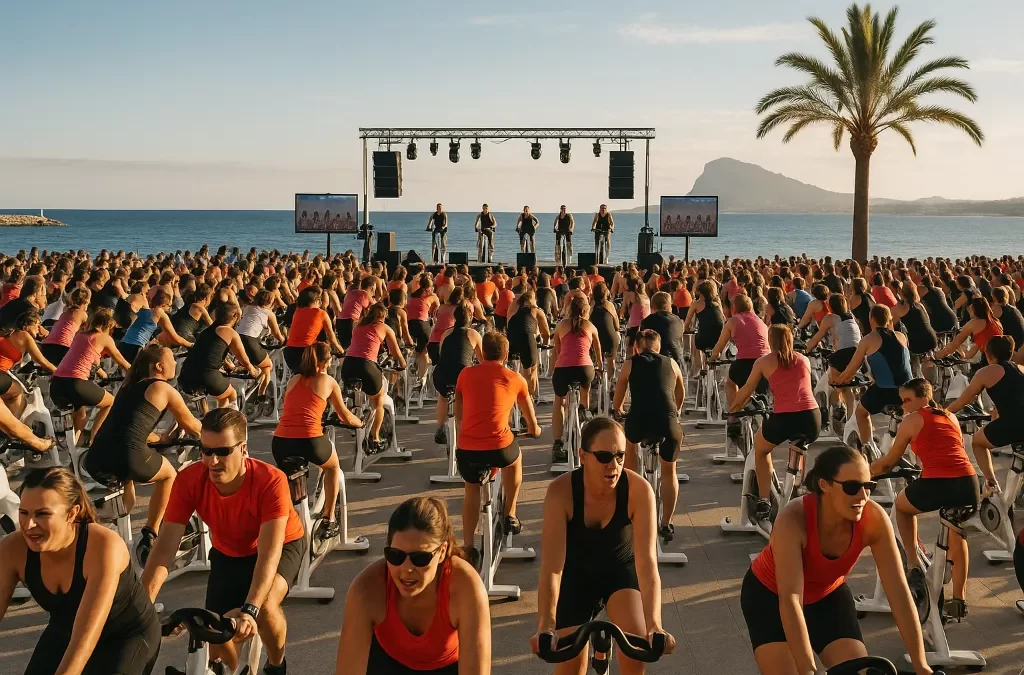
The coastal city of Denia will transform into a global fitness destination this June as it welcomes over 1,500 cycling enthusiasts for an unprecedented outdoor spinning experience. The 14th annual Desafío Bestcycling, scheduled for Saturday, June 21st, 2025, promises to deliver the planet’s most ambitious open-air stationary cycling gathering along Spain’s Mediterranean coastline.
This remarkable fitness festival combines the intensity of indoor cycling classes with the breathtaking backdrop of the Mediterranean Sea, creating an unparalleled athletic experience that has captured international attention. The event’s unique concept of outdoor indoor cycling has revolutionized traditional fitness formats, establishing Denia as a premier destination for innovative sports tourism.
What sets Desafío Bestcycling apart is its groundbreaking approach to group fitness. Rather than confining spinning classes to indoor studios, organizers transport the entire experience outdoors, arranging hundreds of stationary bikes across Denia’s scenic Marina esplanade. This innovative format allows participants to enjoy high-energy cycling workouts while surrounded by ocean views and Mediterranean breezes.
The event’s creators, Bestcycling founders César and Nacho Bosquet, pioneered this outdoor indoor cycling concept in 1997. Their vision has grown into a record-breaking phenomenon that officially holds the Guinness World Record for simultaneous outdoor cycling participation. In 2014, they achieved this distinction in Valencia when 1,220 participants cycled together, surpassing Colombia’s previous record of 1,095 simultaneous cyclists.
The 2025 Denia edition will feature 800 premium stationary bikes strategically positioned to maximize both participant comfort and scenic views. This represents a carefully calibrated capacity designed to balance intimate community experience with large-scale spectacle.
Comprehensive day-long cycling journey awaits participants
The event unfolds as an immersive full-day experience rather than a single workout session. Beginning with registration at 8:30 AM, participants embark on a carefully structured cycling odyssey that spans from sunrise to sunset. The programming includes six distinct cycling sessions strategically spaced throughout the day, complemented by rest periods that allow for recovery, socializing, and enjoying local amenities.
Morning sessions feature three energetic classes designed to capitalize on cooler temperatures and fresh energy levels. A strategic three-hour midday break provides respite during peak sun hours while encouraging participants to explore Denia’s culinary offerings and rest areas. Afternoon programming resumes with three additional sessions, building toward the event’s crown jewel.
The sunset masterclass serves as the emotional climax of the entire experience. Timed perfectly with the Mediterranean sunset, this final session creates an unforgettable finale that participants consistently describe as deeply moving and inspirational. Professional instructors of international caliber guide each session, ensuring both safety and maximum engagement throughout the demanding schedule.
Complete festival experience extends beyond cycling
Desafío Bestcycling transcends typical athletic events by incorporating comprehensive hospitality elements. The €70 registration fee encompasses far more than cycling access, providing participants with a complete festival experience. Included amenities feature a traditional Spanish paella lunch, event beverages, and admission to the evening celebration at Zensa Marina.
This post-cycling party allows participants to decompress, celebrate their achievement, and connect with fellow cycling enthusiasts from around the world. The social component has become integral to the event’s appeal, fostering lasting friendships and international cycling connections.
Logistical considerations demonstrate the organizers’ commitment to participant experience. While the event provides all cycling equipment, participants may bring personal coolers with food and non-alcoholic beverages. Professional sound systems, large display screens, and sophisticated lighting create an immersive atmosphere that rivals major music festivals.
The Desafío Bestcycling generates substantial economic impact for Denia and surrounding communities. Municipal officials estimate that the event drives significant hotel occupancy increases throughout the weekend, while local restaurants, shops, and service providers experience notable revenue boosts. The influx of 1,500+ visitors fills streets with energy and activity, creating a vibrant atmosphere that benefits the entire city.
Beyond immediate economic effects, the event positions Denia strategically within the growing sports tourism market. International participants return home with positive impressions of the city’s lifestyle, natural beauty, culinary offerings, and outdoor recreation opportunities. This word-of-mouth marketing proves invaluable for long-term tourism development.
Live streaming coverage extends the event’s promotional value globally, showcasing Denia’s attractions to international audiences who may never have considered visiting otherwise. The municipal sports department actively supports the initiative, viewing it as perfectly aligned with their vision of Denia as an active, health-focused destination.
Registration demand exceeds capacity limitations
The 2025 edition sold out completely, demonstrating the event’s tremendous popularity and limited availability. This sellout occurred despite the expanded capacity, highlighting growing international interest in unique fitness experiences. Bestcycling has implemented a sophisticated waitlist system using SMS alerts to notify interested participants of potential last-minute cancellations.
Priority registration access goes to established Bestcycling subscribers with six or more months of membership, rewarding loyal community members while ensuring experienced participants maintain access. The registration system limits groups to four people maximum, helping maintain manageable group dynamics while accommodating friends and families.
The €70 fee structure represents exceptional value considering the comprehensive experience provided. When compared to typical fitness festivals or cycling events, participants receive remarkable benefits including professional instruction, premium equipment, full meal service, and entertainment access.
Legacy event strengthens Mediterranean cycling culture
Desafío Bestcycling’s 14-year evolution reflects the growing intersection of fitness, travel, and experiential entertainment. What began as an innovative cycling concept has matured into a signature Mediterranean event that attracts participants from across Europe and beyond. The consistent annual growth and immediate sellout status demonstrate the event’s successful formula.
The Marina de Denia location provides an ideal setting that competitors struggle to match. The combination of professional marina facilities, Mediterranean coastline, and supportive municipal infrastructure creates optimal conditions for large-scale outdoor fitness events. Participants consistently praise the venue’s beauty and accessibility.
As sports tourism continues evolving, Desafío Bestcycling represents a successful model for combining athletic challenge, scenic beauty, cultural immersion, and social connection. The event’s influence extends beyond cycling, inspiring similar initiatives that blend fitness with travel experiences. For 2025, all attention turns to June 21st when Denia once again becomes the global epicenter of outdoor indoor cycling innovation.
by Ralf Tenbrink | 11, Jun 2025 | Costa Blanca News, Latest News
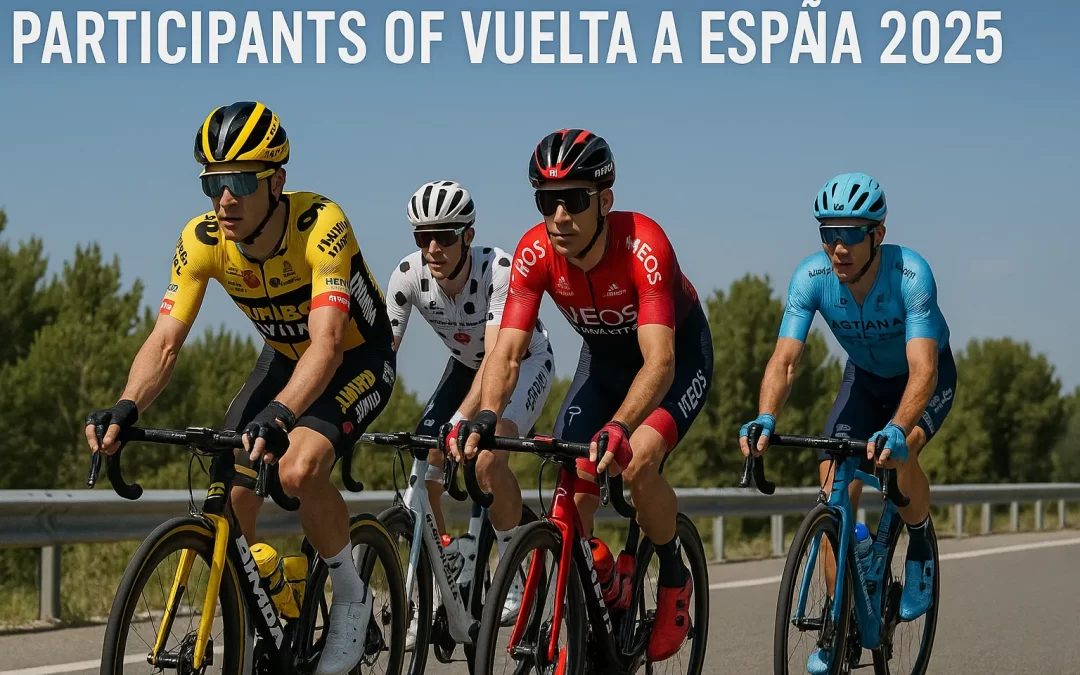
Participants of Vuelta a España 2025
Key Takeaways
- 22 teams will compete: 18 WorldTeams and 4 ProTeams
- Q36.5 Pro Cycling Team earned a wildcard spot for their first-ever Vuelta
- Top contenders include Jonas Vingegaard, Tadej Pogačar, and Jai Hindley
- Primož Roglič (2024 champion) won’t defend his title in 2025
- Pogačar is attempting a rare Tour de France/Vuelta double
Team Lineup for the 2025 Vuelta
The 2025 Vuelta a España is gonna be packed with talent! This year’s race brings together 22 teams from around the world. Let’s break down who’s coming to Spain for this big race.
The organizers picked 18 WorldTeams (the top cycling teams) who get automatic spots. Then they added 4 ProTeams to round things out. This mix makes for an exciting race with both established stars and hungry newcomers.
What’s really cool about this year? Q36.5 Pro Cycling Team got their first-ever invite to the Vuelta! Their team manager Doug Ryder was super happy, saying they’ve got “a strong Spanish contingent” on their team. Even though they’re new to the Vuelta as a team, their riders have actually raced in it 36 times before when they rode for other teams. That’s a lotta experience!
Introducing the Vuelta a España Race Around Spain gives you more background on this amazing race if you’re new to it.
The full team list looks like this:
WorldTeams (18)
- Jumbo-Visma (now called Visma-Lease a Bike)
- UAE Team Emirates
- Soudal Quick-Step
- INEOS Grenadiers
- Lidl-Trek
- Bora-Hansgrohe
- Bahrain Victorious
- Movistar Team
- EF Education-EasyPost
- Groupama-FDJ
- Alpecin-Deceuninck
- Astana Qazaqstan
- Cofidis
- Intermarché-Wanty
- Team DSM-Firmenich PostNL
- Arkéa-B&B Hotels
- Team Jayco AlUla
- Uno-X Mobility
ProTeams (4)
- Lotto Dstny (automatic invitation as top-ranked ProTeam)
- Israel-Premier Tech (automatic invitation as second-ranked ProTeam)
- Burgos-BH (wildcard)
- Q36.5 Pro Cycling Team (wildcard)

Star Riders to Watch in 2025
Who’s gonna shine in the 2025 Vuelta? This year’s race has some big names missing and others stepping up. Let’s check out the main riders who’ll fight for the red jersey and stage wins.
The biggest news? Primož Roglič, who won in 2024 (his fourth Vuelta victory!), won’t be back to defend his title. This opens the door for new champions to emerge.
Jonas Vingegaard from Visma-Lease a Bike (formerly Jumbo-Visma) is one of the top favorites. After winning the Tour de France, he’s looking to add another Grand Tour to his collection. He’s got the climbing skills to handle Spain’s tough mountain stages.
Tadej Pogačar from UAE Team Emirates might try something really special – winning both the Tour de France and the Vuelta in the same year! This double is super hard to pull off, but if anyone can do it, it’s Pogačar. His explosive climbing and time trial abilities make him a threat on almost any terrain.
Jai Hindley from Bora-Hansgrohe is another rider to watch closely. The 2022 Giro d’Italia winner has the perfect skill set for the Vuelta’s challenging climbs. His team is building their strategy around him for this race.
For the sprint stages, keep an eye on these fast guys:
- Mads Pedersen (Lidl-Trek) – won the points classification before
- Olav Kooij (Visma-Lease a Bike) – young Dutch sprinter looking for stage wins
- Kaden Groves – explosive finisher who’s done well in Spanish races
If you’re planning to watch the race in person, check out Biking Routes on Costa Blanca to find great spots to catch the action.
Team Strategies and Goals
Different teams come to the Vuelta with different plans. Some want the overall win, others just want stage victories, and some are looking to develop young riders. Let’s look at what the main teams are aiming for.
Visma-Lease a Bike is all in for Jonas Vingegaard. They’ve built a super strong team around him with climbers who can protect him in the mountains and powerful riders for the flat stages. Their goal? Nothing less than the red jersey in Madrid.
UAE Team Emirates has a tricky situation. If Pogačar races, he’s their clear leader. But if he skips the Vuelta, João Almeida will step up as their GC contender. Almeida has finished in the top 5 of Grand Tours before and could surprise everyone.
Bora-Hansgrohe is putting all their eggs in Jai Hindley’s basket. They’ve picked a team of strong climbers to support him in the mountains, where the Vuelta is often decided.
Lidl-Trek has a two-pronged approach. Mads Pedersen will target sprint stages and possibly the green points jersey, while they’ll also have a GC rider (maybe Giulio Ciccone) for the overall classification.
The Spanish teams like Movistar will be super motivated racing on home roads. They always bring their A-game to the Vuelta and will be hunting for stage wins at minimum.
For the smaller ProTeams, especially the wildcards like Q36.5 and Burgos-BH, getting in breakaways is key. They need TV time for their sponsors and will fight hard to get in the daily escapes. A stage win would be huge for these teams!

Route Highlights and Key Stages
The 2025 Vuelta route is brutal! It’s got everything from flat sprint stages to super steep mountain finishes. The organizers love to include crazy climbs with gradients that make even the best cyclists suffer.
While the full route details aren’t finalized yet, we can expect around 21 stages covering about 3,300 kilometers across Spain. The race typically includes:
- 6-7 flat stages for sprinters
- 3-4 individual time trial stages
- 8-10 mountain or hilly stages
- 1-2 rest days
The mountain stages in northern Spain are usually decisive. Places like Lagos de Covadonga, Angliru, and Alto de l’Angliru have gradients over 20% in some sections! These are where the GC contenders will attack each other.
The time trials will also be important for the overall classification. Riders like Vingegaard and Pogačar excel in these stages and could gain valuable time.
For Costa Blanca fans, there’s often a stage in this region. The Stage 8 Denia-Xorret de Cati from a previous edition shows how the race uses our local climbs.
The final week is always the hardest, with multiple mountain stages stacked together to really test who’s got anything left in their legs. The race typically ends with a flat stage in Madrid, giving sprinters one last chance for glory.
Historical Context and Records
The Vuelta has a rich history that adds extra meaning to the 2025 edition. Started in 1935, it’s the youngest of cycling’s three Grand Tours but has grown into a race with its own special character.
Primož Roglič made history in 2024 by winning his fourth Vuelta, tying Roberto Heras’ record for most overall victories. With Roglič not returning in 2025, we won’t see a new record set this year.
Spanish riders have historically dominated their home Grand Tour, winning 33 times in total. But recently, international stars have taken control. The last Spanish winner was Alberto Contador in 2014, so local fans are desperate for a home victory.
The Vuelta is known for being the most unpredictable Grand Tour. Its placement late in the season (August-September) means riders are either in peak form or completely exhausted from earlier races. This creates opportunities for surprise winners and dramatic racing.
Some interesting Vuelta records:
- Most stage wins: Delio Rodriguez with 39
- Most days in leader’s jersey: Alex Zülle with 48
- Youngest winner: Angelino Soler at 21 years old in 1961
If you’re interested in cycling history in Spain, Exploring Costa Blanca: Top 5 Scenic Bike Routes shows some roads that have featured in past editions.
Wanna catch all the action of the 2025 Vuelta? You’ve got plenty of options! The race has grown in popularity, and TV coverage has expanded worldwide.
In Spain, RTVE provides comprehensive coverage with Spanish commentary. For English-speaking viewers, Eurosport is the main broadcaster across Europe, while Peacock and FloBikes cover the race in North America.
The official Vuelta website and app offer live tracking, results, and sometimes free streaming in regions without TV rights. They also provide detailed stage profiles and stats during the race.
Social media is huge for following the Vuelta too. The official accounts (@lavuelta) post updates, highlights, and behind-the-scenes content. Most teams and riders also share their experiences daily.
If you’re in Spain during the race, catching a stage live is an amazing experience! The “publicity caravan” comes through before the riders, throwing free stuff to spectators. Then the excitement builds as the helicopters appear overhead, signaling the approaching peloton.
For those watching from Costa Blanca, local bars often show the stages, creating a fun atmosphere to enjoy the race with fellow cycling fans. It’s almost as good as being roadside!
Some viewing tips:
- Mountain stages usually provide the most drama
- The last hour of racing is when most action happens
- Watch the “kilometro cero” (race start) for early breakaway attempts
- Follow live text updates if you can’t watch the video feed
Impact on Cycling Tourism in Spain
The Vuelta doesn’t just excite cycling fans – it boosts tourism too! Each year, the race showcases Spain’s beautiful landscapes, historic towns, and winding roads to millions of viewers worldwide.
After seeing these amazing places on TV, many cyclists plan trips to ride the same roads as their heroes. Costa Blanca is one of the biggest beneficiaries of this cycling tourism boom. Our region offers perfect weather, challenging climbs, and smooth roads that attract thousands of cyclists each year.
Local businesses definitely feel the positive effects. Bike Rentals shops see increased bookings, hotels fill with cycling groups, and restaurants serve hungry riders refueling after long days in the saddle.
The economic impact is huge. A study showed that each cycling tourist spends about 150€ per day – more than the average visitor. They also tend to travel in quieter seasons, helping businesses stay open year-round.
Communities along the Vuelta route get even more benefits. When a stage passes through, hotels sell out, restaurants are packed, and the whole town celebrates. The TV exposure puts small villages on the map, attracting visitors for years afterward.
For local cyclists, the Vuelta inspires more people to take up the sport. Bike clubs report membership increases after the race passes through, and more kids get interested in cycling.
If you’re planning a cycling trip inspired by the Vuelta, check out Bike Holidays for organized tours that let you experience the best routes without worrying about logistics.
Training Like a Vuelta Rider
Ever wondered how these pros prepare for such a tough race? Their training is super specific and starts months before the event.
Vuelta contenders typically build their fitness in stages:
- Base training (long, steady rides to build endurance)
- Intensity blocks (interval training to improve power)
- Race-specific preparation (simulating Vuelta conditions)
- Tapering (reducing volume while maintaining intensity before the race)
The key to Vuelta success is climbing ability. Riders spend weeks in the mountains, doing repeats on long climbs to prepare their bodies for the pain to come. They’ll often train at altitude to boost red blood cell production.
Heat adaptation is crucial too. The Vuelta is famous for scorching temperatures, sometimes over 40°C (104°F). Pros train in hot conditions or use heat chambers to get their bodies ready.
Want to train like a pro? Here are some tips you can apply to your own riding:
- Include structured intervals (try 4×8 minutes at threshold power with 4 minutes recovery)
- Do at least one long ride weekly (4+ hours)
- Practice climbing seated for efficiency
- Don’t neglect recovery – pros sleep 9-10 hours daily
- Stay hydrated and practice your nutrition strategy
If you’re visiting Costa Blanca, you can test yourself on the same climbs used in the Vuelta. The Ultimate Guide to Mountain Biking Adventures in Costa Blanca has great info on local mountains.
Remember that pros build fitness over years, not weeks. Be patient with your progress and enjoy the process!
Frequently Asked Questions
How many teams participate in the 2025 Vuelta a España?
The 2025 Vuelta features 22 teams: 18 UCI WorldTeams who qualify automatically and 4 ProTeams (including 2 wildcard selections).
Who are the main favorites to win the 2025 Vuelta?
The top contenders include Jonas Vingegaard (Visma-Lease a Bike), Tadej Pogačar (UAE Team Emirates) if he decides to race, and Jai Hindley (Bora-Hansgrohe).
Will Primož Roglič compete in the 2025 Vuelta?
No, Primož Roglič won’t defend his 2024 Vuelta title in the 2025 edition.
What is special about Q36.5 Pro Cycling Team’s participation?
Q36.5 received their first-ever Vuelta invitation as a wildcard team. Despite being new, their riders collectively have 36 previous Vuelta appearances.
How long is the 2025 Vuelta a España?
While exact details aren’t finalized, the Vuelta typically covers around 3,300 kilometers (2,050 miles) over 21 stages in a three-week period.
When does the 2025 Vuelta take place?
The Vuelta traditionally runs from late August to mid-September, occupying the third Grand Tour slot in the cycling calendar.
Can I watch the Vuelta if I’m visiting Costa Blanca?
Yes! Many local bars and restaurants show the race daily. You might even be able to watch a stage live if the route passes through the region.
How do teams qualify for the Vuelta?
All 18 UCI WorldTeams qualify automatically. The top two ProTeams in the rankings also receive automatic invitations, while the final two spots go to wildcard teams selected by the race organizers.
Buy the Vuelta Map Cycling Print Today
Vuelta Map Cycling Print – La Vuelta 1935 Edition
Celebrate the rich heritage of Spanish cycling with our bold Vuelta Map Cycling Print, inspired by the inaugural 1935 La Vuelta race. Featuring a custom vintage typeface and a vivid red background, this minimalist design brings iconic Grand Tour energy into your home, office, or pain cave.
Printed on sustainable 200gsm FSC-certified paper and available in A3 or A2 sizes, it pairs perfectly with our Tour de France and Giro d’Italia maps – collect all three and get 25% off.
Ships rolled in a recyclable tube. For framed options, add your print to the basket, then choose a frame on our framing page.
by Ralf Tenbrink | 10, Jun 2025 | Costa Blanca News, Latest News, Mountain Biking Trails in Costa Blanca
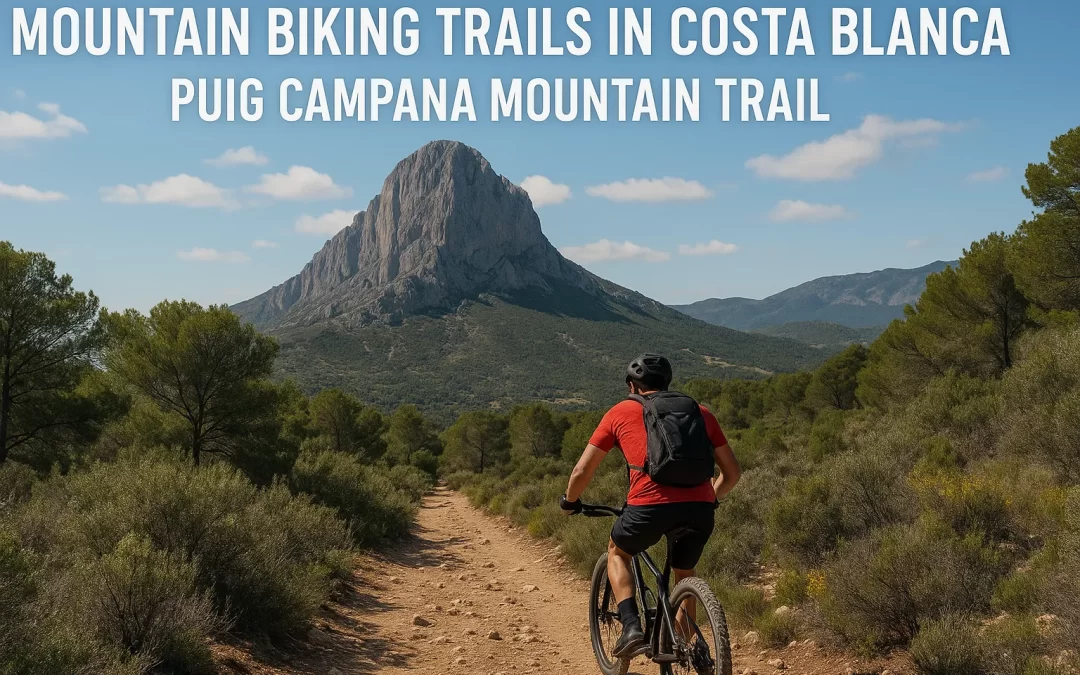
Mountain Biking Trails in Costa Blanca: Puig Campana Mountain Trail
Key Takeaways
- Puig Campana is Costa Blanca’s most iconic mountain biking trail at 1,408m elevation
- The main trail loop is 14.9 miles with 2,300ft of climbing
- Best riding season is October-April to avoid summer heat
- Intermediate to advanced skill level required for technical sections
- Stunning views extend to Ibiza on clear days
- Local towns of Finestrat and Benidorm offer post-ride amenities
What Makes Puig Campana Special?
Ever looked at a mountain and thought “I wanna ride that”? That’s what Puig Campana does to bikers in Costa Blanca. This big limestone mountain isn’t just any hill – it’s THE mountain that stands out when you’re anywhere near Benidorm. At 1,408 meters tall, it’s like the king of Costa Blanca mountains.

What makes it so good for mountain biking? It’s got this perfect mix of tough climbs and fun downhills. The views are crazy good too – you can see the blue Mediterranean on one side and more mountains on the other. On super clear days, some riders swear they can spot Ibiza from the top!
I rode this trail last spring and couldn’t believe how the terrain changes as you go up. You start in these scrubby pine areas and end up in rocky alpine-like terrain. The trail has this cool figure-eight shape that lets you hit different parts of the mountain in one ride. Some parts are smooth and flowy, others are rocky and technical – it never gets boring.
If you’re into mountain biking adventures in Costa Blanca, Puig Campana should be at the top of your list. It’s not just a ride – it’s an experience that shows you what makes this region special.
Trail Details and Route Description
The main Puig Campana – Ponotx trail is a 14.9-mile figure-eight loop that’ll give your legs and lungs a proper workout. You’re looking at about 2,300 feet of climbing, which doesn’t sound crazy until you realize how steep some sections are. The average gradient hits 12% on the main climbs, and some bits are even steeper!
Here’s how the trail breaks down:
| Trail Section | Distance | Features | Difficulty |
|---|
| Access Trail | 5 km | Gradual climb, coastal views | Moderate |
| Collado del Llamp | 3.2 km | Flowy singletrack | Moderate |
| La Cava Ridge | 2.5 km | Technical descent | Difficult |
| Barranc de la Canal | 4.1 km | Rocky gully, 614m drop | Very Difficult |
| Summit Push | 1.8 km | Hike-a-bike sections | Extreme |
The trail surface changes a lot as you go. You’ll hit hardpack dirt, loose scree, rock gardens, and some smooth sections. There’s even parts where you’ll need to hop off and carry your bike – what riders call “hike-a-bike” sections. These tough bits are worth it though, cuz the views and downhills that follow are amazing.

One thing I love about this trail is how it connects to other routes. If you’re staying in the area for a few days, you can link it with the biking routes on Costa Blanca to create multi-day adventures. The Super Enduro Benidorm route (40 miles) makes a great addition if you’re feeling extra energetic.
Best Time to Ride Puig Campana
Timing is everything when riding Puig Campana. Get it wrong and you’ll be suffering in extreme heat or caught in bad weather. Get it right and you’ll have perfect conditions for an epic day out.
The sweet spot for riding here is October through April. During these months, temperatures usually sit between 8-15°C (46-59°F), which is perfect for climbing without overheating. Summer (June-September) is just too hot for most riders – temperatures regularly hit 30°C+ (86°F+), and there’s not much shade on the mountain.
Morning rides work best for a few reasons:
- Trails are usually drier and more stable
- Visibility is better for those amazing views
- You’ll avoid afternoon heat
- You’ll have time to enjoy a post-ride meal in town
I made the mistake of starting too late once and ended up descending in fading light – not fun on technical trails! Now I always aim to start by 9am at the latest.
Weather can change quickly on the mountain too. I’ve seen clear skies turn to threatening clouds in under an hour. Always check the forecast before heading out, and pack a light jacket even on sunny days – it can be surprisingly cool at the summit.
Winter riding is possible and sometimes magical, but be prepared for occasional rain and cooler temperatures. The upside is you’ll practically have the trails to yourself!
Technical Difficulty and Skill Requirements
Let’s be real – Puig Campana ain’t for beginners. This trail demands solid mountain biking skills and good fitness. If you’re new to mountain biking, you might wanna try some easier Costa Blanca biking routes first.
The technical challenges include:
- Tight switchbacks that test your turning technique
- Rock gardens that’ll rattle your fillings loose
- Exposed sections with big consequences for mistakes
- Steep climbs that require good balance and power
- Fast descents with surprise features
You need intermediate to advanced skills to enjoy this trail safely. That means you should be comfortable with:
- Riding over obstacles like rocks and roots
- Handling your bike on steep terrain
- Basic bike maintenance (you don’t wanna be stuck with a mechanical)
- Reading trail features and choosing good lines
- Managing your energy over a long ride

As for your bike, a trail or enduro mountain bike with 140-160mm of suspension travel works best. Full suspension is definitely recommended – your body will thank you after bouncing down rocky descents. Good brakes and grippy tires are must-haves too.
I’ve seen riders attempt this on hardtails and even gravel bikes, but they weren’t having nearly as much fun as those on proper mountain bikes. If you don’t have the right bike, check out bike rentals in Costa Blanca – many shops offer high-quality enduro bikes perfect for this terrain.
Stunning Views and Natural Highlights
The views from Puig Campana will literally make you stop pedaling and just stare. I’m not exaggerating when I say they’re some of the best in all of Costa Blanca. The mountain’s position near the coast creates this perfect combo of sea and mountain vistas that’s hard to beat.
As you climb higher, the Mediterranean spreads out before you like a blue blanket. On super clear days (usually in winter after rain clears the air), you can actually see Ibiza sitting on the horizon. It’s about 80km away but totally visible from the upper sections of the trail.
The natural features along the way are just as impressive:
- The Giant’s Notch: This huge V-shaped cut in the mountain has a cool local legend about a giant who sliced the peak with his sword
- La Cava Ridge: A dramatic rocky spine that gives you 360-degree views
- Barranc de la Canal: A natural gully that creates a perfect descent channel
- Alpine Flora: The upper sections have unique plants you won’t see elsewhere in the region

The geology here is pretty special too. The mountain is mainly limestone, which creates those dramatic cliffs and rock formations. In some places, the trail passes right next to vertical rock walls that climbers love.
Wildlife spotting is another bonus. I’ve seen eagles soaring above the ridges and mountain goats watching curiously as I pedal by. Early morning riders sometimes spot foxes and wild boar too.
Don’t forget to look back as you climb – sometimes the view behind you is even better than what’s ahead!
Local Tips and Trail Access
Getting to Puig Campana is pretty straightforward, but there’s some local knowledge that’ll make your day much better. The main trailhead starts near the town of Finestrat, which sits at the base of the mountain.
Here’s how to find it:
- Head to Finestrat (about 15 minutes inland from Benidorm)
- Follow signs for “Font del Molí” or “Puig Campana”
- Park at the recreation area where the dirt road begins
- The trail starts on a fire road that gradually narrows
If you’re staying in Costa Blanca biking accommodation, many places can provide detailed directions or even guided rides.
Some insider tips that’ll help:
- The 5km access road can be shuttled if you arrange transport (saves energy for the good stuff)
- Carry more water than you think you need – there are no reliable water sources on the mountain
- The trail is marked with small cairns (rock piles) in some sections – keep an eye out for them
- Mobile phone coverage is spotty on parts of the mountain – download offline maps
- The local bike shops in Finestrat know the trail conditions – check with them before riding
Speaking of bike shops, if you need last-minute supplies or repairs, there are several good bike shops in Costa Blanca that can help. Some even offer guide services if you want local knowledge on the trail.
After your ride, Finestrat’s old town has some excellent tapas bars where you can refuel. Ca Iaio and Bar Cantonet are local favorites with outdoor seating and good beer selections. Nothing tastes better than a cold drink after conquering Puig Campana!
Comparing to Other Costa Blanca Trails
Puig Campana stands out even among the many great off-road mountain biking trails in Costa Blanca. It’s bigger, more technical, and offers more variety than most other trails in the region.
Here’s how it compares to some other popular routes:
| Trail | Length | Elevation | Technical Difficulty | Scenery | Best For |
|---|
| Puig Campana | 14.9 miles | 2,300ft | High | Mountain/Sea | Technical riders |
| Sierra Bernia | 12 miles | 1,800ft | Medium | Forest/Valley | Flow seekers |
| Aitana Circuit | 18 miles | 2,700ft | Medium-High | Alpine | Endurance riders |
| Guadalest Valley | 10 miles | 1,200ft | Low-Medium | Reservoir/Village | Beginners |
| Sierra Helada | 8 miles | 1,000ft | Medium | Coastal cliffs | View lovers |
What makes Puig Campana special is how it combines elements from all these other trails. You get the flow sections like Sierra Bernia, the big mountain feel of Aitana, some beginner-friendly parts like Guadalest, and amazing views similar to Sierra Helada.
I’ve ridden all these trails, and while each has its charm, Puig Campana feels the most complete. It’s like getting a full Costa Blanca mountain biking experience in one trail.
That said, if you’re new to the area or to mountain biking in general, you might want to start with something easier like the Guadalest Valley routes. They’ll give you a taste of the terrain without the technical challenges of Puig Campana.
For experienced riders looking for more after conquering Puig Campana, the Super Enduro Benidorm route offers a bigger day out at 40 miles. It’s less technical but requires more endurance.
Safety Considerations and Preparation
Let’s talk safety, cuz Puig Campana isn’t a place to take chances. The remote sections and technical terrain mean you need to be prepared for anything.
First, never ride alone if possible. The buddy system isn’t just for swimming – it’s for mountain biking too! If you do ride solo (I’ve done it), make sure someone knows your route and expected return time.
Essential gear to bring:
- Helmet (full-face recommended for the descents)
- Knee and elbow pads
- Plenty of water (minimum 2 liters, 3+ in warmer months)
- High-energy snacks
- Basic first aid kit
- Multi-tool and spare tube/repair kit
- Fully charged phone with emergency numbers
- Light jacket (even in summer, the summit can be windy)
- Sunscreen (the Mediterranean sun is stronger than you think)
Weather awareness is super important. The mountain creates its own weather patterns, and conditions can change rapidly. Check forecasts specifically for Puig Campana, not just Benidorm or Finestrat.
If you’re not confident in your skills or navigation, consider using a local guide. Several bike support services in Costa Blanca offer guided rides with people who know the mountain like the back of their hand.
In case of emergency, Spain’s emergency number is 112. They have English-speaking operators. For minor mechanical issues, there are bike repair shops in Costa Blanca that can help get you rolling again.
One last tip from personal experience: start earlier than you think you need to. This gives you plenty of daylight if something goes wrong or if you want to take your time enjoying the views. I always aim to be back at the trailhead at least 2 hours before sunset, just to be safe.
Frequently Asked Questions
How long does it take to complete the Puig Campana mountain bike trail?
Most intermediate to advanced riders complete the full 14.9-mile loop in 3-5 hours, depending on fitness and how often you stop for photos or breaks. If you’re pushing hard, it’s possible in under 3 hours, but you’ll miss out on enjoying the views!
Is there a shorter option for riders who don’t want to do the full loop?
Yes! You can ride just the lower half of the figure-eight loop, which cuts the distance to about 7 miles and avoids the most technical upper sections. This still gives you great views and a good taste of the trail.
Are there places to refill water on the trail?
No reliable water sources exist on the mountain. You must carry all the water you’ll need. I recommend at least 2 liters per person, more in hot weather.
Can beginners ride Puig Campana?
Honest answer? Not really. The technical sections and exposure make it unsuitable for true beginners. However, intermediate riders with good fitness can manage it if they’re willing to walk the most difficult parts.
What’s the best bike for riding Puig Campana?
A full-suspension trail or enduro bike with 140-160mm travel is ideal. Good brakes and grippy tires are essential. While you could ride it on a hardtail, you’ll have a much better experience on full suspension.
Are there guided tours available for this trail?
Yes, several local companies offer guided mountain bike tours of Puig Campana. This is a great option if you’re unfamiliar with the area or want to maximize your experience with local knowledge.
What wildlife might I encounter on the trail?
You might see eagles, mountain goats, foxes, wild boar, and various reptiles. None are typically dangerous, but it’s best to observe from a distance and never feed wildlife.
Is the trail well-marked?
Parts of the trail are marked with cairns (small rock piles) and occasional signs, but navigation can be tricky in some sections. I recommend downloading an offline map or GPS track before your ride.
by Ralf Tenbrink | 9, Jun 2025 | Latest News
Introducing the Vuelta a España – Race Around Spain
- Introduction to La Vuelta
- Brief overview and significance
- Key takeaways
- The History of La Vuelta a España
- Understanding the Race Format
- What Makes La Vuelta Unique
- The Costa Blanca Connection
- Experiencing La Vuelta as a Spectator
- Riding La Vuelta Routes Yourself
- The Future of La Vuelta
- FAQs about La Vuelta a España
Key Takeaways
- La Vuelta started in 1935 as a newspaper promotion and is now Spain’s biggest bike race
- The race lasts 3 weeks, covers about 3,265km, and features 21 stages including brutal mountain climbs
- The leader wears a red jersey (previously gold and then yellow)
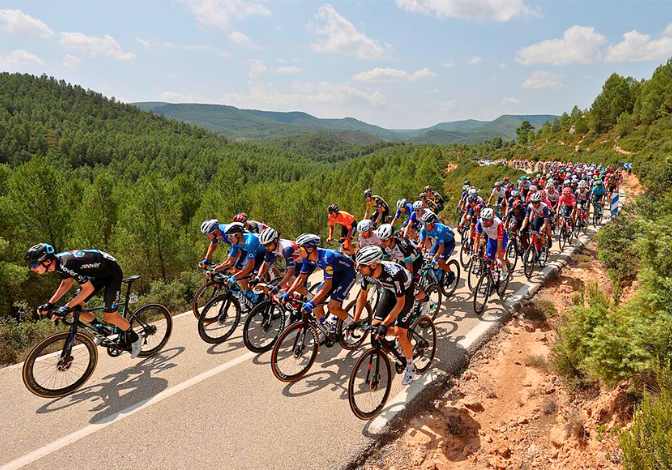
- Costa Blanca regularly hosts important stages with challenging mountain sections
- The 2025 edition starts in Italy (Torino) and finishes in Madrid
- La Vuelta is known for steeper climbs than the Tour de France, with gradients over 13%
- The race happens in August/September, making heat a major challenge
The History of La Vuelta a España
Did ya know that Spain’s biggest bike race started cuz a newspaper wanted more readers? Yep, back in 1935, the newspaper Informaciones created La Vuelta to copy what France and Italy were doin with their big races. The first race was crazy hard – 14 stages that averaged 240km each! That’s way longer than today’s stages. A Belgian guy named Gustaaf Deloor won it, beating the Spanish favorite Mariano Cañardo. Must’ve been a bummer for the local fans.
The race had a rough start in life. After just two years, everything stopped cuz of the Spanish Civil War. Things were messy for a while, with the race happening on and off until 1955. After that, it’s been goin strong every year. The 1950s were pretty cool for Spanish cycling – the Rodríguez brothers (Emilio and Manuel) totally crushed it in 1950, winning 11 stages between them! Talk about keeping it in the family.
La Vuelta didn’t get the same respect as the Tour de France or Giro d’Italia for a long time. It was like the forgotten little brother of the Grand Tours. But things started changing in the 1980s and 90s when more international stars began racing it. The organizers made the race more exciting with tougher mountain stages and better TV coverage.
One of the biggest changes happened in 2010 when they switched the leader’s jersey from gold to red. Before that, it was yellow for a while, but that was too similar to the Tour de France’s yellow jersey. The red jersey has become a cool symbol of the race now – when you see someone in that bright red top, you know they’re the boss of La Vuelta.
La Vuelta 2023 Spain Finishes in Madrid shows how the race traditionally ends in Spain’s capital, just like the Tour ends in Paris. This tradition connects the past and present of the race, linking back to those early editions while showcasing modern cycling.
La Vuelta works kinda like other big bike races, but with its own Spanish twist. It lasts for three weeks and has 21 stages with 2 rest days mixed in. The whole thing covers around 3,265km, which is a ton of riding! The race has different types of stages that make it interesting – flat stages for the sprinters, mountain stages for the climbers, and time trials where riders race alone against the clock.
The way you win La Vuelta is pretty simple – be the fastest overall. Every day, they add up how long each rider takes, and the person with the lowest total time wears the red jersey. But there’s other competitions goin on at the same time. The green jersey is for the points competition (usually won by sprinters), the polka-dot jersey goes to the best climber, and the white jersey is for the best young rider under 25.
Teams are super important in La Vuelta. There’s usually 22 teams with 8 riders each, making 176 cyclists at the start. Some riders are there to win the whole thing, while others focus on winning individual stages or helping their team leader. It’s like a chess game on wheels sometimes!
The route changes every year, which keeps things fresh and exciting. The organizers love to find new and super hard climbs to challenge the riders. They also try to visit different parts of Spain to show off the country. Sometimes they even start in another country – the 2025 edition begins in Torino, Italy before heading into Spain.
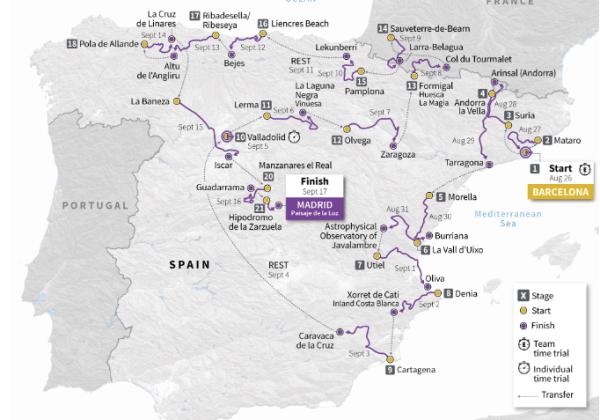
La Vuelta 2023 Spain – A Map of the Route gives you a good idea of how the race travels around Spain. Looking at these maps is a great way to understand the journey the riders take and the different challenges they’ll face along the way.

What Makes La Vuelta Unique
What’s special about La Vuelta compared to other big races? First off, it’s got some of the steepest climbs in cycling – way steeper than the Tour de France! Places like Alto de l’Angliru have sections that are over 20% gradient. That’s so steep that riders sometimes struggle just to keep their bikes moving forward without falling over. It’s brutal but makes for amazing TV!
The timing of La Vuelta makes it extra tough too. It happens in August and September when Spain can be super hot. Riders sometimes race in temperatures over 40°C (104°F), which is like biking in an oven. They gotta drink tons of water just to not pass out. The heat changes how the race works – riders who handle hot weather better have a big advantage.
Another cool thing about La Vuelta is how it showcases Spanish culture. Each region the race passes through shows off its local traditions, food, and landscapes. You might see stages that go past ancient castles, through olive groves, along beautiful coastlines, or up into misty mountains. It’s like a three-week tour of everything awesome about Spain.
La Vuelta is also known for being a bit unpredictable. Cuz it comes at the end of the cycling season, some riders are tired from racing all year, while others are super motivated to save their season with a big result. This creates crazy racing where unexpected things happen all the time. You never know who might win a stage or take the red jersey!
Stage 8 Denia Xorret de Cati Costa Blanca Interior is a perfect example of the challenging terrain that makes La Vuelta special. This Costa Blanca stage features the kind of brutal climbing that has become the race’s signature.
The Costa Blanca Connection
Costa Blanca and La Vuelta have a special relationship that goes back many years. This beautiful coastal region has hosted some of the most exciting stages in the race’s history. Why? Cuz it’s got this perfect mix of flat coastal roads and super steep mountains just a few kilometers inland. Race organizers love this combo since it creates dramatic racing where the situation can change in minutes.
Some of the most famous climbs in La Vuelta history are in the Costa Blanca region. Places like Xorret de Cati, Coll de Rates, and Alto de Aitana have become legendary in cycling. These climbs aren’t as long as the ones in the Pyrenees or Sierra Nevada, but they’re super steep! Gradients of 15-20% are common, making riders suffer like crazy. I watched a stage finish on Xorret de Cati once, and some riders were zigzagging across the road just to make the climb easier!
The weather in Costa Blanca adds another challenge. When La Vuelta visits in late August or early September, temperatures often hit 35°C or higher. The heat bounces off the rocky landscapes, making it feel like riding in a furnace. But the scenery is worth it – riders pass through beautiful white villages, almond groves, and get amazing views of the Mediterranean Sea.
For local businesses and tourism, La Vuelta’s visits are huge. Towns compete to host stage starts and finishes because it brings visitors and shows their area on TV to millions of people. Hotels fill up, restaurants get busy, and the whole place has a festival atmosphere. I remember being in Denia for a stage start – the whole town was decorated in red (La Vuelta’s color), and everyone was out on the streets hours before the riders arrived.
Biking Routes on Costa Blanca shows how cyclists can ride many of the same roads used in La Vuelta. This connection between the professional race and amateur cycling helps boost the region’s reputation as a cycling paradise.

Experiencing La Vuelta as a Spectator
Wanna watch La Vuelta in person? It’s way different than seeing it on TV! First thing to know – you don’t need tickets for most of the race. Just find a spot along the route and wait for the riders. But ya gotta plan ahead cuz roads close hours before the race comes through. I made this mistake once near Valencia and ended up walking 5km to find a viewing spot!
The best places to watch are either at the start, the finish, or on a big mountain climb. Starts are cool cuz you can see the riders up close while they sign in and warm up. They’re usually pretty relaxed and might stop for photos or autographs. Finishes are exciting with all the action of the sprint or the winner crossing the line, but they get super crowded. My favorite spot? Definitely the mountains! The riders are going slower so you see them better, and the atmosphere with all the fans is amazing.
Here’s a pro tip – the “caravan” comes through about an hour before the riders. This is a parade of sponsor vehicles that throw out free stuff like hats, keychains, and snacks. Kids love it, and even adults get excited about the freebies! Bring a bag to collect your goodies.
If you’re planning to watch multiple stages, you might need to think about transportation. The race moves to a new location each day, and public transport doesn’t always line up with the race schedule. Having a car gives you more freedom, but parking can be tricky near popular viewing spots. Some fans follow the whole race in camper vans, creating little communities in camping areas near the route.
The atmosphere at La Vuelta is more relaxed than at the Tour de France. There’s fewer spectators, which means better viewing spots and a more chilled vibe. You’ll see lots of families having picnics by the roadside, waiting for the race to come through. It feels like a big community event rather than just a sports competition.
Exploring Costa Blanca: Top 5 Scenic Bike Routes can help you plan your own rides in the region while you’re there to watch La Vuelta, combining spectating with your own cycling adventures.
Riding La Vuelta Routes Yourself
Ever dreamed of riding the same roads as the pros? You totally can! Many of La Vuelta’s routes are open to regular cyclists all year round. It’s one of the coolest things about cycling – you can test yourself on the exact same climbs that challenge the world’s best riders. I tried the Alto de l’Angliru once and barely made it halfway before I had to stop… those pros are on another level!
If you wanna try some Vuelta climbs, Costa Blanca is a perfect place to start. The climbs here are shorter than in other parts of Spain, making them more doable for amateur cyclists. Places like Coll de Rates (a favorite training climb for pros who live in the area) give you amazing views and a good challenge without being impossible. The roads are usually in good condition too, which helps.
Timing is important if you’re planning to ride in Spain. Summer (when La Vuelta happens) can be way too hot for enjoyable riding unless you start super early in the morning. The best times for cycling in Costa Blanca are spring (April-May) and fall (October-November) when temperatures are pleasant and there’s less traffic on the roads.
You don’t need a super fancy bike to enjoy these routes, but good gearing is essential. Make sure you’ve got some easy gears for those steep sections! A compact chainset (50/34) and a cassette with at least a 32-tooth biggest sprocket will save your knees on the steeper climbs. And always carry plenty of water – there aren’t always shops or fountains in the mountain areas.
If you’re not confident about planning routes yourself, there’s lots of local companies offering guided rides on La Vuelta routes. They’ll handle the navigation, support, and sometimes even transport your luggage between hotels if you’re doing a multi-day trip. It costs more than going solo, but the local knowledge and convenience might be worth it.
Cycling Costa Blanca: A Beginner’s Guide provides excellent information for those wanting to ride in this region, with tips that apply whether you’re tackling La Vuelta climbs or enjoying more gentle routes.
The Future of La Vuelta
What’s next for Spain’s biggest bike race? The 2025 edition is already lookin super exciting with some big changes! For the first time in a while, the race will start outside Spain – in Torino, Italy. This continues the trend of “foreign starts” that all the Grand Tours are doing now. It’s good for spreading the race’s popularity but some traditional fans aren’t happy about it. I think it’s cool to mix things up a bit!
The 2025 route will cover 3,265km over 21 stages, with 8 mountain stages that’ll really test the riders. The organizers keep finding new climbs to include, making the race harder and more unpredictable each year. They’ve announced that the fearsome Alto de l’Angliru will be back – that’s a climb with sections over 20% gradient that makes even pro riders struggle to stay upright!
Technology is changing how we experience La Vuelta too. The TV coverage gets better every year, with drone footage, bike cameras, and real-time data showing riders’ power and heart rates. Some people think this makes the race more interesting, while others prefer the mystery of the old days. I’m in the tech-loving camp – seeing exactly how hard the riders are working adds another level to watching.
Climate change might force some changes to La Vuelta in coming years. With Spain experiencing more extreme heat waves, there’s talk about potentially moving the race earlier in the year or changing the route to avoid the hottest regions during certain stages. Safety has to come first, even if it means breaking with tradition.
One thing that won’t change is La Vuelta’s importance for Spanish culture and tourism. The race will continue showcasing different regions each year, bringing attention and visitors to parts of Spain that might otherwise be overlooked by international tourists. It’s like a three-week commercial for Spanish tourism, broadcast to millions around the world!
Off-Road Mountain Biking Trails in Costa Blanca shows how the region is expanding its cycling offerings beyond road biking, potentially influencing future editions of La Vuelta which have occasionally included gravel or dirt sections in recent years.
FAQs about La Vuelta a España
When did La Vuelta a España start?
La Vuelta began in 1935, created by the Spanish newspaper Informaciones to boost their circulation. The first winner was Belgian cyclist Gustaaf Deloor, who also won the second edition in 1936. The race was interrupted by the Spanish Civil War and had an irregular schedule until becoming an annual event from 1955 onwards.
How long is La Vuelta a España?
The modern Vuelta covers around 3,265 kilometers (about 2,028 miles) over 21 stages with 2 rest days. The race takes three weeks to complete, similar to the Tour de France and Giro d’Italia. Each day’s stage averages about 150-170km, though individual stages can be shorter or longer depending on the terrain.
What do the different jerseys mean in La Vuelta?
The red jersey (previously gold and yellow) goes to the overall race leader based on total time. The green jersey is for the points classification, usually won by sprinters. The polka-dot jersey rewards the best climber who collects the most points on categorized climbs. The white jersey is worn by the best young rider under 25 years old.
Why is La Vuelta considered so difficult?
La Vuelta is famous for its extremely steep mountain stages, often featuring climbs with gradients over 15%. The race also takes place in August/September when Spain can be extremely hot, adding another challenge. The organizers deliberately seek out difficult and lesser-known climbs to make the race unpredictable and exciting.
Can I watch La Vuelta in person?
Yes! Watching La Vuelta is free along most of the route – you just need to find a spot along the roadside. The best viewing locations are typically at stage starts, finishes, or on mountain climbs where riders pass more slowly. The race atmosphere is festive and more relaxed than at the Tour de France, with good opportunities to see riders up close.
Has La Vuelta ever visited Costa Blanca?
Yes, Costa Blanca has hosted numerous La Vuelta stages over the years. The region is popular with race organizers because it offers both coastal flat sections and challenging mountains just inland. Famous climbs in the area include Xorret de Cati, Coll de Rates, and Alto de Aitana, which have all featured in decisive race moments.
How does La Vuelta compare to the Tour de France?
La Vuelta is generally considered the third most prestigious of cycling’s Grand Tours, after the Tour de France and Giro d’Italia. However, many cycling fans appreciate La Vuelta for its more unpredictable racing and extremely challenging mountain stages. The Vuelta typically has steeper climbs than the Tour, though they’re usually shorter in length.
Can amateur cyclists ride La Vuelta routes?
Absolutely! Most roads used in La Vuelta are public and open to all cyclists year-round. Many cycling tourists visit Spain specifically to challenge themselves on famous climbs from the race. Costa Blanca is particularly popular for this, offering great weather, good road surfaces, and climbs of varying difficulty suitable for different fitness levels.