Never Clean Your Chain Again’? What That Actually Means

Never Clean Your Chain Again’? What That Actually Means

Never Clean Your Chain Again’? What That Actually Means

You’ve probably seen the claim: “Hot wax means you never have to clean your chain again.”

It sounds like marketing hype. And honestly, it makes people roll their eyes. But there’s real truth behind it—if you understand what it’s actually replacing.

This article cuts through the exaggeration to show you exactly how hot wax changes your chain maintenance from weekly scrubbing battles to simple, predictable re-waxing.


The promise that sounds too good to be true

Traditional chain maintenance follows a vicious cycle:

  1. Lube the chain with oil or drip wax
  2. Ride a few days/100km
  3. Dirt sticks to the wet/sticky lube
  4. Degrease + scrub everything
  5. Repeat from step 1

Most riders spend more time fighting black grease than actually riding. Hot wax breaks this cycle completely.

The promise isn’t “zero maintenance.” It’s “no more scrubbing.” You trade messy cleaning sessions for occasional re-waxing.


Traditional oil maintenance vs hot wax reality

Here’s what changes:

Maintenance task Oil/Drip lube Hot wax
Weekly cleaning? ✅ Required ❌ Never
Degreaser use Every 1-2 weeks One-time setup only
Scrub chain/cassette Constant battle Never
Time per “service” 30-60 min scrubbing 10-15 min re-wax
Frequency Every ride or two Every 300-500km
Mess level High (grease everywhere) Low (contained wax pot)

The math: If you ride 200km/week, oil means 2-3 hours/month scrubbing. Hot wax means 30 minutes/month total maintenance.


What “no cleaning” actually replaces

“Never clean your chain again” means you stop these tasks forever:

  • ✅ No more chain cleaner brushes
  • ✅ No more scrubbing cassette with a toothbrush
  • ✅ No more degreaser down the drain
  • ✅ No more wiping black paste off frame/legs
  • ✅ No more cursing at greasy quick links

What you do instead:

  • Re-wax every few weeks (dip chain → hang → ride)
  • Wipe exterior occasionally if visually dirty (rare)

The chain stays “visually clean” much longer because dry wax repels dirt instead of trapping it.


Your new simple maintenance calendar

Here’s what it looks like for typical European riders:

Weekend road rider (150km/week):

Week 1: Fresh wax → ride
Week 2: Ride
Week 3: Quick re-wax → ride
Repeat

Daily commuter (15km/day):

Monday-Friday: Ride
Weekend: 10-min re-wax

Gravel rider (dusty conditions):

Big ride → check chain feel → re-wax if noisy → ride

Total time: Less than 1 hour/month vs 3-4 hours/month scrubbing oil.


Why shops love waxed chains too

Bike shops notice the difference immediately:

  • Cleaner workshops (no black grease on workstands)
  • Happier customers (chains actually stay clean)
  • New revenue stream (waxing service, ~€20-30)
  • Fewer warranty drivetrain claims (components last longer)

Many shops now offer:

  • Pre-waxed chain installation
  • Re-wax service every 300-500km
  • Waxing workshops for customers

Ask your local Spanish bike shop: “¿Ofrecen encerado de cadenas con Cyclowax?”


The one-time setup investment

The only “work” is your first chain prep:

  1. Option A: Buy pre-waxed chain (€60-80) → instant clean
  2. Option B: Deep-clean existing chain + wax (€30-40 kit)

After that? Just re-waxing. No scrubbing ever again.

Real cost math (1 year, 5,000km):

Oil routine: 12x degreaser + 12x lube + 24h labor = €120+
Hot wax: 1x kit + 12x wax blocks = €80 total
Savings: €40 + 20h of your time

Bottom line: dramatically less scrubbing

The “never clean again” claim translates to:

  • 95% less scrubbing time
  • No more chemical degreasers
  • Cleaner bike, workshop, clothes
  • Longer-lasting components

Hot wax doesn’t eliminate maintenance. It replaces a dirty, endless cycle with a clean, predictable routine.

If you’re tired of the grease war, your next chain service could be your last scrubbing session ever.

Ready to try? Start with Cyclowax waxing kits or ask your local shop for pre-waxed chain service.


Deep Dive on Stage 9: La Vila Joiosa – Alto de Aitana

Deep Dive on Stage 9: La Vila Joiosa – Alto de Aitana

Deep Dive on Stage 9: La Vila Joiosa – Alto de Aitana

Key Takeaways

Aspect Details
Distance 187.5 km (some sources suggest up to 188.8 km)
Elevation Gain Over 5,000m of climbing
Classification Mountain stage – one of the hardest in Vuelta history
Key Climbs Alto de El Miserat (1st category), Puerto de Tudons (2nd category), Alto de Aitana (summit finish)
Start Location La Vila Joiosa (first-ever Vuelta start for the town)
Finish Alto de Aitana – celebrating 25 years since its Vuelta debut
Date Sunday, August 30, 2026
Race Window Approximately 12:00 start to 17:00 finish

Route Overview: From Costa to Summit in One Brutal Day

La Vila Joiosa makes its Vuelta debut as a start town in 2026, but riders won’t be admiring the Mediterranean views for long. This stage transforms from a seaside departure into a mountain nightmare across 187.5 kilometres through the Costa Blanca interior.

What makes this stage particularly savage? Six categorised climbs packed into less than 190 kilometres. That’s roughly one major ascent every 30 kilometres, with minimal flat sections for recovery. The route winds through historic towns like Finestrat, La Nucia, and Callosa d’en Sarrià before hitting the mountains proper.

The profile reads like a sawtooth pattern. Riders face constant elevation changes, starting from sea level and eventually reaching the Alto de Aitana summit finish at over 1,500 metres. This isn’t just difficult – it’s relentless.

Professional teams will need to manage their energy carefully from the gun. Any early breakaway attempts will face the harsh reality of six major climbs ahead. The constant up-and-down nature means even the strongest climbers will suffer by the final ascent.

Why This Is Being Called One of the Hardest Vuelta Stages Ever

Over 5,000 metres of elevation gain in a single day. Let that sink in. Most amateur cyclists would consider 2,000 metres a challenging day out. The professionals face more than double that figure.

But raw elevation numbers don’t tell the complete story. This stage offers virtually no respite. Traditional mountain stages often feature long valley sections between climbs where teams can regroup and recover. Stage 9 provides no such luxury.

The route’s positioning within the race adds another layer of difficulty. By Stage 9, accumulated fatigue from the opening week will have taken its toll. Riders’ legs won’t be fresh, and this brutal test arrives just as bodies are adapting to race pace.

Weather conditions in late August can be punishing in inland Costa Blanca. Temperatures often exceed 35°C, and the lack of coastal breezes means riders will face stifling heat on the exposed climbs. Dehydration becomes a genuine concern across such a demanding profile.

Professional cyclists I’ve spoken with describe stages like this as “career-defining moments.” The physical demands separate genuine contenders from pretenders. Expect significant time gaps and potential race-changing performances.

The Decisive Climbs: Where the Race Will Be Won and Lost

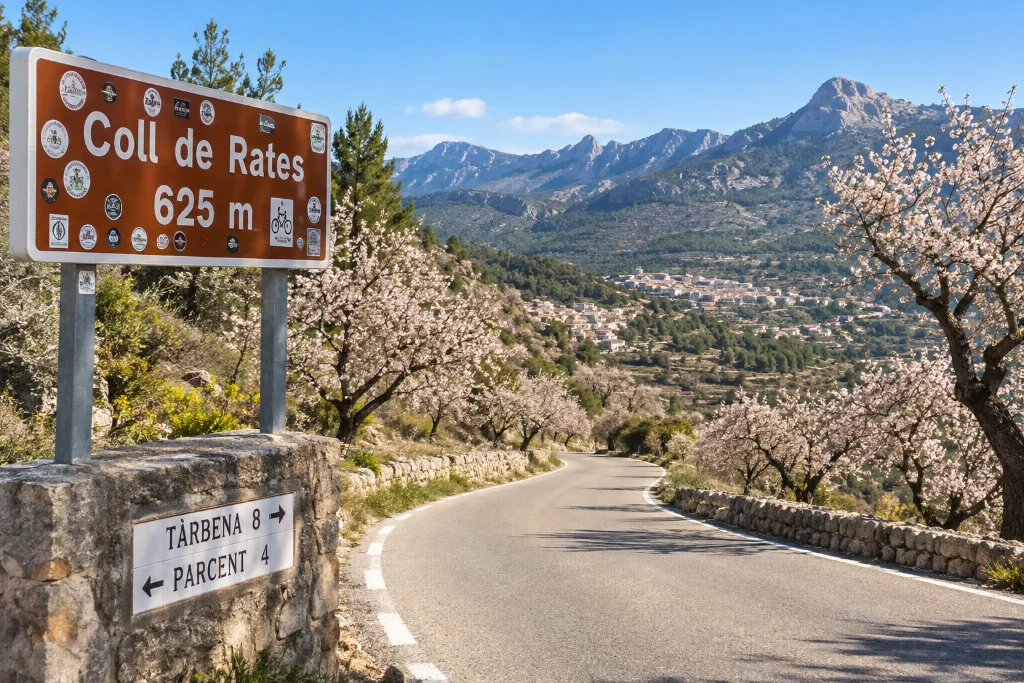
Puerto de Tàrbena kicks things off early, but it’s more of a warm-up for what follows. This initial climb will see breakaway groups form, but the real action starts later.

Alto de El Miserat carries the 1st category classification for good reason. This ascent typically features gradients exceeding 10% in several sections, with limited opportunities to recover. Teams will use this climb to position their leaders and potentially shed weaker climbers from the main group.

Puerto de Tudons, despite its 2nd category rating, shouldn’t be underestimated. Coming after significant accumulated climbing, riders’ legs will be screaming by this point. The descent that follows offers a brief respite, but smart teams know this is where race tactics become crucial.

The final approach to Alto de Aitana represents the stage’s defining moment. This legendary summit returns to the Vuelta after a decade-long absence. The climb’s reputation precedes it – steep sections, exposed terrain, and a summit that has produced some of the race’s most memorable moments.

Local knowledge suggests the final 5 kilometres to Aitana’s summit include sections at 15% gradient. After 180+ kilometres in the legs, these percentages become race-splitting terrain. Only the strongest climbers will remain in contention by this point.

La Vila Joiosa: A Historic Vuelta Debut

This seaside town has waited decades for its Vuelta moment. La Vila Joiosa (Villajoyosa in Spanish) brings genuine excitement to hosting the race’s most demanding stage. The town’s chocolate-coloured houses and fishing heritage provide a picturesque backdrop before riders face the mountains.

Starting at sea level creates maximum contrast with the stage’s mountainous finish. Riders begin alongside Mediterranean beaches before climbing to over 1,500 metres. This dramatic elevation change epitomises the Costa Blanca’s diverse terrain.

Local cycling enthusiasts have already begun planning viewing parties and celebrations. The town recognises this as a once-in-a-lifetime opportunity to showcase itself on cycling’s global stage. Tourism officials predict significant long-term benefits from the international television coverage.

The departure logistics will be fascinating to observe. Team buses navigating the narrow coastal streets, riders warming up along the promenade, and thousands of fans cramming into the start area. La Vila Joiosa has never experienced anything quite like this scale of sporting event.

For local cyclists, this represents validation of their training routes. Many of the stage’s climbs feature regularly in Costa Blanca cycling itineraries, and suddenly these roads will host the world’s best riders.

Alto de Aitana: 25 Years of Vuelta History

Alto de Aitana first appeared in the Vuelta 25 years ago, creating instant legend status. This summit finish has produced some of cycling’s most dramatic moments, and its return after a decade-long absence generates genuine excitement among cycling fans.

The climb’s difficulty lies in its relentless nature rather than extreme gradients. Riders face a steady grind upward with few opportunities to recover. The exposed terrain offers no protection from wind or weather, adding psychological pressure to the physical demands.

Previous Vuelta winners have described Aitana as “make-or-break” terrain. The climb doesn’t favour any particular type of rider – pure climbers, powerful rouleurs, and tactical racers have all found success here in previous editions.

The summit’s infrastructure has been upgraded significantly since its last Vuelta appearance. Modern safety barriers, improved road surfaces, and enhanced spectator areas mean this edition should surpass previous visits in terms of spectacle and safety.

Weather conditions at the summit can change rapidly. Even on clear days at sea level, clouds and wind often affect the upper reaches of Aitana. This unpredictability adds another tactical element for team managers and riders.

Training on These Roads: A Local Cyclist’s Paradise

Costa Blanca cyclists have been using these exact roads for training rides for decades. The Villajoyosa to Relleu route covers much of the stage’s early terrain, while the Benidorm to Guadalest scenic ride includes several of the featured climbs.

Local cycling clubs organise regular group rides that tackle individual sections of the stage. These provide excellent preparation for anyone wanting to experience the same challenges as the professionals. However, completing the full 187.5-kilometre route with over 5,000 metres of climbing requires serious preparation and fitness.

The Puerto de Tollos and Puerto de Benifallim climbs are particularly popular with local riders. Both offer stunning views across the Costa Blanca interior and provide genuine tests of climbing ability without being completely brutal.

For visiting cyclists, rental options through providers like Blanca Bikes Rental make these roads accessible. However, I’d strongly recommend building up to the full stage distance gradually. The accumulated elevation gain can be overwhelming for riders not accustomed to such terrain.

The Orba Valley singletrack provides mountain bikers with alternative ways to explore the same geographical area, though on different surfaces and gradients.

Strategic Implications for Teams and GC Contenders

Team managers face a tactical nightmare with this stage profile. The constant climbing means traditional lead-out trains become impossible to maintain. Instead, teams must focus on positioning their leaders for the final climbs while conserving energy throughout the stage.

Breakaway groups will form early, but selecting the right riders becomes crucial. Pure sprinters have no chance of survival, while climbing specialists might exhaust themselves before reaching the decisive final climbs. The ideal breakaway rider combines decent climbing ability with tactical awareness.

General Classification contenders must balance aggression with conservation. Attacking too early risks exhaustion before the summit finish, while waiting too long might mean missing crucial moves. The stage’s length adds complexity – riders need both explosive power for attacks and endurance for the full distance.

Weather monitoring becomes essential for team directors. Wind direction on the exposed climbs can influence tactical decisions, while temperature affects hydration strategies. The Mediterranean climate can be deceptive – what starts as a pleasant morning can become punishing heat by afternoon.

Support vehicle logistics present unique challenges. The narrow mountain roads limit where team cars can position themselves, while the stage’s duration means riders need multiple feeding opportunities throughout the 187+ kilometres.

How This Stage Fits into the 2026 Vuelta

Stage 9 arrives at a crucial point in the race calendar. The opening week’s flat and rolling stages will have established an initial hierarchy, but this mountain test provides the first genuine opportunity for significant time gaps.

Coming on a Sunday, television audiences worldwide will witness this spectacle. The timing maximises global viewership while allowing Spanish fans to gather for what promises to be one of the race’s defining moments.

The stage’s positioning means recovered riders from the opening week still have reasonable form, while accumulated fatigue hasn’t reached critical levels. This combination often produces the most explosive racing, as multiple riders feel capable of making decisive moves.

Following stages will likely favour the survivors of this brutal test. Riders who limit their losses here maintain realistic GC hopes, while those who struggle may find themselves out of contention entirely.

The psychological impact extends beyond mere time gaps. Surviving Stage 9 intact provides confidence for the challenges ahead, while struggling here can create doubt that affects performance in subsequent mountain stages.

Frequently Asked Questions

How long will Stage 9 take the professionals to complete? Based on the 12:00 start and 17:00 estimated finish, expect around 5 hours of racing. The winner should reach Alto de Aitana between 16:30 and 17:00, with the final finishers arriving up to 30 minutes later.

What makes this stage harder than typical mountain stages? The combination of distance (187.5km), elevation gain (5,000m+), and number of climbs (6 categorised ascents) creates relentless difficulty. Most mountain stages feature one or two major climbs – this stage never stops going up.

Can amateur cyclists ride this exact route? Yes, though it requires serious preparation. The roads are open to public traffic, and local cycling groups regularly tackle sections of the route. However, the full distance with such elevation gain challenges even experienced cyclists.

Why has Alto de Aitana been absent from the Vuelta for a decade? Race organisers rotate summit finishes to maintain variety and manage logistical challenges. Aitana’s return celebrates its 25-year Vuelta anniversary while showcasing Costa Blanca’s challenging interior terrain.

Which riders typically excel on stages like this? Pure climbers with excellent endurance perform best. Riders who can maintain steady power output over long distances while still having reserves for explosive attacks on the final climbs usually succeed on such demanding terrain.

How do weather conditions affect this stage? August temperatures in inland Costa Blanca often exceed 35°C. The exposed mountain terrain offers little shade, making heat management crucial. Wind conditions at altitude can also influence race tactics significantly.

Javea Mountain Biking Route

Javea Mountain Biking Route

Javea Mountain Biking Route

Key Takeaways

Aspect Details
Available Routes Montgó (27km), Capsades/Tossal Gros (18.7km)
Difficulty Level Moderate to high with 440m+ elevation gain
Starting Point Arenal Beach (Montgó route)
Best For Experienced MTB riders seeking forest trails
Route Type Forest paths, vineyard sections, river routes

Important Note: The available research doesn’t provide detailed information about a specific “Javea Forest MTB Loop” as a defined route. The content below synthesises available information about MTB trails in the Javea area, but readers should verify specific route details, GPS coordinates, and current trail conditions through local sources or recent user reviews before riding.

Discovering Javea’s Mountain Biking Terrain

Javea offers several established mountain biking routes that traverse the area’s diverse landscape. The most documented routes include the Montgó circuit and the Capsades trail system, both providing different challenges for off-road enthusiasts.

Why do these routes attract serious mountain bikers? The terrain combines forest paths, vineyard sections, and challenging elevation changes that test both technical skills and endurance. The Montgó route covers approximately 27 kilometres, whilst the Capsades/Tossal Gros circuit spans 18.7 kilometres.

Local riders often combine sections from different routes to create longer adventures. This flexibility allows you to adjust distance and difficulty based on your fitness level and available time. The forest sections provide natural shade during summer months, making these routes more comfortable than exposed coastal paths.

Trail conditions vary significantly between seasons. Spring offers the best combination of mild weather and firm trail surfaces. Summer brings heat that makes early morning starts essential. Autumn provides excellent visibility but watch for wet leaves on technical sections.

The elevation profiles show moderate to high difficulty ratings, with climbs reaching 440 metres of gain. This isn’t beginner territory – you need solid bike handling skills and reasonable fitness to complete these routes safely.

Most routes connect to the broader mountain biking trails network in Costa Blanca, allowing for extended touring opportunities.

Montgó Route: Technical Forest Challenge

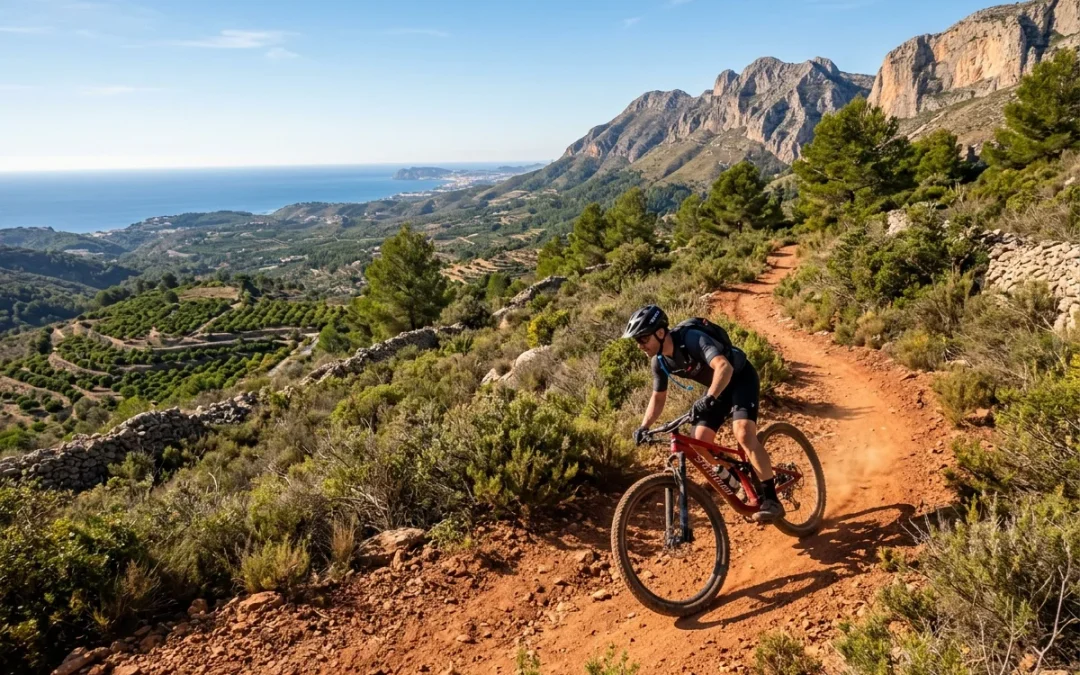
The Montgó route begins at Arenal Beach and immediately challenges riders with a steady climb towards the 753-metre peak. This isn’t a route for casual weekend riders – the initial ascent demands strong legs and proper gearing.

What makes this route technically demanding? The forest sections include loose rock surfaces, narrow singletrack passages, and steep gradient changes that require precise bike control. Riders report sections where dismounting becomes necessary, particularly on the steepest climbs approaching the Montgó summit area.

Navigation requires attention throughout the route. Forest paths can become unclear during poor weather conditions. GPS devices or smartphone apps with offline maps are essential – mobile signal coverage becomes patchy in the deeper forest sections.

The descent sections offer thrilling riding but demand respect. Loose gravel and sudden turns require controlled speed and proper braking technique. Full-face helmets aren’t overkill for this terrain – several local riders recommend them for the technical descents.

Water carrying capacity becomes crucial on this 27-kilometre route. The climbing sections generate significant sweat loss, and refill opportunities are limited once you leave the beach area. Plan for at least 1.5 litres per rider on warm days.

Forest wildlife occasionally crosses the trails. Wild boar tracks are common, though actual encounters remain rare during daylight hours. Make noise on blind corners and avoid riding alone in early morning or late afternoon periods.

Proper chain maintenance becomes critical on these dusty, demanding trails.

Capsades Trail Network: Shorter But Intense

The 18.7-kilometre Capsades/Tossal Gros route provides a more concentrated challenge than the longer Montgó circuit. This network focuses on technical forest riding rather than distance achievements.

Trail character changes dramatically between sections. The initial forest approach offers flowing singletrack that builds confidence. Then the terrain shifts to rocky, technical climbing that tests both bike setup and rider skill.

Tossal Gros sections include some of the most challenging terrain in the Javea area. Steep, loose climbs require careful line choice and momentum management. Many riders find the 34-tooth climbing gear still isn’t low enough for the steepest pitches.

The vineyard crossings provide welcome relief from intense forest riding. These sections flow smoothly and offer opportunities to recover before the next technical challenge. However, respect private property boundaries and stick to marked paths.

Rocky descents demand full attention. The combination of loose stones, tight corners, and gradient changes creates challenging conditions. Modern mountain bikes with dropper posts and wide tyres perform best on this terrain.

Local knowledge suggests early morning rides encounter the best trail conditions. Afternoon heat makes the rocky sections particularly demanding, and dust levels increase significantly with multiple riders.

Weather affects this route more than coastal alternatives. Rain makes rocky sections treacherous, and mud accumulates in forest areas for days after storms. Check recent conditions before attempting challenging sections.

Professional bike maintenance becomes essential after repeated rides on this abrasive terrain.

Essential Route Planning and Navigation

Successful mountain biking in the Javea area requires thorough preparation and proper equipment. GPS navigation tools are mandatory – mobile phone coverage becomes unreliable in forest sections, making offline maps essential.

Route verification through multiple sources is crucial. The available documentation lacks detailed turn-by-turn directions, specific landmarks, or recent condition reports. Local bike shops provide the most current information about trail conditions and access restrictions.

Water and food planning requires careful consideration. The combination of heat, elevation gain, and technical terrain creates high energy demands. Plan for 250-300 calories per hour of riding, plus extra reserves for navigation delays or mechanical issues.

Emergency contact procedures need establishment before starting longer routes. Mobile signal coverage varies significantly across the trail networks. Share your planned route and expected return time with reliable contacts.

Trail etiquette becomes important as these routes cross private land and sensitive natural areas. Stick to established paths, avoid riding during wet conditions that damage trails, and respect any seasonal access restrictions.

Mechanical preparation can prevent serious problems. The rocky, technical terrain causes higher-than-normal wear on brake pads, tyres, and drivetrain components. Pre-ride safety checks should include brake function, tyre pressure, and chain condition.

Most experienced riders recommend morning starts to avoid afternoon heat and potential thunderstorms. Summer conditions in particular make afternoon riding dangerous due to dehydration risk and reduced visibility from dust.

Consider linking with other Costa Blanca mountain biking adventures to extend your riding experience.

Terrain Analysis and Difficulty Assessment

The elevation profiles for Javea mountain biking routes show significant vertical challenges that separate these trails from casual riding options. With 440+ metres of climbing over relatively short distances, the power-to-weight ratio becomes a limiting factor for many riders.

Technical terrain analysis reveals specific skill requirements. The forest sections combine loose rock surfaces with narrow trail widths that demand precise steering control. Riders report that standard cross-country mountain bike skills aren’t sufficient – trail bike or enduro experience provides better preparation.

Gradient analysis shows sustained climbs rather than short, sharp ascents. This creates different physiological demands compared to coastal routes with brief hills. Pacing becomes critical to avoid early exhaustion that compromises bike handling on technical descents.

Surface conditions vary dramatically within single routes. Compact earth sections flow smoothly, but rocky areas require constant line choice decisions. Wet conditions transform moderately challenging sections into genuinely dangerous terrain.

Seasonal difficulty variations affect route planning. Summer heat adds significant cardiovascular stress to already demanding climbs. Spring conditions offer optimal trail surfaces but variable weather. Autumn provides stable temperatures but shorter daylight hours limit riding time.

The combination of elevation gain and technical terrain creates situations where walking becomes necessary. Plan routes with this possibility in mind – some sections simply exceed rideable limits for most mountain bikers.

Bike setup requirements differ from typical cross-country specifications. Wider tyres, lower gearing, and dropper posts improve safety and enjoyment on this challenging terrain.

Trailforks data confirms the technical nature of these routes through user difficulty ratings.

Local Trail Conditions and Seasonal Considerations

Trail maintenance levels vary across the Javea mountain biking network. Some sections receive regular attention from local cycling groups, whilst others rely on natural weather patterns and occasional hiker traffic to maintain rideable surfaces.

Wet weather creates lasting impact on trail conditions. The combination of clay soil and rocky terrain means that autumn and winter rain affects riding conditions well into spring months. Muddy sections become deeply rutted and potentially damaging to trail surfaces.

Summer drought conditions create different challenges. Dust accumulation reduces visibility on descents and creates slippery conditions on steep sections. The combination of heat and dust makes afternoon riding particularly uncomfortable and potentially dangerous.

Spring offers the most consistent trail conditions. Temperatures remain moderate, trail surfaces firm up from winter moisture, and vegetation growth hasn’t yet encroached on narrow sections. However, spring weather remains variable and sudden storms can catch riders unprepared.

Local wildlife activity influences safe riding times. Wild boar prefer dawn and dusk periods for foraging, making these times less suitable for solo riding in forest areas. Daylight hours between 9 AM and 5 PM generally offer the safest conditions.

Seasonal access restrictions may apply to specific trail sections during hunting periods or fire risk seasons. Local authorities can implement temporary closures with minimal advance notice during high fire danger periods.

Trail marking consistency varies between route sections. Some areas feature clear directional signs and distance markers, whilst others rely on faded paint marks or GPS navigation for route finding.

Consider exploring family-friendly alternatives if conditions aren’t suitable for technical riding.

Equipment Specifications and Safety Requirements

Modern mountain bike specifications become critical for safe completion of Javea’s challenging trail network. Full-suspension bikes with 120-140mm travel provide optimal performance on the rocky, technical terrain typical of these routes.

Tyre selection significantly affects both safety and enjoyment. Wide tyres in the 2.4-2.6 inch range offer improved grip and puncture resistance on sharp limestone rocks. Tubeless setups reduce puncture anxiety and allow lower pressures for better traction.

Dropper post functionality transforms the riding experience on these routes. The combination of steep climbs followed by technical descents makes quick saddle height adjustment essential for maintaining control and comfort.

Brake specifications require careful consideration. The sustained descents and loose surfaces demand consistent stopping power that basic mechanical disc brakes struggle to provide. Four-piston hydraulic systems offer the power and heat dissipation needed for safe descending.

Protective equipment recommendations exceed standard cross-country requirements. Full-face helmets provide worthwhile protection on rocky descents where crashes can involve facial impact with stones. Knee and elbow protection helps prevent injury during inevitable minor spills.

Navigation equipment must function reliably in areas with poor mobile coverage. GPS devices with preloaded maps or smartphones with offline mapping apps are essential. Power bank capacity should support all-day navigation use.

Emergency repair capabilities need expansion beyond basic puncture fixes. The rocky terrain causes higher failure rates for brake components, derailleur hangers, and chain links. Comprehensive tool kits and spare parts become necessary for remote trail riding.

Hydration planning requires consideration of heat, exertion, and limited refill opportunities. Hydration packs offering 2+ litre capacity work better than bottle systems for longer routes.

Professional waxing services help maintain drivetrain performance in dusty conditions.

Route Extensions and Connecting Adventures

The Javea trail network connects to broader Costa Blanca mountain biking opportunities, allowing experienced riders to create multi-day adventures or longer single-day challenges. Understanding these connections opens up significantly more riding possibilities.

Northern connections link to the Vall de Laguar systems. This extension adds approximately 15-20 kilometres but requires solid navigation skills and self-sufficiency for longer remote sections. The terrain becomes more technical with increased exposure to weather conditions.

Southern route options connect towards Calpe and the Sierra de Bernia networks. These extensions offer different geological formations and trail characteristics whilst maintaining challenging difficulty levels throughout.

The forest trail systems can connect to coastal routes for mixed-terrain adventures. However, the transition sections often involve road riding through built-up areas that reduce the wilderness experience.

Multi-day touring possibilities exist but require careful planning. Accommodation options that cater specifically to mountain bikers remain limited around Javea. Most hotels and rental properties don’t provide secure bike storage or workshop facilities.

Route combination strategies should consider cumulative fatigue effects. Adding distance to already challenging routes can push difficulty levels beyond safe limits for many riders. Conservative planning prevents problems in remote trail sections.

Weather windows become more critical for extended route combinations. Single-day routes offer flexibility to postpone rides during poor conditions, but multi-day plans require more accurate forecasting and backup options.

Transportation logistics for route combinations need advance planning. Car shuttles or return transportation become necessary for point-to-point route combinations that don’t form complete loops.

Explore self-guided tour planning resources for extended adventure preparation.

Frequently Asked Questions

Is the Javea Forest MTB Loop suitable for beginners? No, the available routes around Javea feature moderate to high difficulty levels with 440+ metres of elevation gain and technical rocky sections. Beginners should start with easier coastal routes and build skills before attempting forest trails.

What’s the best time of year for mountain biking in Javea? Spring (March-May) offers optimal conditions with moderate temperatures and firm trail surfaces. Summer requires early morning starts due to heat, whilst autumn and winter bring variable weather that can make trails dangerous when wet.

How long does it take to complete the main Javea mountain bike routes? The Montgó route (27km) typically requires 3-4 hours for experienced riders, whilst the Capsades circuit (18.7km) takes 2-3 hours. Times vary significantly based on fitness level, technical skill, and trail conditions.

What bike specifications are recommended for these trails? Full-suspension mountain bikes with 120-140mm travel work best. Wide tyres (2.4-2.6 inches), four-piston hydraulic brakes, and dropper posts significantly improve safety and performance on the technical, rocky terrain.

Are GPS devices necessary for navigation? Yes, GPS devices or smartphones with offline maps are essential. Mobile phone coverage becomes unreliable in forest sections, and trail marking inconsistency makes electronic navigation critical for safe route completion.

Can these routes be ridden year-round? Weather conditions significantly affect trail safety and rideability. Wet conditions make rocky sections dangerous, whilst summer heat creates dehydration risks. Spring and early autumn generally provide the most consistent riding conditions.

Your First Hot‑Waxed Chain: Simple Step‑by‑Step Guide

Your First Hot‑Waxed Chain: Simple Step‑by‑Step Guide

Your First Hot‑Waxed Chain: Simple Step‑by‑Step Guide

Hot‑waxed chains used to sound like something only WorldTour mechanics did in race trucks. Today, the good news is that you can get the same clean, fast feeling at home or through your local workshop—without turning your kitchen into a chemistry lab.

This guide walks you through everything you need for your first hot‑wax setup and gives you two easy paths: do it yourself, or let your local bike shop handle the messy part.


Why hot wax isn’t just for pros

Hot wax has a reputation for being “high‑tech” or “too much faff,” but the basic idea is simple:

  • You clean the chain once, properly.
  • You coat it with molten wax so it penetrates the internals.
  • The wax hardens into a dry, clean lubricating layer.

After that first setup, ongoing maintenance is often easier than living with a constantly greasy, dirty drivetrain. You just re‑wax at intervals instead of endlessly degreasing and re‑oiling.

For everyday riders, the benefits are clear:

  • A chain that stays visually clean.
  • Less friction and noise.
  • Longer life for chain and cassette.

What you need for your first hot‑wax setup

For a simple home setup, you only need a handful of items:

  • A good chain‑cleaning solution (for the first deep clean).
  • A container or jars for degreasing if the chain is very oily.
  • A way to heat the wax safely (dedicated small slow cooker, wax pot, or similar).
  • A high‑quality chain wax formulated for hot application.
  • A quick‑link tool or chain tool to remove and refit the chain.
  • Hooks or a hanger to let the chain drip and cool after waxing.

Many riders find that a dedicated waxing kit takes the guesswork out of this list by bundling compatible components and clear instructions.


The easiest option: start with a pre‑waxed chain

If you want the fastest, cleanest start, consider this route:

  1. Buy a pre‑waxed chain that has already been fully stripped and waxed by the manufacturer.
  2. Take it to your local bike shop or install it yourself if you’re comfortable.
  3. Ride and enjoy the difference immediately.

This approach has a few advantages:

  • No messy first clean at home.
  • No need to worry whether you removed all the old oil and factory grease.
  • Perfect way to “test” hot wax before investing in full setup.

Once you’re convinced, you can later buy a waxing kit to maintain that chain or prepare your next one.


How to prepare an existing chain (deep clean)

If you’d rather convert your current chain, the most important part is the first deep clean. Any oil or factory grease left inside the chain will contaminate the wax, so take your time here.

Basic process:

  1. Remove the chain
    • Shift onto small chainring and smallest cog.
    • Release the quick link or pin and carefully remove the chain from the bike.
  2. Degrease thoroughly
    • Place the chain in a suitable container with degreaser.
    • Agitate and soak until all visible grease and oil are gone.
    • You may need to repeat with fresh degreaser for heavily oiled chains.
  3. Rinse and dry completely
    • Rinse with clean water if the degreaser allows it.
    • Dry with a cloth, then let the chain air‑dry until there is no moisture left.
    • Some riders use a hairdryer or low heat to make sure it’s fully dry.

The chain should feel “bare metal” with no oily residue. It might even look slightly dull—that’s perfect for wax adhesion.


Step‑by‑step: how to wax your chain at home

Once the chain is clean and dry, waxing is straightforward.

  1. Prepare the wax
    • Place the wax in your dedicated pot or heater.
    • Warm it until fully melted, following the product’s temperature guidance.
    • Give it a gentle stir so the wax is evenly heated.
  2. Immerse the chain
    • Hook the chain on a wire or hang it so you can lower it into the wax.
    • Make sure the entire chain is submerged.
    • Gently move the chain in the wax for a few minutes to help it penetrate.
  3. Let the wax soak in
    • Keep the chain immersed for long enough for the links to reach wax temperature and for the wax to flow into the internals.
    • This often takes just a few minutes in a properly heated bath.
  4. Remove and drip‑dry
    • Lift the chain out and let excess wax drip back into the pot.
    • Hang it on a hook or hanger to cool and fully solidify.
  5. Break the links free
    • Once cool, the chain will be stiff.
    • Flex it gently in your hands to “break” each link free so it moves smoothly.
  6. Refit the chain
    • Reinstall the chain on the bike using the quick link or pin.
    • Spin the cranks and shift through the gears to ensure everything runs smoothly.

You’re ready to ride. The chain will feel exceptionally smooth and quiet, especially in the first rides.


Workshop option: letting your local shop do it

If you’d rather not deal with degreaser and hot wax at home, your local bike shop can be your best friend:

  • Ask if they offer chain waxing as a service.
  • Bring your bike in and have them either:
    • Fit a pre‑waxed chain, or
    • Fully strip and wax your existing chain.

Many shops appreciate waxed chains because:

  • Their workspace stays cleaner.
  • Customer drivetrains last longer and cause fewer complaints.
  • It creates a new service they can offer regularly.

This is also a great way to introduce more riders in your local community to hot‑waxed chains with minimal friction (for them and the mechanics).


Common beginner mistakes (and how to avoid them)

When people say “hot wax didn’t work for me,” it’s usually due to one of these:

  • Not cleaning the chain properly first
    Any oil left inside dilutes and contaminates the wax.
  • Waxing a wet chain
    Moisture trapped inside stops wax from bonding and can cause rust.
  • Using the wrong wax or temperature
    Household candles or random waxes are not the same as dedicated chain wax. Always follow the product’s instructions.
  • Adding oil on top of wax later
    That defeats the whole purpose and makes the chain dirty again. If it feels dry, it needs a re‑wax, not oil.

Avoid these, and your first experience will be dramatically better.


Your next steps: keeping the routine simple

Once you’ve done your first hot‑wax setup, ongoing maintenance is surprisingly low effort:

  • Ride and enjoy a clean, quiet drivetrain.
  • Re‑wax at the interval that fits your riding (for many riders, every few weeks).
  • Avoid using oil or random sprays on the chain.

Whether you set up at home or through your local workshop, hot wax turns chain care from a constant battle with black grease into a simple, predictable routine.

If you’re ready for your first try, start with either a pre‑waxed chain or a complete waxing kit. From there, it’s just ride, re‑wax, repeat.

How Often Do You Really Need to Re‑Wax? A Simple Guide for Everyday Riders

How Often Do You Really Need to Re‑Wax? A Simple Guide for Everyday Riders

How Often Do You Really Need to Re‑Wax? A Simple Guide for Everyday Riders

If you’re new to hot‑waxed chains, one of the first questions you’ll have is: “How often do I need to re‑wax this thing?” The good news is that, for most everyday riders, re‑waxing is much less frequent than traditional cleaning and lubing.

This guide breaks it down into simple, real‑world scenarios so you can plan your maintenance without overthinking it.


Why you can’t just use a fixed number

You’ll sometimes see a rough recommendation like “re‑wax every 300–500 km” or “every 200–300 miles.” That’s a useful starting point, but not a rule written in stone.

How often you really need to re‑wax depends on:

  • Where you ride (dry roads vs dusty gravel vs constant rain)

  • How hard you ride (easy spins vs race efforts)

  • How often you ride each week

  • How well the chain was prepared and waxed in the first place

Think of the mileage range as a guideline. Your actual interval will be shorter or longer depending on your conditions.


Simple signs your chain is ready for a re‑wax

Instead of just counting kilometres, learn the signs that the wax layer is used up. You probably need to re‑wax when:

  • The chain feels noticeably noisier than usual

  • The drivetrain loses that “smooth” feeling, even though everything looks clean

  • The chain starts to feel dry to the touch, rather than slightly slick and waxy

  • Shifting gets a bit harsher, especially under load

If you ignore those signs and keep riding, you’re effectively running a dry chain. It will still be cleaner than an oily drivetrain, but wear will increase and you’ll lose the main benefits of hot wax.


Everyday scenarios: how often should you re‑wax?

Let’s turn this into real‑life examples so you can plan your next wax.

1. The weekend road rider

  • Typical riding: 2–3 rides per week

  • Distance: 120–200 km per week

  • Conditions: mostly dry, paved roads

In this case, a well‑prepared, properly waxed chain can often go around 300–500 km before it needs a re‑wax. That usually means:

  • Re‑wax approximately every 2–3 weeks in good weather

  • Slightly more often if you ride in the rain or on gritty roads

If your chain starts to sound dry before you reach that distance, use the sound/feel as your true signal.

2. The daily commuter

  • Typical riding: 5 days per week

  • Distance: 10–30 km per day

  • Conditions: mixed weather, urban dust, occasional rain

City riding can be surprisingly hard on a chain because of stop‑start pedalling, pollution, and wet roads. For commuters, a realistic pattern is:

  • Re‑wax every 2–4 weeks, depending on distance and weather

  • Shorter intervals in winter or very rainy periods

If you commute in coastal or very humid areas, check your chain more often—salt and moisture will eat through any lubrication layer faster.

3. The gravel and adventure rider

  • Typical riding: 1–2 longer rides per week

  • Distance: 60–150 km per ride

  • Conditions: dust, dirt, sometimes mud

Hot wax is excellent for dusty gravel because it doesn’t create a sticky film for dust to cling to. However, off‑road contamination still wears down the wax layer faster than smooth tarmac.

For gravel riders:

  • Plan to re‑wax roughly every big weekend or every 2–3 rides in heavy dust

  • If you ride in mud and wash the bike, expect to re‑wax sooner

A good habit is to gently inspect the chain after each big gravel ride: if it looks clean but feels dry and sounds “scratchy,” it’s time.

4. The performance‑oriented racer or serious enthusiast

  • Typical riding: 4–6 sessions per week

  • Distance: high mileage, intervals and races

  • Conditions: mostly dry, some wet race days

Performance riders typically care about every watt and are happy to maintain more often to keep friction consistently low.

For this group:

  • Re‑wax every 250–400 km is common

  • Before important races, start with a fresh re‑wax to ensure peak efficiency

You’re trading a bit more maintenance for the reassurance that you’re not leaving free speed on the table.


Weather and conditions: how they change your interval

You can use a simple mental rule:

  • Dry, clean roads = wax lasts longer

  • Dusty/gravel = wax wears faster

  • Heavy rain or frequent washing = wax wears fastest

If you ride in:

  • Dry Mediterranean conditions most of the year: you’ll likely enjoy some of the longest re‑wax intervals.

  • Wet, northern climates or winter: plan for shorter intervals and put more emphasis on drying the chain properly after wet rides before storing the bike.


How to keep track without obsessing

You don’t need a spreadsheet to manage re‑waxing. A light system is enough:

  • Note down your starting mileage when you apply fresh wax.

  • Add re‑waxing as a repeating reminder on your phone at a rough interval that suits your riding (for example, every 2 or 3 weeks).

  • Use sound and feel as your final check—if it’s noisy or rough before the reminder, re‑wax earlier.

Over time, you’ll learn your own pattern. Many riders find that after a month or two, they can almost predict when the chain will start to sound dry.


What happens if you re‑wax “too early” or “too late”?

  • Too early: You’ll spend a bit more time re‑waxing than necessary, but your chain will be consistently smooth and protected. No real downside.

  • Too late: The chain runs effectively dry. It may still look clean, but friction and wear increase, and you lose the main efficiency benefits.

If you’re unsure, it’s better to re‑wax a little earlier, especially if you have a big event or trip coming up.


A simple rule of thumb you can remember

If you only remember one thing, make it this:

Start with a guideline (for example 300–500 km), then let sound and feel tell you the truth.

For most everyday riders, that means:

  • Road: roughly every 2–3 weeks in normal conditions

  • Commuting: every 2–4 weeks, depending on distance and weather

  • Gravel/MTB: every 2–3 big rides in dust or mud

  • Racers: more often, and always before key events

Once you’ve found your own rhythm, re‑waxing becomes just another easy part of your cycling routine—like charging your lights or checking tyre pressure—only this one keeps your bike smoother, cleaner, and cheaper to run in the long term.

If you want, I can now add a short internal‑link plan and tailored calls‑to‑action for Cyclowax products at the key points in this article.