
by Ralf Tenbrink | 30, Mar 2026 | Cyclowax
How to Wax Your Chain in 10 Minutes: Fast Heating, Real Routine
Hot-waxing your chain has a reputation for being slow and complicated. In reality, once you’re set up, it can fit easily into a normal weeknight—about 10–15 minutes of actual hands-on time.
This guide shows you a realistic routine you can repeat over and over without feeling like you’ve taken on a second job.
Why hot wax doesn’t have to take ages
The first time you convert a chain to hot wax (deep cleaning, setting up a pot, etc.) takes longer. That’s normal.
But once you:
-
Have a dedicated wax pot,
-
Are using a fast-melting wax, and
-
Start with a chain that is already waxed and clean,
rewaxing becomes simple: warm, dip, hang, reinstall.
Most of the time the wax is heating, you’re free to do something else.
What “10 minutes” really means
When people say “10-minute chain wax,” they’re talking about active time:
-
Time your hands are actually touching the chain or wax.
There is also some passive time:
-
Waiting for the wax to melt fully,
-
Letting the chain cool and harden.
The key is to structure the routine so that passive time overlaps with things you’d do anyway—changing, showering, preparing food, or tidying the bike.
Think of it like this:
-
5–10 minutes of real work.
-
20–30 minutes of waiting where you’re doing other things.
Your weeknight waxing checklist
To keep it fast, have everything ready in one place:
-
Dedicated wax pot / small slow cooker with wax already inside.
-
Quick-link tool (or chain tool) to remove and refit the chain.
-
Hook or hanger where the chain can drip and cool.
-
Clean rag for quick wipe-ups.
-
Optional: gloves and apron if you want to keep clothes spotless.
If you have to search the house for tools every time, the “10 minutes” turns into 30. A small, permanent waxing corner solves this.
Step-by-step: the 10-minute chain waxing routine
This assumes your chain is already converted to wax (clean and waxed from previous sessions). For a first-time conversion, use a full beginner guide.
Step 1 – Start heating the wax (1 minute)
-
Turn on your wax pot or heater so the wax starts melting.
-
You can do this as soon as you get home, before you even change.
Step 2 – Remove the chain (2 minutes)
-
Shift onto the smallest chainring and smallest cog.
-
Open the quick link and remove the chain from the bike.
-
Hang it on a hook or hold it ready.
Step 3 – Prepare the chain (1–2 minutes)
-
If it’s only lightly dusty, a quick shake or gentle wipe is enough.
-
No degreasing or heavy cleaning is required on a waxed chain.
Step 4 – Dip the chain in hot wax (2 minutes)
-
Once the wax is fully melted, lower the chain in.
-
Gently move it around for a minute or two so wax flows into all the links.
-
This is hands-on, but goes quickly once you’re used to it.
Step 5 – Let it drip and cool (passive time)
-
Lift the chain out and let excess wax drip back into the pot.
-
Hang it on a hook to cool and harden.
-
While it cools (10–20 minutes), you can shower, eat, or get your kit ready for the next ride.
Step 6 – Flex the links and refit (3–4 minutes)
-
Once cool, gently flex the chain to free up each link so it moves smoothly.
-
Refit the chain on the bike using the quick link.
-
Spin the cranks and shift through a few gears to make sure everything runs smoothly.
Total active time: around 10 minutes once you get into the rhythm.
How often you need to do this
Your waxing routine doesn’t need to happen after every ride.
In normal conditions, many riders re-wax:
-
Every 300–500 km on the road.
-
Every 2–3 big gravel rides in dusty conditions.
-
Every 1–2 weeks for commuting, depending on distance and weather.
That means your “10-minute routine” might only happen a few times per month—not every few days like oiling and scrubbing.
Common time-wasters to avoid
If hot wax feels slow, it’s usually because of one of these:
-
Setting everything up from scratch each time
Solution: keep a permanent waxing station with tools and pot ready.
-
Trying to deep-clean every time
Once the chain is converted to wax, you only need light prep before re-waxing.
-
Waiting next to the pot doing nothing
Treat wax melting and chain cooling as background time while you do other tasks.
-
Overthinking perfect timing
Don’t stress about precise minutes—melting and cooling for a bit longer is not a problem.
Remove these, and the process feels easy rather than like a “project.”
Making hot wax part of your normal riding rhythm
The secret is to tie waxing to an existing habit:
-
Always re-wax after a certain distance or number of rides.
-
Make it part of your “Sunday evening” routine or post-ride ritual.
-
Use a phone reminder or app to nudge you when the interval is up.
Once it becomes just another small step—like charging your lights or checking tyre pressure—hot wax stops feeling like extra work and starts feeling like the simplest way to keep your bike running beautifully.
A 10-minute routine every few weeks for a drivetrain that’s clean, quiet, fast, and long-lasting is a trade that most riders are very happy to make.

by Ralf Tenbrink | 23, Mar 2026 | Cyclowax
Never Clean Your Chain Again’? What That Actually Means
You’ve probably seen the claim: “Hot wax means you never have to clean your chain again.”
It sounds like marketing hype. And honestly, it makes people roll their eyes. But there’s real truth behind it—if you understand what it’s actually replacing.
This article cuts through the exaggeration to show you exactly how hot wax changes your chain maintenance from weekly scrubbing battles to simple, predictable re-waxing.
The promise that sounds too good to be true
Traditional chain maintenance follows a vicious cycle:
- Lube the chain with oil or drip wax
- Ride a few days/100km
- Dirt sticks to the wet/sticky lube
- Degrease + scrub everything
- Repeat from step 1
Most riders spend more time fighting black grease than actually riding. Hot wax breaks this cycle completely.
The promise isn’t “zero maintenance.” It’s “no more scrubbing.” You trade messy cleaning sessions for occasional re-waxing.
Traditional oil maintenance vs hot wax reality
Here’s what changes:
| Maintenance task |
Oil/Drip lube |
Hot wax |
| Weekly cleaning? |
✅ Required |
❌ Never |
| Degreaser use |
Every 1-2 weeks |
One-time setup only |
| Scrub chain/cassette |
Constant battle |
Never |
| Time per “service” |
30-60 min scrubbing |
10-15 min re-wax |
| Frequency |
Every ride or two |
Every 300-500km |
| Mess level |
High (grease everywhere) |
Low (contained wax pot) |
The math: If you ride 200km/week, oil means 2-3 hours/month scrubbing. Hot wax means 30 minutes/month total maintenance.
What “no cleaning” actually replaces
“Never clean your chain again” means you stop these tasks forever:
- ✅ No more chain cleaner brushes
- ✅ No more scrubbing cassette with a toothbrush
- ✅ No more degreaser down the drain
- ✅ No more wiping black paste off frame/legs
- ✅ No more cursing at greasy quick links
What you do instead:
- Re-wax every few weeks (dip chain → hang → ride)
- Wipe exterior occasionally if visually dirty (rare)
The chain stays “visually clean” much longer because dry wax repels dirt instead of trapping it.
Your new simple maintenance calendar
Here’s what it looks like for typical European riders:
Weekend road rider (150km/week):
Week 1: Fresh wax → ride
Week 2: Ride
Week 3: Quick re-wax → ride
Repeat
Daily commuter (15km/day):
Monday-Friday: Ride
Weekend: 10-min re-wax
Gravel rider (dusty conditions):
Big ride → check chain feel → re-wax if noisy → ride
Total time: Less than 1 hour/month vs 3-4 hours/month scrubbing oil.
Why shops love waxed chains too
Bike shops notice the difference immediately:
- Cleaner workshops (no black grease on workstands)
- Happier customers (chains actually stay clean)
- New revenue stream (waxing service, ~€20-30)
- Fewer warranty drivetrain claims (components last longer)
Many shops now offer:
- Pre-waxed chain installation
- Re-wax service every 300-500km
- Waxing workshops for customers
Ask your local Spanish bike shop: “¿Ofrecen encerado de cadenas con Cyclowax?”
The one-time setup investment
The only “work” is your first chain prep:
- Option A: Buy pre-waxed chain (€60-80) → instant clean
- Option B: Deep-clean existing chain + wax (€30-40 kit)
After that? Just re-waxing. No scrubbing ever again.
Real cost math (1 year, 5,000km):
Oil routine: 12x degreaser + 12x lube + 24h labor = €120+
Hot wax: 1x kit + 12x wax blocks = €80 total
Savings: €40 + 20h of your time
Bottom line: dramatically less scrubbing
The “never clean again” claim translates to:
- 95% less scrubbing time
- No more chemical degreasers
- Cleaner bike, workshop, clothes
- Longer-lasting components
Hot wax doesn’t eliminate maintenance. It replaces a dirty, endless cycle with a clean, predictable routine.
If you’re tired of the grease war, your next chain service could be your last scrubbing session ever.
Ready to try? Start with Cyclowax waxing kits or ask your local shop for pre-waxed chain service.

by Ralf Tenbrink | 16, Mar 2026 | Cyclowax
Your First Hot‑Waxed Chain: Simple Step‑by‑Step Guide
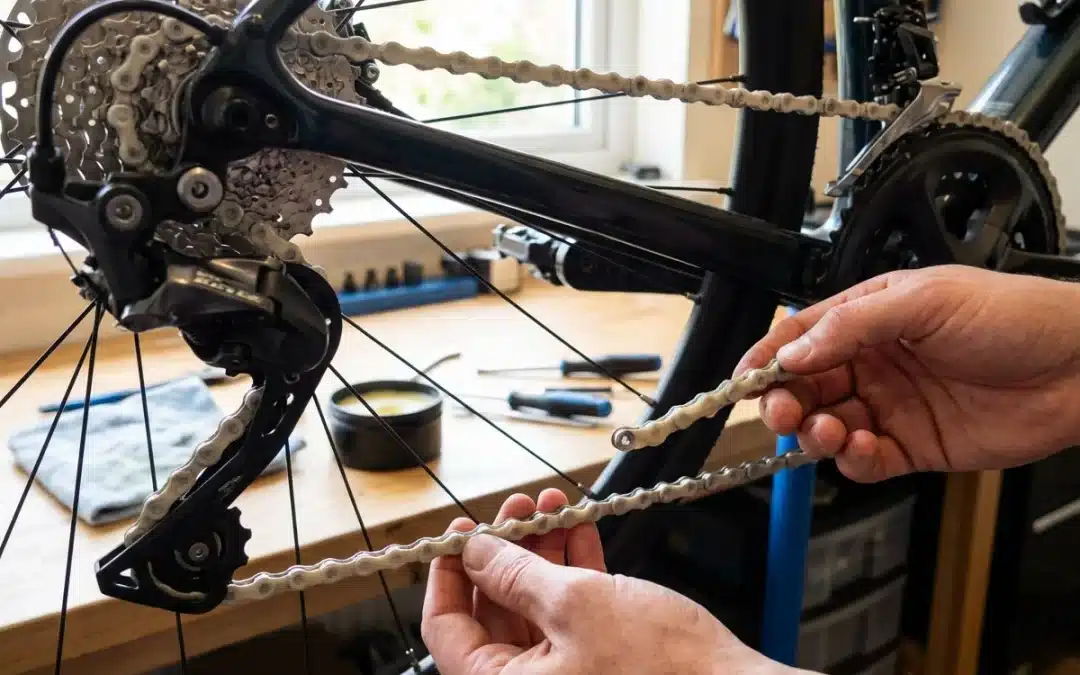
Hot‑waxed chains used to sound like something only WorldTour mechanics did in race trucks. Today, the good news is that you can get the same clean, fast feeling at home or through your local workshop—without turning your kitchen into a chemistry lab.
This guide walks you through everything you need for your first hot‑wax setup and gives you two easy paths: do it yourself, or let your local bike shop handle the messy part.
Why hot wax isn’t just for pros
Hot wax has a reputation for being “high‑tech” or “too much faff,” but the basic idea is simple:
- You clean the chain once, properly.
- You coat it with molten wax so it penetrates the internals.
- The wax hardens into a dry, clean lubricating layer.
After that first setup, ongoing maintenance is often easier than living with a constantly greasy, dirty drivetrain. You just re‑wax at intervals instead of endlessly degreasing and re‑oiling.
For everyday riders, the benefits are clear:
- A chain that stays visually clean.
- Less friction and noise.
- Longer life for chain and cassette.
What you need for your first hot‑wax setup
For a simple home setup, you only need a handful of items:
- A good chain‑cleaning solution (for the first deep clean).
- A container or jars for degreasing if the chain is very oily.
- A way to heat the wax safely (dedicated small slow cooker, wax pot, or similar).
- A high‑quality chain wax formulated for hot application.
- A quick‑link tool or chain tool to remove and refit the chain.
- Hooks or a hanger to let the chain drip and cool after waxing.
Many riders find that a dedicated waxing kit takes the guesswork out of this list by bundling compatible components and clear instructions.
The easiest option: start with a pre‑waxed chain
If you want the fastest, cleanest start, consider this route:
- Buy a pre‑waxed chain that has already been fully stripped and waxed by the manufacturer.
- Take it to your local bike shop or install it yourself if you’re comfortable.
- Ride and enjoy the difference immediately.
This approach has a few advantages:
- No messy first clean at home.
- No need to worry whether you removed all the old oil and factory grease.
- Perfect way to “test” hot wax before investing in full setup.
Once you’re convinced, you can later buy a waxing kit to maintain that chain or prepare your next one.
How to prepare an existing chain (deep clean)
If you’d rather convert your current chain, the most important part is the first deep clean. Any oil or factory grease left inside the chain will contaminate the wax, so take your time here.
Basic process:
- Remove the chain
- Shift onto small chainring and smallest cog.
- Release the quick link or pin and carefully remove the chain from the bike.
- Degrease thoroughly
- Place the chain in a suitable container with degreaser.
- Agitate and soak until all visible grease and oil are gone.
- You may need to repeat with fresh degreaser for heavily oiled chains.
- Rinse and dry completely
- Rinse with clean water if the degreaser allows it.
- Dry with a cloth, then let the chain air‑dry until there is no moisture left.
- Some riders use a hairdryer or low heat to make sure it’s fully dry.
The chain should feel “bare metal” with no oily residue. It might even look slightly dull—that’s perfect for wax adhesion.
Step‑by‑step: how to wax your chain at home
Once the chain is clean and dry, waxing is straightforward.
- Prepare the wax
- Place the wax in your dedicated pot or heater.
- Warm it until fully melted, following the product’s temperature guidance.
- Give it a gentle stir so the wax is evenly heated.
- Immerse the chain
- Hook the chain on a wire or hang it so you can lower it into the wax.
- Make sure the entire chain is submerged.
- Gently move the chain in the wax for a few minutes to help it penetrate.
- Let the wax soak in
- Keep the chain immersed for long enough for the links to reach wax temperature and for the wax to flow into the internals.
- This often takes just a few minutes in a properly heated bath.
- Remove and drip‑dry
- Lift the chain out and let excess wax drip back into the pot.
- Hang it on a hook or hanger to cool and fully solidify.
- Break the links free
- Once cool, the chain will be stiff.
- Flex it gently in your hands to “break” each link free so it moves smoothly.
- Refit the chain
- Reinstall the chain on the bike using the quick link or pin.
- Spin the cranks and shift through the gears to ensure everything runs smoothly.
You’re ready to ride. The chain will feel exceptionally smooth and quiet, especially in the first rides.
Workshop option: letting your local shop do it
If you’d rather not deal with degreaser and hot wax at home, your local bike shop can be your best friend:
- Ask if they offer chain waxing as a service.
- Bring your bike in and have them either:
- Fit a pre‑waxed chain, or
- Fully strip and wax your existing chain.
Many shops appreciate waxed chains because:
- Their workspace stays cleaner.
- Customer drivetrains last longer and cause fewer complaints.
- It creates a new service they can offer regularly.
This is also a great way to introduce more riders in your local community to hot‑waxed chains with minimal friction (for them and the mechanics).
Common beginner mistakes (and how to avoid them)
When people say “hot wax didn’t work for me,” it’s usually due to one of these:
- Not cleaning the chain properly first
Any oil left inside dilutes and contaminates the wax.
- Waxing a wet chain
Moisture trapped inside stops wax from bonding and can cause rust.
- Using the wrong wax or temperature
Household candles or random waxes are not the same as dedicated chain wax. Always follow the product’s instructions.
- Adding oil on top of wax later
That defeats the whole purpose and makes the chain dirty again. If it feels dry, it needs a re‑wax, not oil.
Avoid these, and your first experience will be dramatically better.
Your next steps: keeping the routine simple
Once you’ve done your first hot‑wax setup, ongoing maintenance is surprisingly low effort:
- Ride and enjoy a clean, quiet drivetrain.
- Re‑wax at the interval that fits your riding (for many riders, every few weeks).
- Avoid using oil or random sprays on the chain.
Whether you set up at home or through your local workshop, hot wax turns chain care from a constant battle with black grease into a simple, predictable routine.
If you’re ready for your first try, start with either a pre‑waxed chain or a complete waxing kit. From there, it’s just ride, re‑wax, repeat.
by Ralf Tenbrink | 9, Mar 2026 | Cyclowax
How Often Do You Really Need to Re‑Wax? A Simple Guide for Everyday Riders
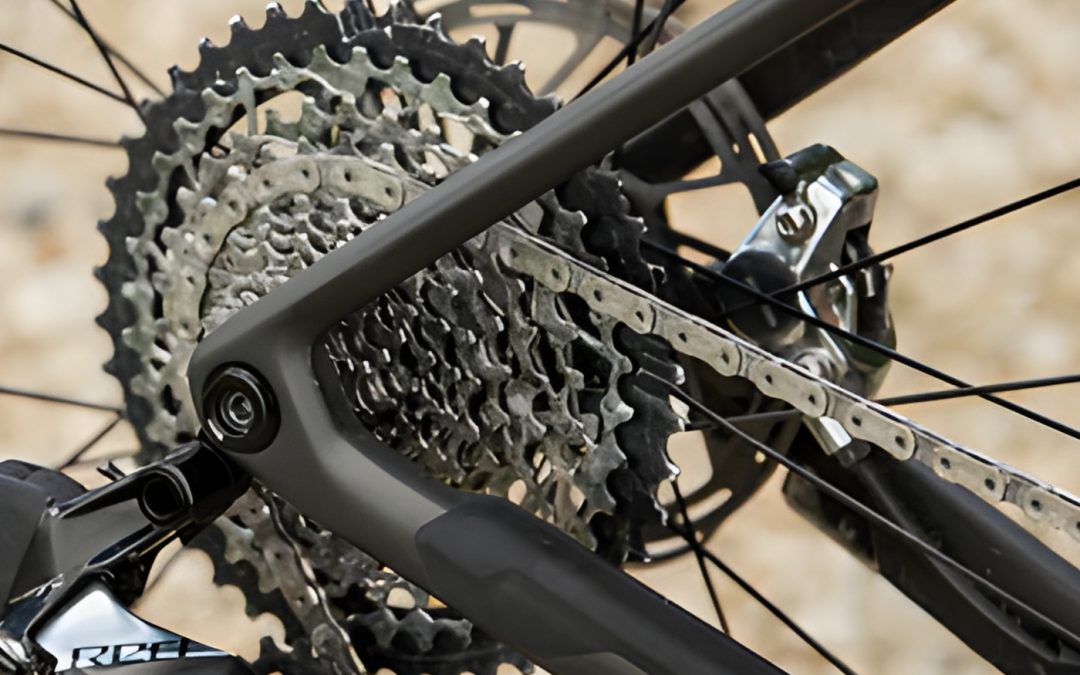
If you’re new to hot‑waxed chains, one of the first questions you’ll have is: “How often do I need to re‑wax this thing?” The good news is that, for most everyday riders, re‑waxing is much less frequent than traditional cleaning and lubing.
This guide breaks it down into simple, real‑world scenarios so you can plan your maintenance without overthinking it.
Why you can’t just use a fixed number
You’ll sometimes see a rough recommendation like “re‑wax every 300–500 km” or “every 200–300 miles.” That’s a useful starting point, but not a rule written in stone.
How often you really need to re‑wax depends on:
-
Where you ride (dry roads vs dusty gravel vs constant rain)
-
How hard you ride (easy spins vs race efforts)
-
How often you ride each week
-
How well the chain was prepared and waxed in the first place
Think of the mileage range as a guideline. Your actual interval will be shorter or longer depending on your conditions.
Simple signs your chain is ready for a re‑wax
Instead of just counting kilometres, learn the signs that the wax layer is used up. You probably need to re‑wax when:
-
The chain feels noticeably noisier than usual
-
The drivetrain loses that “smooth” feeling, even though everything looks clean
-
The chain starts to feel dry to the touch, rather than slightly slick and waxy
-
Shifting gets a bit harsher, especially under load
If you ignore those signs and keep riding, you’re effectively running a dry chain. It will still be cleaner than an oily drivetrain, but wear will increase and you’ll lose the main benefits of hot wax.
Everyday scenarios: how often should you re‑wax?
Let’s turn this into real‑life examples so you can plan your next wax.
1. The weekend road rider
-
Typical riding: 2–3 rides per week
-
Distance: 120–200 km per week
-
Conditions: mostly dry, paved roads
In this case, a well‑prepared, properly waxed chain can often go around 300–500 km before it needs a re‑wax. That usually means:
-
Re‑wax approximately every 2–3 weeks in good weather
-
Slightly more often if you ride in the rain or on gritty roads
If your chain starts to sound dry before you reach that distance, use the sound/feel as your true signal.
2. The daily commuter
-
Typical riding: 5 days per week
-
Distance: 10–30 km per day
-
Conditions: mixed weather, urban dust, occasional rain
City riding can be surprisingly hard on a chain because of stop‑start pedalling, pollution, and wet roads. For commuters, a realistic pattern is:
-
Re‑wax every 2–4 weeks, depending on distance and weather
-
Shorter intervals in winter or very rainy periods
If you commute in coastal or very humid areas, check your chain more often—salt and moisture will eat through any lubrication layer faster.
3. The gravel and adventure rider
-
Typical riding: 1–2 longer rides per week
-
Distance: 60–150 km per ride
-
Conditions: dust, dirt, sometimes mud
Hot wax is excellent for dusty gravel because it doesn’t create a sticky film for dust to cling to. However, off‑road contamination still wears down the wax layer faster than smooth tarmac.
For gravel riders:
-
Plan to re‑wax roughly every big weekend or every 2–3 rides in heavy dust
-
If you ride in mud and wash the bike, expect to re‑wax sooner
A good habit is to gently inspect the chain after each big gravel ride: if it looks clean but feels dry and sounds “scratchy,” it’s time.
4. The performance‑oriented racer or serious enthusiast
-
Typical riding: 4–6 sessions per week
-
Distance: high mileage, intervals and races
-
Conditions: mostly dry, some wet race days
Performance riders typically care about every watt and are happy to maintain more often to keep friction consistently low.
For this group:
-
Re‑wax every 250–400 km is common
-
Before important races, start with a fresh re‑wax to ensure peak efficiency
You’re trading a bit more maintenance for the reassurance that you’re not leaving free speed on the table.
Weather and conditions: how they change your interval
You can use a simple mental rule:
-
Dry, clean roads = wax lasts longer
-
Dusty/gravel = wax wears faster
-
Heavy rain or frequent washing = wax wears fastest
If you ride in:
-
Dry Mediterranean conditions most of the year: you’ll likely enjoy some of the longest re‑wax intervals.
-
Wet, northern climates or winter: plan for shorter intervals and put more emphasis on drying the chain properly after wet rides before storing the bike.
How to keep track without obsessing
You don’t need a spreadsheet to manage re‑waxing. A light system is enough:
-
Note down your starting mileage when you apply fresh wax.
-
Add re‑waxing as a repeating reminder on your phone at a rough interval that suits your riding (for example, every 2 or 3 weeks).
-
Use sound and feel as your final check—if it’s noisy or rough before the reminder, re‑wax earlier.
Over time, you’ll learn your own pattern. Many riders find that after a month or two, they can almost predict when the chain will start to sound dry.
What happens if you re‑wax “too early” or “too late”?
-
Too early: You’ll spend a bit more time re‑waxing than necessary, but your chain will be consistently smooth and protected. No real downside.
-
Too late: The chain runs effectively dry. It may still look clean, but friction and wear increase, and you lose the main efficiency benefits.
If you’re unsure, it’s better to re‑wax a little earlier, especially if you have a big event or trip coming up.
A simple rule of thumb you can remember
If you only remember one thing, make it this:
Start with a guideline (for example 300–500 km), then let sound and feel tell you the truth.
For most everyday riders, that means:
-
Road: roughly every 2–3 weeks in normal conditions
-
Commuting: every 2–4 weeks, depending on distance and weather
-
Gravel/MTB: every 2–3 big rides in dust or mud
-
Racers: more often, and always before key events
Once you’ve found your own rhythm, re‑waxing becomes just another easy part of your cycling routine—like charging your lights or checking tyre pressure—only this one keeps your bike smoother, cleaner, and cheaper to run in the long term.
If you want, I can now add a short internal‑link plan and tailored calls‑to‑action for Cyclowax products at the key points in this article.
by Ralf Tenbrink | 2, Mar 2026 | Cyclowax
Why Your Bike Chain Is Always Dirty (And How Hot Wax Fixes It)
If your chain goes from shiny silver to thick black paste after just a few rides, you’re not alone. Most riders in Europe still use traditional oil-based lubes, and those products almost guarantee a dirty drivetrain.
A big part of the solution is switching from wet, sticky lubrication to a dry, waxed chain. Let’s break down why your chain is always dirty and how hot wax fixes it.
Why your bike chain turns black so quickly
After a few rides, you’ll often notice:
Black grime on the chain and cassette
Greasy marks on your calf or clothing
“Crunchy” sounds when you pedal in the rain or on gravel
That black layer is a mix of:
Oil or liquid lube
Dust, sand, and road dirt
Tiny metal particles from normal wear
When all of this mixes together, it becomes a grinding paste that sticks to every surface. It doesn’t just look bad; it accelerates wear on your chain, cassette, and chainrings and can cost you real watts.
How traditional oil and liquid lubes actually work
Most riders grew up using two kinds of products:
Wet oil lubes
“Dry” or liquid wax lubes in a bottle
They’re easy to apply, but they share one problem: they stay wet or tacky on the surface of the chain.
That means:
Any dust or dirt you ride through clings to the lube.
Dirty lube gets pushed inside the chain when you pedal.
You end up needing degreasers and a lot of scrubbing to get things clean again.
So the more often you “top up” with oil, the more dirty paste you build up on your drivetrain.
What makes hot wax different
Hot wax works in a very different way.
Instead of staying wet, the wax is melted and the chain is immersed so the wax can penetrate the internals. Once the chain cools down, the wax solidifies and leaves a dry lubricating layer on the metal.
That dry layer means:
Dirt has almost nothing sticky to cling to.
Any dust that lands on the chain falls off more easily.
The wax inside the chain reduces friction where it really matters.
Because there’s no oily film on the outside, the chain doesn’t turn into a glue trap for grit, so it stays visually clean much longer.
Real-world benefits of a waxed chain
For everyday riders in Spain and across Europe, a properly waxed chain brings a few big advantages:
A drivetrain that stays clean
Your chain, cassette, and chainrings stay silver instead of black. Wiping the frame or your calf is no longer a constant chore.
Less friction, more speed
A clean, waxed chain reduces drag compared with a dirty oil-lubed chain. That can translate into measurable watt savings and a fresher feeling on climbs and long rides.
Longer component life
With less abrasive paste grinding away at your drivetrain, your chain and cassette can last significantly longer. Over time, that means fewer replacements and lower total cost of ownership.
Less mess at home
You don’t need aggressive degreasers every few weeks, which is more pleasant for you and kinder to the environment.
Is hot wax right for your riding style?
Hot wax isn’t just for pros. It works extremely well for:
Road riders who want a quiet, fast bike
Gravel cyclists dealing with dust and dirt on caminos and tracks
Mountain bikers riding in dry or mixed conditions
Commuters who don’t want black grease on trousers or bags
If you ride in very wet conditions constantly, you may need to re-wax more frequently, but the chain still stays cleaner than with traditional wet oil.
The key habit change is simple: instead of regularly adding more oil and degreasing everything, you ride until the wax coating is used up, then you re-wax.
How to switch from oil to hot wax (simple steps)
Moving from an oily chain to a waxed chain is easier than it looks. In practice, you have two main options:
Start with a pre-waxed chain
Buy a new chain that’s already stripped and waxed.
Have your local bike shop install it.
Keep your old, oily chain as a backup or clean it later.
This is the fastest, cleanest way to experience the difference.
Deep-clean your existing chain, then wax it
Remove the chain from the bike.
Thoroughly degrease it to remove all oil and factory grease.
Rinse and dry until there is no residue left.
Immerse it in hot wax following the instructions of your waxing kit.
Refit the chain and ride.
Once your chain is fully converted to wax, ongoing maintenance is straightforward: ride, re-wax at the recommended interval, and avoid adding any oil-based products on top.
Ask for Cyclowax in your local bike shop
If you’re tired of fighting against a black, greasy chain, hot wax is one of the most effective upgrades you can make to your bike’s maintenance routine.
You can:
Look for Cyclowax products online, or
Ask for Cyclowax by name in your local bike shop in Spain or elsewhere in Europe.
Shops can offer hot waxing as a service, stock waxing kits, and even sell pre-waxed chains, so riders get all the benefits of a clean, fast drivetrain without having to figure it out alone.
A chain that stays clean, runs smoothly, and lasts longer is not just nicer to look at—it makes every ride feel better.
by Geroge Cornelius | 23, Feb 2026 | Cyclowax
Oficialmente la mejor cera caliente del mundo
Pruebas independientes lo confirman:
La pastilla de cera Cyclowax Race supera a cualquier cera caliente inmersiva del mercado.

Cuando Adam Kerin de Zero Friction Cycling realizó las pruebas de transmisión más exigentes e
independientes, los resultados fueron claros: la pastilla de cera Cyclowax Race Wax quedó en
primer lugar.
Desarrollada y perfeccionada junto al equipo profesional Lidl–Trek, nuestra nueva cera
ofrece una durabilidad, velocidad y protección que marcan récord.
“En las tres pruebas, la Race Wax de Cyclowax es ahora la cera caliente por inmersión líder.” —
Adam Kerin, Zero Friction Cycling
Respaldado por datos, no solo por afirmaciones
Después de años de pruebas y perfeccionamiento, nuestra pastilla Race Wax no se
creó a partir del marketing, sino a partir de un rendimiento medible.
Las pruebas de Single Application Longevity (SAL) de Zero Friction Cycling muestran
cuánto tiempo una sola aplicación de cera protege tu cadena — no durante minutos,
sino salida tras salida.
- Menor desgaste y fricción de la cadena
- Mayor vida útil de la transmisión
- Menos intervalos de reaplicación de cera
Diseñada para cada salida, en cualquier condición
Las pruebas extremas en polvo, tierra y lluvia demostraron lo que los profesionales ya
saben: esta cera sigue rindiendo cuando otras se quedan atrás.
- Superó a Silca Hot Melt, M-Speed Wax y Hot Wax X
- Funciona en gravel, MTB y carreteras húmedas de invierno
- Mantiene tu cadena limpia, silenciosa y rápida, salida tras salida
“El objetivo es ser el mejor equipo del mundo, así que tenemos que estar a la
vanguardia en innovación.” — Glen Leven, Head of Performance, Lidl–Trek
Suave desde la primera pedalada
Algunas ceras de larga duración se sienten pesadas al principio — esta no.
- Sin resistencia en la primera hora
- Sensación de asentamiento normal
Suavidad duradera muchos kilómetros después
Incluso después de 14 horas de pruebas en condiciones reales, las cadenas tratadas
con Race Wax se mantuvieron silenciosas, suaves y protegidas.
Desarrollada con los profesionales de Lidl–Trek
Creada y probada en bicicletas de competición reales, no solo en un laboratorio. Cada
versión se mejoró gracias a la retroalimentación de los profesionales, hasta cumplir con
el estándar más exigente: un rendimiento de clase mundial en competición.
Pedalea con la mejor cera caliente oficial del mundo
Consigue la misma tecnología que impulsa a Lidl–Trek. ¡Aquí mismo!
