by Ralf Tenbrink | 18, Mar 2026 | Bike Tours, Mountain Biking Trails in Costa Blanca
Javea Mountain Biking Route
Key Takeaways
| Aspect | Details |
|---|
| Available Routes | Montgó (27km), Capsades/Tossal Gros (18.7km) |
| Difficulty Level | Moderate to high with 440m+ elevation gain |
| Starting Point | Arenal Beach (Montgó route) |
| Best For | Experienced MTB riders seeking forest trails |
| Route Type | Forest paths, vineyard sections, river routes |
Important Note: The available research doesn’t provide detailed information about a specific “Javea Forest MTB Loop” as a defined route. The content below synthesises available information about MTB trails in the Javea area, but readers should verify specific route details, GPS coordinates, and current trail conditions through local sources or recent user reviews before riding.
Discovering Javea’s Mountain Biking Terrain
Javea offers several established mountain biking routes that traverse the area’s diverse landscape. The most documented routes include the Montgó circuit and the Capsades trail system, both providing different challenges for off-road enthusiasts.
Why do these routes attract serious mountain bikers? The terrain combines forest paths, vineyard sections, and challenging elevation changes that test both technical skills and endurance. The Montgó route covers approximately 27 kilometres, whilst the Capsades/Tossal Gros circuit spans 18.7 kilometres.
Local riders often combine sections from different routes to create longer adventures. This flexibility allows you to adjust distance and difficulty based on your fitness level and available time. The forest sections provide natural shade during summer months, making these routes more comfortable than exposed coastal paths.
Trail conditions vary significantly between seasons. Spring offers the best combination of mild weather and firm trail surfaces. Summer brings heat that makes early morning starts essential. Autumn provides excellent visibility but watch for wet leaves on technical sections.
The elevation profiles show moderate to high difficulty ratings, with climbs reaching 440 metres of gain. This isn’t beginner territory – you need solid bike handling skills and reasonable fitness to complete these routes safely.
Most routes connect to the broader mountain biking trails network in Costa Blanca, allowing for extended touring opportunities.
Montgó Route: Technical Forest Challenge
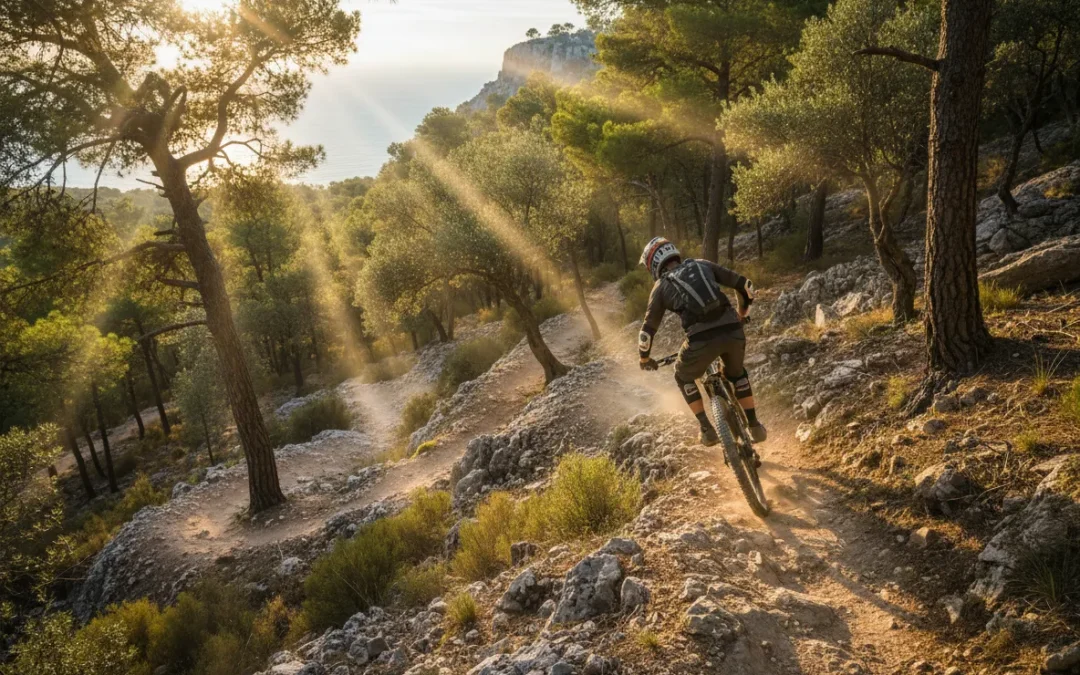
The Montgó route begins at Arenal Beach and immediately challenges riders with a steady climb towards the 753-metre peak. This isn’t a route for casual weekend riders – the initial ascent demands strong legs and proper gearing.
What makes this route technically demanding? The forest sections include loose rock surfaces, narrow singletrack passages, and steep gradient changes that require precise bike control. Riders report sections where dismounting becomes necessary, particularly on the steepest climbs approaching the Montgó summit area.
Navigation requires attention throughout the route. Forest paths can become unclear during poor weather conditions. GPS devices or smartphone apps with offline maps are essential – mobile signal coverage becomes patchy in the deeper forest sections.
The descent sections offer thrilling riding but demand respect. Loose gravel and sudden turns require controlled speed and proper braking technique. Full-face helmets aren’t overkill for this terrain – several local riders recommend them for the technical descents.
Water carrying capacity becomes crucial on this 27-kilometre route. The climbing sections generate significant sweat loss, and refill opportunities are limited once you leave the beach area. Plan for at least 1.5 litres per rider on warm days.
Forest wildlife occasionally crosses the trails. Wild boar tracks are common, though actual encounters remain rare during daylight hours. Make noise on blind corners and avoid riding alone in early morning or late afternoon periods.
Proper chain maintenance becomes critical on these dusty, demanding trails.
Capsades Trail Network: Shorter But Intense
The 18.7-kilometre Capsades/Tossal Gros route provides a more concentrated challenge than the longer Montgó circuit. This network focuses on technical forest riding rather than distance achievements.
Trail character changes dramatically between sections. The initial forest approach offers flowing singletrack that builds confidence. Then the terrain shifts to rocky, technical climbing that tests both bike setup and rider skill.
Tossal Gros sections include some of the most challenging terrain in the Javea area. Steep, loose climbs require careful line choice and momentum management. Many riders find the 34-tooth climbing gear still isn’t low enough for the steepest pitches.
The vineyard crossings provide welcome relief from intense forest riding. These sections flow smoothly and offer opportunities to recover before the next technical challenge. However, respect private property boundaries and stick to marked paths.
Rocky descents demand full attention. The combination of loose stones, tight corners, and gradient changes creates challenging conditions. Modern mountain bikes with dropper posts and wide tyres perform best on this terrain.
Local knowledge suggests early morning rides encounter the best trail conditions. Afternoon heat makes the rocky sections particularly demanding, and dust levels increase significantly with multiple riders.
Weather affects this route more than coastal alternatives. Rain makes rocky sections treacherous, and mud accumulates in forest areas for days after storms. Check recent conditions before attempting challenging sections.
Professional bike maintenance becomes essential after repeated rides on this abrasive terrain.
Essential Route Planning and Navigation
Successful mountain biking in the Javea area requires thorough preparation and proper equipment. GPS navigation tools are mandatory – mobile phone coverage becomes unreliable in forest sections, making offline maps essential.
Route verification through multiple sources is crucial. The available documentation lacks detailed turn-by-turn directions, specific landmarks, or recent condition reports. Local bike shops provide the most current information about trail conditions and access restrictions.
Water and food planning requires careful consideration. The combination of heat, elevation gain, and technical terrain creates high energy demands. Plan for 250-300 calories per hour of riding, plus extra reserves for navigation delays or mechanical issues.
Emergency contact procedures need establishment before starting longer routes. Mobile signal coverage varies significantly across the trail networks. Share your planned route and expected return time with reliable contacts.
Trail etiquette becomes important as these routes cross private land and sensitive natural areas. Stick to established paths, avoid riding during wet conditions that damage trails, and respect any seasonal access restrictions.
Mechanical preparation can prevent serious problems. The rocky, technical terrain causes higher-than-normal wear on brake pads, tyres, and drivetrain components. Pre-ride safety checks should include brake function, tyre pressure, and chain condition.
Most experienced riders recommend morning starts to avoid afternoon heat and potential thunderstorms. Summer conditions in particular make afternoon riding dangerous due to dehydration risk and reduced visibility from dust.
Consider linking with other Costa Blanca mountain biking adventures to extend your riding experience.
Terrain Analysis and Difficulty Assessment
The elevation profiles for Javea mountain biking routes show significant vertical challenges that separate these trails from casual riding options. With 440+ metres of climbing over relatively short distances, the power-to-weight ratio becomes a limiting factor for many riders.
Technical terrain analysis reveals specific skill requirements. The forest sections combine loose rock surfaces with narrow trail widths that demand precise steering control. Riders report that standard cross-country mountain bike skills aren’t sufficient – trail bike or enduro experience provides better preparation.
Gradient analysis shows sustained climbs rather than short, sharp ascents. This creates different physiological demands compared to coastal routes with brief hills. Pacing becomes critical to avoid early exhaustion that compromises bike handling on technical descents.
Surface conditions vary dramatically within single routes. Compact earth sections flow smoothly, but rocky areas require constant line choice decisions. Wet conditions transform moderately challenging sections into genuinely dangerous terrain.
Seasonal difficulty variations affect route planning. Summer heat adds significant cardiovascular stress to already demanding climbs. Spring conditions offer optimal trail surfaces but variable weather. Autumn provides stable temperatures but shorter daylight hours limit riding time.
The combination of elevation gain and technical terrain creates situations where walking becomes necessary. Plan routes with this possibility in mind – some sections simply exceed rideable limits for most mountain bikers.
Bike setup requirements differ from typical cross-country specifications. Wider tyres, lower gearing, and dropper posts improve safety and enjoyment on this challenging terrain.
Trailforks data confirms the technical nature of these routes through user difficulty ratings.
Local Trail Conditions and Seasonal Considerations
Trail maintenance levels vary across the Javea mountain biking network. Some sections receive regular attention from local cycling groups, whilst others rely on natural weather patterns and occasional hiker traffic to maintain rideable surfaces.
Wet weather creates lasting impact on trail conditions. The combination of clay soil and rocky terrain means that autumn and winter rain affects riding conditions well into spring months. Muddy sections become deeply rutted and potentially damaging to trail surfaces.
Summer drought conditions create different challenges. Dust accumulation reduces visibility on descents and creates slippery conditions on steep sections. The combination of heat and dust makes afternoon riding particularly uncomfortable and potentially dangerous.
Spring offers the most consistent trail conditions. Temperatures remain moderate, trail surfaces firm up from winter moisture, and vegetation growth hasn’t yet encroached on narrow sections. However, spring weather remains variable and sudden storms can catch riders unprepared.
Local wildlife activity influences safe riding times. Wild boar prefer dawn and dusk periods for foraging, making these times less suitable for solo riding in forest areas. Daylight hours between 9 AM and 5 PM generally offer the safest conditions.
Seasonal access restrictions may apply to specific trail sections during hunting periods or fire risk seasons. Local authorities can implement temporary closures with minimal advance notice during high fire danger periods.
Trail marking consistency varies between route sections. Some areas feature clear directional signs and distance markers, whilst others rely on faded paint marks or GPS navigation for route finding.
Consider exploring family-friendly alternatives if conditions aren’t suitable for technical riding.
Equipment Specifications and Safety Requirements
Modern mountain bike specifications become critical for safe completion of Javea’s challenging trail network. Full-suspension bikes with 120-140mm travel provide optimal performance on the rocky, technical terrain typical of these routes.
Tyre selection significantly affects both safety and enjoyment. Wide tyres in the 2.4-2.6 inch range offer improved grip and puncture resistance on sharp limestone rocks. Tubeless setups reduce puncture anxiety and allow lower pressures for better traction.
Dropper post functionality transforms the riding experience on these routes. The combination of steep climbs followed by technical descents makes quick saddle height adjustment essential for maintaining control and comfort.
Brake specifications require careful consideration. The sustained descents and loose surfaces demand consistent stopping power that basic mechanical disc brakes struggle to provide. Four-piston hydraulic systems offer the power and heat dissipation needed for safe descending.
Protective equipment recommendations exceed standard cross-country requirements. Full-face helmets provide worthwhile protection on rocky descents where crashes can involve facial impact with stones. Knee and elbow protection helps prevent injury during inevitable minor spills.
Navigation equipment must function reliably in areas with poor mobile coverage. GPS devices with preloaded maps or smartphones with offline mapping apps are essential. Power bank capacity should support all-day navigation use.
Emergency repair capabilities need expansion beyond basic puncture fixes. The rocky terrain causes higher failure rates for brake components, derailleur hangers, and chain links. Comprehensive tool kits and spare parts become necessary for remote trail riding.
Hydration planning requires consideration of heat, exertion, and limited refill opportunities. Hydration packs offering 2+ litre capacity work better than bottle systems for longer routes.
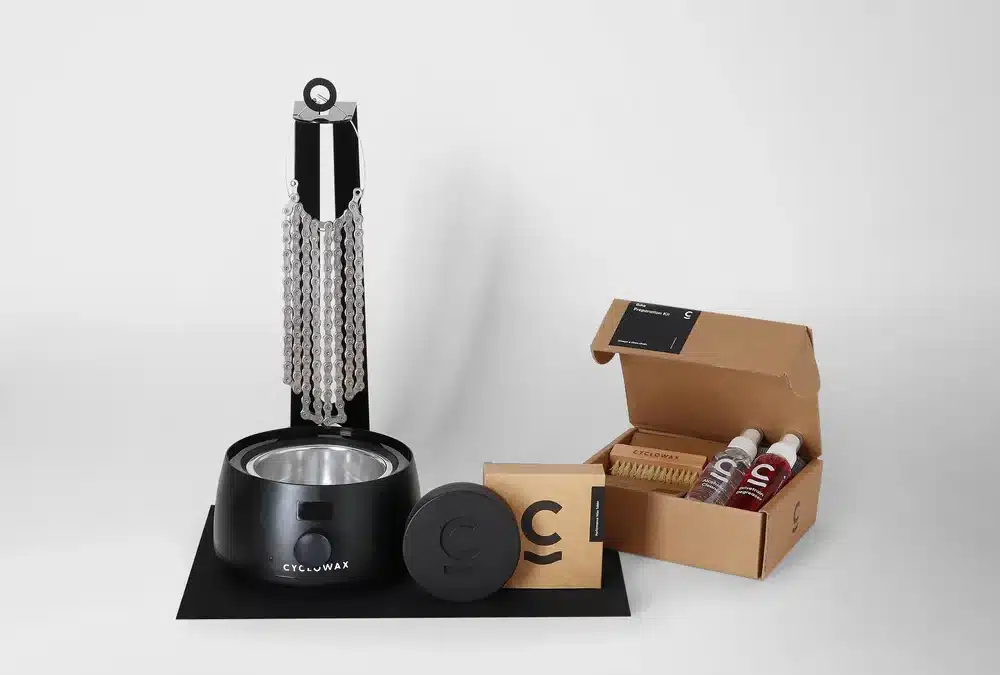
Professional waxing services help maintain drivetrain performance in dusty conditions.
Route Extensions and Connecting Adventures
The Javea trail network connects to broader Costa Blanca mountain biking opportunities, allowing experienced riders to create multi-day adventures or longer single-day challenges. Understanding these connections opens up significantly more riding possibilities.
Northern connections link to the Vall de Laguar systems. This extension adds approximately 15-20 kilometres but requires solid navigation skills and self-sufficiency for longer remote sections. The terrain becomes more technical with increased exposure to weather conditions.
Southern route options connect towards Calpe and the Sierra de Bernia networks. These extensions offer different geological formations and trail characteristics whilst maintaining challenging difficulty levels throughout.
The forest trail systems can connect to coastal routes for mixed-terrain adventures. However, the transition sections often involve road riding through built-up areas that reduce the wilderness experience.
Multi-day touring possibilities exist but require careful planning. Accommodation options that cater specifically to mountain bikers remain limited around Javea. Most hotels and rental properties don’t provide secure bike storage or workshop facilities.
Route combination strategies should consider cumulative fatigue effects. Adding distance to already challenging routes can push difficulty levels beyond safe limits for many riders. Conservative planning prevents problems in remote trail sections.
Weather windows become more critical for extended route combinations. Single-day routes offer flexibility to postpone rides during poor conditions, but multi-day plans require more accurate forecasting and backup options.
Transportation logistics for route combinations need advance planning. Car shuttles or return transportation become necessary for point-to-point route combinations that don’t form complete loops.
Explore self-guided tour planning resources for extended adventure preparation.
Frequently Asked Questions
Is the Javea Forest MTB Loop suitable for beginners? No, the available routes around Javea feature moderate to high difficulty levels with 440+ metres of elevation gain and technical rocky sections. Beginners should start with easier coastal routes and build skills before attempting forest trails.
What’s the best time of year for mountain biking in Javea? Spring (March-May) offers optimal conditions with moderate temperatures and firm trail surfaces. Summer requires early morning starts due to heat, whilst autumn and winter bring variable weather that can make trails dangerous when wet.
How long does it take to complete the main Javea mountain bike routes? The Montgó route (27km) typically requires 3-4 hours for experienced riders, whilst the Capsades circuit (18.7km) takes 2-3 hours. Times vary significantly based on fitness level, technical skill, and trail conditions.
What bike specifications are recommended for these trails? Full-suspension mountain bikes with 120-140mm travel work best. Wide tyres (2.4-2.6 inches), four-piston hydraulic brakes, and dropper posts significantly improve safety and performance on the technical, rocky terrain.
Are GPS devices necessary for navigation? Yes, GPS devices or smartphones with offline maps are essential. Mobile phone coverage becomes unreliable in forest sections, and trail marking inconsistency makes electronic navigation critical for safe route completion.
Can these routes be ridden year-round? Weather conditions significantly affect trail safety and rideability. Wet conditions make rocky sections dangerous, whilst summer heat creates dehydration risks. Spring and early autumn generally provide the most consistent riding conditions.
by Ralf Tenbrink | 16, Mar 2026 | Cyclowax
Your First Hot‑Waxed Chain: Simple Step‑by‑Step Guide
Hot‑waxed chains used to sound like something only WorldTour mechanics did in race trucks. Today, the good news is that you can get the same clean, fast feeling at home or through your local workshop—without turning your kitchen into a chemistry lab.
This guide walks you through everything you need for your first hot‑wax setup and gives you two easy paths: do it yourself, or let your local bike shop handle the messy part.
Why hot wax isn’t just for pros
Hot wax has a reputation for being “high‑tech” or “too much faff,” but the basic idea is simple:
- You clean the chain once, properly.
- You coat it with molten wax so it penetrates the internals.
- The wax hardens into a dry, clean lubricating layer.
After that first setup, ongoing maintenance is often easier than living with a constantly greasy, dirty drivetrain. You just re‑wax at intervals instead of endlessly degreasing and re‑oiling.
For everyday riders, the benefits are clear:
- A chain that stays visually clean.
- Less friction and noise.
- Longer life for chain and cassette.
What you need for your first hot‑wax setup
For a simple home setup, you only need a handful of items:
- A good chain‑cleaning solution (for the first deep clean).
- A container or jars for degreasing if the chain is very oily.
- A way to heat the wax safely (dedicated small slow cooker, wax pot, or similar).
- A high‑quality chain wax formulated for hot application.
- A quick‑link tool or chain tool to remove and refit the chain.
- Hooks or a hanger to let the chain drip and cool after waxing.
Many riders find that a dedicated waxing kit takes the guesswork out of this list by bundling compatible components and clear instructions.
The easiest option: start with a pre‑waxed chain
If you want the fastest, cleanest start, consider this route:
- Buy a pre‑waxed chain that has already been fully stripped and waxed by the manufacturer.
- Take it to your local bike shop or install it yourself if you’re comfortable.
- Ride and enjoy the difference immediately.
This approach has a few advantages:
- No messy first clean at home.
- No need to worry whether you removed all the old oil and factory grease.
- Perfect way to “test” hot wax before investing in full setup.
Once you’re convinced, you can later buy a waxing kit to maintain that chain or prepare your next one.
How to prepare an existing chain (deep clean)
If you’d rather convert your current chain, the most important part is the first deep clean. Any oil or factory grease left inside the chain will contaminate the wax, so take your time here.
Basic process:
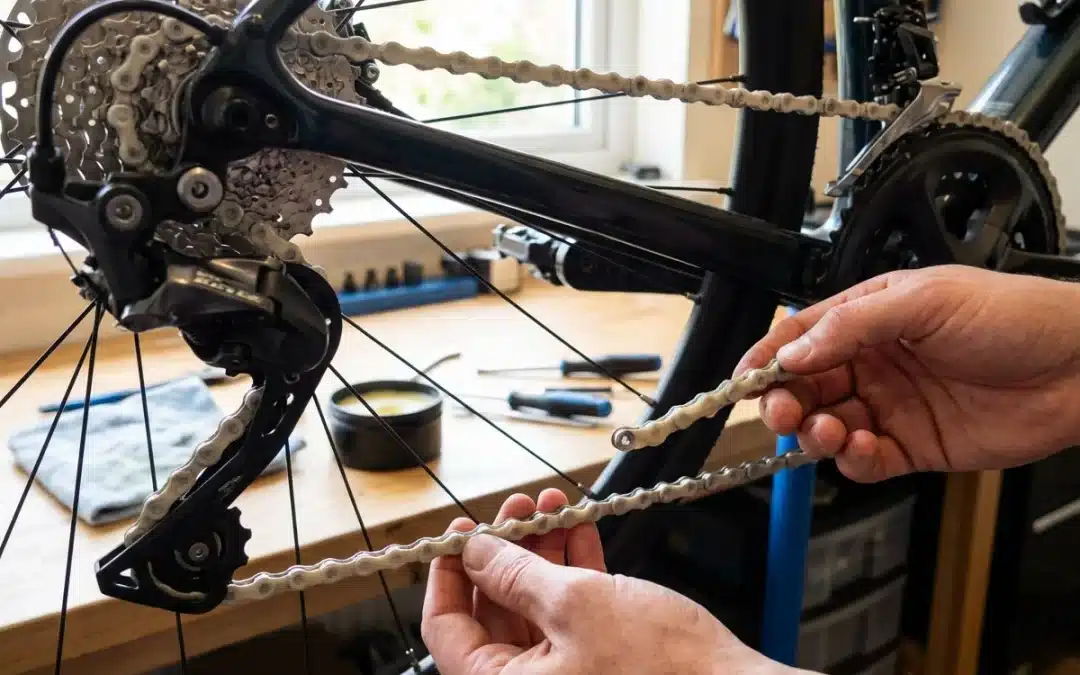
- Remove the chain
- Shift onto small chainring and smallest cog.
- Release the quick link or pin and carefully remove the chain from the bike.
- Degrease thoroughly
- Place the chain in a suitable container with degreaser.
- Agitate and soak until all visible grease and oil are gone.
- You may need to repeat with fresh degreaser for heavily oiled chains.
- Rinse and dry completely
- Rinse with clean water if the degreaser allows it.
- Dry with a cloth, then let the chain air‑dry until there is no moisture left.
- Some riders use a hairdryer or low heat to make sure it’s fully dry.
The chain should feel “bare metal” with no oily residue. It might even look slightly dull—that’s perfect for wax adhesion.
Step‑by‑step: how to wax your chain at home
Once the chain is clean and dry, waxing is straightforward.
- Prepare the wax
- Place the wax in your dedicated pot or heater.
- Warm it until fully melted, following the product’s temperature guidance.
- Give it a gentle stir so the wax is evenly heated.
- Immerse the chain
- Hook the chain on a wire or hang it so you can lower it into the wax.
- Make sure the entire chain is submerged.
- Gently move the chain in the wax for a few minutes to help it penetrate.
- Let the wax soak in
- Keep the chain immersed for long enough for the links to reach wax temperature and for the wax to flow into the internals.
- This often takes just a few minutes in a properly heated bath.
- Remove and drip‑dry
- Lift the chain out and let excess wax drip back into the pot.
- Hang it on a hook or hanger to cool and fully solidify.
- Break the links free
- Once cool, the chain will be stiff.
- Flex it gently in your hands to “break” each link free so it moves smoothly.
- Refit the chain
- Reinstall the chain on the bike using the quick link or pin.
- Spin the cranks and shift through the gears to ensure everything runs smoothly.
You’re ready to ride. The chain will feel exceptionally smooth and quiet, especially in the first rides.
Workshop option: letting your local shop do it
If you’d rather not deal with degreaser and hot wax at home, your local bike shop can be your best friend:
- Ask if they offer chain waxing as a service.
- Bring your bike in and have them either:
- Fit a pre‑waxed chain, or
- Fully strip and wax your existing chain.
Many shops appreciate waxed chains because:
- Their workspace stays cleaner.
- Customer drivetrains last longer and cause fewer complaints.
- It creates a new service they can offer regularly.
This is also a great way to introduce more riders in your local community to hot‑waxed chains with minimal friction (for them and the mechanics).
Common beginner mistakes (and how to avoid them)
When people say “hot wax didn’t work for me,” it’s usually due to one of these:
- Not cleaning the chain properly first
Any oil left inside dilutes and contaminates the wax. - Waxing a wet chain
Moisture trapped inside stops wax from bonding and can cause rust. - Using the wrong wax or temperature
Household candles or random waxes are not the same as dedicated chain wax. Always follow the product’s instructions. - Adding oil on top of wax later
That defeats the whole purpose and makes the chain dirty again. If it feels dry, it needs a re‑wax, not oil.
Avoid these, and your first experience will be dramatically better.
Your next steps: keeping the routine simple
Once you’ve done your first hot‑wax setup, ongoing maintenance is surprisingly low effort:
- Ride and enjoy a clean, quiet drivetrain.
- Re‑wax at the interval that fits your riding (for many riders, every few weeks).
- Avoid using oil or random sprays on the chain.
Whether you set up at home or through your local workshop, hot wax turns chain care from a constant battle with black grease into a simple, predictable routine.
If you’re ready for your first try, start with either a pre‑waxed chain or a complete waxing kit. From there, it’s just ride, re‑wax, repeat.
by Ralf Tenbrink | 9, Mar 2026 | Cyclowax
How Often Do You Really Need to Re‑Wax? A Simple Guide for Everyday Riders
If you’re new to hot‑waxed chains, one of the first questions you’ll have is: “How often do I need to re‑wax this thing?” The good news is that, for most everyday riders, re‑waxing is much less frequent than traditional cleaning and lubing.
This guide breaks it down into simple, real‑world scenarios so you can plan your maintenance without overthinking it.
Why you can’t just use a fixed number
You’ll sometimes see a rough recommendation like “re‑wax every 300–500 km” or “every 200–300 miles.” That’s a useful starting point, but not a rule written in stone.
How often you really need to re‑wax depends on:
Where you ride (dry roads vs dusty gravel vs constant rain)
How hard you ride (easy spins vs race efforts)
How often you ride each week
How well the chain was prepared and waxed in the first place
Think of the mileage range as a guideline. Your actual interval will be shorter or longer depending on your conditions.
Simple signs your chain is ready for a re‑wax
Instead of just counting kilometres, learn the signs that the wax layer is used up. You probably need to re‑wax when:
The chain feels noticeably noisier than usual
The drivetrain loses that “smooth” feeling, even though everything looks clean
The chain starts to feel dry to the touch, rather than slightly slick and waxy
Shifting gets a bit harsher, especially under load
If you ignore those signs and keep riding, you’re effectively running a dry chain. It will still be cleaner than an oily drivetrain, but wear will increase and you’ll lose the main benefits of hot wax.
Everyday scenarios: how often should you re‑wax?
Let’s turn this into real‑life examples so you can plan your next wax.
1. The weekend road rider
Typical riding: 2–3 rides per week
Distance: 120–200 km per week
Conditions: mostly dry, paved roads
In this case, a well‑prepared, properly waxed chain can often go around 300–500 km before it needs a re‑wax. That usually means:
Re‑wax approximately every 2–3 weeks in good weather
Slightly more often if you ride in the rain or on gritty roads
If your chain starts to sound dry before you reach that distance, use the sound/feel as your true signal.
2. The daily commuter
Typical riding: 5 days per week
Distance: 10–30 km per day
Conditions: mixed weather, urban dust, occasional rain
City riding can be surprisingly hard on a chain because of stop‑start pedalling, pollution, and wet roads. For commuters, a realistic pattern is:
Re‑wax every 2–4 weeks, depending on distance and weather
Shorter intervals in winter or very rainy periods
If you commute in coastal or very humid areas, check your chain more often—salt and moisture will eat through any lubrication layer faster.
3. The gravel and adventure rider
Typical riding: 1–2 longer rides per week
Distance: 60–150 km per ride
Conditions: dust, dirt, sometimes mud
Hot wax is excellent for dusty gravel because it doesn’t create a sticky film for dust to cling to. However, off‑road contamination still wears down the wax layer faster than smooth tarmac.
For gravel riders:
Plan to re‑wax roughly every big weekend or every 2–3 rides in heavy dust
If you ride in mud and wash the bike, expect to re‑wax sooner
A good habit is to gently inspect the chain after each big gravel ride: if it looks clean but feels dry and sounds “scratchy,” it’s time.
4. The performance‑oriented racer or serious enthusiast
Typical riding: 4–6 sessions per week
Distance: high mileage, intervals and races
Conditions: mostly dry, some wet race days
Performance riders typically care about every watt and are happy to maintain more often to keep friction consistently low.
For this group:
Re‑wax every 250–400 km is common
Before important races, start with a fresh re‑wax to ensure peak efficiency
You’re trading a bit more maintenance for the reassurance that you’re not leaving free speed on the table.
Weather and conditions: how they change your interval
You can use a simple mental rule:
Dry, clean roads = wax lasts longer
Dusty/gravel = wax wears faster
Heavy rain or frequent washing = wax wears fastest
If you ride in:
Dry Mediterranean conditions most of the year: you’ll likely enjoy some of the longest re‑wax intervals.
Wet, northern climates or winter: plan for shorter intervals and put more emphasis on drying the chain properly after wet rides before storing the bike.
How to keep track without obsessing
You don’t need a spreadsheet to manage re‑waxing. A light system is enough:
Note down your starting mileage when you apply fresh wax.
Add re‑waxing as a repeating reminder on your phone at a rough interval that suits your riding (for example, every 2 or 3 weeks).
Use sound and feel as your final check—if it’s noisy or rough before the reminder, re‑wax earlier.
Over time, you’ll learn your own pattern. Many riders find that after a month or two, they can almost predict when the chain will start to sound dry.
What happens if you re‑wax “too early” or “too late”?
Too early: You’ll spend a bit more time re‑waxing than necessary, but your chain will be consistently smooth and protected. No real downside.
Too late: The chain runs effectively dry. It may still look clean, but friction and wear increase, and you lose the main efficiency benefits.
If you’re unsure, it’s better to re‑wax a little earlier, especially if you have a big event or trip coming up.
A simple rule of thumb you can remember
If you only remember one thing, make it this:
Start with a guideline (for example 300–500 km), then let sound and feel tell you the truth.
For most everyday riders, that means:
Road: roughly every 2–3 weeks in normal conditions
Commuting: every 2–4 weeks, depending on distance and weather
Gravel/MTB: every 2–3 big rides in dust or mud
Racers: more often, and always before key events
Once you’ve found your own rhythm, re‑waxing becomes just another easy part of your cycling routine—like charging your lights or checking tyre pressure—only this one keeps your bike smoother, cleaner, and cheaper to run in the long term.
If you want, I can now add a short internal‑link plan and tailored calls‑to‑action for Cyclowax products at the key points in this article.
by Ralf Tenbrink | 9, Mar 2026 | Bike Rental Services in Costa Blanca, Costa Blanca News, Latest News
Affordable MTB Rental Providers
Key Takeaways
| Topic | Key Information |
|---|
| Cheapest Options | Yumping offers rentals from €5 per hour in Calpe |
| Best for Long Stays | Weekly rentals cost €300-350 through Roxybike |
| E-Bike Pricing | E-MTBs cost about €50 more per week than standard bikes |
| Top Locations | Calpe, Benidorm, and Jávea have the most rental options |
| What’s Included | Most rentals include helmets, locks, and basic repair kits |
| Booking Tip | Reserve early for peak season and compare multiple platforms |
Mountain biking in Costa Blanca doesn’t have to empty your wallet. The region has loads of rental shops that cater to different budgets, and you can find something that works whether you’re planning a quick afternoon ride or a full week of trails. I’ve spent time exploring these options, and honestly, the variety is pretty impressive once you know where to look.
Why Costa Blanca Works So Well for Mountain Biking
Costa Blanca isn’t just another beach destination – it’s got proper mountain biking terrain. The climbs like Coll de Rates will test your legs, while the coastal paths give you views that make you forget you’re working hard. The weather stays rideable most of the year, which is why you’ll see cyclists here even in January.
The trails range from easy coastal paths to technical mountain routes. What I like about this region is that you can ride different terrain every day without driving hours between spots. One morning you’re climbing through pine forests, the next you’re cruising along the Mediterranean with salt air in your face.
Budget-Friendly Rental Shops You Should Know About
Finding cheap rentals doesn’t mean getting rubbish bikes. Several shops offer quality equipment at prices that won’t make you wince.
Yumping – Best for Short Rentals
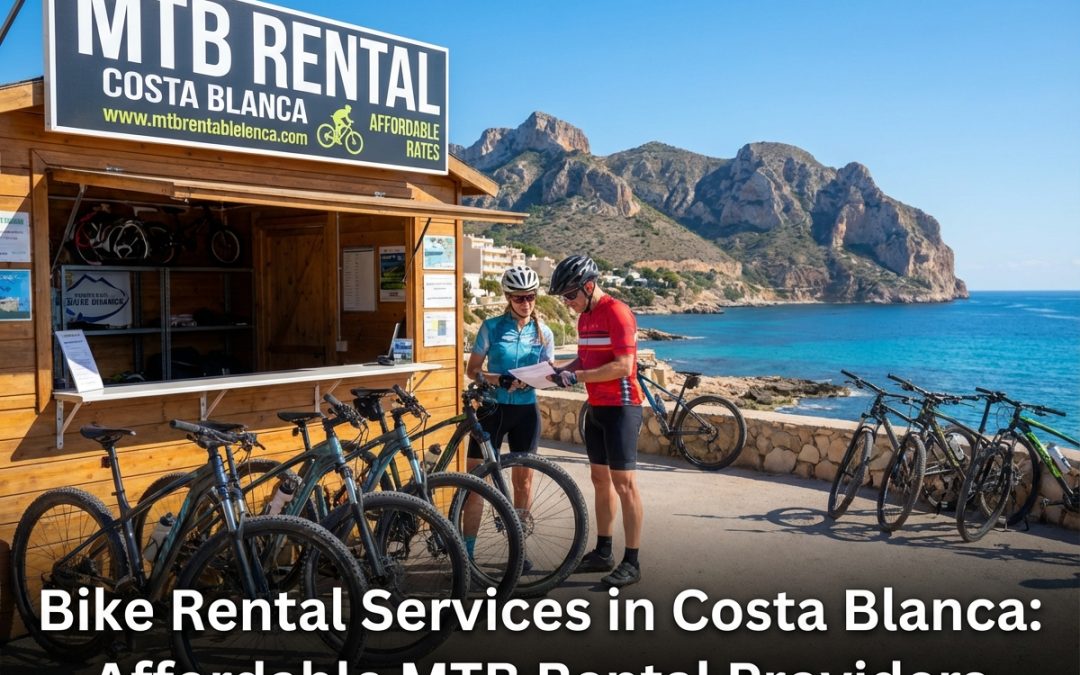
Yumping’s bike rental platform starts at just €5 for an hour in Calpe. That’s cheaper than most cafes charge for coffee and cake. They’ve got over 14 different rental options across Costa Blanca, which gives you flexibility if you’re not sure how long you’ll ride.
Their guided tours start at €19 per person, which includes the bike. Not bad if you want someone else to handle navigation while you focus on pedaling. I’ve found their booking system pretty straightforward – no hidden fees that pop up at checkout.
Lammertink Bikes – For Serious Riders
Based in Orihuela Costa, Lammertink Bikes stocks proper equipment. Their Focus Raven carbon frame mountain bike comes with Rockshox suspension and a Shimano XT/SLX 12-speed setup. That’s the kind of gear that costs thousands to buy, but you can rent it for a fraction.
The carbon frame makes a real difference on long climbs. Your arms don’t get as tired, and the bike responds quicker when you need to maneuver around rocks or roots. If you’re used to riding quality bikes at home, this place won’t disappoint you.
ListNRide – The Peer-to-Peer Option
ListNRide connects you with 33+ mountain bikes from local owners and shops. Sometimes you’ll find better deals here because you’re renting directly from someone who owns the bike rather than going through a big company. The selection varies, but that’s also what makes it interesting – you might find something unique.
I’d recommend checking their listings a few weeks before your trip. The good bikes get booked quickly, especially during spring and autumn when the weather’s perfect for mountain biking adventures.
What Different Rental Durations Actually Cost
Pricing changes quite a bit depending on how long you need the bike. Here’s what you’re looking at:
Hourly Rentals (€5-15)
- Perfect for testing a route before committing
- Good if you’re not sure about your fitness level
- Available mainly in tourist spots like Calpe
Half-Day Rentals (€20-40)
- Gives you 4-8 hours of riding time
- Enough for most scenic bike routes
- Better value than hourly if you plan to ride more than 3 hours
Full-Day Rentals (€15-60)
- 24-hour access to the bike
- You can start early and ride until sunset
- Some shops let you keep it overnight
Weekly Rentals (€300-350+)
- Standard MTBs cost around €300
- E-MTBs run about €350
- Usually includes maintenance support
The weekly rate works out cheaper per day if you’re staying a while. I’ve done both short and long rentals, and the weekly option makes more sense if you’re planning to ride at least 4-5 days.
Where to Rent Based on Your Location
Different towns have different strengths when it comes to bike rentals.
Calpe Rental Scene
Calpe’s got several shops within walking distance of each other. Costablanca Cycling maintains their bikes really well – I’ve never had a mechanical issue with their equipment. The bike rental shops in Calpe tend to know the local trails inside out, so ask them for route suggestions.
The €5 hourly rate here is hard to beat. You can rent a bike, ride up to the Peñón de Ifach area, and return it within a couple hours without spending much.
Benidorm Options
Benidorm focuses more on e-bikes, which makes sense given the hills around town. You’ll find 8-hour e-bike rentals for €20-25, and some shops offer team-building packages that include tapas stops. The bike rental shops in Benidorm cater to tourists, so they’re used to dealing with riders of all levels.
E-bikes take the sting out of those steep climbs to Guadalest. Your legs still work, but you’re not gasping for air every five minutes.
Jávea for Technical Trails
Jávea’s rental shops stock bikes suited for rougher terrain. The mountain biking trails around here get rocky and technical, so you want proper suspension. Most shops here understand that and stock appropriate equipment.
Standard MTB vs E-MTB – Which Should You Choose?
This depends on your fitness and what you want to accomplish.
Standard Mountain Bikes
- Cost €300 for a week
- Give you a proper workout
- Lighter and more nimble on technical sections
- Better if you’re already fit
E-Mountain Bikes
- Cost €350 for a week
- Let you cover more distance
- Make steep climbs manageable
- Good if you’re recovering from injury or want to ride with faster friends
I’ve used both, and here’s my take: if you’re riding family-friendly MTB trails, a standard bike works fine. But if you’re planning big days with lots of climbing, the e-bike pays for itself in enjoyment. You’ll see more terrain and finish rides without being completely wrecked.
The €50 price difference isn’t much when you consider you might do twice as many trails with the motor assist.
What Comes With Your Rental
Most rental packages include more than just the bike. Here’s what you should expect:
- Helmet (required by law in many areas)
- Lock for when you stop for lunch
- Basic repair kit with tire levers and patches
- Pump or CO2 cartridges
- Sometimes a spare tube
Better shops include:
- Free delivery to your accommodation
- Route maps and GPS files
- Phone holder for navigation
- Water bottle cage
Roxybike throws in a multitool, spare derailleur hanger, and brake pads with their rentals. That’s smart because you’re less likely to get stuck on a trail with a mechanical issue you can’t fix.
Some places like DP Cycling and RentEbike CostaBlanca deliver the bike right to where you’re staying. That saves you the hassle of figuring out transport, especially if you’re staying somewhere without a car.
How to Actually Book and Save Money
Booking the right way can save you a chunk of money. Here’s what works:
Compare Multiple Platforms Don’t just book with the first shop you find. Check Yumping for short rentals, ListNRide for peer-to-peer options, and contact local shops directly. Sometimes calling gets you a better rate than booking online.
Book Early for Peak Season March through May and September through October are busy. Shops run out of good bikes fast. I’ve seen people show up in April expecting to rent a quality MTB and end up with whatever’s left – usually the heavy, poorly maintained bikes nobody wants.
Look for Package Deals Guided tours sometimes cost less than renting separately and hiring a guide. Yumping’s €19 tours include the bike, which is cheaper than renting alone in some places.
Check Deposit Requirements Most shops want €50 per bike as a deposit. You get it back when you return the bike undamaged. Bring cash because some smaller shops don’t do card deposits.
Ask About Multi-Day Discounts If you’re renting for 3-4 days, ask if they offer a weekly rate. Sometimes you’ll pay the same for 7 days as you would for 4, which means free riding.
Real Costs Beyond the Rental Fee
The rental price isn’t everything you’ll spend. Factor in:
- Bike shorts or padded underwear: €20-40 if you don’t have them
- Gloves: €15-25 for basic ones
- Sunscreen: €10-15 (you’ll burn faster than you think)
- Water and snacks: €5-10 per ride
- Parking: €2-5 if you drive to trailheads
If you’re doing a self-guided cycling tour, add costs for lunch stops and maybe a taxi back if you bonk halfway through a ride.
Routes Worth Riding on a Rental Bike
Once you’ve got your bike sorted, you need to know where to ride it. Here are routes that work well on rental equipment:
Finestrat Forest Trail This mountain biking trail winds through pine forests with enough technical bits to keep it interesting. Not too hard, not too easy. Takes about 2-3 hours on a standard MTB.
Puig Campana Mountain Trail The Puig Campana route is tougher. You’ll want an e-bike unless you’re really fit. The views from up high make the climb worth it though.
Jalon Valley Scenic Loop Less technical, more about enjoying the scenery. The Jalon Valley route passes through vineyards and small villages. Good for a recovery day or if you’re riding with mixed abilities.
Maintenance and Support During Your Rental
Things break. Chains snap, tires puncture, derailleurs get knocked out of alignment. Good rental shops help you deal with this.
Most include a basic repair kit, but knowing how to use it helps. If you can’t fix a flat tire, watch a YouTube video before your trip. It’s not hard – you just need to practice once.
Some shops offer phone support while you’re out riding. I’ve called rental shops from trailheads before, and they’ve talked me through fixing issues. The better ones will even come get you if something major breaks.
Roxybike’s approach of including spare derailleur hangers and brake pads shows they understand what actually breaks on mountain bikes. Those are the parts that fail most often on rough trails.
Insurance and Damage Policies
Read the rental agreement before you sign. Most shops charge you for damage beyond normal wear. That means:
- Scratches from trail riding: usually fine
- Bent derailleur from crashing: you’ll pay
- Worn brake pads from riding: fine
- Broken frame from crashing: you’ll pay a lot
Some rental shops offer damage insurance for €5-10 per day. Worth it if you’re riding technical trails where crashes happen. I’ve never bought it for easy routes, but I always get it for rocky descents.
Your travel insurance might cover rental bike damage. Check before you go. Mine does, which saved me €200 when I crashed and bent a wheel in 2024.
Best Times of Year for Cheap Rentals
Prices change with the seasons. Here’s when you’ll find deals:
January-February: Cheapest rates but weather’s hit or miss. Some days are perfect, others are cold and rainy.
March-May: Prices go up but weather’s reliable. This is peak season so book early.
June-August: Hot. Really hot. Some shops offer discounts because fewer people want to ride in 35°C heat.
September-October: Second peak season. Great weather, higher prices.
November-December: Prices drop again. Weather’s usually okay, just shorter days.
I’ve ridden in every season. My favorite is November – fewer tourists, decent weather, and rental shops sometimes negotiate on price if you’re renting for a week.
What to Bring When You Pick Up Your Rental
Make the pickup process smooth by bringing:
- Photo ID (passport or driver’s license)
- Credit card for deposit
- Confirmation email or booking number
- Your own pedals if you use clipless (most rentals have flat pedals)
- Phone with the shop’s contact info saved
Wear or bring your riding clothes. Most shops let you test ride the bike before you leave, and you’ll want to check that everything works. Test the brakes, shift through all the gears, and make sure the seat height feels right.
Don’t be shy about asking them to adjust things. I always ask them to lower the seat post more than they initially set it. Better to get it right there than stop 10 minutes into your ride to fix it.
Common Mistakes People Make With Rentals
I’ve seen tourists make the same errors repeatedly:
Renting the Wrong Size Bike A bike that’s too big or too small will make you miserable. If you’re between sizes, go smaller for mountain biking. You want to be able to put both feet flat on the ground when stopped.
Not Testing Everything Before Leaving Check the brakes work. Shift through all gears. Bounce the bike to test the suspension. Once you’re 10km into a trail, it’s too late to discover the rear brake doesn’t work properly.
Ignoring the Return Time Shops charge extra if you’re late. Some charge a full extra day. If you’re running behind, call them. They’re usually flexible if you communicate.
Returning a Filthy Bike Most places expect some dirt, but if you return a bike caked in mud, they might charge a cleaning fee. A quick rinse before returning takes five minutes and saves money.
Alternatives to Traditional Rentals
Sometimes a standard rental doesn’t fit what you need.
Bike Holidays with Included Rentals Bike holidays package accommodation, rentals, and sometimes meals together. Roxybike’s mountain bike holidays include the bike in the overall price. This simplifies planning and often costs less than booking everything separately.
Long-Term Rentals Staying a month or more? Some shops offer monthly rates that work out to €10-15 per day. You’ll need to ask about this – it’s not usually advertised.
Buying Used and Reselling If you’re staying several months, buying a used bike and selling it before you leave might cost less than renting. Check local Facebook groups or the bike classifieds for deals.
Frequently Asked Questions
Do I need to book bike rentals in advance? For peak season (March-May, September-October), yes. Book at least 2-3 weeks ahead. In quieter months you can sometimes just show up, but you’ll have less choice of bikes.
Can I rent a bike for just a few hours? Yes, Yumping offers hourly rentals starting at €5 in Calpe. Most shops prefer half-day or full-day rentals though.
What happens if the bike breaks down during my rental? Call the rental shop immediately. Most provide phone support and will help you fix it or come get you if it’s serious. This is why you should save their contact info in your phone.
Are helmets included with rentals? Usually yes. It’s required by law in some areas, so most shops include them automatically.
Can I take a rental bike on rough trails? Depends on the bike. Ask the shop what’s allowed. Some rental agreements prohibit extreme terrain. If you damage the bike doing something they said not to do, you’ll pay for repairs.
Do rental shops deliver bikes to hotels? Many do, especially DP Cycling and RentEbike CostaBlanca. Some charge for delivery, others include it free. Ask when booking.
What’s the deposit amount for bike rentals? Usually €50 per bike. You get it back when you return the bike in good condition. Bring cash because some shops don’t accept cards for deposits.
Can I extend my rental if I want to keep the bike longer? Usually yes, if they don’t have it booked for someone else. Call them before your rental ends to arrange it. They’ll charge you the daily rate for extra days.
by Ralf Tenbrink | 2, Mar 2026 | Bike Rental Services in Costa Blanca, Costa Blanca News, Latest News
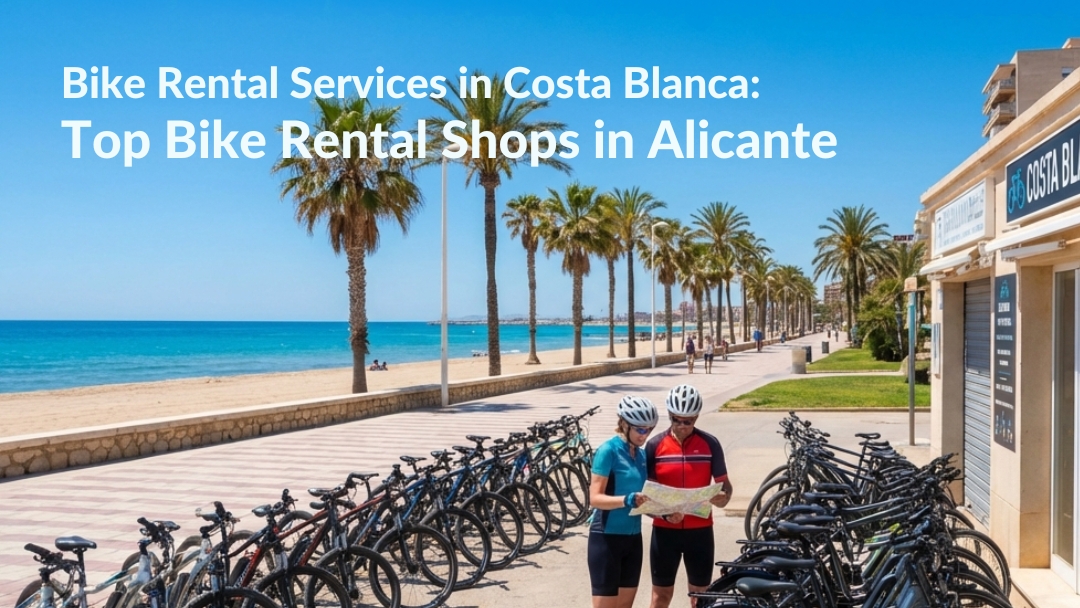
Top Bike Rental Shops in Alicante
Key Takeaways
| Topic | Key Information |
|---|
| Best Premium Option | Blanca Bikes offers exclusive Cervélo carbon bikes with 4 pickup locations |
| Most Convenient Service | Peloton Belgica provides free bike delivery and collection at your location |
| Price Range | Daily rentals start from €35 for road bikes, €60 for e-bikes |
| Main Rental Areas | Altea, Calpe, Denia, Javea, Benidorm, and Jalon Valley |
| Bike Types Available | Road bikes, e-bikes, mountain bikes, and gravel bikes |
| Booking Method | Online booking available through company websites |
| Additional Services | Bike fitting, guided tours, workshop repairs, and accommodation packages |
| Experience Level | Options available for beginners through professional cyclists |
Finding the Right Bike Rental Shop in Costa Blanca
Costa Blanca has become a popular spot for cyclists from all over Europe. The weather stays nice most of the year, and the roads wind through mountains and along the coast. But how do you pick a good bike rental shop when you’re planning your trip?
Most rental shops in the area focus on road bikes because thats what most visitors want. You’ll find everything from basic models to professional-grade carbon bikes. The main towns for bike rentals are Calpe, Altea, Denia, and Benidorm – these places have the most options and the best infrastructure for cyclists.
When I first visited Costa Blanca, I made the mistake of booking the cheapest option I could find online. The bike worked fine, but the gears weren’t set up properly and I spent the first day adjusting everything myself. Now I always check what services come with the rental, not just the price.
For more information about cycling in the region, check out our guide on cycling routes which covers the best areas to explore.

Peloton Belgica started in September 2021 and they’ve built their business around convenience. They’ll bring the bike to wherever you’re staying – whether thats a hotel in Benidorm or a villa in Altea. And when you’re done? They come pick it up. No need to drive anywhere or worry about transportation.
Their bike selection focuses on high-end models. The Scott Addict series comes with electronic shifting – either SRAM eTap AXS or Shimano Di2. All bikes include powermeters, which is great if you like tracking your performance data. They also offer Ridley road bikes, which is a Belgian brand known for quality.
What really sets them apart is the bike fitting service. Before you ride, they adjust the bike to match your body measurements and riding style. This might sound like a small thing, but it makes a huge difference on longer rides. I’ve seen people struggle through 80km rides on poorly fitted bikes, and its not fun.
Service Areas:
- Altea (main base)
- Calpe
- La Nucia
- Polop
- Benidorm
- Finestrat
- Albir
They also offer package deals with Hotel Cap Negret in Altea. If you’re planning a dedicated cycling trip, these packages can save you money and hassle. You can explore more options for bike rentals across the Costa Blanca region.

Blanca Bikes does one thing and does it well – they only rent Cervélo bikes. No other brands, no compromises. If you know bikes, you know Cervélo makes some of the best carbon frames in the world. If you dont know bikes, just trust me – these are really good bikes.
They have four locations where you can pick up or drop off bikes: Denia, Calpe, Parcent, and Javea. The Parcent location is special because its also their Base Camp Cafe and workshop. You can grab coffee, get repairs done, or join one of their guided tours all from the same place.
Pricing Structure:
| Bike Model | Daily Rate | Weekly Rate |
|---|
| Caledonia Rival eTAP AXS | €35 | Discounted |
| Caledonia-5 | €40 | Discounted |
| Soloist | €45 | Discounted |
| Pro Upgrades | €53 | Discounted |
| Rouvida E-bike | €60 | Discounted |
The longer you rent, the better the daily rate gets. They also offer premium delivery service to areas like Albir, Altea, Benidorm, and the Jalon Valley. This costs extra, but its worth it if you’re staying somewhere without easy access to their pickup locations.
Their workshop services are handy if something goes wrong during your trip. I once had a flat tire on day three of a week-long rental, and they fixed it within an hour at their Parcent location. For those interested in exploring the area, our Jalon Valley scenic loop is a perfect route to try.

Allure Bike Rental calls themselves “not the largest but definitely the best” rental company on Costa Blanca. Thats a bold claim, but their customer reviews back it up. They focus on providing excellent service rather than having the biggest fleet or the most locations.
The company emphasizes personalized attention. When you book with them, you’re not just getting a bike – you’re getting advice on routes, local knowledge, and support throughout your rental period. This approach works well for people who are new to the area or want more guidance.
Unfortunately, specific details about their bike models and pricing werent available in my research. But their reputation suggests they’re worth contacting directly if you value service quality over having the newest equipment. Sometimes a well-maintained older bike with great support beats a brand-new bike with no help.
Many cyclists who visit Costa Blanca regularly have their favorite rental shops, and Allure often comes up in conversations. Word-of-mouth recommendations mean alot in the cycling community. If you’re planning your first visit, check out our beginner’s guide to cycling Costa Blanca.

Other Bike Rental Options Across Costa Blanca
Beyond the main companies, several other rental shops operate throughout Costa Blanca. Each has its own focus and service area:
Northern Costa Blanca:
- Montgó Bikes (Denia area)
- Xabias Bike (Javea)
- TAO bike (various locations)
Central Costa Blanca:
- Start With Bike (Calpe – recommended for club riders)
- Azrentandbike (multiple areas)
General Services:
- Travel Costa Blanca (tour packages with rentals)
- Segway Eco Tours (alternative transport options)
- Segway Trip Denia (electric options)
Prices across these companies range from €5 per hour for basic bikes in Calpe to €60+ per day for specialized equipment. The hourly option works well if you just want to ride around town for a bit, but daily or weekly rates make more sense for serious cycling.
Start With Bike in Calpe gets mentioned alot by club riders – these are people who ride regularly and know what they’re looking for in a rental bike. That endorsement tells you something about their quality. For exploring the Calpe area specifically, we’ve compiled a list of top bike rental shops in Calpe.

What to Look for When Choosing a Rental Shop
Picking a bike rental shop isnt just about finding the cheapest option. Here’s what actually matters:
Bike Condition and Maintenance: Ask about their maintenance schedule. Good shops service their bikes regularly, not just when something breaks. Check reviews for mentions of mechanical problems – if multiple people complain about the same issues, thats a red flag.
Fitting and Setup: Can they adjust the bike to fit you properly? This includes saddle height, handlebar position, and cleat setup if you’re using clipless pedals. A proper fit prevents pain and injury.
Support Services: What happens if you get a flat tire 40km from your hotel? Do they offer roadside assistance? Can you swap bikes if something isnt working right? These questions matter more than you think.
Location Convenience: Where do you pick up and return the bike? If the shop is an hour’s drive from your accommodation, factor that into your decision. Some companies offer delivery, which solves this problem but usually costs extra.
Insurance and Damage Policies: What are you responsible for if something happens to the bike? Clear policies protect both you and the rental company. Read the fine print before you sign anything.
I learned this lesson the hard way when I scratched a frame on a rocky descent. The rental agreement said I was responsible for “all damage,” which ended up costing me €300. Now I always ask about insurance options upfront. You might also want to explore bike repair services in the area, just in case.

Booking Your Bike Rental: Practical Tips
Most rental shops in Costa Blanca accept online bookings. This is convenient, but it also means you need to plan ahead – especially during peak season (March through May and September through October).
How Far in Advance Should You Book? For popular periods, book at least 2-3 weeks ahead. If you’re visiting in summer or winter, you can probably book just a few days before. But why risk it? Booking early often gets you better rates anyway.
Payment Methods: Peloton Belgica uses Mollie payment service for online bookings. Most shops accept credit cards, but some smaller operations might prefer bank transfers or cash. Check before you assume.
What to Bring:
- Photo ID (passport or driving license)
- Credit card for deposit
- Your cycling shoes if you use clipless pedals
- Any specific measurements if you know them (saddle height, reach, etc.)
Communication: If you have specific requirements – like needing a compact chainring or preferring a certain saddle type – tell the rental shop when you book. Don’t assume they’ll have exactly what you want if you just show up.
Some shops offer package deals that include accommodation. If you’re planning a dedicated cycling holiday, these packages can save money and simplify logistics. Hotel Cap Negret in Altea partners with Peloton Belgica, for example. For more accommodation options, visit our Costa Blanca biking accommodation page.

Understanding Rental Costs and Value
Bike rental prices in Costa Blanca vary widely based on bike quality, services included, and rental duration. Here’s how to think about costs:
Daily vs Weekly Rates: Daily rates look expensive, but weekly rates usually offer significant discounts. If you’re staying for 5+ days, weekly rental almost always makes more sense financially.
What’s Included: Basic rental usually includes the bike, helmet, and basic tools. Premium services might include:
- Professional bike fitting
- Delivery and collection
- Roadside assistance
- GPS devices
- Spare wheels
- Nutrition products
Hidden Costs to Watch For:
- Delivery fees (can be €20-50 depending on distance)
- Damage deposits (usually €500-1000, refunded if no damage)
- Insurance options (€5-15 per day)
- Pedal upgrades (if you need specific types)
- Extra equipment (spare tubes, CO2 canisters, etc.)
Is Premium Worth It? If you’re riding 50+ kilometers per day, yes. The difference between a €35/day bike and a €53/day bike becomes very noticeable over long distances. Better components mean smoother shifting, lighter weight, and more comfort.
But if you’re just cruising around town or doing short rides, a basic rental works fine. Match the bike quality to your riding plans, not your ego. I’ve seen people rent €100/day bikes for gentle 20km rides along the coast – total waste of money.
For those planning extensive rides, our Benidorm to Guadalest scenic ride is a challenging but rewarding route.
Frequently Asked Questions
Do I need to book bike rentals in advance? Yes, especially during peak cycling season (March-May and September-October). Booking 2-3 weeks ahead ensures you get the bike you want. Last-minute bookings might work in summer or winter, but you’ll have fewer options.
What happens if the bike breaks down during my rental? Most reputable shops offer support for mechanical issues. Blanca Bikes has workshop locations, and Peloton Belgica provides assistance for their rentals. Always get the shop’s emergency contact number when you pick up the bike.
Can I rent a bike for just one day? Yes, all major rental shops offer daily rentals. However, weekly rates provide better value if you’re staying longer. Daily rates typically range from €35-60 depending on bike quality.
Do rental bikes come with helmets and tools? Basic equipment like helmets and essential tools usually comes included. However, confirm this when booking. Some shops charge extra for premium helmets or additional accessories.
What size deposit do I need to pay? Deposits typically range from €500-1000 depending on bike value. This gets refunded when you return the bike undamaged. Bring a credit card as most shops don’t accept cash deposits.
Are electric bikes available for rent? Yes, several shops offer e-bikes. Peloton Belgica rents Scott Genius eRIDE mountain bikes, and Blanca Bikes offers the Cervélo Rouvida e-bike starting at €60 per day.
Can the rental shop deliver the bike to my hotel? Peloton Belgica offers free delivery throughout their service area. Blanca Bikes charges extra for premium delivery to locations like Albir, Altea, and Benidorm. Check delivery options when booking.
What if the bike doesn’t fit me properly? Good rental shops provide fitting services. Peloton Belgica includes professional bike fitting with all rentals. If you’re uncomfortable during your first ride, contact the shop immediately – they should make adjustments.