by Ralf Tenbrink | 29, Jul 2025 | Costa Blanca News, Latest News, Road Cycling Routes in Costa Blanca
Road Cycling Routes in Costa Blanca: Benidorm to Guadalest Scenic Ride
Key Takeaways
- The Benidorm to Guadalest route offers three main options: a short 22.5km climb, a mid-length 60km loop, or a full-day 150km circuit
- Guadalest Castle provides stunning views of the reservoir and surrounding mountains
- The route features Category 3 climbs including Guadalest (6.3km at 4%) and Coll de Rates (15.3km at 3%)
- Most roads are paved, but some sections include unpaved tracks (about 2% of the full route)
- Best starting points are Benidorm’s Tram Station or Plaza de La Era
- GPX files are available on platforms like CyclingLocations and Bikemap
Outline
- Introduction to the Benidorm-Guadalest Route
- Route Options and Variations
- Key Climbs and What to Expect
- Scenic Highlights Along the Way
- Planning Your Ride: Practical Tips
- Best Seasons and Weather Considerations
- Post-Ride Attractions and Recovery
- Equipment and Preparation Recommendations
- Frequently Asked Questions
Introduction to the Benidorm-Guadalest Route
Have you ever wanted to escape the busy beaches of Costa Blanca and discover the real Spain? I’ve been cycling these roads for over 15 years, and the Benidorm to Guadalest route is still my favorite. It’s got everything – coastal views, mountain climbs, cute villages, and that amazing feeling when you reach Guadalest Castle and see the whole valley below you.
This route is special cuz it connects the touristy coast with the authentic Spanish interior. You start in Benidorm with its skyscrapers and beaches, then suddenly your climbing into quiet mountains where locals still make olive oil the old way. The contrast is amazing!

The roads are mostly good quality, but there’s enough variety to keep things interesting. Some parts are busy near the coast, but once you hit the climbs, traffic drops off and you can enjoy the ride. I remember my first time doing this route – I wasn’t prepared for how beautiful the reservoir would be when it suddenly appears around a corner. That moment still gives me goosebumps even after dozens of rides.
Route Options and Variations
Depending on your fitness and time, you’ve got three main choices for tackling this route. Which one sounds best to you?
Short Uphill Climb (22.5km)
This is perfect if you just want a taste of the mountains without committing to a full day. You’ll start at Benidorm’s Tram Station and head straight to Guadalest Castle, gaining 686m in elevation. The steepest part is on Montgo with a 5% gradient that’ll get your heart pumping. I often do this version when I’m short on time but need my mountain fix.
Mid-Length Loop (60km)
My personal favorite! This 60km route with 1,550m of climbing gives you a bit of everything. You’ll ride through Beniardá and along the Guadalest River on a mix of paved and asphalt roads. The views are incredible, and there’s a lovely cafe in Beniardá where the owner always remembers returning cyclists. Their tortilla is the best I’ve ever tasted!
Full-Day Adventure (150km)
For the hardcore cyclists, this 150km circuit with 2,120m of climbing takes you through Denia, Calpe, and Altea. You’ll conquer famous climbs like Coll de Rates (15.3km at 3%) and Guadalest (6.3km at 4%). I did this with a group last summer and we still talk about it – especially the ice-cold drinks we had in Calpe’s harbor!

The beauty of these options is you can start with the short route and work your way up as your fitness improves. Many of my bike rental customers start with the short climb and come back the next year ready for the full loop!
Key Climbs and What to Expect
Let’s talk about the climbs – they’re challenging but totally doable if you pace yourself. Here’s what you’ll face:
Guadalest Climb
- Distance: 6.3km
- Average Gradient: 4%
- Category: 3
- What to expect: A steady climb with a few steeper sections. The views get better with every turn, and there’s a natural spring about halfway up where locals fill water bottles. I always stop here to splash some cold water on my face!
Coll de Rates
- Distance: 15.3km
- Average Gradient: 3%
- Category: 3
- What to expect: A longer but gentler climb that’s popular with pro teams training in the area. The road surface is excellent, and there’s a restaurant at the top with amazing paella. I once saw Team Ineos training here – they made it look so easy!
Montgo
- Distance: 3.3km
- Average Gradient: 5%
- Category: 3
- What to expect: The steepest of the main climbs, but also the shortest. There’s a tricky hairpin about two-thirds of the way up where I always see cyclists struggling. The trick is to swing wide before the corner to maintain momentum.

The road surfaces vary throughout the route. On the full 150km loop, you’ll find:
- Asphalt roads: 26%
- Paved roads: 29%
- Unpaved tracks: 2%
- Busy roads: 62% (mostly near coastal sections)
I always tell people to save something for the final few kilometers to Guadalest – the gradient kicks up just when your legs are getting tired, but the castle view at the top makes it all worthwhile!
Scenic Highlights Along the Way
The scenery on this route is so good it’s hard to keep your eyes on the road! Here are the spots where you’ll definitely want to stop for photos:
Guadalest Castle and Reservoir
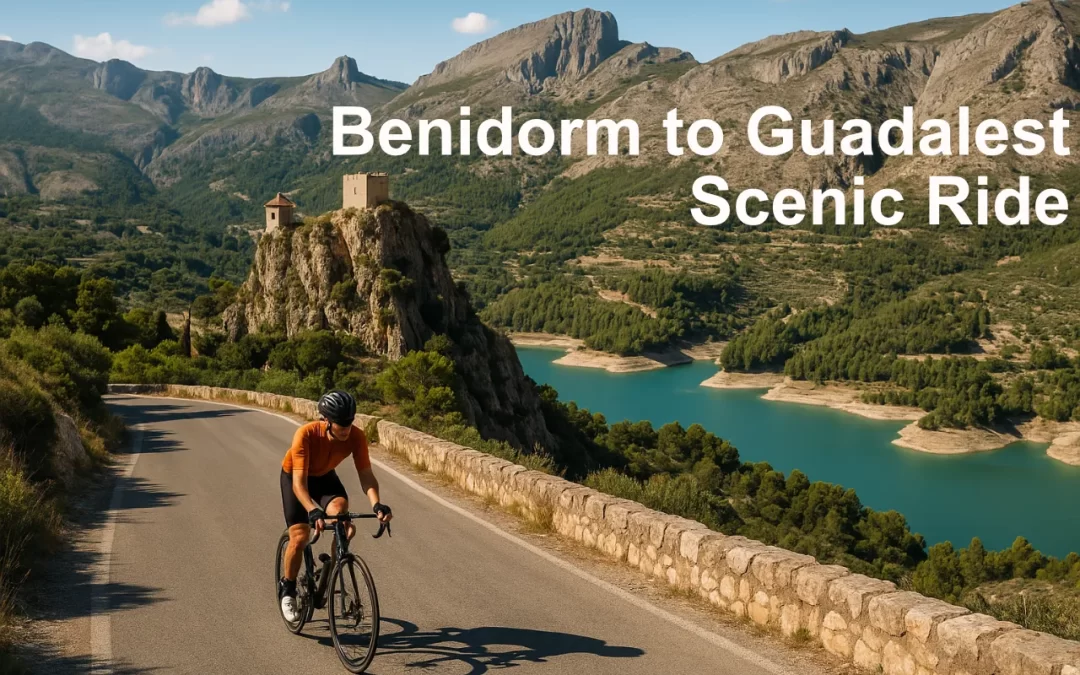
This medieval fortress sits dramatically on a cliff edge, with views that’ll make your jaw drop. The emerald-green reservoir below looks like something from a fantasy movie. I’ve cycled all over Europe, and this view still ranks in my top five. The castle itself dates back to the 11th century and somehow survived earthquakes and wars.
Coastal Towns
If you’re doing the longer route, you’ll pass through Denia, Calpe, and Altea. Each has its own character:
- Denia: Great seafood restaurants and a historic castle
- Calpe: Dominated by the Ifach Rock, a mini Gibraltar
- Altea: White-washed buildings and a beautiful blue-domed church
I love stopping in Altea’s old town square for coffee – there’s a little place where the owner is a former cyclist and always has the latest racing news.

Beniardá Valley
This is the hidden gem most tourists never see. Quiet roads wind through olive groves and along the Guadalest River. In spring, the almond trees bloom with pink and white flowers that make the whole valley look like it’s covered in snow. I once got caught in a light rain shower here, and the smell of the wet earth and herbs was incredible – one of those moments that remind you why cycling is so special.
The contrast between the busy coast and these peaceful inland valleys is what makes this route so special. You feel like you’ve discovered a secret Spain that most visitors never experience.
Planning Your Ride: Practical Tips
Wanna make sure your ride goes smoothly? Here’s what I’ve learned from years of guiding cyclists on this route:
Navigation and Route Planning
Download GPX files before you go – mobile coverage can be patchy in the mountains. Good sources include:
I prefer Komoot because it gives you turn-by-turn directions and warns you about steep sections coming up. The app once saved me when a road was closed due to landslide and suggested a perfect alternative route.
Starting Points
The two best places to start are:
- Benidorm’s Tram Station: Easy to find and plenty of parking
- Plaza de La Era: Quieter and gives you direct access to the climbs
If your staying in bike-friendly accommodation, ask the staff which starting point they recommend based on current road conditions.
Timing Your Ride
Start early, especially in summer! The heat can be brutal after 11am. I usually aim to be at Guadalest by 10:30am to avoid both the heat and the tourist buses that arrive around 11am. The castle opens at 10am if you want to visit.

Water and Supplies
There are fountains in most villages, but carry at least two large bottles. Food options include:
- Guadalest: Several cafes near the castle
- Beniardá: Small shop and cafe
- Coastal towns: Plenty of options
I always pack extra energy bars just in case – once I bonked badly on the return from Guadalest because I underestimated how much the heat would affect me. Not a mistake I’ve made twice!
Best Seasons and Weather Considerations
When’s the best time to tackle this route? I’ve ridden it in all seasons, and here’s my honest advice:
Spring (March-May)
Absolutely perfect! Temperatures range from 15-25°C (59-77°F), wildflowers carpet the valleys, and the reservoirs are usually full after winter rains. The almond blossom in February and March is spectacular. Easter can be busy with Spanish tourists, so avoid that week if possible.
Summer (June-September)
Early morning only! Start at dawn (around 6:30am) and aim to finish by 11am before the heat becomes unbearable. Temperatures regularly exceed 30°C (86°F) by midday. I’ve seen too many cyclists suffering from heat exhaustion in August – it’s no joke. Always carry extra water.
Autumn (October-November)
My personal favorite time. The summer crowds have gone, temperatures are pleasant (18-25°C/64-77°F), and the light has a golden quality that’s perfect for photos. The sea is still warm enough for a post-ride swim too!

Winter (December-February)
Surprisingly good! Daytime temperatures usually reach 15-18°C (59-64°F) – perfect for climbing. The roads are quiet, and you’ll have Guadalest almost to yourself. Pack a windproof jacket for descents and watch out for occasional rain. I’ve only been caught in snow once in 15 years, and that was a freak event.
The Costa Blanca has over 300 sunny days per year, which is why pro teams train here in winter. Just check the forecast for strong winds – the “Levante” wind can make coastal sections challenging.
Post-Ride Attractions and Recovery
You’ve conquered the climbs – now what? Here’s how to make the most of your achievement:
In Guadalest
If you’ve got time, the castle is worth exploring (€4 entry). There’s also a quirky museum of miniatures that’s strangely fascinating. My favorite recovery spot is the terrace at Casa Orduña – their fresh orange juice and Spanish tortilla are perfect cyclist fuel.
Back in Benidorm
The old town has some excellent tapas bars away from the tourist strips. I recommend Taberna El Casco for authentic food at reasonable prices. Their patatas bravas and local Alicante wines are the perfect recovery meal.
For recovery, nothing beats a dip in the Mediterranean! Levante Beach gets crowded, but Poniente Beach is usually quieter and just as nice for a refreshing swim to ease tired legs.

Recovery Tips
- Hydrate immediately – the climate is drier than you think
- Find shade – even in winter, the sun is strong
- Elevate your legs for 10 minutes to help recovery
- Try a local horchata drink – it’s sweet but surprisingly refreshing
I always tell my cycling groups to book a restaurant for after the ride – having that reward waiting helps on the tough climbs, and Spanish food tastes even better when you’ve earned it!
Equipment and Preparation Recommendations
What should you bring for this route? Based on guiding hundreds of cyclists, here’s my essential list:
Bike Setup
- Compact chainset (50/34) recommended for the climbs
- Cassette with at least a 28T sprocket (32T if you’re not confident on climbs)
- 25mm or 28mm tires for comfort on varied road surfaces
- Check your brakes before descents – they get a good workout!
I once had a client who ignored my gearing advice and brought a standard 53/39 chainset. He had to walk sections of Guadalest – don’t be that person!
What to Carry
- At least 2 water bottles (750ml each)
- Energy bars/gels – one per hour plus a spare
- Windproof jacket (even in summer for descents)
- Sunscreen – the Spanish sun is deceptively strong
- Phone with downloaded maps
- ID and some cash for village stops

Training Tips
If you’re specifically preparing for this route, focus on:
- Sustained climbs of 20-30 minutes
- Heat acclimatization if coming in summer
- Back-to-back riding days if attempting the full loop
I always recommend doing some hill repeats before your trip. Even a short local hill done multiple times can prepare your legs for the longer Costa Blanca climbs.
The most common mistake I see is people going too hard at the beginning. The climbs aren’t super steep, but they’re long enough that pacing is crucial. As we say in Spain, “tranquilo” (take it easy) – start slower than you think you should.
Frequently Asked Questions
How difficult is the Benidorm to Guadalest route?
The short route (22.5km) is moderate – suitable for regular cyclists with some hill experience. The full 150km loop is challenging and requires good fitness and endurance. The climbs aren’t extremely steep (mostly 4-5%) but they’re sustained.
Can I rent a bike locally for this route?
Yes! Several bike shops in Costa Blanca offer quality road bike rentals. Book in advance during peak season (March-May and September-October). Expect to pay €25-40 per day for a good carbon road bike.
Are there guided tours available?
Several companies offer guided rides on this route. Prices range from €50-80 for a day ride including support vehicle. If it’s your first time in the area, a guide can be worth it for local knowledge and mechanical support.
What if I have a mechanical problem?
Villages along the route have limited bike services. Carry basics (spare tube, mini-pump, multi-tool). For serious issues, there are bike repair services in Benidorm and larger coastal towns.
Is the route well-marked?
Main roads are well-signed, but some smaller turns can be easy to miss. A GPS device or phone with the route loaded is highly recommended. Cell service can be patchy in mountain areas, so download maps beforehand.
Can I do this route on a hybrid or mountain bike?
Absolutely! You’ll be slower on the climbs and descents with wider tires, but the route is entirely on paved roads. I’ve guided several people on hybrids who enjoyed the more relaxed riding position for taking in the views.
What’s the best time of year for this ride?
April-May and September-October offer ideal temperatures and fewer tourists. Summer (June-August) can be extremely hot – start very early if riding then. Winter (November-February) is often pleasant but bring layers for descents.
Are there places to refill water bottles?
Yes, most villages have public fountains with drinking water. Guadalest, Beniardá, and Callosa all have easily accessible water sources. Still, start with two full bottles, especially in summer.
by Ralf Tenbrink | 27, Jun 2025 | Costa Blanca News, Road Cycling Routes in Costa Blanca
Inland Scenic Cycling Routes: Jalon Valley Scenic Loop
Key Takeaways
- The Jalon Valley Scenic Loop is a 60km cycling route starting from Xalo (Jalon)
- The route features moderate difficulty with some challenging climbs, especially near Sierra de Bernia
- Best time to ride is spring (March-May) and autumn (September-November) when temperatures are mild
- The loop passes through quiet villages, vineyards, almond groves, and offers stunning mountain views
- Road conditions are generally good with low traffic, making it ideal for recreational cyclists
- Allow 3-4 hours to complete the route, depending on fitness level and number of stops
Now let’s dive into this amazing cycling route that I’ve personally ridden dozens of times!
Route Overview and Starting Point
The Jalon Valley Scenic Loop is one of the most beautiful inland cycling routes you’ll find on the Costa Blanca. I’ve been cycling this route for over 15 years, and it still takes my breath away every single time! The loop starts in the charming town of Xalo (also called Jalon), which sits about 25km inland from the Mediterranean coast.
This circular route is roughly 60km long and takes you through a hidden valley nestled between La Vall d’Ebo and Vall de Pop. What makes this route so special? It’s the perfect mix of challenging climbs, thrilling descents, and jaw-dropping scenery that changes with the seasons. Plus, the roads are quiet – you’ll often see more cyclists than cars!
The starting point is easy to find – just head to the main square in Jalon where you’ll find plenty of parking if you’re arriving by car. There’s also a few bike shops in town where you can rent bikes or get any last-minute supplies. I always recommend starting early in the morning, especially during summer months, to avoid the midday heat.

Route Details and Key Waypoints
From Jalon, the route heads north toward Alcalali, a tiny village with a distinctive tower. The road gently climbs as you leave Jalon, giving your legs a nice warm-up before the more challenging sections. After Alcalali, you’ll continue toward Parcent, where the scenery starts to change from vineyards to more mountainous terrain.
The key waypoints along this scenic loop include:
- Jalon (Xalo) – Starting point with cafes and bike shops
- Alcalali – Small village with historic tower
- Parcent – Gateway to the mountains
- Vall d’Ebo – Remote valley with stunning views
- Castell de Castells – Mountain village with ancient history
- Tarbena – Highest village on the route
- Bolulla – Charming village with narrow streets
- Xalo – Return to starting point
One thing I’ve learned from riding this route so many times is that each village has it’s own character. Parcent has a lovely square with a fountain where you can fill your water bottles. Vall d’Ebo feels like stepping back in time with its traditional architecture. And Tarbena? The views from up there are simply incredible – on a clear day, you can see all the way to the Mediterranean!
The route forms a natural loop, bringing you back to Jalon where you can celebrate with a glass of local Moscatel wine (after your ride, of course!). The total distance is about 60km, but don’t let that fool you – the elevation changes make it feel longer.
Elevation Profile and Difficulty Level
Let’s talk about the climbs, cause there’s no way to sugar-coat it – this route has some challenging sections! The total elevation gain is approximately 1,200 meters, which puts this firmly in the moderate-to-challenging category.
The most significant climb comes after Parcent as you head toward the Sierra de Bernia mountains. This section includes a 5km climb with an average gradient of 5-6%, with some sections hitting 8-9%. It’s not Tour de France level, but it’ll definitely get your heart pumping! The eastern approach to Sierra de Bernia is particularly steep, so pace yourself.
Here’s a breakdown of the main climbs:
- Jalon to Alcalali: Gentle warm-up (2-3% gradient)
- Parcent to Vall d’Ebo: Moderate climb (5-6% average)
- Approach to Sierra de Bernia: Challenging (sections of 8-9%)
- Tarbena descent: Technical with switchbacks
I remember my first time tackling the Sierra de Bernia climb – I wasn’t prepared for how long it would feel! But the reward at the top is worth every drop of sweat. The panoramic views of the valleys below are simply stunning, and the descent that follows is exhilarating.
For difficulty level, I’d rate this route as moderate for experienced cyclists and challenging for beginners. If your not used to climbing, you might want to build up to this route with some shorter rides first. The good news is that there are plenty of places to stop and rest along the way.

Scenic Highlights and Natural Attractions
The scenery along the Jalon Valley Scenic Loop is what makes this route truly special. The landscape changes dramatically throughout the year, offering a different experience each season.
In late January and February, the almond trees burst into bloom, covering the valleys with a blanket of white and pink blossoms. It’s like cycling through a painting! Spring brings wildflowers that dot the hillsides with splashes of color. Summer offers lush green vineyards, while autumn transforms the landscape with golden and amber hues.
Some of the scenic highlights include:
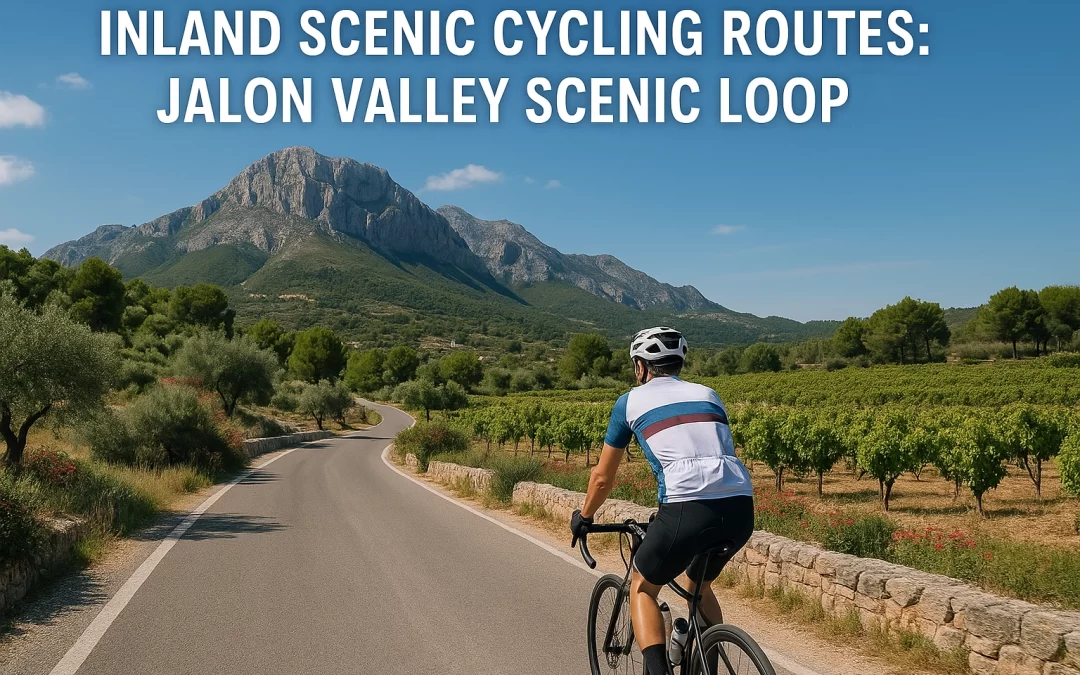
- Jalon Valley vineyards – Rows of grapevines stretching across the valley floor
- Almond groves – Particularly beautiful when in bloom
- Sierra de Bernia mountains – Dramatic rocky peaks that dominate the skyline
- Hidden valleys – Secluded areas that feel untouched by time
- Traditional farmhouses – Scattered throughout the countryside
- Olive terraces – Ancient terraced hillsides with gnarled olive trees
One of my favorite spots is a viewpoint just after the main climb out of Parcent. There’s a small area to pull over, and the view back down the valley is absolutely breathtaking. I’ve taken countless photos there, but none of them really capture how amazing it feels to stand there after conquering the climb.
The natural environment here is Mediterranean perfection – pine forests, rocky outcrops, flowing streams (depending on the season), and an incredible variety of birds and wildlife. Keep your eyes peeled for eagles soaring overhead – I’ve spotted them several times on clear days.
Road Conditions and Traffic Levels
Good news for cyclists – the roads on this route are generally in excellent condition! The main roads connecting the villages are well-maintained with smooth asphalt and clear markings. There are a few sections of narrower country roads, but even these are typically well-surfaced.
Traffic is one of the biggest advantages of this inland route compared to coastal rides. These roads see very little traffic, especially on weekdays. Weekends can be slightly busier with local traffic and other cyclists, but nothing compared to the busy coastal roads. The locals are used to seeing cyclists and are generally very respectful.
Here’s what to expect regarding road conditions:
- Main connecting roads: Excellent condition, good width
- Village sections: Sometimes narrower but well-maintained
- Descents: Good visibility on corners, some gravel possible after rain
- Signage: Clear directional signs to villages
I’ve found that the best time to ride in terms of traffic is early morning (before 10am) when the roads are almost deserted. The section between Jalon and Alcalali can get a bit busier as it’s a main connecting road, but after that, you’ll often have the roads to yourself.
One tip from my experience – be extra cautious on the descents after rain. Occasionally there can be small amounts of gravel washed onto the road, particularly on the tighter corners. Nothing dangerous if you’re aware of it, but worth keeping in mind.

Practical Tips for Cyclists
After countless rides on this route, I’ve gathered some practical tips that might help make your experience even better:
Best Time to Ride
The ideal months for this route are March to May and September to November. Summer (June-August) can be extremely hot, with temperatures often exceeding 30°C (86°F). If you must ride in summer, start very early! Winter rides (December-February) can be beautiful but bring layers as mornings can be chilly.
Water and Refueling
There are limited places to refill water bottles, so start with at least 2 full bottles. The villages of Parcent, Castell de Castells, and Tarbena all have public fountains where you can refill. For food, I recommend:
- Bar Aleluya in Jalon – Great for coffee before starting
- La Plaza in Parcent – Nice terrace for a mid-ride snack
- Casa Pinet in Tarbena – Amazing homemade food if you want a proper stop
Technical Considerations
- The descent from Tarbena has some technical sections with tight switchbacks
- Bring spare inner tubes and basic tools – bike shops are scarce once you leave Jalon
- Mobile phone coverage is generally good but can be patchy in some valley sections
One of my favorite spots to take a break is at the highest point after climbing from Parcent. There’s a small clearing with incredible views – perfect for catching your breath and taking some photos. I always pack some local almonds and dried fruit for a quick energy boost at this spot.
If your planning to ride this route, I’d recommend allowing 3-4 hours of cycling time, plus additional time for stops and photos. Trust me, you’ll want to stop for photos!
Comparing to Other Jalon Valley Routes
The Jalon Valley area offers several fantastic cycling routes, but how does this scenic loop compare to others? Having ridden most of the routes in this region, I can offer some perspective.
The Jalon Valley Scenic Loop stands out for its perfect balance of challenge, scenery, and accessibility. Here’s how it compares to other popular routes:
Jalon to Vall de Ebo Direct Route
- Shorter at around 30km
- Less elevation gain
- Misses some of the most scenic sections
- Good option if you’re short on time or energy
Jalon to Sierra de Bernia Loop
- More challenging with steeper climbs
- More technical descents
- Spectacular mountain scenery
- Better for experienced cyclists
Jalon to Guadalest Route
- Similar distance but more elevation
- Includes the famous Coll de Rates climb
- More popular with cycling groups
- Higher traffic levels near Guadalest
What makes the Jalon Valley Scenic Loop special is that it offers a bit of everything – vineyard views, mountain passes, quaint villages, and challenging but not extreme climbs. It’s the route I most often recommend to visitors who want to experience the “real” Costa Blanca away from the tourist areas.
I’ve noticed that many cycling holidays in the area include this loop or variations of it in their itineraries, which speaks to its popularity and appeal. If you’re staying in the area for several days, ride this loop first to get a good overview of the region, then explore some of the more specialized routes.

Seasonal Considerations and Weather
The Costa Blanca is famous for its climate – over 300 days of sunshine per year! But that doesn’t mean all days are equal for cycling this route. The seasonal variations dramatically affect your experience on the Jalon Valley Scenic Loop.
Spring (March-May)
This is my absolute favorite time to ride this route. The temperatures are perfect (15-25°C/59-77°F), the almond blossoms might still be visible in early March, and wildflowers carpet the hillsides. The landscape is lush and green following the winter rains. One caution – spring can occasionally bring unexpected rain showers, so check the forecast.
Summer (June-August)
Summers are hot, with temperatures regularly exceeding 30°C (86°F). If you ride in summer, start very early (6-7am) to avoid the midday heat. Carry extra water and use plenty of sunscreen. The advantage of summer is the long daylight hours and virtually guaranteed dry weather. The vineyards are in full leaf during this time, creating beautiful green valleys.
Autumn (September-November)
Another excellent time for this route. Temperatures cool down to comfortable levels, and the autumn colors begin to appear. September can still be quite warm, while November might require an extra layer in the morning. The grape harvest happens in early autumn, so you might see activity in the vineyards.
Winter (December-February)
Winter riding is underrated! Daytime temperatures typically range from 12-18°C (54-64°F) – perfect for cycling. The mountains might have snow on the highest peaks, creating spectacular backdrops. Morning rides can be chilly, so layers are essential. The almond blossoms start appearing in late January, transforming the valleys.
I’ve ridden this route in all seasons, and each offers something special. One winter ride stands out in my memory – the mountains had a dusting of snow, the air was crystal clear, and we had the roads completely to ourselves. Magical!
Frequently Asked Questions
How long does it take to complete the Jalon Valley Scenic Loop?
Most recreational cyclists complete the route in 3-4 hours of riding time. Adding stops for photos, refreshments, and rest, you should plan for 4-6 hours total.
Is the route suitable for beginners?
This route is best for intermediate cyclists with some experience of hills. Beginners might find the climbs challenging but could still enjoy it by taking plenty of breaks. E-bikes are also a great option for less experienced riders.
Where can I rent a bike for this route?
Several bike rental shops in Jalon and nearby towns offer quality road bikes. Booking in advance is recommended, especially during peak season.
Are there guided tours available for this route?
Yes, several local companies offer guided tours of the Jalon Valley Scenic Loop. These typically include a guide, support vehicle, and often lunch at a local restaurant.
What type of bike is best for this route?
A road bike or endurance bike is ideal. The roads are well-paved, so you don’t need a gravel or mountain bike. Make sure your bike has appropriate gearing for climbs.
Is there public transportation to get to Jalon?
Limited bus services connect Jalon to coastal towns like Denia and Calpe. However, schedules are infrequent, so check in advance. Many cyclists drive to Jalon and park in the town.
What should I bring on this ride?
Essential items include: at least 2 water bottles, energy snacks, spare inner tube and basic tools, sunscreen, cycling glasses, phone with offline maps, and some cash for village stops.
Are there any dangerous sections on the route?
The route is generally safe, but the descent from Tarbena requires caution due to some tight switchbacks. After rain, watch for occasional gravel on corners.

by Ralf Tenbrink | 5, Jun 2025 | Bike Tours, Costa Blanca News, Latest News, Road Cycling Routes in Costa Blanca
Coastal Loop from Calpe to Denia: The Ultimate Biking Adventure
Key Takeaways
- The Calpe to Denia coastal loop spans 75-100km with breathtaking Mediterranean views
- Best cycling season is November-March with temperatures of 15-20°C and dry roads
- Famous climbs include Cumbre del Sol (4km at 7% gradient) and routes through Montgó Natural Park
- Numerous bike-friendly accommodations available in Calpe, Javea, and Albir
- WorldTour pro teams regularly train on these routes during winter months
- Local coffee shops and restaurants cater specifically to cyclists’ needs
The Perfect Coastal Cycling Adventure
Have you ever dreamed of pedaling along stunning coastlines while challenging yourself on pro-level climbs? The Costa Blanca coastal loop from Calpe to Denia is exactly that dream come true. This route ain’t just popular with holiday cyclists – it’s where the big pro teams come to train during winter months.
The coastal loop offers something special that many cycling destinations don’t – variety. You can ride flat sections along beautiful beaches or challenge yourself on tough climbs with amazing views. What makes this route so good? It’s the perfect mix of hard bits and easy bits, with roads that are smoother than you’d expect.
“I’ve cycled all over Europe, but there’s sumthing magical about the Calpe to Denia loop,” says Miguel, a local cycling guide. “Where else can you climb the same mountains as Tour de France winners in the morning and be relaxing on a beach by afternoon?”
Biking Routes on Costa Blanca offers more detailed information about various cycling options in the region, not just this specific coastal loop. The website features comprehensive maps and elevation profiles that help riders plan their adventures better.
Route Overview and Key Sections
The basic route follows the coastline from Calpe through Moraira, Javea, and finally to Denia. Depending on which detours and climbs you choose, the total distance varies between 75-100km. The beauty of this route is you can make it as hard or easy as you want.
Starting in Calpe, you’ll head northeast along the coast. The road hugs the shoreline for several kilometers, giving you amazing views of the Mediterranean on your right. As you approach Moraira, the terrain gets a bit more rolling, with short climbs that aren’t too difficult.
After Moraira, you’ll continue toward Javea, where things get more interesting. Here, you can choose to take the coastal road or head inland for some challenging climbs. The coastal option is flatter but still has some small hills to keep things interesting.
From Javea to Denia, you’ll pass through some of the most beautiful scenery in Costa Blanca. The road winds through orange groves and past small villages before reaching Denia, where you can stop for lunch before heading back.
Exploring Costa Blanca: Top 5 Scenic Bike Routes for Every Cyclist provides additional information about other beautiful cycling routes in the region that might complement your coastal loop experience.
Famous Climbs and Challenges
What makes this route special? The climbs! The most famous is Cumbre del Sol, a 4km beast with an average gradient of 7%. This climb has been featured in La Vuelta a España multiple times, and it’s where riders like Tom Dumoulin and Primož Roglič have battled it out.
The climb starts gently but quickly ramps up. The middle section is the toughest, with gradients reaching over 15% in places. But the pain is worth it – the views from the top are absolutely stunning. You can see the entire coastline stretching out below you, with the Mediterranean sparkling in the distance.
Another challenging section is the climb through Parc Natural del Montgó near Denia. While not as steep as Cumbre del Sol, it offers a different kind of challenge with its winding roads and technical descents. The park itself is a protected area, so the roads are quiet and the scenery is unspoiled.
For those who want an even bigger challenge, there’s the option to add the Col de Rates, which isn’t directly on the coastal route but can be included as a detour. This climb is about 6.5km long with an average gradient of 5%, making it a good test without being too brutal.
Stage 8 Denia Xorret de Cati Costa Blanca Interior 164.8km provides insights into how professional races utilize these challenging terrains during competitions like La Vuelta.
Best Time to Cycle the Coastal Loop
When should you plan your trip? The Costa Blanca has an amazing climate that makes cycling possible year-round, but some seasons are better than others.
The prime cycling season runs from November to March. During these months, temperatures typically range from 15-20°C – perfect for riding without overheating or freezing. The roads are usually dry, and there’s minimal rainfall. This is why so many professional teams choose Costa Blanca for their winter training camps.
Summer months (June to September) can be very hot, with temperatures often exceeding 30°C. If you do ride during summer, start early in the morning to avoid the midday heat. Always carry plenty of water, as the combination of heat and climbing can lead to dehydration quickly.
Spring (April-May) and autumn (October) offer a nice middle ground, with pleasant temperatures and fewer tourists than the peak summer season. The landscape is particularly beautiful in spring, with wildflowers blooming along the roadsides.
“The best thing about Costa Blanca is you can escape bad weather back home and find perfect riding conditions here almost any time of year,” says Anna, a cycling tour operator based in Calpe. “Just don’t forget your sunscreen, even in winter!”
La Vuelta 2023 Spain: A Map of the Route shows how professional races are scheduled to take advantage of the region’s favorable climate conditions.
Bike-Friendly Accommodations Along the Route
One of the best things about cycling in Costa Blanca is the amazing infrastructure for cyclists. There are loads of bike-friendly hotels and accommodations that cater specifically to cyclists’ needs.
In Calpe, several hotels offer secure bike storage, maintenance areas, and even laundry services for cycling clothes. Some hotels have partnerships with local bike rental shops, making it easy to rent a quality bike if you don’t bring your own.
Javea has become a cycling hotspot in recent years, with Blanca Bikes Rental offering not just bikes but also accommodation options. Their boutique hotel provides a perfect base for exploring the coastal loop, with knowledgeable staff who can suggest routes based on your fitness level and interests.
Albir, located between Calpe and Benidorm, is another great option for cyclists. The Albir Playa Hotel & Spa is particularly popular with cycling groups and even professional teams. They offer secure bike storage, a workshop area, and easy access to the coastal route.
“What I love about staying in these cycling-focused hotels is the community,” says Mark, a regular visitor from the UK. “You meet other cyclists at breakfast, share route tips, and sometimes even find new riding buddies for the day.”
Most of these accommodations offer cyclist-friendly meals with early breakfast options and energy-rich foods. Some even prepare packed lunches that you can take on your ride, saving you the trouble of finding food along the way.
Local Amenities and Cyclist-Friendly Spots
The Costa Blanca region has embraced cycling culture, and you’ll find many businesses catering specifically to cyclists’ needs. From coffee shops to restaurants, there are plenty of places where lycra is welcome and bike parking is available.
Coffee stops are an important part of any cycling trip, and Costa Blanca doesn’t disappoint. In Javea, there are several cafes where you’ll spot cyclists refueling with espresso and pastries. D’Origen Coffee Roasters is particularly popular, known for its specialty coffees and cyclist-friendly atmosphere.
For lunch stops, the coastal towns offer plenty of options. In Denia, you can find restaurants serving fresh seafood right by the harbor – perfect for a midday break before heading back to Calpe. Pasta & Pasta near Albir is a family-run restaurant known for its handmade pasta dishes that provide the perfect carb loading for cyclists.
Bike shops are plentiful in the region, so you don’t need to worry if you have mechanical issues. Most towns along the route have at least one shop where you can get repairs or buy spare parts. Some even offer rental services if you prefer not to bring your own bike.
“The local businesses here understand cyclists,” explains Carlos, a shop owner in Moraira. “We know you might come in sweaty and in cycling shoes, and that’s completely fine. We’re just happy to see you enjoying our beautiful region.”
Cycling Costa Blanca: A Beginner’s Guide to Enjoying the Ride offers additional tips for newcomers about local amenities and cyclist-friendly establishments throughout the region.
Training Like a Pro: WorldTour Teams in Costa Blanca
Did you know that many WorldTour professional cycling teams choose Costa Blanca for their winter training camps? Teams like Ineos Grenadiers, Jumbo-Visma, and UAE Team Emirates have all been spotted on these roads, preparing for the upcoming season.
The appeal for pro teams is obvious – reliable good weather, varied terrain, and excellent infrastructure. When you ride the coastal loop, you’re literally following in the tire tracks of Tour de France winners and world champions.
Pro teams typically arrive in December and January, setting up base in hotels around Calpe and Denia. If you visit during this time, it’s not uncommon to see groups of professional cyclists out on training rides. Some teams even organize fan meets or open training sessions where amateur cyclists can watch them in action.
“It’s surreal to be climbing Cumbre del Sol and suddenly have Tadej Pogačar zoom past you,” laughs David, a cycling enthusiast from Germany. “But that’s what makes Costa Blanca special – you’re riding the same roads as your cycling heroes.”
The presence of professional teams has helped improve the cycling infrastructure in the region. Roads are well-maintained, drivers are accustomed to sharing the road with cyclists, and there’s a general respect for the sport throughout the area.
La Vuelta 2023 Spain Finishes in Madrid September 17th 2023 provides insights into how professional races showcase the region’s cycling infrastructure on a global stage.
Safety Tips and Local Regulations
Safety should always be your top priority when cycling, especially in an unfamiliar area. The good news is that Costa Blanca is generally very cyclist-friendly, but there are still some things to keep in mind.
Spanish traffic laws require cyclists to ride single file when necessary for safety, though riding two abreast is permitted when conditions allow. Helmets are mandatory for cyclists on interurban roads (outside built-up areas) but optional in urban areas for adults. However, it’s always recommended to wear one regardless of the legal requirements.
The roads along the coastal loop are generally in good condition, but some sections can have tight corners, especially on descents. Always ride within your limits and be cautious on unfamiliar descents.
“The most dangerous thing I see tourists do is not drinking enough water,” warns Elena, a local cycling guide. “The sun here is stronger than many people realize, even when it’s not super hot. Always carry more water than you think you’ll need.”
Be aware that during summer months, traffic can increase significantly due to tourism. If possible, start your rides early in the morning to avoid the busiest times on the road. Also, some of the smaller coastal roads can get congested during peak season.
It’s also worth noting that some areas have implemented changes to cycling infrastructure, so it’s always good to check the latest information before planning your route.
Extending Your Adventure: Beyond the Coastal Loop
While the Calpe to Denia coastal loop is amazing on its own, there are plenty of ways to extend your cycling adventure in Costa Blanca. The region offers countless routes that can complement your coastal experience.
If you’re looking for more climbing challenges, head inland to tackle the Col de Rates or the Puerto de Confrides. These climbs offer different scenery from the coastal route, taking you through olive groves, almond orchards, and traditional Spanish villages.
For those interested in mountain biking, Costa Blanca also offers excellent off-road options. The Ultimate Guide to Mountain Biking Adventures in Costa Blanca provides detailed information about trails and routes that showcase a different side of the region.
Many cyclists combine their road cycling trip with other activities. The beaches along the coast are perfect for relaxing after a hard ride, and the clear Mediterranean waters are ideal for swimming. Towns like Denia and Javea also offer water sports such as sailing and paddleboarding.
“What I love about Costa Blanca is the variety,” says Sophie, a cycling tour guide. “One day you can do the coastal loop, the next day climb mountains inland, and the day after that go for an easy recovery ride along flat roads. You never get bored here.”
For hikers, there’s also the option to explore some of the same areas on foot. The Coastal Loop from Calpe to Denia: The Ultimate Hiking Adventure offers a different perspective on this beautiful stretch of coastline.
Frequently Asked Questions
How difficult is the Calpe to Denia coastal loop? The basic route is moderate in difficulty, suitable for recreational cyclists with some experience. However, the route can be made more challenging by adding climbs like Cumbre del Sol. The total elevation gain ranges from 800m to 1,500m depending on your chosen route.
What type of bike is best for this route? A road bike is ideal for the coastal loop. The roads are generally well-paved, and a lightweight bike with good gearing will help on the climbs. If you plan to explore some of the optional gravel sections, a gravel bike or endurance road bike with wider tires would be better.
Where can I rent a bike in Costa Blanca? There are numerous rental shops in Calpe, Javea, and Denia. Blanca Bikes Rental offers quality road bikes and can deliver to your accommodation. Many hotels also have partnerships with rental companies.
Is it safe to cycle on the roads in Costa Blanca? Yes, the roads are generally safe for cycling. Spanish drivers are accustomed to cyclists, especially in this region. However, always remain vigilant, particularly during the busy tourist season when there are more rental cars on the road.
When is the best time of year to cycle this route? The prime cycling season is from November to March, with pleasant temperatures and dry roads. Spring and autumn are also good options. Summer can be very hot, so early morning rides are recommended if you visit during June-September.
Do I need to be super fit to enjoy this route? No, one of the beauties of this route is its flexibility. You can make it as challenging or as easy as you want. The basic coastal route is accessible to most cyclists with a reasonable level of fitness, while the additional climbs cater to those looking for more of a challenge.
Are there guided tours available for the coastal loop? Yes, several companies offer guided cycling tours of the Costa Blanca, including the coastal loop. These can range from single-day guided rides to week-long packages with accommodation included. This is a great option if you’re unfamiliar with the area.
What should I pack for cycling in Costa Blanca? Essentials include sunscreen (even in winter), sunglasses, a windproof/light rain jacket (just in case), and plenty of water. If cycling in winter, arm warmers and leg warmers are useful for early morning starts when it might be cooler.
Photo by Alain ROUILLER on Unsplash
