by Ralf Tenbrink | 13, Jul 2026 | Costa Blanca News
Cycling in Alicante: The Complete Local Guide
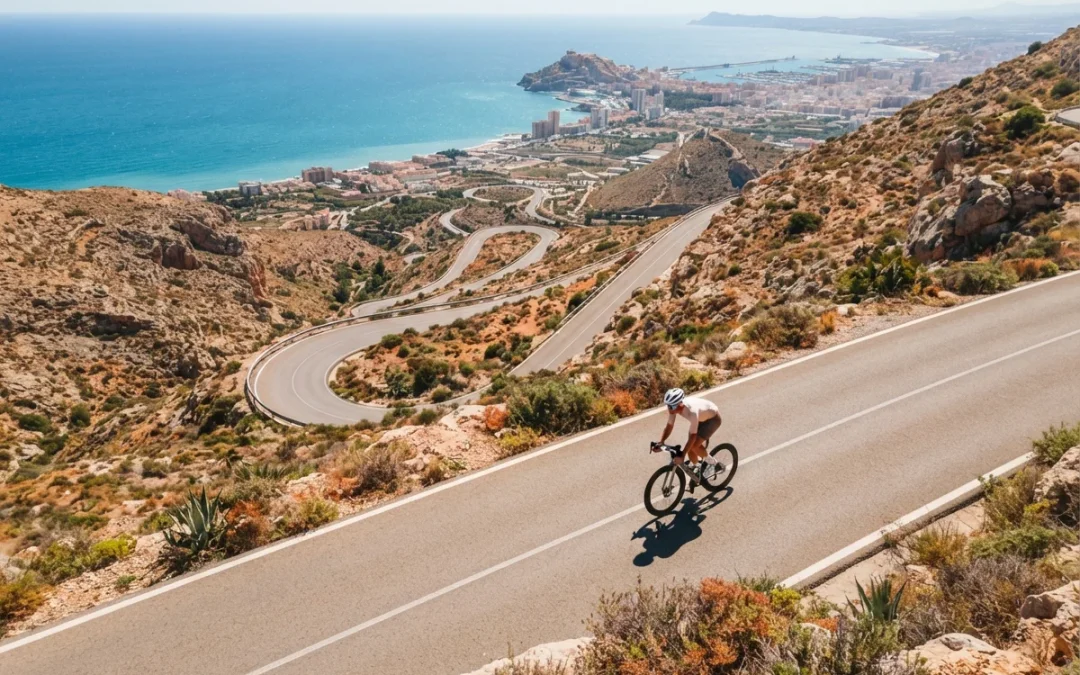
Alicante does not have the pro team glamour of Calpe or the boutique cycling infrastructure of Javea, but cycling in Alicante has its own appeal. The city sits at the southern end of the Costa Blanca, with the Sierra de Aitana to the north, the salt flats of Santa Pola to the south, and dozens of kilometres of coastal road running in both directions. The climbing, when you go looking for it, is serious: the Puerto de la Carrasqueta at 1,024 metres is one of the most respected ascents on the entire Costa Blanca, and the roads inland past Tibi and Castalla are consistently good.
Alicante is also the easiest arrival point on the Costa Blanca. The airport handles direct flights from across the UK, and the city centre is 15 minutes away. For cyclists who want to combine easy coastal days with harder mountain rides, it is a practical base that does not get enough attention.
According to the Alicante Tourism Board, cycling is one of the main active tourism draws in the province, with the area’s road infrastructure and year-round climate making it a growing destination for training camps and cycling holidays.
Why Alicante works as a cycling base
The terrain around Alicante is more varied than the city’s flat coastal profile suggests. Within 30 kilometres you can be on mountain roads with minimal traffic and serious climbing. The coastal routes, particularly north towards El Campello and Villajoyosa, are gentle enough for any fitness level. The roads inland towards the Sierra del Maigmo and the Carrasqueta pass are in good condition and largely quiet outside of local commuter hours.
The city itself is reasonably well set up for cyclists. Bike lanes run along several main routes, the seafront promenade is accessible by bike early in the morning, and the port area has several hire shops within walking distance of the main hotels and apartments.
Best cycling routes from Alicante
| Route | Distance | Elevation | Difficulty |
|---|
| Puerto de la Carrasqueta | 90km | 1,400m | Hard |
| Sierra del Maigmo loop | 60km | 900m | Moderate–Hard |
| Coastal north to El Campello and Villajoyosa | 50km | 200m | Easy–Moderate |
| Santa Pola and the salt flats | 35km | 100m | Easy |
| Tibi reservoir | 55km | 700m | Moderate |
1. Puerto de la Carrasqueta (90km, 1,400m)
This is the ride that defines cycling in Alicante. The Puerto de la Carrasqueta sits at 1,024 metres in the mountains behind Alcoy, roughly 45 kilometres from the coast, and the climb from the Ibi side is about 13 kilometres of sustained effort averaging 5% with a few steeper ramps near the top. It has been used as a stage finish in the Vuelta a España and is well known to serious cyclists across the Costa Blanca.
The standard loop from Alicante heads northwest through Mutxamel and San Vicente del Raspeig, picks up the road towards Castalla and Ibi, and climbs from the Ibi side. The descent towards Alcoy on the far side is long, fast, and rewarding, with views into the steep valley below. The return via Agost adds a second, gentler climb and brings you back through the wine country south of Alicante. Allow four to five hours for the full loop.
2. Sierra del Maigmo loop (60km, 900m)
The Sierra del Maigmo is a less-known but excellent alternative to the Carrasqueta for riders who want a mountain day without committing to 90 kilometres. The route heads west from Alicante through Agost and climbs into the sierra on roads that see almost no traffic during the week. The summit area sits above 1,200 metres and the views back towards the coast are worth the climb on their own.
The descent into Tibi is fast and well-surfaced. From Tibi the road connects through the Castalla valley and back towards Mutxamel and the coast. A solid three-hour ride for a fit cyclist, and manageable on a mid-level hire bike with the right gearing.
3. Coastal north: Alicante to El Campello and Villajoyosa (50km, 200m)
The coastal road north of Alicante runs through El Campello and up towards Villajoyosa, a stretch of about 25 kilometres each way that is mostly flat, well-surfaced, and pleasant. El Campello is a natural coffee stop with a good waterfront. Villajoyosa, with its distinctive painted house fronts and seafront promenade, is worth the extra 10 kilometres if you have the time.
This is the best route for riders who want easy mileage, a first-day spin to get used to a hire bike, or a simple morning outing before the heat builds. Our coastal guide from Alicante to Calpe extends this same road all the way north for riders who want the full day out.
4. Santa Pola and the salt flats (35km, 100m)
South of Alicante, the road towards Santa Pola runs through the protected salt flats of the Parque Natural de las Salinas, a completely flat landscape with wide roads and very little traffic outside of rush hour. Santa Pola itself is a fishing port with a good selection of waterfront cafes. The return via Elche and the palm groves adds a few kilometres but is more interesting than simply reversing the same road.
This is the most accessible route from Alicante for leisure cyclists, families, or anyone on an e-bike. The terrain asks nothing of you, and the distance is short enough to finish before midday even in summer.
5. Tibi reservoir (55km, 700m)
The road to Tibi reservoir north of Alicante is a quiet inland route that does not appear on many cycling maps but delivers steady climbing and almost no traffic. The reservoir itself is one of the oldest dams in Europe, built in the 16th century, and the road above it continues into the hills towards Castalla. It pairs well with the Maigmo loop as a second-day ride if you want variety without repeating the same roads.
When is the best time to cycle in Alicante?
October to April is the reliable window. Alicante is slightly hotter and drier than Calpe further north, which means summer heat arrives earlier and lingers longer. October through to early April offers consistently good riding weather, with temperatures between 15°C and 22°C for most of that period.
January and February bring the coolest days and occasionally some rain. The mountain routes above 800 metres can be cold at the summit and a light base layer or gilet is worth carrying. Coastal and low-elevation routes are generally fine.
May is excellent: warm enough to ride in a short-sleeve jersey from the start, cool enough to tackle the Carrasqueta without suffering too much.
June to September requires the same approach as the rest of the Costa Blanca: very early starts, plenty of water, and finishing by 10am. The Alicante coastal area can feel more humid than the northern Costa Blanca during July and August, which makes the early-morning discipline even more important. The Costa Blanca summer cycling guide covers the full approach to riding in the heat.
Hiring a bike in Alicante
Alicante has a good range of hire options, concentrated mainly around the port and city centre. Road bikes, e-bikes, hybrids, and mountain bikes are all available, and most operators offer hotel and apartment delivery across the city and surrounding areas.
What bikes are available
Road bikes are the most popular hire choice. Aluminium options start at around €25–35 per day and are well suited to the coastal routes and the Tibi reservoir road. Carbon road bikes with Shimano Ultegra or equivalent groupsets are available at €45–65 per day and are the right choice for the Carrasqueta. Most shops carry 105- and Ultegra-level bikes in a reasonable spread of frame sizes.
E-bikes have become increasingly popular for the Alicante mountain routes. An e-road bike at €40–55 per day makes the Carrasqueta accessible to riders who want the mountain experience without the training miles. Leisure e-bikes suited to the flat coastal rides and the Santa Pola route are available at €30–40 per day.
Mountain bikes (hardtail and full suspension) are available for the Sierra del Maigmo and surrounding trails at €25–40 per day depending on spec.
Hybrid and city bikes suit the coastal routes and the salt flats. These are the most affordable option, typically €15–25 per day, and are ideal for relaxed riding or families.
Most operators include a helmet, lock, and basic toolkit with every hire. Ask about saddle bags and route maps when you book — many shops provide both. For multi-day hires of four days or more, most operators offer a weekly discount.
Book at least a week ahead between March and May and at least two weeks ahead in July and August. Carbon road bikes in popular frame sizes fill up quickly during peak season. For a full list of current operators, pricing, and delivery coverage, see our bike hire in Alicante guide.
If you need a bike delivered to your hotel or villa, most Alicante hire operators cover the city, El Campello, Playa de San Juan, and the surrounding areas. Confirm delivery availability and lead times when you book, particularly during July and August.
Where to stay in Alicante for cycling
The old town and port area put you close to the hire shops and the coastal routes. Hotels in the Playa de San Juan area, about 8 kilometres north of the centre, give you slightly easier access to the coastal route north and are a good option if you have your own bike and want to avoid the city centre traffic in the morning.
For cyclists who prefer a villa or apartment, the areas around Mutxamel and El Campello offer quick access to the northern coastal road and the inland mountain routes without navigating city traffic.
Our cycling-friendly accommodation guide lists options across the area with notes on bike storage facilities and early breakfast availability.
Practical tips for cycling in Alicante
Get through the city early
Alicante city traffic is heavier than in smaller Costa Blanca towns. Leaving before 7am means you clear the urban section quickly and reach the mountain or coastal roads before the heat builds.
The Carrasqueta needs proper preparation
If the Puerto de la Carrasqueta is on your list, treat it with respect. It is 13 kilometres of climbing to over 1,000 metres. Carry two full bottles from the base in Ibi, a gilet for the descent, and a downloaded route on your GPS or phone. The descent towards Alcoy is fast and long, so check your brakes before you start, not at the top.
The salt flats get windy
The Santa Pola route along the coast and through the nature park is flat, but the open landscape means a headwind on the return is almost guaranteed in the afternoon. Head south in the morning and come back with the wind behind you.
Use an e-bike for the mountain routes if you are not a regular climber
The Carrasqueta and the Maigmo are not forgiving on a casual rider. An e-road bike makes both routes genuinely enjoyable rather than a suffer-fest. Most Alicante hire operators carry e-road bikes alongside standard road bikes.
Featured bike hire and shops in Alicante
Frequently asked questions
Is Alicante good for road cycling? Yes, if you choose the right routes. The coastal roads are good for easy or moderate riding, and the mountain roads inland, particularly towards the Carrasqueta and the Sierra del Maigmo, are excellent for serious climbing. The city itself requires a short urban section to exit, but this clears quickly once you head north along the coast or inland towards the hills.
What is the main cycling climb near Alicante? The Puerto de la Carrasqueta, at 1,024 metres, is the most significant climb accessible from Alicante. It is about 45 kilometres from the city and the approach from the Ibi side is roughly 13 kilometres at an average of 5%. It has been used as a Vuelta a España stage finish and is well known to cyclists across the region.
Do I need to bring my own bike to Alicante? Not at all. Road bikes, e-bikes, MTBs, and hybrids are available for hire in the city, with most operators offering hotel and apartment delivery. See our bike hire in Alicante page for current options and pricing.
Is it safe to cycle in Alicante city? The city has dedicated bike lanes on several main routes and the seafront is accessible by bike. The main challenge is traffic around the city centre, best avoided by riding early in the morning. Once you are on the coastal road or heading inland, traffic thins quickly.
How does Alicante compare to Calpe for cycling? Calpe has more concentrated access to climbing within a shorter distance and a stronger cycling café culture. Alicante has better transport links, easier flat riding to the south, and the Carrasqueta, one of the finest climbs on the Costa Blanca. The two complement each other rather than compete. If you are doing a week on the Costa Blanca, a couple of days based in Alicante alongside the main Calpe block works well.
Can I ride from Alicante to Calpe? Yes. The coastal route north from Alicante to Calpe is about 80 kilometres, passing through El Campello, Villajoyosa, Benidorm, and Altea. Our Alicante to Calpe route guide covers the full route with notes on road conditions and stops.
Can I hire an e-bike in Alicante? Yes. Most hire operators in Alicante carry e-bikes alongside standard road bikes. E-road bikes are particularly popular for riders planning the Carrasqueta or the Maigmo without the fitness load of a pure road bike. Check our bike hire in Alicante directory for current availability.
by Ralf Tenbrink | 10, Jul 2026 | Costa Blanca News
Cycling in Calpe: The Complete Local Guide
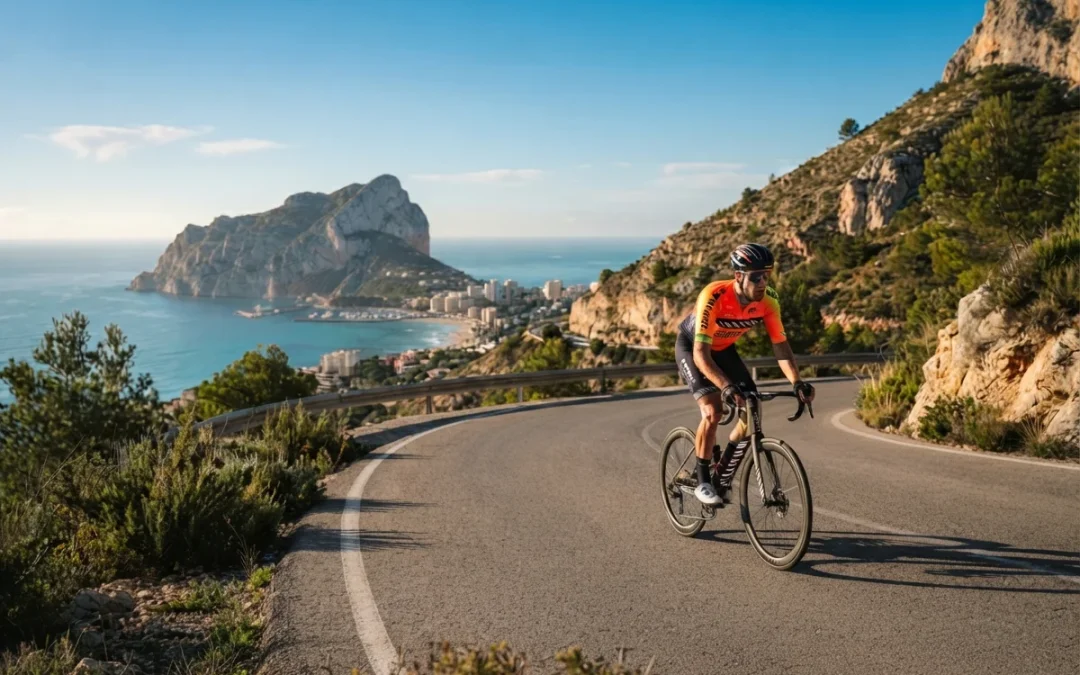
Calpe punches well above its weight as a cycling destination. The Peñón de Ifach, that unmistakable 332-metre limestone rock rising straight out of the bay, has become as recognisable to cyclists as the town itself, a reliable landmark on climbs and coastal rides across the northern Costa Blanca. Every January and February, when roads across northern Europe are frozen or rain-soaked, professional teams descend on Calpe for altitude training, time trials on the coast road, and back-to-back days in the mountains. Team Ineos (formerly Sky), Trek-Segafredo, and Dimension Data have all used the area as a winter training base, and their choice is not hard to understand.
Beyond the weather and the roads, the variety is what makes Calpe stand out. On the same day you can ride a flat coastal loop to Altea before breakfast, tackle a mountain pass by mid-morning, and be back for coffee on the seafront before the heat builds. The terrain runs from sea-level salt flats to the summit of Coll de Rates at 876 metres in under 30 kilometres. For cyclists of every level, that range is rare.
Cycling Weekly, one of the UK’s leading cycling publications, described the Calpe area as one of the finest cycling destinations in Europe, not for a single iconic climb, but for the sheer density of quality riding within a small area. That assessment holds up.
Why Calpe is one of Spain’s best cycling destinations
The Costa Blanca benefits from more than 300 days of sunshine per year, and Calpe sits near the centre of the best riding terrain on the coast. According to the Valencian Tourism Agency, the region draws tens of thousands of cycling visitors annually, and Calpe in particular has built its reputation on the quality of its roads, the density of challenging climbs within reach, and the concentration of cycling-specific services, bike shops, cafes, and hotels that understand what riders need.
The roads inland from Calpe are consistently in excellent condition. Traffic is light on most mountain routes outside of summer weekends. The gradients are honest, rarely brutal, which makes the area accessible to club cyclists as well as serious sportive riders. And the scenery, from the Peñón across Calpe bay to the Sierra de Bernia ridge and the mountains behind Benidorm, makes every ride worth doing again.
Best cycling routes from Calpe
| Route | Distance | Elevation | Difficulty |
|---|
| Coll de Rates loop | 65km | 1,200m | Moderate–Hard |
| Coastal south to Altea | 40km | 350m | Easy–Moderate |
| Jalón Valley | 55km | 800m | Moderate |
| Calpe to Guadalest | 75km | 1,800m | Hard |
| Sierra Bernia MTB loop | 35km | 900m | Moderate–Hard (MTB/gravel) |
1. The Coll de Rates loop (65km, 1,200m)
This is the ride that defines cycling in Calpe. Coll de Rates is arguably the most famous climb on the Costa Blanca: 10 kilometres of steady climbing from Parcent to a summit at 876 metres, with consistent gradients averaging around 5% and spectacular views across the Marina Alta valley.
The classic loop heads north out of Calpe towards Benissa and Llíber, drops into the Jalón Valley, and picks up the climb from the Parcent side. The descent towards Pego and the coast road back to Calpe adds up to a full morning’s riding that leaves most cyclists satisfied and most cafe stops well-deserved. The route is well-marked and well-ridden enough that you will rarely be alone on it, which makes navigation straightforward.
2. Coastal south: Calpe to Altea and Albir (40km, 350m)
For an easier day or a warm-up ride, the coastal route south along the N-332 towards Altea, Albir, and Alfaz del Pi is an excellent option. The road runs close to the sea for much of the distance, with views back to the Peñón and forward to the Sierra Helada headland above Benidorm. Altea old town is a natural coffee stop, and the descent through Albir to the seafront promenade rewards the short climb that precedes it.
This route connects naturally with our Altea Hills Loop cycling guide, which adds the inland climb behind Altea for riders looking for more elevation. If you need a hire bike for a flat coastal day, Vuelta Turistica and other Calpe operators can have a bike ready at your hotel the evening before.
3. The Jalón Valley (55km, 800m)
The Jalón Valley (Vall de Pop) is one of the quietest and most beautiful inland areas on the Costa Blanca. The road out of Calpe heads through Benissa and Llíber before dropping into the valley floor at Jalón, a village known for its wine cooperative and almond blossom in late January. Continuing up the valley towards Alcalalí and Tormos gives access to some of the least-trafficked roads in the region.
The return via the Bernia road adds a short but sharp climb with views that extend to Ibiza on clear days. This is a route that rewards multiple visits, as the light changes dramatically across the seasons.
4. Calpe to Guadalest (75km, 1,800m)
The hardest route on this list and one of the best long rides on the entire Costa Blanca. Guadalest is a medieval castle village perched above a turquoise reservoir in the mountains behind Benidorm. Getting there from Calpe requires crossing two significant climbs and accumulating nearly 1,800 metres of elevation across 75 kilometres. This is a route for fit riders with the right bike and a full day to spend.
Our detailed write-up of the coastal ride from Alicante to Calpe covers some of the same terrain in reverse and gives useful context on road conditions south of the town.
5. Sierra Bernia: MTB and gravel (35km, 900m)
Calpe is not exclusively a road cycling destination. The Sierra de Bernia ridge, which runs roughly parallel to the coast just inland from Calpe, offers some of the best gravel and mountain biking terrain on the northern Costa Blanca. The classic loop climbs the back of the ridge via Benissa and returns through Llíber, using a mix of tarmac and well-graded dirt tracks. A hardtail MTB or a gravel bike is ideal. The views from the ridge extend across the bay to the Peñón and, on clear days, to Ibiza. Several bike hire operators in Calpe stock gravel bikes and MTBs specifically for this type of riding.
When is the best time to cycle in Calpe?
January to March is pro team season. The roads can be busy with organised training rides, and the weather is mild but unpredictable, clear blue skies one day, cold wind and rain the next. Average temperatures sit between 12°C and 17°C. For serious cyclists who want to maximise mileage without the summer heat, these months are excellent.
April and May are widely considered the best months. Temperatures sit between 18°C and 24°C, the almond and orange blossom are long gone but the countryside is still green, and the roads have not yet filled with summer visitors. Most cyclists who plan a dedicated cycling holiday target these months.
June to September brings the heat. Temperatures regularly exceed 35°C by mid-morning, and the coastal routes especially can become airless. This does not mean cycling stops. It means it starts much earlier. Heading out at 6:30am and finishing by 10:00am gives you three to four hours of excellent riding before the heat becomes a factor. Mountain routes catch more breeze and are worth prioritising. The practical tips section below covers hydration and sun protection.
October and November offer a second peak season. The sea is at its warmest, the light is beautiful, and the roads empty again after the summer crowds leave. Many cyclists consider October the finest month of all on the Costa Blanca.
Hiring a bike in Calpe
You do not need to bring your own bike. Calpe has a strong range of bike hire options covering road bikes, e-bikes, mountain bikes, and hybrids, with several operators offering delivery directly to your hotel or villa.
Blanca Bikes operates a dedicated Calpe location with a premium fleet of Cervélo road bikes and offers hotel and villa delivery across the area. Vuelta Turistica is a long-established Calpe specialist with BMC and Specialized models and an on-site fitting service. SolyBike combines bike hire with café facilities and group rides, making it a good base for riders who want more than just a bike. For a full comparison of options, current pricing, and delivery details, see our bike hire in Calpe guide. For shops offering sales, servicing, and emergency repairs, the Calpe bike shops directory covers every option.
As a general rule, book your hire bike at least a week ahead between March and May and at least two weeks ahead in July and August. The best carbon road bikes in the most popular sizes go quickly.
Where to stay in Calpe for cycling
Calpe has a well-developed infrastructure of cycling-friendly accommodation, from hotels with secure bike storage and workshop facilities to villas and apartments within easy reach of the main routes.
Our guide to the top cyclist hotels in Calpe covers the best options in detail, with notes on which hotels offer bike washing stations, early breakfast for pre-dawn starts, and on-site or partnered bike hire.
If you are travelling as a group or planning a week-long camp, a villa with private parking is often the better option. It gives you more flexibility on ride times and makes storing multiple bikes significantly easier.
Practical tips for cycling in Calpe
Start early in summer
Between June and September, aim to be on the bike by 6:30am at the latest. The roads are quieter, the air is cooler, and you will be back at the hotel pool before the worst of the heat builds.
Carry more water than you think you need
On mountain routes in summer, two 750ml bottles is the minimum. A third bottle or a small hydration pack is worth the extra weight on longer rides. Many of the inland villages have public fountains, but you should not count on them.
Use high-factor sun cream and reapply
Sweat washes sunscreen off quickly. Factor 50 on exposed skin, and re-apply at every café stop.
Road etiquette
Drivers on the Costa Blanca are generally respectful of cyclists, particularly on the known cycling routes. Ride in single file on busier roads, use hand signals clearly, and avoid the N-332 coastal road between Calpe and Altea on summer weekend afternoons when traffic is heaviest.
Café stops are part of the ride
Calpe and the surrounding villages have a well-developed café culture that caters specifically to cyclists. Most bike cafes open early, serve proper espresso, and stock energy bars and gels. Do not skip them.
Check your hire bike before you leave
Brakes, tyre pressure, saddle height, and quick release skewers. Ask the shop to fit your own pedals if you use clipless, most hire operators are used to this and will have the tools ready.
Featured bike hire and shops in Calpe
Planning your Costa Blanca cycling trip? These pages cover the routes, rentals, and accommodation you need:
Frequently asked questions
Is Calpe suitable for beginner cyclists? Yes, with the right route selection. The coastal roads south towards Altea and the flat roads around the salt lakes north of town are entirely manageable for riders at any level. The mountain routes are more demanding, but many riders who would not describe themselves as climbers complete the Coll de Rates with a compact chainset and a bit of patience.
What is the best cycling route from Calpe? For most riders visiting for the first time, the Coll de Rates loop is the definitive Calpe ride. It covers the best climbing, the most varied scenery, and gives you a clear benchmark for the rest of the week. If you have limited time, the coastal route to Altea is the best shorter option.
When do professional cycling teams train in Calpe? January and February are the main pro training months. Squads from teams including Ineos Grenadiers and Trek-Segafredo have used the area for pre-season training camps, and it is not unusual to see sponsored vehicles and support staff at the main cycling cafes during this period.
Do I need to bring my own bike to Calpe? Not at all. Hire bikes in Calpe range from aluminium road bikes at €25–30 per day to top-level carbon machines at €55–70 per day, with e-bikes also available. Most hire operators offer delivery to your accommodation. See our bike hire in Calpe page for full details.
Is it safe to cycle in Calpe in summer? Yes, if you adapt your schedule. Ride before 10am, carry plenty of water, use high-factor sun protection, and choose routes with shade where possible. Mountain roads are generally cooler than coastal roads. Avoid riding between 12pm and 5pm in July and August.
How hilly is cycling around Calpe? It depends on the direction you ride. The town itself sits at sea level, and you can ride flat or gently rolling roads for 20–30 kilometres in several directions before the climbing starts in earnest. The mountain routes behind Calpe are genuinely challenging, with the Coll de Rates and the Guadalest climbs both requiring fitness and the right gearing.
Can I hire an e-bike in Calpe? Yes. Several operators in and around Calpe offer e-bike hire, including both leisure e-bikes and e-road bikes for riders who want motor assistance on the climbs. Check our bike hire in Calpe directory for current availability.
by Ralf Tenbrink | 7, Jul 2026 | Costa Blanca News
Cycling in the Heat: How to Ride Safely on the Costa Blanca in Summer
The Costa Blanca in July is not like cycling anywhere else in northern Europe. By 10am the tarmac is already hot enough to soften, the air above the coast road shimmers, and the temperature is pushing 34°C with no cloud cover in sight. Riders who flew in from Manchester or Amsterdam on Friday are on the bike by Saturday morning, and by Saturday afternoon some of them are learning a lesson that locals already know: summer cycling on the Costa Blanca is genuinely wonderful, but only if you respect the heat.
This is not a guide about avoiding cycling in summer. It is a guide to doing it properly. The sports science backs this up: according to research published in the Journal of Applied Physiology, trained cyclists can perform safely in high heat when they manage timing, hydration, and pacing correctly. The Costa Blanca’s dry heat is also more forgiving than humid tropical climates, sweat evaporates efficiently here, which makes cooling more effective than the raw temperature suggests. With the right approach, a 6am start on the roads above Calpe or Javea in July is one of the finest cycling experiences you will find anywhere. The air is still, the light is extraordinary, and the roads are yours. The goal is to be back at your accommodation before the heat becomes dangerous, not to battle through it.
What the heat actually does to your body on a bike
Understanding the physiology helps you make better decisions on the road. When you cycle in high temperatures, your body faces a dual demand: it needs blood at the muscles to sustain effort, and blood at the skin surface to cool you down through sweat. In extreme heat, these two demands compete, and your cardiovascular system starts to struggle.
Sweat rates on a hard ride in 35°C heat can exceed 1.5 litres per hour. If you are not replacing fluid at something approaching that rate, your blood volume decreases, your heart rate rises for the same power output, and your core temperature climbs. Heat exhaustion (heavy sweating, weakness, rapid pulse, nausea, and confusion) can develop faster than most cyclists expect. Heat stroke, where the body’s cooling system fails entirely and core temperature exceeds 40°C, is a medical emergency.
None of this should put you off riding. It should put you in the habit of treating hydration and timing as non-negotiable, not optional.
Rule one: ride with the sun, not against it
The single most effective thing you can do to cycle safely in summer on the Costa Blanca is to ride early. Very early.
The window is 6:00am to 10:00am. If you are hiring a bike for a summer trip, ask your provider whether they offer early-morning delivery. Most operators across Calpe, Javea, and Benidorm can have a bike at your villa door the evening before so you are not waiting for a 9am shop opening. During this window, temperatures are typically 22–27°C on the coast, roads are quiet, and a cooling breeze is usually still present. By 11:00am temperatures rise sharply and the breeze often drops. By 1:00pm riding in the sun is uncomfortable and potentially dangerous for unacclimatised visitors.
That means setting your alarm for 5:30am, having a light breakfast, and being clipped in before sunrise. It sounds extreme until you experience the first time you crest a climb on the Coll de Rates road at 7:00am with the bay below still in shadow and the whole day ahead of you. After that, it makes perfect sense.
If you can only ride once a day, make it the morning ride. If you want two sessions, a very early morning ride and a late-evening ride after 7:00pm (once the worst heat has passed) is a sustainable routine. The middle of the day is for recovery, not riding.
Hydration: more than you think, earlier than you think
Most cyclists know they should drink enough. Most cyclists underestimate how much that is in summer heat.
On a 3-hour ride in 30°C+ temperatures, you should be consuming between 750ml and 1 litre per hour depending on your sweat rate, intensity, and body size. That means leaving with at least two 750ml bottles and knowing where you can refill. On mountain routes in the Costa Blanca, many villages have public fountains with cold, drinkable water. Identify these before you leave.
Start drinking before you are thirsty. Thirst is a late indicator of dehydration. By the time you feel thirsty, you are already behind. Take a few sips every 10–15 minutes from the first kilometre, not just when you feel the need.
What to drink
Plain water is fine for rides under 90 minutes. For longer efforts, electrolytes, particularly sodium, are important. Sweat contains a significant amount of sodium, and replacing water without replacing electrolytes can lead to hyponatraemia, a dangerous drop in blood sodium levels. Use electrolyte tablets, a sports drink, or simply make sure your café stop includes some salty food alongside your espresso.
The evening before
If you are riding early the following morning, drink consistently through the afternoon and evening. Arriving at the start already slightly dehydrated makes the morning ride significantly harder and riskier.
What to wear in summer heat
Lightweight, light-coloured kit matters more than most riders realise. Dark colours absorb significantly more heat than light ones. White, cream, or pale colours reflect sunlight and make a measurable difference to your comfort on a long climb in direct sun.
Sun protection is the most underestimated piece of kit on the Costa Blanca. The UV index in July regularly reaches 9 or 10 (extreme), which means skin burns faster than most northern Europeans expect. Apply factor 50 to all exposed skin before you ride, and carry a small tube to reapply at your café stop. Pay particular attention to the back of your neck, the backs of your hands, and any gap between your jersey and shorts at the lower back.
A cycling cap under your helmet provides shade for your face and nose on exposed climbs and is worth its minimal weight. Some riders also use a damp buff or cloth around the neck as an additional cooling measure on very hot days.
Arm warmers have no place on a summer Costa Blanca ride, but a light gilet can be useful on early morning descents when the temperature at the summit is noticeably cooler than at sea level. Once the descent is done, pack it away.
Route selection: where to ride when it’s hot
Head inland, not along the coast
The coast road sounds appealing in theory: sea breeze, flat terrain. In practice the N-332 and the coastal route south of Calpe can be airless and exposed in the heat, with heavy traffic by late morning. Mountain roads above 500 metres are typically 3–6°C cooler than the coast, catch more breeze, and are far quieter.
Prioritise routes with shade
The roads through the Jalón Valley, the approach to Coll de Rates through Parcent, and the inland roads above Altea all pass through forested sections that provide genuine relief from direct sun. Plan your hardest climbing for the first hour, when you are freshest and temperatures are lowest.
Avoid exposed ridge roads after 9am in high summer
Routes like the Bernia road, which offers spectacular views but minimal shade, are best ridden in the very early morning or left for spring and autumn.
Build café stops into the plan
Choose a route with a natural halfway stop at a village bar or cycling café. Sitting in the shade for 20 minutes, drinking a cold water alongside your coffee, and letting your core temperature drop slightly before continuing makes the second half of any summer ride significantly more comfortable. It also gives you a moment to assess how you are feeling before committing to the return.
Our cycling routes section has detailed guides to the main roads around Calpe, Javea, Benidorm, and Altea, including notes on shade, water stops, and difficulty. The Cycling in Calpe guide is a good starting point for the best early-morning mountain routes, and the Altea Hills Loop is one of the shadiest routes on the coast.
Recognising heat exhaustion and what to do
Knowing the warning signs could save your ride, or someone else’s.
Heat exhaustion develops gradually. Signs include heavy sweating despite feeling cold or clammy, weakness or fatigue out of proportion to the effort, a rapid but weak pulse, nausea, headache, and dizziness. If you or a riding partner shows these signs, stop riding immediately.
Move to shade. Lie down with your legs elevated if possible. Drink cool water steadily (not ice-cold, which can cause cramping). Apply cool, damp cloths to the neck, armpits, and wrists. Rest until symptoms resolve, which usually takes 30–60 minutes. Do not continue the ride that day.
Heat stroke is more serious and requires emergency help. Signs include hot, dry or only slightly damp skin, confusion or disorientation, loss of coordination, and a very rapid strong pulse. Core temperature is dangerously elevated. Call 112 immediately, move the person to shade, cool them with whatever water is available, and stay with them until help arrives.
The key difference: heat exhaustion responds to rest and rehydration and is manageable in the field. Heat stroke does not. It is a medical emergency every time.
Acclimatisation: give yourself time
If you have just arrived from a northern climate, your body is not yet adapted to the heat. Acclimatisation takes roughly 10–14 days of regular exposure, during which your body increases its plasma volume, improves its sweating response, and becomes more efficient at cooling itself.
In practical terms, this means your first two or three rides in summer heat should be shorter and easier than you planned. Ride for 90 minutes rather than three hours. Stay on flatter terrain. Drink more than you think necessary. You will feel weaker than you do at home. This is normal and temporary.
By the end of the first week, most riders are performing noticeably better in the heat than they did on arrival. If you are planning a cycling holiday specifically around summer training, our cycling-friendly accommodation guide lists hotels with early breakfast service and secure bike storage, both important for 6am starts. Push the duration and intensity gradually, not all at once.
Before you ride: the summer checklist
Print this and pin it to the fridge:
- Alarm set for 5:30am — wheels rolling by 6:00am
- Two full bottles (750ml minimum each)
- Electrolyte tablets or sports mix for rides over 90 minutes
- Factor 50 suncream applied — small tube in back pocket to reapply
- Lightweight, light-coloured kit
- Route planned with shade and at least one water/café stop
- Someone knows your route and expected return time
- Fully charged phone with emergency number saved (112 is the Spanish emergency services)
- Cash or card for café stop
Bike hire in summer: what to know
If you are hiring a bike for a summer trip, book well in advance. July and August are the busiest months for hire operators across the Costa Blanca, and the best carbon road bikes and e-bikes in the most popular frame sizes are reserved weeks ahead.
When the bike is delivered or collected, ask the shop to check tyre pressure specifically. Tyres lose pressure faster in high heat, and a soft tyre in 35°C is not just slower, it is a puncture risk. If you are riding mountain or gravel routes, also check that the brakes are properly adjusted before you leave, as heat affects rim braking performance on long descents.
Our bike hire directory for the Costa Blanca covers all operators across Benidorm, Calpe, Javea, Altea, Denia, and Torrevieja, with current pricing and delivery options. Town-specific guides are also available:
Frequently asked questions
Is it safe to cycle on the Costa Blanca in July and August? Yes, if you ride early. The 6:00am–10:00am window offers quiet roads, manageable temperatures, and beautiful light. Avoid riding between 11:00am and 5:00pm in peak summer.
How much water should I carry on a summer ride? A minimum of 1.5 litres for rides up to two hours. For longer mountain rides, carry 2 litres and plan your route around water refill points. Electrolyte tabs are worth adding for rides over 90 minutes.
What temperature is too hot to cycle? There is no single threshold, but above 38°C ambient temperature, the risk of heat illness increases significantly for unacclimatised riders. At those temperatures, experienced local cyclists switch to indoor training or limit outdoor riding to pre-dawn hours. If you are newly arrived from a cooler climate, be more conservative. 32°C can feel extreme in your first few days.
Should I use an e-bike in summer to reduce effort? An e-bike is a sensible choice in summer, particularly for the hotter parts of the day or for riders who are less fit. Motor assistance reduces your exertion level, which means less heat generated internally and a lower sweat rate. If you are planning rides in warmer parts of the day, an e-bike is worth considering. See our bike hire guides for e-bike availability across the Costa Blanca.
Can I ride through the heat as long as I drink enough? Hydration helps significantly, but fluid replacement alone does not fully offset the physiological cost of exercising in extreme heat. Your cardiovascular system is under stress regardless of how much you drink. The early morning window exists for a reason. Use it.
What should I eat before an early morning ride? Keep it light and digestible: a banana, a slice of toast with honey, or a small bowl of oats. You do not have enough time to fully digest a large meal before a 6:00am start, and riding on a heavy stomach in heat compounds the discomfort. Save the larger meal for post-ride recovery.
by Ralf Tenbrink | 29, Jun 2026 | Costa Blanca News
Spain just updated its traffic regulations — and if you ride on Spanish roads, some of these changes affect you directly. The new Royal Decreto 518/2026 was published in the BOE on 26 June 2026 and amends the General Traffic Regulations (Reglamento General de Circulación). The DGT describes it as a shift away from vehicle-first thinking toward people-first mobility. For cyclists that sounds good on paper — here’s what it actually means on the road.
Helmets Outside Towns: Now Mandatory, No Exceptions
This one is clear cut. On any road outside a built-up area, a helmet is now compulsory. There are no longer any exemptions — not for heat, not for gradient climbs, not for any other reason.
If you ride professionally, there’s an additional rule: a reflective vest is required when working. That covers guides, couriers, race support riders, and anyone else using a bike as part of their job.
For most of us riding the Costa Blanca’s interurban roads and mountain routes, the practical message is simple: helmet on before you leave town.
Overtaking: The Rules for Drivers Just Got Tighter
This is probably the most significant change for safety. When a motor vehicle overtakes a cyclist on an interurban road, the driver must now:
- Reduce speed by at least 20 km/h below the road limit — not just slow down a bit, but a measurable reduction
- Keep at least 1.5 metres of lateral clearance — the minimum distance rule that many countries have had for years is now law in Spain
- Change lane completely when there is more than one lane in the same direction
That last point matters. On a two-lane road heading out of Altea or up toward Jalón, a driver can no longer just nudge wide — they have to move into the other lane properly.
The law also now treats a group of cyclists as a single moving unit for overtaking purposes. So a driver behind a group of ten riders has to treat the whole group as one vehicle, not attempt to thread through gaps.
Urban Cycling: More Space, More Rights
In towns and cities, the new rules put bikes more clearly in the flow of traffic rather than at the edge of it:
- Cyclists should generally ride on the carriageway, preferably in the centre of the lane
- Motor vehicles must keep a minimum of 5 metres from a cyclist when following in the same lane
- Cyclists may overtake motor vehicles on either side in congested urban traffic — so filtering past stationary cars is now explicitly permitted
- On one-way 30 km/h streets, local authorities can designate two-way cycling where properly signposted
If you do any riding through Alicante, Benidorm, or Torrevieja, the centre-of-lane guidance is worth knowing. Riding in the middle of a slow lane is often safer than hugging the kerb, and the law now backs that up.
Shoulder Use and Riding Two Abreast
The rules on the arcén (hard shoulder) haven’t changed dramatically. Bicycles may still use the shoulder where it’s passable and wide enough. Riding two abreast on the shoulder, or on the usable part of the carriageway where permitted, remains allowed.
For anyone used to riding the CV roads on the Costa Blanca, most of this will feel familiar. The shoulder rules were already fairly clear — this reform doesn’t tighten them.
“Vulnerable Road Users” Now Has a Legal Definition
One change that’s easy to overlook but actually matters: Spanish traffic law now formally defines vulnerable road users for the first time. Cyclists, pedestrians, motorcycle riders, and VMP users (e-scooters and the like) are included. This matters because it’s the foundation that future protections build on — once you’re defined in law, enforcement and penalties can be calibrated around that.
The reform also introduces a new Title VI covering urban circulation rules and strengthens requirements around special lanes and vehicle behaviour near stopped vehicles.
When Do the Changes Take Effect?
The decree was published on 26 June 2026. Several sources indicate the cycling-specific rules come into force from October 2026, though you should check the official BOE text for the precise implementation dates.
The Bottom Line
Interurban riding gets meaningfully better protection under this law — the overtaking rules in particular are a genuine improvement. Urban cyclists get clearer rights to road space. And the helmet rule outside towns, while not new in spirit, now has no grey areas.
If you drive on Costa Blanca roads as well as ride them, make sure you’re up to speed on the overtaking changes. The 20 km/h reduction and full lane change requirements catch a lot of drivers off guard.
For more on cycling routes, bike shops, and local news across the Costa Blanca, browse the Bikes Costa Blanca directory.
Sources: BOE — Real Decreto 518/2026 · DGT press release
by Ralf Tenbrink | 13, Jun 2026 | Bike Rental Services in Costa Blanca, Costa Blanca News
Bike hire in Torrevieja: road bikes, e-bikes and more delivered to your door
Torrevieja sits at the southern end of the Costa Blanca. The city gets a lot of sun and has become one of Spain’s more accessible cycling destinations. Unlike the mountainous terrain further north around Calpe and Altea, Torrevieja offers flat coastal paths, gently rolling inland routes, and easy access to the salt lakes and wetlands that define this corner of Alicante province.
For visitors arriving without their own wheels, bike hire in Torrevieja opens up plenty of options. You might cruise the promenade at sunrise, tackle the quiet roads towards Orihuela, or test your legs on routes connecting to the Vega Baja region. Renting locally makes sense. You skip the airline bike fees, avoid the stress of travel damage, and get a machine already tuned for local conditions.
This guide covers bicycle hire in Torrevieja: the types of bikes available, typical rental prices, delivery options, recommended routes, and practical booking tips.
Why hire a bike in Torrevieja?
Torrevieja has changed over the past decade from a traditional Spanish seaside town into a genuine cycling hub. Year-round sunshine, mild winters, and flat terrain make it appealing to leisure cyclists, families, and those returning to cycling after a break.
Best time to visit Torrevieja for cycling
The cycling calendar breaks down clearly:
- March to May: Warm but not hot, quiet roads, wildflowers in bloom
- September to October: Comfortable temperatures and fewer tourists
- November to February: Cooler but still rideable, popular with European training camps
- July to August: Hot and crowded; stick to early morning or evening rides
- Easter and October half-term: Peak family periods; book bikes well in advance
Climate and conditions
Torrevieja gets over 300 days of sunshine annually. Average winter temperatures hover around 16°C. The Comunitat Valenciana tourism board notes that the southern Costa Blanca has some of the most stable weather in Spain. Summer can be hot for midday riding, but early morning and evening sessions remain comfortable.
Cycling infrastructure
The city has invested in cycling infrastructure. Dedicated bike lanes connect the main beaches, the marina, and the town centre. The Via Verde del Maigmó, a converted railway line, lies within striking distance and offers traffic-free riding through rural landscapes. Local authorities have improved road surfaces on popular cycling routes, and drivers in this region are generally accustomed to sharing the road with cyclists.
Training camps and cycling tourism
Torrevieja attracts cycling training camps, particularly during European winter months. Teams and clubs from the UK, Germany, Scandinavia, and the Netherlands base themselves here for pre-season preparation. The flat terrain suits base training and recovery rides. The nearby hills around Crevillente and Elche provide options for those wanting more intensity.
For cyclists planning an extended stay, cycling-friendly accommodation in Torrevieja offers secure bike storage, early breakfast options, and local route knowledge.
The case for hiring locally
Bringing your own bike to Spain involves considerable hassle. Airlines charge anywhere from €60 to €150 each way for bike carriage. Bikes can arrive damaged, and you’ll spend time at each end packing and unpacking. Hire shops in Torrevieja offer well-maintained bikes that are road-ready, properly sized, and come with local knowledge.
For a deeper look at rental services across the region, explore the bike rental services in Costa Blanca overview.
What bikes are available to hire in Torrevieja?
Bike rental in Torrevieja caters to every type of rider. Serious road cyclists, families looking for a casual spin, and people who want electric assistance will all find suitable options.
Road bikes
Road bikes dominate the hire fleet in Torrevieja, reflecting the area’s popularity with training camps and enthusiast cyclists.
Entry-level aluminium road bikes come equipped with Shimano Tiagra or 105 groupsets. These suit recreational riders and those new to road cycling. Expect to pay around €25 to €35 per day or €100 to €150 per week.
Mid-range carbon road bikes with Shimano 105 or Ultegra groupsets offer a significant step up in performance. The carbon frames absorb road vibration better, and the gearing is more precise. Daily rates typically range from €40 to €60, with weekly hire costing €180 to €280.
Premium carbon road bikes with Shimano Ultegra Di2 or SRAM Force electronic shifting are the top tier. These machines are intended for experienced cyclists who want the best available equipment. Rates run €60 to €90 per day or €300 to €450 per week.
Road bikes from Torrevieja work well on the quiet inland roads, the coastal route towards Guardamar, and longer excursions into the Vega Baja countryside.
Electric bikes (e-bikes)
E-bike hire in Torrevieja has grown rapidly. Electric bikes suit riders who want to cover more ground without exhausting themselves, those returning to cycling after time away, and anyone who wants to enjoy the scenery without the physical strain.
City e-bikes with step-through frames and comfortable upright positions cost around €30 to €45 per day. They work well for promenade rides, trips to the market, and gentle exploration.
E-road bikes and e-gravel bikes appeal to more serious cyclists who want assistance on longer routes or hillier terrain. These cost €50 to €70 per day and allow you to keep pace with stronger riders or extend your range significantly.
Battery range typically spans 60 to 100km depending on assistance level and terrain. Most hire shops provide chargers, and you can top up over a lunch stop if needed.
Mountain bikes (MTB)
Torrevieja isn’t known for technical mountain biking, but decent trails exist in the surrounding hills and natural parks.
Hardtail mountain bikes suit cross-country riding and fire roads. They’re simpler, lighter, and easier to maintain. Daily hire costs €25 to €40.
Full-suspension mountain bikes handle rougher terrain and provide more comfort on technical descents. Expect to pay €45 to €65 per day for a quality full-sus bike.
The Sierra de Escalona and the hills around San Miguel de Salinas offer rideable trails. For more serious MTB riding, the off-road mountain biking trails in Costa Blanca guide covers options across the region.
Hybrid and city bikes
Hybrid bikes bridge the gap between road and mountain bikes. They feature flat handlebars for a comfortable riding position, wider tyres for stability, and gearing suited to varied terrain.
These work well for mixed riding: starting on paved roads, exploring the salt lake paths, and finishing with a coffee in the old town. Daily rates sit around €15 to €25, making them the most affordable option.
Kids bikes and family options
Families visiting Torrevieja can hire children’s bikes in various sizes, typically ranging from 16-inch wheels for younger children up to 24-inch for older kids. Tag-along attachments and child seats are also available from most providers.
Daily rates for kids bikes range from €10 to €18, with family bundle discounts common for multiple bike hires.
Tandems
Tandems appear less frequently in Torrevieja hire fleets but can be sourced from larger providers or through advance booking. They’re popular with couples wanting a shared experience and typically cost €40 to €55 per day.
For families and groups planning a cycling trip, the bike rentals for groups and families resource provides useful guidance.
Bike hire delivered to your hotel or villa in Torrevieja
One genuine convenience of renting a bike in Torrevieja is the delivery service offered by most providers. Rather than navigating to a shop, your bike arrives at your accommodation ready to ride.
How delivery works
When you book, you provide your accommodation address, whether that’s a hotel on the Playa del Cura, an apartment near the marina, or a villa in the urbanisations south of town. The hire shop arranges a delivery window, typically with a two-hour slot.
A technician delivers the bike, sets it up to your specifications, and walks you through the key features. They’ll adjust the saddle height, show you how the gears work, and ensure the brakes are properly bedded in.
What’s typically included
Standard bike hire in Torrevieja usually includes:
- Helmet (fitted to your head size)
- Basic lock
- Saddle bag with spare tube, tyre levers, and mini pump
- Water bottle cage (bring your own bottles or purchase locally)
- Route map or suggested GPS files
- Free delivery within Torrevieja
Some providers also offer lights, phone mounts, and mudguards, sometimes for an extra charge.
Booking lead time
Your booking window depends on when you’re visiting:
- Peak season (Easter, July to August, October half-term): Book two or more weeks ahead
- Shoulder season (March to May, September): Five to seven days’ notice recommended
- Winter (November to February): Two to three days usually sufficient
Popular bikes, especially carbon road bikes and e-bikes, get reserved early. Summer months see the highest demand, so if you’re planning a cycling holiday in Torrevieja between June and September, secure your bikes before you book your flights.
What to check when the bike arrives
Before the delivery technician leaves, take five minutes to verify everything:
- Saddle height: Your leg should have a slight bend at the bottom of the pedal stroke
- Brake function: Squeeze both levers firmly and check the bike stops smoothly
- Tyre pressure: Tyres should feel firm; ask the technician what pressure they’ve set
- Gear shifting: Run through all gears to ensure clean changes
- Quick releases: Check wheels and seatpost are secure
Any issues can be resolved on the spot.
Compare verified Torrevieja bike hire shops to find the right fit for your riding style and budget.
For broader rental guidance across the region, see rent a bike on the Costa Blanca.
Bike hire prices in Torrevieja
Understanding typical pricing helps you budget appropriately and spot good value when comparing providers.
Daily rates
| Bike type | Daily rate (approximate) |
|---|
| City/hybrid bike | €15 to €25 |
| Kids bike | €10 to €18 |
| Aluminium road bike | €25 to €35 |
| Carbon road bike (mid-range) | €40 to €60 |
| Carbon road bike (premium) | €60 to €90 |
| Hardtail MTB | €25 to €40 |
| Full-suspension MTB | €45 to €65 |
| City e-bike | €30 to €45 |
| E-road/e-gravel bike | €50 to €70 |
| Tandem | €40 to €55 |
Weekly rates and discounts
Most hire shops offer significant discounts for weekly rentals, typically 15 to 25 percent off the equivalent daily rate. A carbon road bike that costs €50 per day might be available for €250 to €300 per week.
Multi-day hires (three to five days) often attract smaller discounts, around 10 percent.
Deposit requirements
Expect to leave a deposit, either via credit card pre-authorisation or cash. Deposits range from €100 for basic bikes to €500 or more for premium carbon road bikes or e-bikes. The deposit covers potential damage and is returned in full when you return the bike in good condition.
Usually included: Helmet, basic lock, saddle bag with repair kit, delivery within Torrevieja.
Sometimes charged extra: GPS unit hire (€5 to €10 per day), pedal swaps (€5 to €10), premium locks, extended delivery zones.
Budget vs. premium providers
Budget providers offer functional bikes at lower prices but may have older equipment or less flexible service. Premium providers invest in newer fleets, provide better customer service, and often include extras as standard.
For serious cyclists, the premium option usually delivers better value. A poorly maintained bike can ruin a riding holiday.
Browse verified bike hire providers in Torrevieja to compare availability, prices, and reviews from other cyclists.
Best cycling routes from Torrevieja
Hiring a bike only makes sense if you have somewhere good to ride. Torrevieja delivers, with routes ranging from easy promenade spins to challenging all-day adventures.
Torrevieja to Guardamar coastal route
Distance: 25km (round trip) Elevation: Essentially flat Difficulty: Easy Best bike: Hybrid, city bike, or city e-bike
This route follows the coast south from Torrevieja to Guardamar del Segura, passing the famous pink salt lake (Las Salinas de Torrevieja) and the green lake. The path is mostly paved or well-compacted, suitable for any bike type.
The salt lakes attract flamingos and other wading birds. Stop in Guardamar for coffee at one of the beachfront cafes before returning the same way.
Best for: Families, leisure cyclists, anyone wanting an easy scenic ride. A hybrid or city e-bike works well here.
Torrevieja to Orihuela via the Vega Baja
Distance: 50 to 60km (round trip, depending on route variation) Elevation: 200 to 300m Difficulty: Moderate Best bike: Carbon road bike or e-road bike
Head inland from Torrevieja through the agricultural lands of the Vega Baja towards Orihuela, a historic city with an old town and cathedral. The roads are quiet, the terrain gently rolling, and the scenery shifts from coastal to rural.
This route suits road bikes and works well as a morning ride with lunch in Orihuela before returning.
Best for: Road cyclists wanting a proper ride without major climbs. A carbon road bike with Shimano 105 or Ultegra lets you enjoy it properly.
Sierra de Escalona loop
Distance: 35 to 45km Elevation: 400 to 600m Difficulty: Moderate to challenging Best bike: Carbon road bike (mid-range or premium) or e-road bike
For those wanting hills, the Sierra de Escalona natural park lies west of Torrevieja. The climbs are short but punchy, the roads quiet, and the views across the Segura valley reward the effort.
This route suits experienced road cyclists and strong e-bike riders. The descents require good bike handling skills.
Best for: Experienced cyclists seeking a training ride. A premium carbon bike or e-road bike will handle it well.
For more route inspiration, the best cycling routes in Torrevieja article covers additional options in detail.
Riders venturing further afield might explore the top 10 cycling routes in Costa Blanca or the classic Benidorm to Guadalest scenic ride.
Tips for hiring a bike in Torrevieja
A few practical considerations will make your bike hire experience smoother.
Book early for peak periods
July, August, Easter week, and October half-term see high demand. If you want a specific bike type, particularly a carbon road bike or quality e-bike, book at least two weeks ahead. Some providers take reservations months in advance for the busiest periods.
Common mistakes to avoid
Don’t hire last-minute in peak season. Popular bikes sell out, and you’ll be left with whatever’s available.
Don’t skip helmet fitting. A loose helmet offers reduced protection. Take time to adjust it properly.
Don’t ignore the tyre pressure check. Under-inflated tyres increase puncture risk and make riding harder.
Don’t forget to learn the repair kit. Ask for a quick puncture demonstration at delivery.
Don’t assume all providers are equal. Cheap rates sometimes mean poorly maintained bikes.
Bring valid ID
You’ll need a passport or driving licence to complete the hire. Shops keep a copy for their records and to process deposits.
Check the bike before you ride
Even with delivery service, spend five minutes verifying everything: tyre pressure appropriate for your weight and riding style, brakes functioning smoothly without rubbing, gears shifting cleanly through the full range, quick releases tight, saddle at the right height.
Ask about local conditions
Good hire shops know the roads. Ask about current road works or closures, routes to avoid (heavy traffic, poor surfaces), best direction to tackle routes (wind patterns), and recommended cafes and water stops.
Helmet fitting matters
A helmet that doesn’t fit properly offers reduced protection. Adjust the straps so the helmet sits level on your head, doesn’t rock back and forth, and the chin strap is snug but comfortable.
The British Cycling provides clear guidance on buying and fitting a helmet correctly.
Know what to do with a puncture
Most hire bikes come with a basic repair kit. If you’re not confident fixing a puncture, ask the shop for a quick demonstration at delivery. Most providers also offer roadside assistance or will collect you if you’re truly stuck.
Stay hydrated
Torrevieja’s warmth catches visitors off guard. Carry at least one full water bottle per hour of riding, more in summer. Fill up at cafes and public fountains along your route.
Secure the bike when stopping
Use the provided lock whenever you leave the bike unattended, even briefly. Bike theft exists in tourist areas. Lock through the frame and rear wheel to an immovable object.
For broader safety guidance, the safety tips for touring alone article provides additional context for independent riders.
Bike hire providers in Torrevieja
Finding the right rental shop makes a difference to your cycling experience. Here’s what to look for when comparing providers:
What to compare
| Factor | Why it matters |
|---|
| Bike types available | Match the bike to your riding plans |
| Fleet age and condition | Newer bikes mean better reliability |
| Delivery zones | Confirm your accommodation is covered |
| E-bike availability | High demand; book early |
| Price transparency | Check what’s included vs. extra |
| Customer reviews | Real feedback from other cyclists |
Browse verified providers
Browse our verified Torrevieja bike hire listings to compare options, check availability, and read reviews from other cyclists.
Need support during your ride? Bike repair shops in Torrevieja and across Costa Blanca can help with mechanical issues.
Own a bike hire business in Torrevieja? List your business to reach cyclists planning their Costa Blanca trip.
Book your Torrevieja bike rental
Bike hire in Torrevieja removes the hassle of flying with your own machine. You get a well-maintained bike, delivered to your door, sized to fit, and ready for the local roads. No airline fees, no travel damage worries.
Whether you want a gentle spin along the salt lakes or a proper training week on quiet Vega Baja roads, the right hire bike makes it happen.
Compare Torrevieja bike hire providers and book your bike
Planning a cycling trip to Torrevieja involves more than just bike hire. These resources help you make the most of your time on two wheels.
Torrevieja-specific resources
Bike rental services
Cycling routes
Self-guided tours
Accommodation
Bike shops and repairs
Frequently asked questions
Can I hire a road bike in Torrevieja?
Yes. Road bikes are the most commonly available hire option in Torrevieja. You can choose from aluminium frames with Shimano Tiagra or 105 groupsets, mid-range carbon bikes with Ultegra, or premium carbon machines with electronic shifting. Most providers offer multiple size options and can adjust bikes to your measurements.
Do bike hire shops in Torrevieja deliver to hotels?
Most bike hire providers in Torrevieja offer free delivery to hotels, apartments, and villas within the town and nearby urbanisations. Delivery typically includes bike setup, fitting adjustments, and a brief orientation. Extended delivery zones (further into the Vega Baja or towards Alicante) may cost extra.
How much does it cost to hire a bike in Torrevieja?
Prices vary by bike type. City and hybrid bikes cost around €15 to €25 per day. Road bikes range from €25 to €35 (aluminium) to €60 to €90 (premium carbon). E-bikes typically cost €30 to €70 per day depending on type. Weekly rentals offer discounts of 15 to 25 percent compared to daily rates. Deposits range from €100 to €500 or more depending on bike value.
What is the best bike to hire for cycling around Torrevieja?
For most visitors, a hybrid or city bike suits casual exploration along the promenade and salt lake paths. Road cyclists should opt for a carbon road bike, ideally with Shimano 105 or Ultegra groupset, for inland routes and longer rides. E-bikes work well for those wanting to cover more ground or ride with minimal effort.
Can I hire an e-bike in Torrevieja?
E-bike hire in Torrevieja is widely available. City e-bikes suit leisurely riding, while e-road and e-gravel bikes cater to more active cyclists. Battery range typically covers 60 to 100km. E-bikes are particularly popular with couples of different fitness levels and older riders wanting to extend their range.
Do I need to book bike hire in Torrevieja in advance?
Advance booking is recommended, especially during peak periods (Easter, July to August, October half-term). Two weeks’ notice ensures availability of your preferred bike type. Outside peak season, a few days’ notice usually works. For premium bikes and e-bikes, earlier booking is always sensible.
What happens if I get a puncture during my ride?
Most hire bikes come with a basic repair kit (spare tube, tyre levers, mini pump). If you’re not confident with repairs, ask for a demonstration when the bike is delivered. Many providers also offer roadside assistance. Keep the shop’s phone number handy. In the worst case, they’ll arrange collection.
Is cycling safe in Torrevieja?
Torrevieja has reasonable cycling infrastructure, including dedicated bike lanes on the promenade and through town. Drivers are generally accustomed to cyclists, though standard road awareness applies. Stick to quieter roads for the most pleasant experience, carry water in warm weather, and wear your helmet.
Start planning your cycling trip to Torrevieja
Bike hire in Torrevieja puts the southern Costa Blanca at your pedals. Whether you’re looking for a gentle coastal cruise, an inland adventure through the Vega Baja, or a proper training week in year-round sunshine, the right rental bike makes it possible.
Book early, choose the bike that matches your riding style, and explore one of Spain’s more accessible cycling destinations. The salt lakes are waiting. The roads are quiet. The sunshine is all but guaranteed.
Compare providers and book your Torrevieja bike hire now