
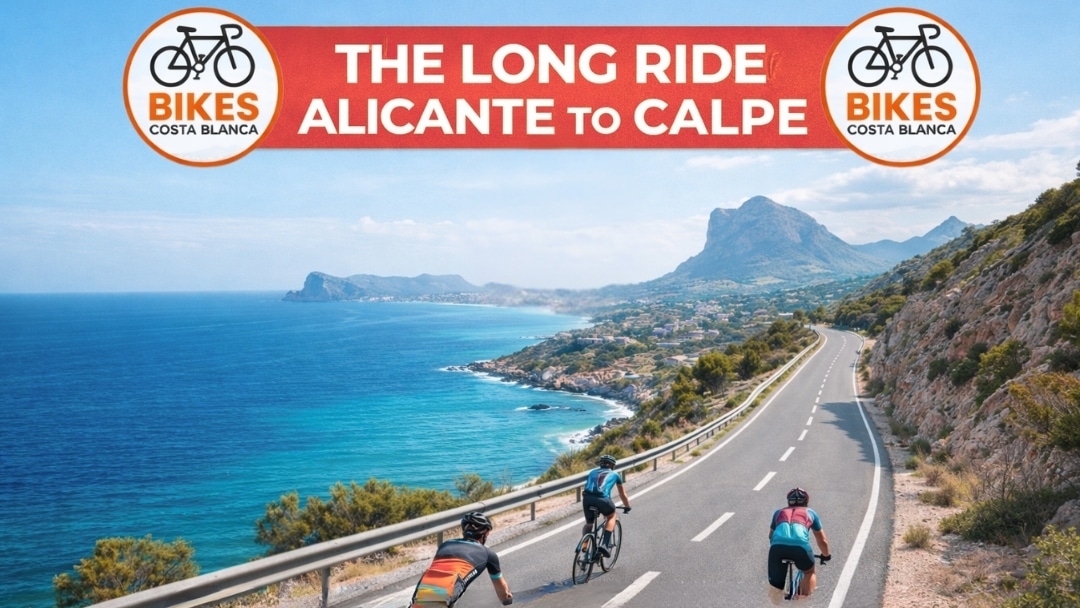
Alicante to Calpe Ride / Key Takeaways
| Distance | 60-137km depending on route choice |
| Elevation Gain | 1,500-2,500m typical |
| Best Months | October-May (avoiding summer heat) |
| Difficulty | Intermediate to Advanced |
| Must-Do Climbs | Coll de Rates, Puerto de Tudons |
| Pro Training Season | January-April |
| Distance | 60-137km depending on route choice |
Ever wonder why pro cyclists flock to this corner of Spain every winter? Its not just the paella (though that helps). Costa Blanca gets about 300 days of sunshine each year – thats basically perfect riding weather when northern Europe is frozen solid.
The roads here? They’re butter smooth. Local governments actually invest in cycling infrastructure because they know riders bring serious money to the region. You’ll find dedicated bike lanes on major roads and drivers who actually respect cyclists – imagine that! Professional teams like Jumbo-Visma and UAE Team Emirates set up their winter camps here, so dont be surprised if you’re grinding up a climb and Tadej Pogačar flies past you.
What really sets this place apart from Mallorca or the Alps is the variety. You can hammer flat coastal roads in the morning, then tackle 1,000-meter climbs after lunch. The temperature rarely drops below 10°C in winter or exceeds 30°C in summer mornings. Plus, unlike touristy Mallorca, accomodation here won’t break the bank – you can find decent cyclist-friendly hotels for 50-70 euros a night.
The Classic Alicante to Calpe Coastal Route
Starting from Alicante’s marina, the most direct coastal route to Calpe stretches about 62 kilometers. But who wants direct when you can have spectacular? The smart move is taking the N-332 coastal road through El Campello and Villajoyosa to Relleu route for some inland variety.
First 20km out of Alicante are pancake flat – perfect for warming up those legs. You’ll roll through San Juan beach (grab a cortado at Café Racer if you need caffeine) then hit El Campello where the road starts getting interesting. The stretch between Villajoyosa and Benidorm throws in some punchy little climbs – nothing huge, maybe 3-4% gradients, but enough to wake up your legs.
Benidorm marks the halfway point. Yeah, its touristy as hell, but the cycling infrastructure here is top-notch. Wide bike lanes, plenty of water fountains, and if you need any bike repair services in Costa Blanca, there’s at least five shops within a kilometer of the main strip. From Benidorm to Altea, you’ve got two choices: stick to the coast (easier, more traffic) or take the CV-755 inland road (harder, way prettier).
The final push from Altea to Calpe is where things get spicy. That innocent-looking bump on your GPS? That’s the Puerto de Calpe – only 2km but it kicks up to 8% in places. Your reward? Rolling into Calpe with the massive Peñón de Ifach rock formation welcoming you like a giant limestone high-five.
Mountain Passes You’ll Conquer Between Alicante and Calpe
Lets talk about the climbs that make grown cyclists cry (in a good way). Coll de Rates is the superstar here – 6.3km of perfectly graded switchbacks averaging 5.8%. The locals call it “El Rates” and if you can do it in under 20 minutes, you’re flying. The road surface is pristine, and those hairpin turns? Chef’s kiss. Best part – there’s a restaurant at the top where they make killer bocadillos.
Puerto de Tudons is the beast everyone respects. Starting from sea level near Benidorm’s bike rental shops, you’ll climb for 20 straight kilometers. The gradient never gets stupid steep – hovering around 5% – but the sheer length will test your mental game. Pro tip: theres a water fountain at km 12 near the Confrides turn-off. Use it.
Port de Confrides might be the “easiest” of the big three at 7.5km and 5% average, but don’t let that fool you. The middle section has some sneaky 9% ramps that’ll have you searching for gears you dont have. What makes this climb special is the views – on clear days you can see all the way to Ibiza. The descent back toward Benidorm? Absolute rocket ship territory – I’ve hit 75km/h without even trying (please be careful though).
Then there’s the lesser-known Port de Sa Creueta from Tárbena. Only locals and cycling nerds know about this one. It’s quieter than a library, the road’s narrow but perfect, and you might see more goats than cars. At 7.5km with a mellow 3.4% average, its perfect for recovery days when you still want to bag a climb.
The 137km Puerto de Tudons Epic Loop
This route is what separates tourists from serious cyclists. Starting in Calpe’s cycling hub, you head south through Altea and Benidorm before the real fun begins. The first 30km are basically a warm-up – coastal roads, maybe a headwind if you’re unlucky, nothing too taxing.
Once you pass Benidorm and hit Finestrat, the landscape changes completely. Suddenly you’re surrounded by orange groves and almond trees, and that big mountain ahead? Yeah, you’re going up that. The climb through Finestrat to Sella is where you earn your pasta later. Its not just the gradient (averaging 6% for 8km) – its the way the road snakes through these ancient terraced hillsides that haven’t changed in centuries.
Sella to Castell de Castells is the route’s hidden gem. This 25km section rolls through proper Spanish countryside – the kind where old guys still ride donkeys and time forgot to show up. The road surface can be sketchy in places (watch for gravel in corners), but the lack of traffic makes up for it. There’s a bar in Castell de Castells that does the best tortilla española you’ll ever taste – seriously, its worth the climb just for that.
The return leg via Benigembla and Parcent is fast. Like, scary fast if you’re not careful. From Castell de Castells, you drop 600 meters in about 15km. The corners are well-marked but respect them – I’ve seen too many riders overcook that left-hander after the Benigembla church. Once you hit the valley floor near Jalón, its a gradual false flat back to Calpe. Total time? Budget 5-6 hours if you’re reasonably fit, longer if you stop for photos (and you will).
Alternative Routes: The Vall de Laguar Adventure
Want something different? The Vall de Laguar loop from Calpe is 104km of pure eye candy. This isnt about setting Strava records – its about riding through landscapes that look like someone cranked the saturation slider to maximum.
The route kicks off mellow enough, following the Jalón Valley scenic loop before things get serious. Between kilometer 20 and 40, you’re basically climbing non-stop from 200m to nearly 1,000m elevation. The road through Vall de Laguar itself is engineering porn – switchback after switchback carved into vertical canyon walls. In February and March, the whole valley explodes with cherry blossoms. Its so stupidly beautiful that you’ll forget your legs are screaming.
The technical crux comes around km 35 near Fleix. The road narrows to barely a car width, the gradient hits 12% for a few hundred meters, and there’s usually a headwind just to keep things interesting. But then you pop out on top of the ridge and BAM – Mediterranean views that make Instagram influencers weep with envy.
After conquering the valley, you still got Coll de Rates to deal with on the way back. By this point your legs are cooked, but approaching Rates from the Parcent side is actually easier than the classic Calpe approach. The descent back to Calpe via Jalón is fast and flowing – perfect for spinning out those tired legs. Pack extra food for this one – there’s limited resupply options in the valley villages.
Essential Stops and Refueling Points
Knowing where to refuel can make or break your ride. In Altea, Café Cycling (yes, thats really its name) on the main strip has become the unofficial cyclist HQ. They do proper coffee, have bike racks, and the owner – an ex-pro from Belgium – gives solid route advice.
The Petrol station at La Nucía (junction of CV-70 and CV-758) is clutch for long rides. They’ve got cold drinks, energy bars, and crucially, clean toilets. The attendant there has seen enough cyclists that he keeps extra water bottles in the fridge during summer. Between Sella and Relleu, there’s a natural spring fountain that locals have used for centuries – the water’s cold and tastes better than anything from a bottle.
For proper food, time your ride to hit Polop around lunchtime. Bar La Plaza does a menu del día for 12 euros that’ll properly refuel you – we’re talking proper Spanish portions here. If you’re doing the mountain routes, the restaurant at Coll de Rates summit is open most days and their tortilla sandwich has achieved legendary status among local cyclists. They also let you fill bottles for free, even if you dont buy anything.
Emergency bike repair spots along these routes include Bikes Benidorm (open 7 days), Ciclos Guerola in Altea (closed Sundays), and Natural Bikes in Calpe. Most carry basic spares and can handle common repairs while you wait.
Frequently Asked Questions
What’s the best time of year to cycle from Alicante to Calpe? October through May offers the best conditions. Summer (July-August) gets properly hot with temperatures hitting 35°C+ by midday. Spring (March-May) is perfect – warm but not hot, and everything’s green from winter rains.
Do I need a road bike or will a hybrid work? You really want a road bike for these routes. The climbs are long and a heavy hybrid will make them miserable. Most bike rental shops offer carbon road bikes from around 40-50 euros per day.
How fit do I need to be for these routes? For the direct coastal route, moderate fitness is fine. For the mountain loops, you should be comfortable riding 100km with 2,000m of climbing. If you can ride for 4-5 hours at home, you’ll manage here.
Is it safe to cycle alone in Costa Blanca? Generally very safe. Drivers are used to cyclists, crime is low, and there’s good mobile coverage almost everywhere. Still, tell someone your route and carry basic repair kit. Check out these safety tips for solo touring.
Where should I base myself for cycling in this area? Calpe is the traditional choice – central location, tons of bike shops, cyclist-friendly hotels. Altea works great too and is slightly less touristy. Benidorm has the most amenities but can be crowded.
Can I join group rides with locals? Absolutely! Most bike shops organize group rides. In Calpe, check out the Saturday morning ride from Ciclos Boluda – mixed abilities, super welcoming. Just rock up around 8:30am.
For cyclists travelling along the Costa Blanca, the journey from Alicante to Calpe is one of the most scenic coastal rides in the region. Rather than staying on the busy N-332, a safer cycling route uses a mix of coastal promenades, secondary roads, and cycle paths where available.
Route Overview
- Distance: approx. 72–78 km
- Elevation: Mostly rolling coastal terrain
- Difficulty: Moderate
- Surface: Tarmac (roads and promenades)
- Best bike: Road bike or gravel bike
Recommended Cycling Route
This route keeps cyclists away from the busiest traffic where possible.
- Alicante → Playa de San Juan
Use the coastal cycle paths leaving Alicante city and follow the seafront through San Juan Beach. - Playa de San Juan → El Campello
Dedicated cycle lanes and quieter coastal streets make this a relaxed start to the ride. - El Campello → Villajoyosa
Follow the coastal road sections parallel to the N-332. This stretch offers spectacular sea views. - Villajoyosa → Benidorm
A gentle rolling section with some climbs before descending into Benidorm. - Benidorm → Albir → Altea
Ride along the coast via Albir promenade and continue into the beautiful old town area of Altea. - Altea → Calpe
Quiet coastal roads with stunning views of the Mediterranean and the famous Peñón de Ifach as you approach Calpe.
Highlights Along the Ride
🚴 Coastal scenery almost the entire route
☕ Plenty of cafés and beach stops along the way
📸 Photo opportunities in Villajoyosa’s colourful harbour
🌅 Historic old town views in Altea
🪨 Finish beneath the iconic Peñón de Ifach rock in Calpe
Cycling Tips
- Start early morning to avoid traffic and heat.
- Avoid the N-332 main carriageway where possible.
- Carry two bottles — the coastal sun can be strong even in winter.
- Many cafés along the route are cyclist-friendly.
Cycling Route Disclaimer
The cycling routes, maps, GPX files, and information published by Bikes Costa Blanca are provided for general guidance and inspiration only.
While we aim to share enjoyable and practical cycling routes across the Costa Blanca, conditions on roads and trails can change at any time due to traffic, construction, weather, road surface conditions, or local regulations.
Cyclists choosing to follow any route featured on this website or associated materials do so entirely at their own risk.
Bikes Costa Blanca makes no guarantees that any route is completely accurate, suitable for all cyclists, or free from hazards. Route descriptions, distances, elevations, and safety information should be treated as approximate guidance only.
It is the responsibility of each rider to:
- Assess road and traffic conditions
- Ride within their own ability and fitness level
- Ensure their bicycle is in safe working condition
- Follow all local traffic laws and regulations
- Use appropriate safety equipment
By using any route, map, GPX file, or cycling information provided by Bikes Costa Blanca, you acknowledge that Bikes Costa Blanca and its contributors accept no liability for any injury, loss, damage, or inconvenience that may arise from the use of this information.
Cyclists should always use their own judgement and take appropriate precautions when riding.