
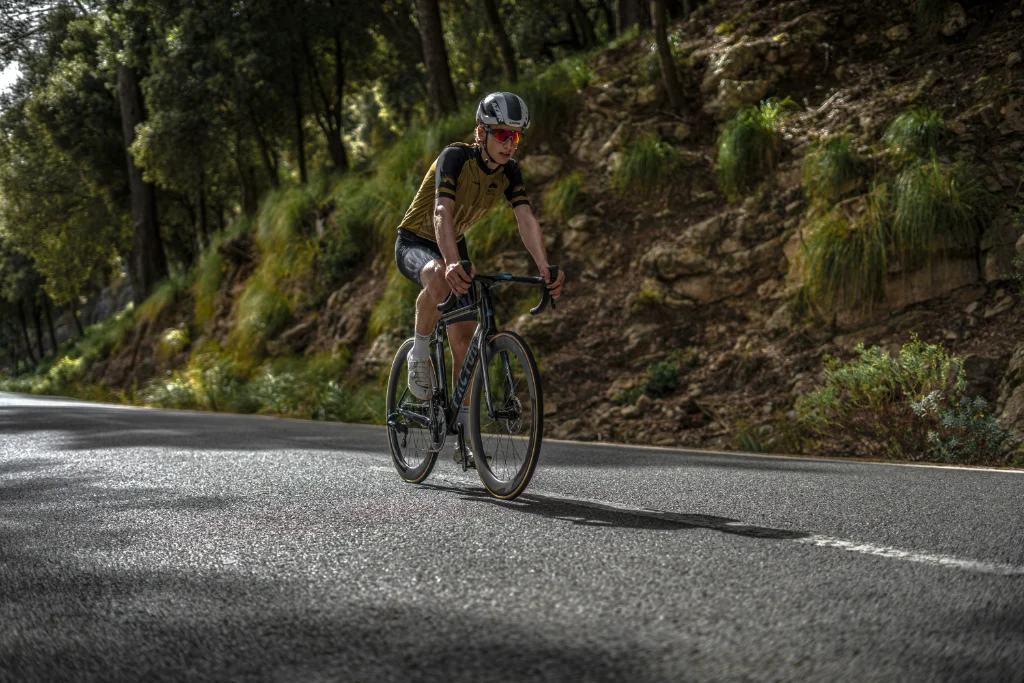
Winter Cycling Training on the Costa Blanca: A Practical Guide for December to March
The Costa Blanca works well for winter training because most days are mild and dry enough to ride. The catch is daylight and cold descents, and those decide how good a week turns out. In Alicante the average January high is about 17°C, with roughly 5.8 hours of sunshine a day and only 3 to 4 rain days a month. Plan your rides around the light, not the temperature.
Key Takeaways
| Question | Short Answer |
|---|---|
| Is it warm enough to ride in winter? | Yes. Average highs sit around 17°C from December to February at Alicante. |
| How wet is it? | About 3 to 4 rain days (1 mm or more) a month in midwinter. |
| What is the real limit? | Daylight. The shortest day has about 9 hours 30 minutes. |
| Best base towns | Calpe, Altea, Dénia and Jávea. All have bike hire and cycling-friendly stays. |
| Busiest period | February to April, so book rentals and rooms early. |
| Most common mistake | Dressing for the sunny start and forgetting the cold descent. |
What Winter Weather Actually Looks Like
The figures below are long-term averages from AEMET, the Spanish meteorological agency, for the Alicante city station. They are a baseline for the coast. Calpe, Altea and the inland climbs will differ, and mountain roads are cooler than these numbers suggest.
| Month | Average High | Average Low | Rain Days (1 mm+) | Rainfall | Sunshine Hours (Month) | Sunshine Per Day |
|---|---|---|---|---|---|---|
| December | 17.7°C | 7.4°C | 3.8 | 25 mm | 164 | about 5.3 h |
| January | 17.0°C | 6.3°C | 3.6 | 23 mm | 181 | about 5.8 h |
| February | 17.6°C | 7.1°C | 3.0 | 22 mm | 180 | about 6.4 h |
| March | 19.6°C | 8.9°C | 3.4 | 23 mm | 227 | about 7.3 h |
We worked out the last column ourselves by dividing monthly sunshine hours by the days in the month. Even in midwinter the sun averages five to six hours a day, so a ride that needs to be warm and bright has to be built around the middle of the day.
The Cold Snap Caveat
Mild is not the same as guaranteed. A tour operator quoted by Cycling Weekly says January and February can bring the occasional cold snap or a few wet days. If your training block is short, keep one day free so a bad forecast does not cost you a key session.
Daylight Is the Real Constraint
At Alicante the shortest day of 2026 has about 9 hours 30 minutes of daylight, and the earliest sunset comes around 5:41 pm in early December, according to WeatherSpark. That sounds fine until you add a café stop and a long ride home from the far end of a loop.
- Start after the coldest hour. Rolling out around 9:30 or 10:00 gives you warmer roads and still leaves most of the afternoon.
- Ride the climb first. Do the big mountain effort early, then use the later hours for flatter roads back to your base.
- Be heading home by mid-afternoon. In December and January, light and temperature both drop quickly after about 4 pm.
- Carry lights anyway. They weigh almost nothing and cover a late puncture or a long coffee stop.
How to Structure a Winter Training Week
Winter is when many riders build their base for the season. The week below is a general template, not a personal coaching plan. Adjust it to your fitness, and speak to a coach if you are training for a specific event.
| Day | Session | Purpose |
|---|---|---|
| Monday | Rest or a 45-minute easy spin | Recover after the weekend |
| Tuesday | Steady endurance ride on flatter coastal roads | Aerobic base |
| Wednesday | Short intervals on a compact sprint route | Top-end power for little time |
| Thursday | Easy ride with a café stop | Active recovery |
| Friday | Rolling hills at a steady tempo | Climbing legs without a full mountain day |
| Saturday | Long climbing day | The week’s main session |
| Sunday | Group or social endurance ride | Volume and morale |
Where to Ride Each Session
- Endurance days: link coastal towns. Our Alicante to Calpe long-distance ride makes a ready-built long steady day.
- Interval days: use short, repeatable stretches near your base. Our guide to short sprint routes for interval training covers the options.
- Climbing days: start with the Coll de Rates cycling guide, then see 5 must-ride climbs to kickstart your season for more.
- Variety days: the Altea hills loop and our top 10 cycling routes in Costa Blanca stop a three-week block going stale.
Why Calpe Became a Winter Training Hub
Cycling Weekly calls Calpe and Dénia the two leading cycling holiday and training camp destinations on this coast, with most riders visiting between October and May. The same article puts February to April as the peak for amateur teams, clubs and groups. A UK tour operator, Eat Sleep Cycle, adds that professional teams have used Calpe for pre-season preparation. That fits the mix of climbs, smooth roads and settled winter weather.
Drivers here are used to cyclists, and the hire shops, workshops and bike-friendly hotels are set up for winter visitors.
Where to Base Yourself
Choose the base that suits your training plan, not just the prettiest town.
- Calpe is the default for climbers, and according to Cycling Weekly’s source it is a little closer to Alicante airport than Dénia. Start with our Cycling in Calpe guide, then browse cycling accommodation in Calpe and bike hire in Calpe.
- Altea suits riders who want hills close to their base without the busiest training-camp towns. See cycling accommodation in Altea and bike hire in Altea.
- Dénia and Jávea are better for the northern end of the coast and the Marina Alta. Compare cycling accommodation in Dénia, cycling accommodation in Jávea, bike hire in Dénia and bike hire in Jávea.
- Alicante works if you want to land and ride on the same day. See cycling in Alicante.
For a wider comparison, the bike hotels and bike holidays pages list advertisers across the whole coast.
What to Pack for a Costa Blanca Winter Ride
The temperature on the coast and the temperature at the top of a climb can be very different, so dress for the descent, not the start.
- Layers you can strip off in one stop: arm warmers, a light gilet and a packable windproof.
- Full-finger gloves, because hands get cold first on long descents.
- Overshoes or warmer socks for early starts.
- Front and rear lights.
- A basic repair kit. Damp roads and winter debris mean the odd puncture.
Our complete packing list guide covers the rest of a self-guided trip. If you plan to ride without a guide, self-guided cycling tours in Costa Blanca explains how to organise it.
Bikes, Repairs and Support
You do not have to fly with your bike. The bike rentals in Costa Blanca directory lists rental operators across the coast, and rent a bike on the Costa Blanca explains what to check before you book. If something breaks mid-trip, see bike shops in Calpe or the bike repair directory.
Book early if you are travelling between February and April, when groups and clubs fill the rental fleets.
Riding With Others
Winter is a good time to join a group, especially on long days when company helps with wind and motivation. Our guide to cycling clubs on the Costa Blanca lists local groups.
Know the Rules Before You Ride
Spain updated its cycling rules for 2026. Read Spain’s new cycling rules in 2026 before your trip, particularly if you are riding in a group or on busy coastal roads.
Frequently Asked Questions
Is the Costa Blanca good for winter cycling training?
Yes. At the Alicante weather station, average highs stay between about 17°C and 18°C from December to February, with only 3 to 4 rain days a month. The main limits are short daylight and cooler conditions in the mountains.
How cold does it get?
Alicante’s average January low is about 6°C and the average high is about 17°C. It will feel colder on descents, in shaded valleys and on higher roads, so carry layers even on a bright morning.
How many hours of daylight will I have?
About 9 hours 30 minutes on the shortest day of the year, with sunsets around 5:41 pm in early December. Start mid-morning and aim to be heading home by mid-afternoon.
When is the busiest time for cycling on the Costa Blanca?
Cycling Weekly reports that February to April is the peak for amateur teams, clubs and groups. Book bike hire and accommodation early if you plan to travel then.
Which town is best for a winter training base?
Calpe is the most established and suits climbers. Altea, Dénia and Jávea are quieter alternatives. Pick the town that fits your training plan and your travel time from the airport.
Do I need to bring my own bike?
No. Rental shops along the coast supply road, gravel and mountain bikes. Check the bike rentals directory and book early in peak months.
Research sources: AEMET standard climate values for Alicante (1981-2010); WeatherSpark, climate and average weather in Alicante; Cycling Weekly, “Cycling in Costa Blanca: a cyclist’s guide to Denia and Calpe”; Eat Sleep Cycle, “Calpe Winter Cycling Holiday”.