
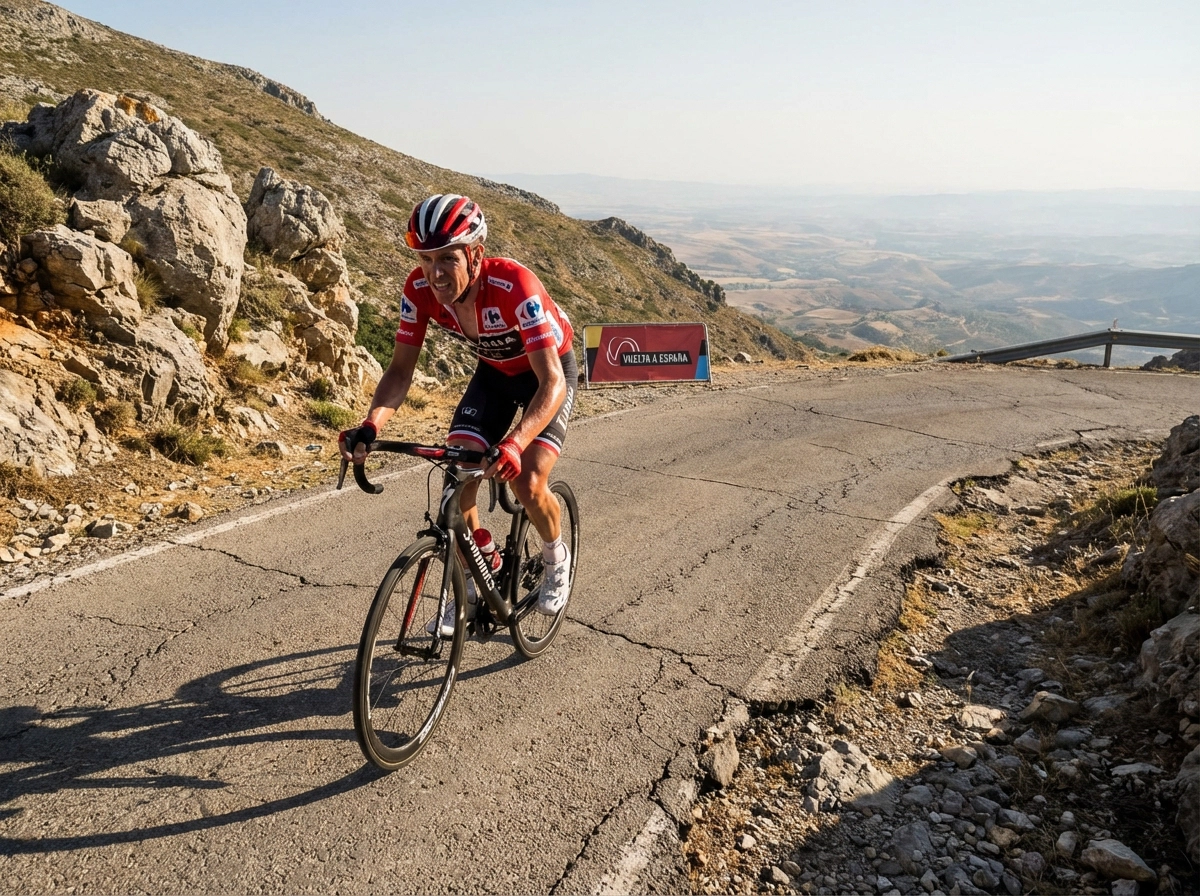
The Five Most Brutal Mountain Finishes of the 2026 Vuelta a España: Sierra de la Pandera (Stage 14)
Key Takeaways
| Aspect | Details |
|---|---|
| Most Brutal Stage | Stage 20: Collado del Alguacil (5,000m+ elevation gain, HC difficulty) |
| Featured Stage | Stage 14: Sierra de la Pandera (4,060m gain, 1,800m summit, brutal heat) |
| Toughest Challenge | Combination of extreme elevation, late race positioning, and weather conditions |
| Key Factors | Elevation gain >4,000m, summit heights >1,800m, steep gradients, stage timing |
| Race Period | August 22 – September 13, 2026 (3,275km total distance) |
The 2026 Vuelta a España promises to deliver some of the most punishing mountain stages in recent memory. What makes these climbs so devastating? It’s not just the elevation – it’s the perfect storm of brutal gradients, crushing heat, and strategic positioning that will separate the contenders from the pretenders.
As cycling fans gear up for another epic edition of Spain’s grand tour, the mountain stages stand out as the real battlegrounds. The Vuelta A Espana 2026 Official Stage Calendar reveals a route designed to push riders to their absolute limits, with five stages that truly embody the word “brutal.”
Stage 20: Collado del Alguacil – The Ultimate Queen Stage
Stage 20 from La Calahorra to Collado del Alguacil takes the crown as the most savage mountain finish of the 2026 race. Why does this 187-kilometer monster earn the top spot? The numbers tell the story – over 5,000 meters of total elevation gain spread across five categorized climbs.
The final ascent to Collado del Alguacil carries the dreaded Hors Category (HC) designation, marking it as beyond classification in terms of difficulty. Located in the Sierra Nevada foothills, this climb will arrive on September 12th as the penultimate stage – exactly when riders are at their most vulnerable after three weeks of racing.
What makes this stage particularly vicious is its timing. Coming after the second rest day, riders might feel refreshed initially, but the cumulative fatigue of nearly three weeks will hit hard on those steep ramps. The stage designers have pulled no punches here, creating a GC-deciding finale that follows Vuelta tradition perfectly.
The elevation profile reads like a torture chamber. Five separate climbs build relentlessly toward that final HC monster, each one sapping more energy from already depleted legs. When the road tilts upward for that final time, only the strongest climbers will survive with their GC hopes intact.
Sierra de la Pandera (Stage 14) – The Heat Wave Crusher
Stage 14 from Jaén to Sierra de la Pandera earns second place in our brutality rankings, and for good reason. This 152.7-kilometer beast packs 4,060 meters of elevation gain into a stage that arrives during the blisteringly hot second week of September.
What sets Sierra de la Pandera apart from other climbs? The summit sits at approximately 1,800 meters above sea level, but the real killer is the relentless rolling terrain that precedes it. The final 3 kilometers average just 3.6% gradient – sounds manageable, right? Wrong. After 50 kilometers of continuous ups and downs, those “easy” gradients feel like vertical walls.
The ProfileScore of 335 tells only part of the story. This stage features two categorized climbs before the summit finish, but it’s the uncategorized terrain that does the real damage. Riders describe it as feeling like there are more climbs than officially listed – the road never truly flattens.
Heat plays a crucial role in Sierra de la Pandera’s brutality. September temperatures in Andalusia can reach scorching levels, and when combined with the steady grind to 1,800 meters, it creates perfect conditions for epic collapses. The continuous effort required on seemingly endless rolling roads leaves no opportunity for recovery.
This represents the first Vuelta summit finish at Sierra de la Pandera in recent years, adding an element of tactical uncertainty. Teams won’t have recent reference points for pacing strategies, making this a true voyage into the unknown for many participants of Vuelta a España 2025.
Stage 19: Peñas Blancas – The Length Monster
The third-most brutal mountain finish takes riders from Vélez-Málaga to Peñas Blancas over a staggering 205.1 kilometers – making it the longest stage on our list. What makes excessive distance so dangerous in mountain stages? Simple – legs that might handle a tough climb after 150km crumble completely after 200km of racing.
Stage 19 features three mid-stage classified climbs before the Category 1 final ascent. This structure creates a tactical nightmare for teams trying to control the race. Do you chase early breaks and burn your team, or do you let dangerous riders slip away during those middle climbs?
The positioning of this stage adds another layer of complexity. As the pre-penultimate stage, it arrives when GC contenders are getting desperate. Riders who’ve lost time earlier in the race know they’re running out of opportunities, leading to more aggressive racing and higher speeds throughout.
The descent-to-ascent combination that characterizes this stage is particularly cruel. After grinding over those middle climbs, riders face fast descents that seem like relief but actually add stress to already fatigued muscles. When the final climb begins, legs that should feel fresh instead feel like concrete blocks.
High above the Mediterranean, these southern Spanish sierras create perfect ambush conditions. The terrain allows for tactical racing that can catch teams off guard, especially after 200 kilometers of hard riding. Introducing the Vuelta a España Race Around Spain shows how these late-race mountain stages often decide the overall winner.
Stage 12: Calar Alto – The Altitude Assassin
Calar Alto claims fourth place in our brutality rankings primarily due to its exceptional altitude. The summit finish sits at over 2,100 meters above sea level – higher than any other stage on this list. What makes altitude so problematic for cyclists? The reduced oxygen at elevation significantly impacts power output and recovery.
This stage features a particularly nasty combination of climbs. The Category 1 Alto de Velefique arrives with just 31 kilometers remaining, seemingly positioned to soften up the field. But here’s the cruel twist – after cresting Velefique, riders face a quick descent to the foot of the final climb to Calar Alto.
That descent might seem like a gift, but it’s actually a trap. Riders who’ve just emptied themselves on Velefique now must refuel and refocus for another major climb with minimal recovery time. The legs that felt strong 40 minutes earlier suddenly feel empty when the road turns upward again.
Calar Alto holds special significance in Vuelta history. Miguel Ángel López claimed victory here during the 2017 edition, showcasing the type of explosive climbing needed to succeed at this altitude. The thin air favors riders with exceptional power-to-weight ratios and strong physiological adaptations to altitude.
The stage timing in the race’s second week adds strategic importance. By Stage 12, the initial excitement has worn off, but riders haven’t yet reached the desperation of the final week. This creates unique tactical dynamics where teams must balance ambition with caution.
Stage 7: Early Season Brutality
Stage 7 rounds out our top five, featuring either Aramón Valdelinares or Calar Alto as the potential finish. The exact routing remains flexible, but both options promise significant suffering for the peloton. What makes an early mountain stage so dangerous? Riders haven’t yet found their climbing legs, and the shock of high-altitude effort can cause dramatic time gaps.
If Calar Alto serves as the destination, riders face that same brutal >2,100-meter altitude with the added challenge of fresh legs that haven’t adapted to grand tour racing rhythm. The Category 1 Velefique precursor adds another layer of difficulty, creating a double-climb scenario early in the race.
The early positioning of this stage creates unique strategic considerations. Teams with strong climbers want to take advantage before their riders accumulate fatigue, while others hope to limit damage and survive until later opportunities arise. This tension often produces explosive racing from the start.
Weather conditions in late August can vary dramatically at high altitude. Morning starts might feel cool and comfortable, but afternoon finishes at over 2,000 meters can feature everything from blazing sun to sudden thunderstorms. These variable conditions add unpredictability to an already challenging stage.
The psychological impact of an early mountain stage cannot be underestimated. Riders who suffer badly on Stage 7 carry that memory throughout the remaining two weeks, while those who excel gain crucial confidence for later mountain battles.
The Science Behind Brutal Mountain Stages
Understanding what makes these stages so devastating requires examining the physiological demands they place on riders. Why do some climbs break riders while others merely test them? The answer lies in a complex combination of factors that stress the human body beyond normal limits.
Elevation Gain vs. Gradient
Total elevation gain matters more than many fans realize. A stage with 5,000+ meters of climbing forces riders to produce massive amounts of power over extended periods. Even at moderate gradients, this sustained effort depletes glycogen stores and stresses cardiovascular systems.
Altitude Effects
The reduced oxygen availability above 1,500 meters significantly impacts performance. At Sierra de la Pandera’s 1,800-meter summit, oxygen levels drop to approximately 83% of sea level values. This reduction forces hearts to work harder and limits the body’s ability to clear lactate.
Heat Stress Multiplier
September temperatures in southern Spain regularly exceed 35°C (95°F). Combined with high-intensity climbing efforts, this heat creates dangerous conditions for dehydration and overheating. Riders can lose 2-3 liters of fluid per hour in these conditions.
The cycling Costa Blanca beginners guide explains how even recreational cyclists struggle with heat and altitude – imagine these effects magnified at professional racing intensities.
Cumulative Fatigue Factor
Late-race positioning multiplies every other difficulty factor. Stage 20’s brutality stems partly from arriving after nearly three weeks of racing. Bodies that could handle such climbs easily in week one simply cannot respond the same way in week three.
Tactical Implications for Team Strategy
These brutal mountain stages don’t just test individual riders – they create complex strategic puzzles for team directors. How do you position your leader for success while managing limited resources across multiple climbs?
Early Stage Challenges (Stage 7)
Teams with proven climbers face pressure to establish early dominance. However, showing strength too early can make you a marked rider for the remaining two weeks. The balance between gaining time and avoiding unwanted attention requires delicate judgment.
Mid-Race Positioning (Stages 12, 14)
The second week traditionally separates contenders from pretenders. Sierra de la Pandera’s heat and Calar Alto’s altitude create opportunities for major time gaps. Teams must decide whether to force the issue or wait for later chances.
Final Week Desperation (Stages 19, 20)
Late-race mountain stages often produce the most dramatic racing. Riders who’ve lost time earlier become increasingly desperate, leading to aggressive tactics and higher speeds. The combination of desperation and accumulated fatigue creates perfect conditions for spectacular collapses.
Smart teams recognize that these five stages represent the primary GC battlegrounds. Success requires careful resource management across all five, not just targeting one or two. The Vuelta a España race around Spain typically rewards consistency across all mountain stages rather than single-stage brilliance.
Weather and Environmental Factors
Mountain stage brutality extends beyond simple elevation profiles. Environmental conditions can transform difficult climbs into nightmarish ordeals that push riders beyond their breaking points.
Temperature Extremes
Sierra de la Pandera’s September timing coincides with some of the year’s hottest weather in Andalusia. Temperatures routinely exceed 40°C (104°F) in the valleys, and even at 1,800 meters, conditions remain scorching. This heat stress compounds the physical demands of sustained climbing.
Wind Exposure
High-altitude finishes like Calar Alto often feature strong winds that create additional resistance and cooling effects. While cooling might seem beneficial, sudden temperature changes can shock systems already stressed by altitude and effort.
Route Exposure
Many of these climbs feature long stretches without tree cover or natural shade. Riders face direct sun exposure for hours, increasing heat stress and dehydration risks. The psychological impact of seeing endless switchbacks stretching into the distance cannot be underestimated.
The Costa Blanca cycling routes demonstrate how environmental factors affect even recreational cycling – professional racing amplifies these effects dramatically.
Historical Context and Precedents
Each of these brutal mountain finishes carries historical weight that adds psychological pressure to physical demands. Past performances at these locations create expectations and fears that influence current racing dynamics.
Calar Alto Legacy
Miguel Ángel López’s 2017 victory at Calar Alto established this climb’s reputation as a launching pad for explosive attacks. The Colombian’s trademark acceleration in the final kilometers showed how altitude and gradient combine to favor specific riding styles.
Sierra Nevada Connections
Collado del Alguacil’s location in the Sierra Nevada foothills connects it to some of cycling’s most legendary climbs. The proximity to iconic ascents like the Alto del Hoya de la Mora creates psychological links to past epic battles.
New Territory
Sierra de la Pandera represents uncharted territory for most riders. The lack of recent Vuelta history at this location removes tactical reference points, forcing teams to approach the stage with uncertainty and caution.
Understanding these historical connections helps explain why certain stages generate more pre-race anxiety than others. Riders carry memories of past sufferings and triumphs that influence their approach to similar challenges.
Frequently Asked Questions
What makes Stage 20 to Collado del Alguacil the most brutal mountain finish?
Stage 20 combines over 5,000 meters of total elevation gain with five categorized climbs, including an Hors Category final ascent. Its positioning as the penultimate stage maximizes the impact of cumulative fatigue from nearly three weeks of racing.
Why is Sierra de la Pandera considered so difficult despite moderate final gradients?
The 3.6% average gradient of the final 3km becomes brutal after 50 kilometers of rolling terrain and 4,060 meters of total climbing. The blisteringly hot September weather in Andalusia adds another layer of difficulty that can break riders.
How does altitude affect performance at Calar Alto?
At over 2,100 meters elevation, oxygen levels drop to approximately 80% of sea level values. This reduction significantly impacts power output and recovery, making sustained climbing efforts much more difficult.
What role does stage positioning play in determining brutality?
Early stages like Stage 7 catch riders before they’ve adapted to racing rhythm, while late stages like Stage 19 and 20 arrive when cumulative fatigue is at its peak. Mid-race stages like Stage 14 often produce the biggest time gaps.
How do weather conditions impact these mountain stages?
September temperatures in southern Spain regularly exceed 35°C, creating dangerous dehydration risks. High-altitude stages can feature sudden weather changes, while exposed climbs offer no protection from direct sun exposure.
Why is Stage 19 to Peñas Blancas particularly challenging despite being “only” Category 1?
The 205.1km distance makes it the longest stage on the list. After 200 kilometers of racing, legs that might handle tough climbs after 150km often collapse completely, especially with three mid-stage climbs adding cumulative stress.