
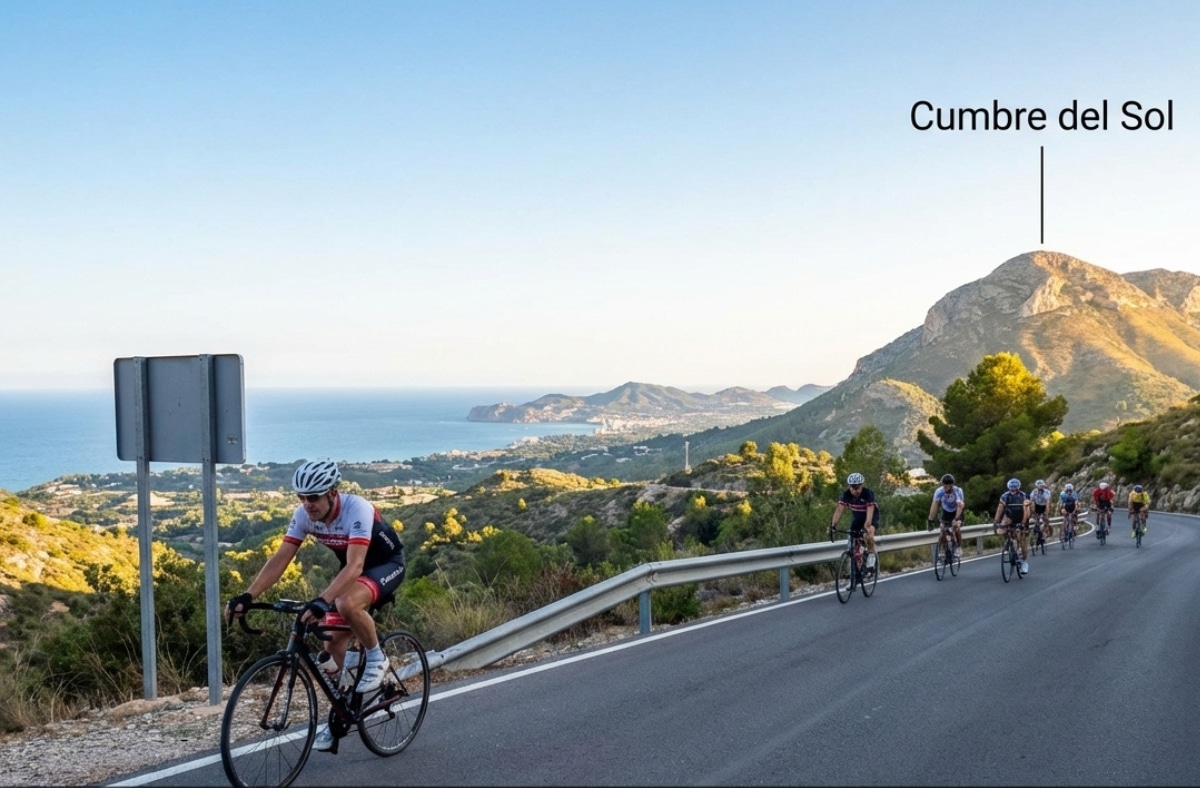
Javea to Cumbre del Sol Route
Key Takeaways
| Aspect | Details |
|---|---|
| Climb Distance | 4.5 kilometers with 7.3% average gradient |
| Maximum Gradient | 19% at steepest sections |
| Full Loop Distance | Approximately 110 kilometers |
| Total Elevation Gain | Over 1,500 meters for complete loop |
| Best Seasons | Spring and autumn for ideal conditions |
| Difficulty Level | Challenging – demands solid fitness |
| Key Highlights | Vuelta a España stage finish, Mediterranean views, professional training route |
| Starting Point | Calpe or Jávea (20 minutes from Cumbre del Sol) |
What Makes Cumbre del Sol Special for Cyclists
Cumbre del Sol isn’t just another hill. This climb hosted a stage finish in the 2015 Vuelta a España, which means you’re riding the same tarmac where professional racers pushed themselves to their limits. The climb starts steep and stays steep – there’s no gentle warm-up here. You’ll hit gradients of 18% before you even get halfway up, and the final sections near the red and white masts at the summit will test everything you’ve got.
The road itself is well-maintained, which is good because you’ll need all your concentration for the climbing. When you’re grinding up those 15% sections, you won’t want to worry about potholes or rough surfaces. The views? They’re incredible, but you might not notice them until you stop pedaling. Serra Gelada, Benidorm, Serra del Montgó – they’re all visible from up there, spread out below you like a map.
Why do cyclists love this climb so much? It’s short enough that you can repeat it if you’re training, but brutal enough that one attempt will leave you satisfied. Plus, it’s become a bit of a badge of honor among cyclists who visit the Costa Blanca.
Planning Your Route from Jávea to Cumbre del Sol
The classic loop starts in Calpe and covers about 110 kilometers total. But here’s the thing – you don’t have to do the whole loop. You can customize this road cycling route to fit your fitness level and time constraints. Some riders skip Cumbre del Sol entirely by staying on the CV-737, while others make it the main event and cut the rest short.
If you’re starting from Jávea, you’ll ride through some pretty typical Costa Blanca scenery first – semi-urban areas, residential developments, the usual stuff. The first 21 kilometers are relatively gentle, which gives you time to warm up before the real work begins. At Alcasar, you’ll reach a decision point: turn toward Cumbre del Sol or continue on the flatter route.
Route Options:
- Full 110km loop with all climbs
- 50-60km shortened version ending at Jávea
- Cumbre del Sol only with immediate return
- Skip the climb entirely via CV-737
I’ve ridden this route three times now, and each time I’ve done it slightly differently. The first time, I tried the full loop and bonked hard around kilometer 80. Second time, I skipped Playa de la Granadella and felt much better. Third time was the charm – I knew exactly what I was getting into.
Tackling the Cumbre del Sol Climb Itself
Those 4.5 kilometers are gonna hurt. The climb begins with a half-kilometer section that’s deceptively straightforward, then the road turns sharply right and the real climbing starts. You’ll pass a false summit – don’t get excited, there’s more to come. At the roundabout near a residential park marker, you might think you’re done. You’re not.
The final push includes a sharp left turn, and then you’re climbing toward those red and white masts that mark the actual summit. The gradient hits 19% in spots, which means if you’re not in your easiest gear, you’ll be walking. There’s no shame in that, by the way – I’ve seen plenty of experienced cyclists walking sections of this climb.
Climbing Strategy:
- Start conservatively – don’t blow up in the first kilometer
- Stay seated when possible to conserve energy
- Use the false summit as a mental checkpoint
- Save something for the final 500 meters
- Don’t forget to look at the views (when you stop)
The descent is steep but the road is wide, which helps. You’ll drop into Benitachell, and suddenly the landscape changes from exposed mountainside to residential areas. It’s a weird transition, honestly.
Beyond Cumbre del Sol: The Rest of the Loop
After you’ve conquered Cumbre del Sol, the route continues through some genuinely beautiful areas. Playa de la Granadella is worth the detour if you’ve got the energy – it’s a gorgeous beach that provides a nice mental break from all the climbing. Then you’ll roll through Jávea’s old town, which has those classic whitewashed buildings and cobbled streets that look great in photos.
The Montgó mountain pass comes next. It’s not as steep as Cumbre del Sol, but it’s longer, and if you’re tired from the earlier climbing, it’ll feel harder than it should. The Montgó massif dominates the skyline here – you can’t miss it. The climb takes you to the right of this massive rock formation, and the views down to the sea are spectacular.
From Dénia, the route turns inland and things get interesting. You’ll weave through small lanes past orange groves, which is a completely different experience from the coastal sections. The climbs up Teulada and Benimarco aren’t terrible, but they come at a point in the ride where your legs are already tired. The final descent into Calpe features dramatic views of Peñón de Ifach rock – it’s steep, so brake carefully.
When to Ride This Route
Spring and autumn are perfect. Summer gets brutally hot, especially on Cumbre del Sol where there’s almost no shade. I made the mistake of riding this in July once, and it was miserable. Winter is actually pretty good here – the weather’s milder than most of Europe, which is why professional teams come here for training camps.
Road conditions vary throughout the year, but generally the main roads are well-maintained. The sections through orange groves can have some rougher patches, but nothing that’ll damage your bike. Traffic is usually light on the climbs themselves, though the coastal sections can get busy during tourist season.
Seasonal Considerations:
- Spring (March-May): Perfect temperatures, fewer tourists
- Summer (June-August): Very hot, crowded, early morning rides recommended
- Autumn (September-November): Ideal conditions, professional teams training
- Winter (December-February): Mild but can be rainy, good for base miles
Why Professional Cyclists Choose This Area
Jávea has become a training paradise for pro cyclists, and it’s not hard to see why. The variety of terrain is incredible – you’ve got flat coastal roads for recovery rides, brutal climbs like Cumbre del Sol for intensity work, and everything in between. The Coll de Rates is probably the most famous training climb in the region, but Cumbre del Sol is right up there.
Professional teams come here because they can train year-round. The infrastructure is excellent – good roads, bike shops, repair services, and cycling-friendly accommodation. When you’re riding these routes, you’re literally on the same roads that prepare riders for Grand Tours. That’s pretty cool, even if you’re just a weekend warrior like me.
Practical Tips for Visiting Cyclists
Cumbre del Sol is only 20 minutes from central Jávea, which makes it super accessible. If you’re flying in without your bike, don’t worry – there are several bike rental shops in the area. Jávea Bike and Xàbia Bikes both get good reviews from other cyclists I’ve talked to. Bring your own helmet and cycling kit though – rental stuff never fits quite right.
The total elevation gain for the full 110-kilometer loop is over 1,500 meters. Cumbre del Sol itself accounts for 367 meters in just 3.8 kilometers, which gives you an idea of how steep it really is. Make sure you’re properly prepared – this isn’t a route for your first long ride of the season.
What to Bring:
- Two water bottles minimum (three in summer)
- Energy gels or bars
- Basic repair kit (spare tube, tire levers, CO2)
- Sunscreen (even in winter)
- Lightweight rain jacket (weather can change)
- Phone with route downloaded offline
- Emergency contact information
I always carry a bit more food than I think I’ll need. There aren’t many places to stop and buy supplies once you’re out on the route, especially if you’re riding early morning.
Alternative Routes and Variations
Not everyone wants to ride 110 kilometers, and that’s fine. You can create a much shorter route by riding from Jávea to Cumbre del Sol and back – that’s only about 40 kilometers total. Or you could do Cumbre del Sol plus the Teulada loop for a concentrated climbing session without the full coastal tour.
Some cyclists prefer to skip Cumbre del Sol entirely and focus on other cycling routes in the area. The Coll de Rates is longer and more consistent, which some people prefer over the short, brutal nature of Cumbre del Sol. The Jalon Valley offers scenic inland routes that are less challenging but still beautiful.
You could also combine this with other routes in the region. A coastal loop from Calpe to Denia works well, or if you’re feeling ambitious, try a long-distance ride from Alicante to Calpe. The options are pretty much endless.
Frequently Asked Questions
How difficult is the Cumbre del Sol climb for average cyclists?
It’s tough. If you can ride 100 kilometers on flat roads comfortably, you’ll probably survive Cumbre del Sol, but it won’t be easy. The 19% maximum gradient sections will hurt no matter how fit you are. I’d recommend having some climbing experience before attempting this route.
Can I rent a bike in Jávea for this route?
Yes, several shops offer bike rentals in the area. Make sure to book in advance during peak season (spring and autumn) because good bikes get reserved quickly. Most rental shops can provide route advice too.
Is the route safe for solo cyclists?
Generally yes, but take normal precautions. The roads are well-maintained and traffic is usually light on the climbs. Let someone know your route and expected return time. Carry a phone with emergency contacts. The descent from Cumbre del Sol is steep, so brake carefully.
What gear ratio do I need for Cumbre del Sol?
You’ll want your easiest gears. A compact chainset (50/34) with an 11-28 or 11-32 cassette is minimum. If you’ve got a 34/32 combo, you’ll be grateful for it on those 18-19% sections. Don’t try to be a hero with big gears.
Are there places to stop for food and water along the route?
There are cafes and shops in Jávea, Benitachell, and Dénia, but once you’re out on the climbs, there’s nothing. Carry enough water and food for the entire ride. I usually stop in Jávea for a quick coffee and refill before continuing.
How does Cumbre del Sol compare to other famous climbs?
It’s shorter than most famous climbs but steeper. Think of it as a mini Alpe d’Huez in terms of difficulty per kilometer. The Coll de Rates is longer and more consistent, while Cumbre del Sol is a short, sharp shock to your system.
What’s the best time of day to ride this route?
Early morning in summer (start by 7am to avoid heat), mid-morning in spring and autumn (9-10am start), and midday in winter. Avoid afternoon heat in summer – it’s genuinely dangerous on exposed climbs like Cumbre del Sol.
Do I need special insurance for cycling in Spain?
Travel insurance that covers cycling is recommended. Some credit cards include this, but check the fine print. If you’re renting a bike, the shop may offer insurance options. Medical care in Spain is good, but you’ll want coverage just in case.