
Cycling in Calpe: The Complete Local Guide
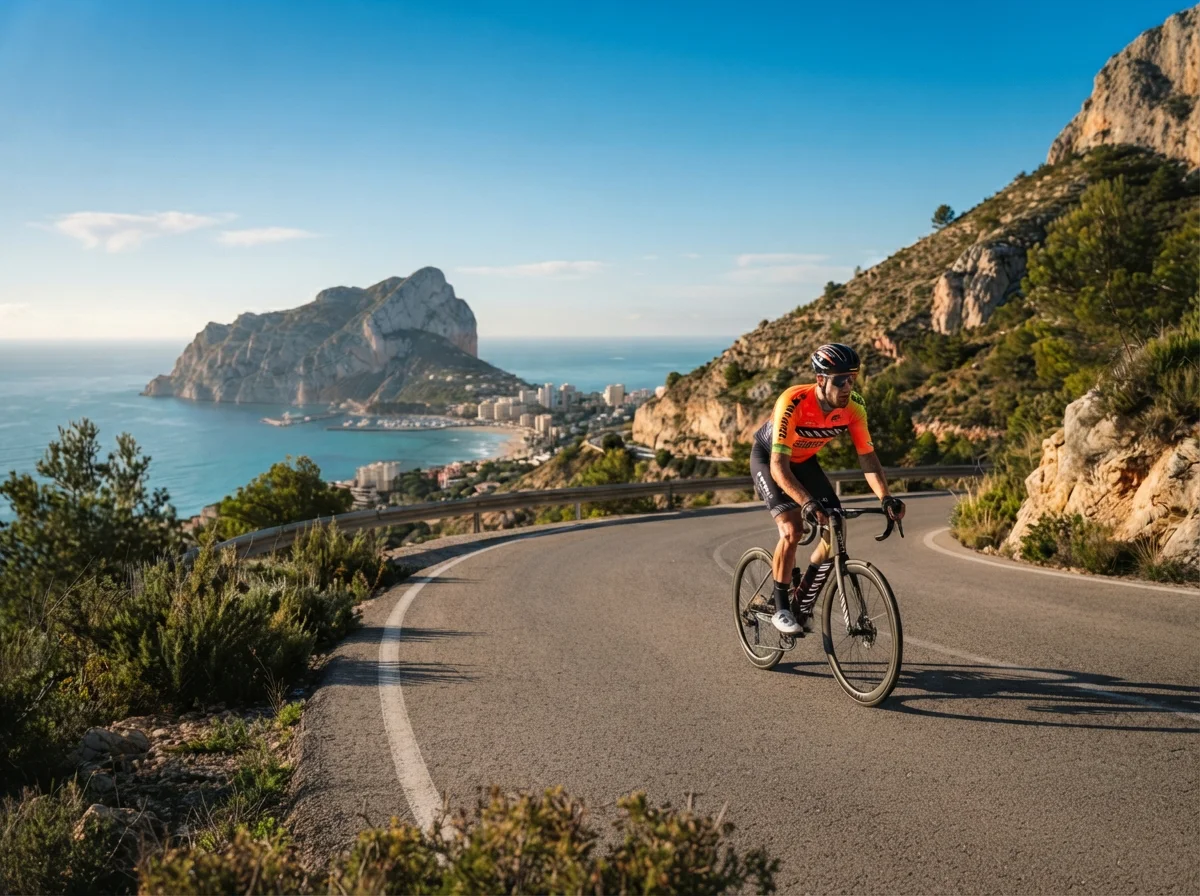
Calpe punches well above its weight as a cycling destination. The Peñón de Ifach, that unmistakable 332-metre limestone rock rising straight out of the bay, has become as recognisable to cyclists as the town itself, a reliable landmark on climbs and coastal rides across the northern Costa Blanca. Every January and February, when roads across northern Europe are frozen or rain-soaked, professional teams descend on Calpe for altitude training, time trials on the coast road, and back-to-back days in the mountains. Team Ineos (formerly Sky), Trek-Segafredo, and Dimension Data have all used the area as a winter training base, and their choice is not hard to understand.
Beyond the weather and the roads, the variety is what makes Calpe stand out. On the same day you can ride a flat coastal loop to Altea before breakfast, tackle a mountain pass by mid-morning, and be back for coffee on the seafront before the heat builds. The terrain runs from sea-level salt flats to the summit of Coll de Rates at 876 metres in under 30 kilometres. For cyclists of every level, that range is rare.
Cycling Weekly, one of the UK’s leading cycling publications, described the Calpe area as one of the finest cycling destinations in Europe, not for a single iconic climb, but for the sheer density of quality riding within a small area. That assessment holds up.
Why Calpe is one of Spain’s best cycling destinations
The Costa Blanca benefits from more than 300 days of sunshine per year, and Calpe sits near the centre of the best riding terrain on the coast. According to the Valencian Tourism Agency, the region draws tens of thousands of cycling visitors annually, and Calpe in particular has built its reputation on the quality of its roads, the density of challenging climbs within reach, and the concentration of cycling-specific services, bike shops, cafes, and hotels that understand what riders need.
The roads inland from Calpe are consistently in excellent condition. Traffic is light on most mountain routes outside of summer weekends. The gradients are honest, rarely brutal, which makes the area accessible to club cyclists as well as serious sportive riders. And the scenery, from the Peñón across Calpe bay to the Sierra de Bernia ridge and the mountains behind Benidorm, makes every ride worth doing again.
Best cycling routes from Calpe
| Route | Distance | Elevation | Difficulty |
|---|---|---|---|
| Coll de Rates loop | 65km | 1,200m | Moderate–Hard |
| Coastal south to Altea | 40km | 350m | Easy–Moderate |
| Jalón Valley | 55km | 800m | Moderate |
| Calpe to Guadalest | 75km | 1,800m | Hard |
| Sierra Bernia MTB loop | 35km | 900m | Moderate–Hard (MTB/gravel) |
1. The Coll de Rates loop (65km, 1,200m)
This is the ride that defines cycling in Calpe. Coll de Rates is arguably the most famous climb on the Costa Blanca: 10 kilometres of steady climbing from Parcent to a summit at 876 metres, with consistent gradients averaging around 5% and spectacular views across the Marina Alta valley.
The classic loop heads north out of Calpe towards Benissa and Llíber, drops into the Jalón Valley, and picks up the climb from the Parcent side. The descent towards Pego and the coast road back to Calpe adds up to a full morning’s riding that leaves most cyclists satisfied and most cafe stops well-deserved. The route is well-marked and well-ridden enough that you will rarely be alone on it, which makes navigation straightforward.
2. Coastal south: Calpe to Altea and Albir (40km, 350m)
For an easier day or a warm-up ride, the coastal route south along the N-332 towards Altea, Albir, and Alfaz del Pi is an excellent option. The road runs close to the sea for much of the distance, with views back to the Peñón and forward to the Sierra Helada headland above Benidorm. Altea old town is a natural coffee stop, and the descent through Albir to the seafront promenade rewards the short climb that precedes it.
This route connects naturally with our Altea Hills Loop cycling guide, which adds the inland climb behind Altea for riders looking for more elevation. If you need a hire bike for a flat coastal day, Vuelta Turistica and other Calpe operators can have a bike ready at your hotel the evening before.
3. The Jalón Valley (55km, 800m)
The Jalón Valley (Vall de Pop) is one of the quietest and most beautiful inland areas on the Costa Blanca. The road out of Calpe heads through Benissa and Llíber before dropping into the valley floor at Jalón, a village known for its wine cooperative and almond blossom in late January. Continuing up the valley towards Alcalalí and Tormos gives access to some of the least-trafficked roads in the region.
The return via the Bernia road adds a short but sharp climb with views that extend to Ibiza on clear days. This is a route that rewards multiple visits, as the light changes dramatically across the seasons.
4. Calpe to Guadalest (75km, 1,800m)
The hardest route on this list and one of the best long rides on the entire Costa Blanca. Guadalest is a medieval castle village perched above a turquoise reservoir in the mountains behind Benidorm. Getting there from Calpe requires crossing two significant climbs and accumulating nearly 1,800 metres of elevation across 75 kilometres. This is a route for fit riders with the right bike and a full day to spend.
Our detailed write-up of the coastal ride from Alicante to Calpe covers some of the same terrain in reverse and gives useful context on road conditions south of the town.
5. Sierra Bernia: MTB and gravel (35km, 900m)
Calpe is not exclusively a road cycling destination. The Sierra de Bernia ridge, which runs roughly parallel to the coast just inland from Calpe, offers some of the best gravel and mountain biking terrain on the northern Costa Blanca. The classic loop climbs the back of the ridge via Benissa and returns through Llíber, using a mix of tarmac and well-graded dirt tracks. A hardtail MTB or a gravel bike is ideal. The views from the ridge extend across the bay to the Peñón and, on clear days, to Ibiza. Several bike hire operators in Calpe stock gravel bikes and MTBs specifically for this type of riding.
When is the best time to cycle in Calpe?
January to March is pro team season. The roads can be busy with organised training rides, and the weather is mild but unpredictable, clear blue skies one day, cold wind and rain the next. Average temperatures sit between 12°C and 17°C. For serious cyclists who want to maximise mileage without the summer heat, these months are excellent.
April and May are widely considered the best months. Temperatures sit between 18°C and 24°C, the almond and orange blossom are long gone but the countryside is still green, and the roads have not yet filled with summer visitors. Most cyclists who plan a dedicated cycling holiday target these months.
June to September brings the heat. Temperatures regularly exceed 35°C by mid-morning, and the coastal routes especially can become airless. This does not mean cycling stops. It means it starts much earlier. Heading out at 6:30am and finishing by 10:00am gives you three to four hours of excellent riding before the heat becomes a factor. Mountain routes catch more breeze and are worth prioritising. The practical tips section below covers hydration and sun protection.
October and November offer a second peak season. The sea is at its warmest, the light is beautiful, and the roads empty again after the summer crowds leave. Many cyclists consider October the finest month of all on the Costa Blanca.
Hiring a bike in Calpe
You do not need to bring your own bike. Calpe has a strong range of bike hire options covering road bikes, e-bikes, mountain bikes, and hybrids, with several operators offering delivery directly to your hotel or villa.
Blanca Bikes operates a dedicated Calpe location with a premium fleet of Cervélo road bikes and offers hotel and villa delivery across the area. Vuelta Turistica is a long-established Calpe specialist with BMC and Specialized models and an on-site fitting service. SolyBike combines bike hire with café facilities and group rides, making it a good base for riders who want more than just a bike. For a full comparison of options, current pricing, and delivery details, see our bike hire in Calpe guide. For shops offering sales, servicing, and emergency repairs, the Calpe bike shops directory covers every option.
As a general rule, book your hire bike at least a week ahead between March and May and at least two weeks ahead in July and August. The best carbon road bikes in the most popular sizes go quickly.
Where to stay in Calpe for cycling
Calpe has a well-developed infrastructure of cycling-friendly accommodation, from hotels with secure bike storage and workshop facilities to villas and apartments within easy reach of the main routes.
Our guide to the top cyclist hotels in Calpe covers the best options in detail, with notes on which hotels offer bike washing stations, early breakfast for pre-dawn starts, and on-site or partnered bike hire.
If you are travelling as a group or planning a week-long camp, a villa with private parking is often the better option. It gives you more flexibility on ride times and makes storing multiple bikes significantly easier.
Practical tips for cycling in Calpe
Start early in summer
Between June and September, aim to be on the bike by 6:30am at the latest. The roads are quieter, the air is cooler, and you will be back at the hotel pool before the worst of the heat builds.
Carry more water than you think you need
On mountain routes in summer, two 750ml bottles is the minimum. A third bottle or a small hydration pack is worth the extra weight on longer rides. Many of the inland villages have public fountains, but you should not count on them.
Use high-factor sun cream and reapply
Sweat washes sunscreen off quickly. Factor 50 on exposed skin, and re-apply at every café stop.
Road etiquette
Drivers on the Costa Blanca are generally respectful of cyclists, particularly on the known cycling routes. Ride in single file on busier roads, use hand signals clearly, and avoid the N-332 coastal road between Calpe and Altea on summer weekend afternoons when traffic is heaviest.
Café stops are part of the ride
Calpe and the surrounding villages have a well-developed café culture that caters specifically to cyclists. Most bike cafes open early, serve proper espresso, and stock energy bars and gels. Do not skip them.
Check your hire bike before you leave
Brakes, tyre pressure, saddle height, and quick release skewers. Ask the shop to fit your own pedals if you use clipless, most hire operators are used to this and will have the tools ready.
Featured bike hire and shops in Calpe
- Browse bike hire options in Calpe — compare providers, pricing, and delivery options
- View the Calpe bike shop directory — for sales, servicing, and specialist fitting
- List your bike hire business — if you operate in Calpe and want to reach more cyclists
Related cycling resources
Planning your Costa Blanca cycling trip? These pages cover the routes, rentals, and accommodation you need:
- Coastal Loop: Calpe to Denia — the classic northern coastal ride
- Altea Hills Loop — the best shorter climb south of Calpe
- Long Distance: Alicante to Calpe — the full coastal epic
- Benidorm to Guadalest — route context for the Guadalest loop
- Top Cycling Hotels in Calpe — where to stay
- All Bike Hire on the Costa Blanca — full rental directory
- All Bike Shops on the Costa Blanca — full shop directory
Frequently asked questions
Is Calpe suitable for beginner cyclists? Yes, with the right route selection. The coastal roads south towards Altea and the flat roads around the salt lakes north of town are entirely manageable for riders at any level. The mountain routes are more demanding, but many riders who would not describe themselves as climbers complete the Coll de Rates with a compact chainset and a bit of patience.
What is the best cycling route from Calpe? For most riders visiting for the first time, the Coll de Rates loop is the definitive Calpe ride. It covers the best climbing, the most varied scenery, and gives you a clear benchmark for the rest of the week. If you have limited time, the coastal route to Altea is the best shorter option.
When do professional cycling teams train in Calpe? January and February are the main pro training months. Squads from teams including Ineos Grenadiers and Trek-Segafredo have used the area for pre-season training camps, and it is not unusual to see sponsored vehicles and support staff at the main cycling cafes during this period.
Do I need to bring my own bike to Calpe? Not at all. Hire bikes in Calpe range from aluminium road bikes at €25–30 per day to top-level carbon machines at €55–70 per day, with e-bikes also available. Most hire operators offer delivery to your accommodation. See our bike hire in Calpe page for full details.
Is it safe to cycle in Calpe in summer? Yes, if you adapt your schedule. Ride before 10am, carry plenty of water, use high-factor sun protection, and choose routes with shade where possible. Mountain roads are generally cooler than coastal roads. Avoid riding between 12pm and 5pm in July and August.
How hilly is cycling around Calpe? It depends on the direction you ride. The town itself sits at sea level, and you can ride flat or gently rolling roads for 20–30 kilometres in several directions before the climbing starts in earnest. The mountain routes behind Calpe are genuinely challenging, with the Coll de Rates and the Guadalest climbs both requiring fitness and the right gearing.
Can I hire an e-bike in Calpe? Yes. Several operators in and around Calpe offer e-bike hire, including both leisure e-bikes and e-road bikes for riders who want motor assistance on the climbs. Check our bike hire in Calpe directory for current availability.