
Self-Guided Cycling Tours in Costa Blanca: Routes, Costs and Best Starting Towns
Key Takeaways
| Feature | Details |
|---|---|
| Duration | 6-8 days typical |
| Daily distance | 48-116 km, depending on route and fitness |
| Best time to ride | Year-round; winter and spring favoured for training, summer for early starts |
| Best starting towns | Calpe, Altea, Finestrat, Alicante |
| Signature climbs | Coll de Rates, Port de Confrides, Alto de Aitana |
| Price range | From €1,270 per person for an organised self-guided package (6-7 days); independent touring from roughly €800-1,000 per week |
| Difficulty | Moderate to challenging, with easier daily options on most itineraries |
| Bike options | Road, hybrid and e-road bikes all available to rent locally |
A self-guided cycling tour of the Costa Blanca typically runs 6 to 8 days, with riders covering 48 to 116 km a day between bases such as Calpe, Altea, Finestrat and Alicante. Organised self-guided packages from local operators start from around €1,270 per person for 6-7 days, including accommodation, route planning and emergency support, with bike rental usually charged separately. Independent planning, using rental bikes, GPS route files and cyclist-friendly hotels booked directly, typically costs less but takes more of your own time to arrange.
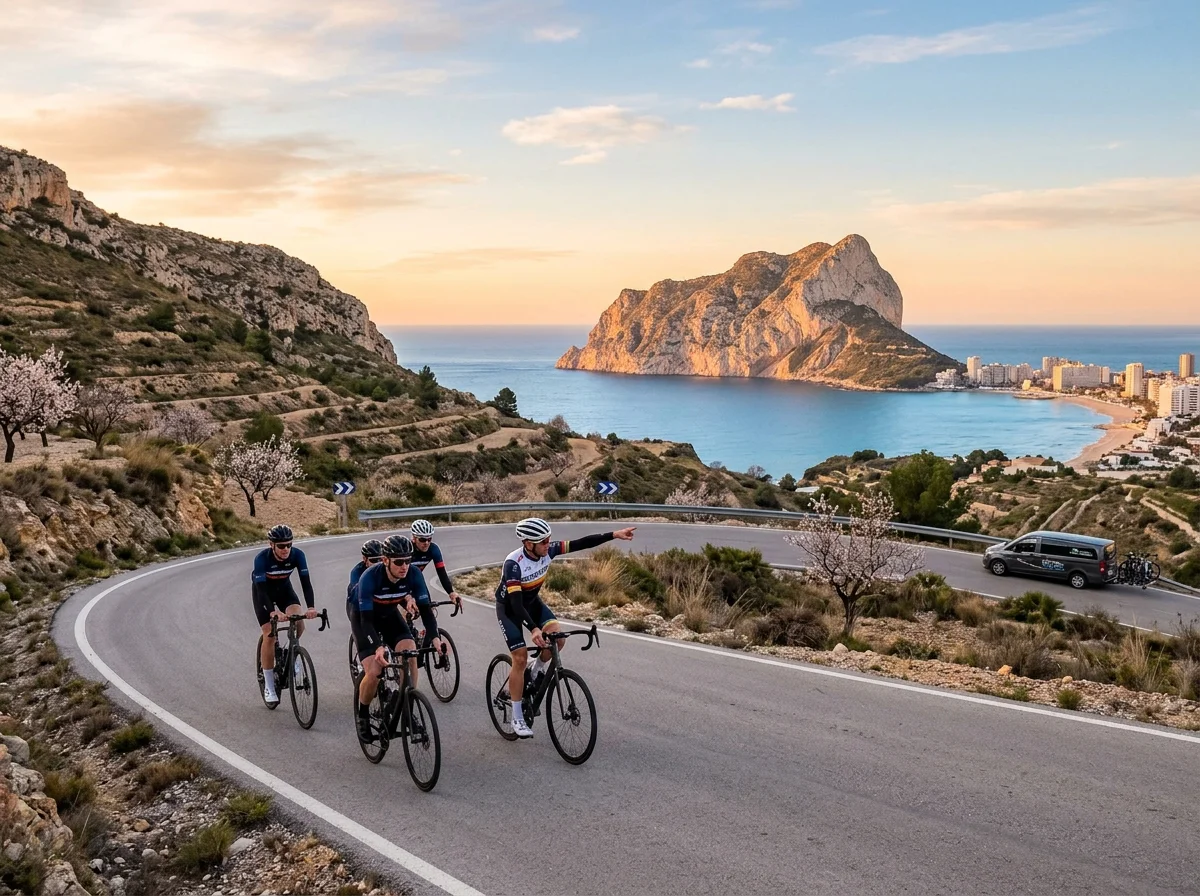
The appeal is simple: a small area holds an unusual mix of terrain. You can start the morning with coffee in a fishing town like Altea, climb through almond groves and pine forest for an hour, and be back down at sea level for lunch. That density, combined with well-surfaced roads, light traffic on the mountain routes and a long cycling season, is why professional teams have used the region for winter training camps and why it’s become a regular stop for independent touring cyclists from northern Europe. This guide covers where to base yourself, which climbs are worth the effort, what a tour actually costs, and the practical details (bikes, navigation, weather) that make the difference between a good week and a frustrating one.
What Makes Costa Blanca Work for Self-Guided Cycling
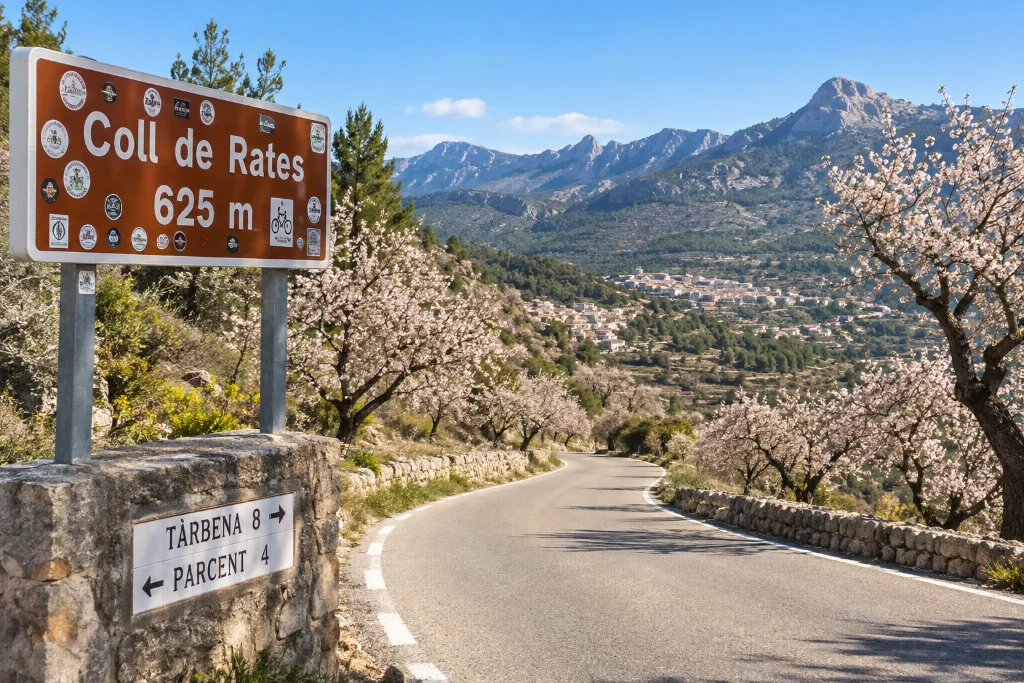
Coll de Rates is the climb most people come for, and it’s a fair introduction to the region’s character: 6.5 km at an average 5% gradient, starting through orange and almond groves before the road narrows into pine forest for the final switchbacks. The surface is good throughout and traffic is light outside of peak training months. From the top, on a clear day, you can see the coastline you started from.
That’s the pattern across the region: routes move quickly between coastal plain, cultivated valley and pine-covered mountain, often within a single ride. Infrastructure has grown to match. Roads are well maintained, several routes are signed, and bike rental and repair shops are established in every base town. Local cycling culture is visible too: group rides leave from cafés in Calpe and Altea most Tuesday and Thursday mornings, which says something about how normal touring cyclists are here.
Choosing Your Base: Calpe, Finestrat, Alicante and Altea
Where you base yourself changes which climbs are a short warm-up and which need a transfer. All four towns below have bike rental, cyclist-friendly accommodation and enough services to plan a full week without a car.
Calpe
The most popular base, and the default choice for most self-guided packages. Coll de Rates is around 20 km away, and Port de Confrides, a longer, harder climb through the Sierra de Serrella, is reachable for a bigger day. Calpe has the widest choice of bike shops and rental services on the coast, plus accommodation ranging from hostels to four- and five-star hotels.
Finestrat
Sits inland of Benidorm and puts you close to some of the region’s toughest climbing, including Alto de Aitana, a route that starts practically from the town itself rather than requiring a drive to a trailhead. A better base if the trip is built around mountain training rather than mixing in coastal riding.
Alicante
The regional capital, with the best transport links (airport, trains, buses) and the widest range of services. The Alicante to Calpe route is a good way to see varied terrain across a single long day, and Alicante works well as a base for longer, multi-town itineraries rather than a fixed one-town week.
Altea
A hilltop old town with easy access to coastal routes, including the Altea Hills Loop. Quieter than Calpe, with fewer services but enough to cover the basics, and a strong pick if you want scenery and a slower pace alongside the climbing.
Essential Climbs and Routes
- Coll de Rates: 6.5 km, 5% average gradient. The region’s signature climb, and the one most self-guided itineraries build a day around.
- Port de Confrides: a longer, more variable ascent through the Sierra de Serrella, with wide views from the summit back across the interior.
- Port d’Ebo combined with Coll de Rates: a 116 km circuit that includes sections up to 17% on the Pla de Petracos, aimed at strong, well-prepared climbers rather than a first visit.
- Alto de Aitana: the highest paved climb in the region, featured in the 2026 Vuelta a España’s Stage 9 route, with 360-degree summit views.
- Port de Tudons and Alto del Tigre: often paired in longer itineraries as sustained, lower-profile climbs between the bigger-name ascents.
Not every route is a mountain finish. The Altea Hills Loop and the Jalón Valley Scenic Loop are worth keeping in reserve as flatter recovery days between harder climbing.
Self-Guided Packages vs Independent Planning
There are two ways to do this: book an operator’s self-guided package (they plan the route, book the hotels and arrange luggage transfer; you ride it on your own schedule), or plan everything yourself. Pricing and route details below were checked against each operator’s own site in September 2026.
| Option | Duration | From (per person) | Bases | What’s included |
|---|---|---|---|---|
| Sierra Sports & Tours | 6 nights / 7 days | €1,400 (min. 2 people) | Calpe and Altea | Hotels, luggage transfer, 24-hour emergency contact, self-guided route PDF, choice of two routes most days |
| Cycle Fiesta | 7 days | €1,270 | Costa Blanca hinterland | Route-focused package built around the region’s harder climbs, including the 116 km Port d’Ebo circuit |
| Independent planning | Flexible | Roughly €800-1,000 per week, excluding bike rental | Your choice | You book accommodation and bike rental directly and navigate with GPX files and route apps |
Both operators run a February-to-November season broadly, though exact dates shift year to year, so confirm current availability directly before booking. Group discounts (6+ people) are common across operators. Independent planning gives you the most control over budget and itinerary but takes more of your own research time, particularly for luggage logistics if you’re moving between towns.
Planning Daily Distances
Distance on its own is misleading: a 50 km day with a category-2 climb is harder than an 85 km day on the flat. Most itineraries plan 48-85 km daily, building up gradually:
- Day 1: Alicante to Finestrat (48 km): a gentle introduction with limited climbing.
- Day 2: Finestrat to Xaló (52 km): meaningful climbing introduced.
- Day 3: Xaló-Bernia-Calpe loop (65 km): mountain passes with a coastal finish.
That kind of build lets your legs adjust before tackling the bigger days. The 116 km Port d’Ebo/Coll de Rates circuit sits at the upper end of what’s realistic in a day and suits strong cyclists or a specific training goal rather than a first visit. Even strong riders benefit from a shorter or flatter day (the Jalón Valley Scenic Loop is a good option) after two or three consecutive days of climbing, and most operators build alternative, easier route options into each day for exactly this reason, alongside flexibility for wind or heat.
Climate and When to Go
Alicante-Elche Airport, the closest official weather station to the region, averages 2,953 hours of sunshine and 35.1 days with measurable rain (≥1mm) a year, based on Spain’s national weather agency AEMET’s 1981-2010 climate normal. That’s among the highest sunshine totals of any populated part of mainland Europe, and it matches the region’s reputation for a long, reliable cycling season.
Winter (December-February) is the season professional teams favour for training: cool enough to climb without overheating, warm enough to ride in normal kit, and quiet on the roads. Spring (March-May) is generally considered the best all-round window, with mild temperatures, wildflowers on the mountain routes, and longer daylight. Autumn (September-November) mirrors spring, with warmer sea temperatures for a post-ride swim. Summer (June-August) is rideable but needs planning around the heat: coastal temperatures regularly reach the high twenties Celsius, and inland climbs can run several degrees hotter at midday, so an early start (around 7am) is close to essential.
Whatever the season, expect a real temperature swing between coast and summit. A comfortable 20°C morning in Calpe can mean single digits at the top of Aitana or Confrides, so pack a light layer for descents even in warmer months.
Bikes, Navigation and Where to Stay
Choosing a Bike
Road bikes handle every major climb and coastal route comfortably; almost all the riding here is on paved roads. A gravel bike or sturdy hybrid adds comfort and confidence if your itinerary includes any of the region’s short unpaved sections. E-road bikes are increasingly available to rent and open the region up to riders who wouldn’t otherwise manage the longer climbs. Battery range is rarely the limiting factor over a normal day’s distance, and many cycling-focused hotels offer charging.
Navigation
Major routes are generally well signed, but a GPS device or a route-planning app with offline maps is worth having as backup, since mobile coverage is patchy in the mountains. Download routes before you set off rather than relying on a live connection.
Accommodation
Standards vary. The better cycling-focused hotels offer secure bike storage, early breakfast, laundry and basic repair tools; book ahead in peak season. Budget options (hostels, apartments) are available in every base town, and a growing number of hotels are specifically courting cycling tourists with bike-cleaning areas and route planning help. Bikes Costa Blanca’s accommodation directory and the cycling-friendly hotels in Calpe guide are good starting points.
Maintenance and Repairs
Carry the basics: tyre levers, a spare tube, a multi-tool, a pump. Bike shops across Costa Blanca are well distributed in towns but thin on the ground once you’re deep into a mountain route. Our complete packing guide covers tools, spares and clothing in more detail.
What a Self-Guided Tour Costs
Organised packages run €1,270-1,400 per person for 6-7 days, usually covering accommodation, route planning, GPS files and emergency support. Bike rental is typically extra, at roughly €25-40 a day for a quality road bike and €35-50 for an e-bike.
Independent touring can come in cheaper or more expensive depending on your choices. Budget accommodation runs roughly €30-50 a night; cyclist-specific hotels are more like €80-150. Meals range from €15-25 for casual dining to €40+ for a proper restaurant sitting. On top of a package’s base price, budget for getting your own bike there if you’re not renting, travel insurance, and the café stops and small purchases that add up over a week: €200-300 is a reasonable buffer.
Typically included: accommodation (usually twin-share), route planning and GPS files, emergency phone support, some meals, luggage transfer between hotels, and a route briefing.
Usually extra: bike rental, most meals, flights to Spain, personal insurance, and any optional extras.
Across a week, all-in costs for most riders land somewhere between €800 and €1,500 per person, whether that’s an organised package or careful independent planning. That’s competitive against most other established European cycling destinations, and the season here runs longer than most of them.
Frequently Asked Questions
What fitness level do I need for a Costa Blanca cycling tour? Most self-guided itineraries suit someone who regularly rides 40-60 km at home. The climbing adds real difficulty beyond flat-terrain distance, so some hill training beforehand helps. Most operators build in easier daily route options for exactly this reason.
Can I rent a good-quality bike locally? Yes. Road bikes, e-bikes and hybrids are all readily available, including carbon-fibre road bikes. Book ahead in peak season, since good stock gets reserved early.
How safe are the roads for cycling? Generally safe, with good surfaces and light traffic on the mountain routes. Coastal roads near the larger towns are busier. Spanish drivers are used to sharing the road with cyclists in this region specifically, given how established the cycling tourism is here.
What happens if I get injured or have a mechanical problem? Operators running organised packages provide emergency phone support, and bike shops operate in every major town. Mobile repair services cover some areas. Check that your travel insurance explicitly covers cycling before you go, since not all standard policies do.
Is it worth bringing my own bike? For most visitors, no: local rental quality is high enough that it isn’t necessary. If you have specific position requirements or strongly prefer your own equipment, bringing it can be worth the extra flight cost and hassle.
When are the roads busiest with other cyclists? January to March, when professional teams train here, brings more traffic to the mountain roads on weekday mornings. October-November and March-April see the most recreational touring cyclists. Summer is actually quieter on the climbs, since the heat pushes casual riders toward early mornings or the coast.
Do I need to speak Spanish? No. English is widely spoken in tourist areas and by cycling-focused businesses. A little Spanish helps in the smaller mountain villages but isn’t essential for planning or riding a self-guided tour.
How much sunshine can I actually expect? Alicante-Elche Airport’s official long-term average is just under 3,000 hours of sunshine a year (AEMET, 1981-2010 normal), one of the highest totals anywhere in mainland Europe. It’s a big part of why a cycling season here realistically runs close to twelve months rather than the typical six or seven.
Plan Your Route
Once you’ve picked a base and a rough itinerary, the next steps are choosing how to plan a self-guided tour in more detail and reading our safety tips for touring alone if you’re riding without a group. When you’re ready to book, browse bike rental services or cyclist-friendly accommodation to get the practical side sorted first.
Research sources: Climate figures from AEMET’s official climate normals for Alicante-Elche Airport, 1981-2010. Tour pricing and itinerary details checked against Sierra Sports & Tours and Cycle Fiesta directly, September 2026.