
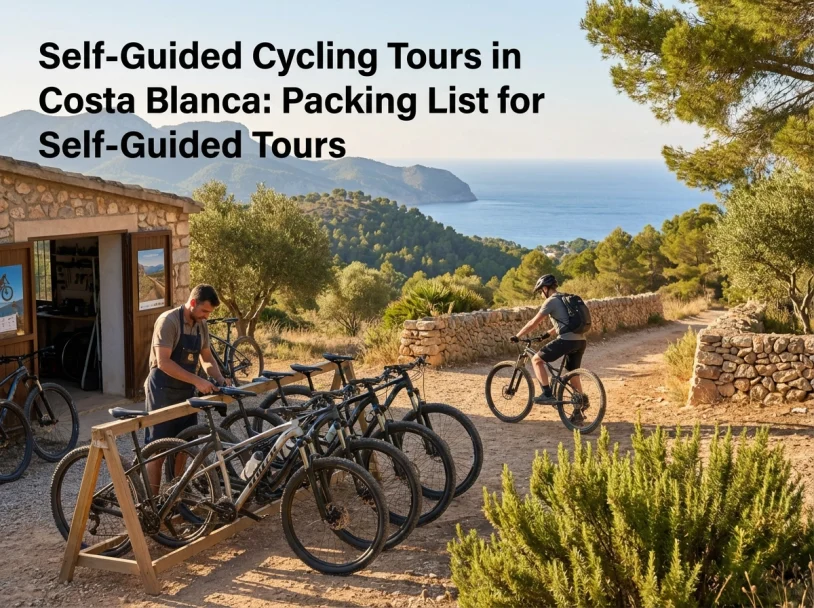
Self-Guided Cycling Tours in Costa Blanca: The Complete Packing List Guide
Key Takeaways
| Essential Category | Must-Have Items | Why It Matters |
|---|---|---|
| Cycling Clothing | 2 pairs bib shorts, 3 jerseys, cycling gloves | Comfort on 100km+ rides with proper chamois padding |
| Weather Layers | Light rain jacket, arm/leg warmers, fleece | Costa Blanca’s variable temperatures (10-30°C) |
| Repair Tools | Multitool, 3 spare tubes, mini pump | Sparse bike shops in mountain areas |
| Navigation | Smartphone + mount, offline GPS maps | Self-guided means no support vehicle |
| Sun Protection | SPF50+ sunscreen, lip balm, UV jerseys | Intense Mediterranean sun at altitude |
| Luggage Strategy | One 40L duffel + carry-on | Weight limits and daily transfers |
Getting ready for a self-guided cycling adventure in Costa Blanca? You’re in for an amazing ride through one of Spain’s most diverse cycling regions. But here’s the thing – packing for Costa Blanca isn’t like preparing for your local weekend rides. One minute you’re sweating on coastal flats, the next you’re climbing steep mountain passes where the temperature drops 15 degrees and the wind picks up.
I learned this the hard way on my first trip when I packed like I was going on a supported tour. Big mistake! Self-guided tours mean you’re on your own out there, especially in those remote mountain areas where bike shops are few and far between.
Understanding Costa Blanca’s Unique Cycling Demands
What makes Costa Blanca special for cyclists? It’s the incredible variety. You’ll ride from sea level beaches to mountain climbs over 1,500 meters, often in the same day. The weather can shift dramatically too – coastal areas might hit 30°C while mountain passes sit at 15°C with strong winds.
Tour operators typically provide basic gear like helmets, water bottles, and simple repair kits. They’ll also handle your luggage transfers between hotels. But don’t assume they’ve got everything covered. Most provide a multitool, one spare tube, and a basic pump – that’s it for repairs. When you’re 50km from the nearest bike shop on a mountain descent, you’ll want more than that.
The terrain demands respect too. Routes like Benidorm To Guadalest Scenic Ride include serious climbing with gradients that’ll test your gearing and your legs. Pack smart, because every gram counts when you’re grinding up those climbs.
Essential Cycling Gear That Can’t Be Compromised
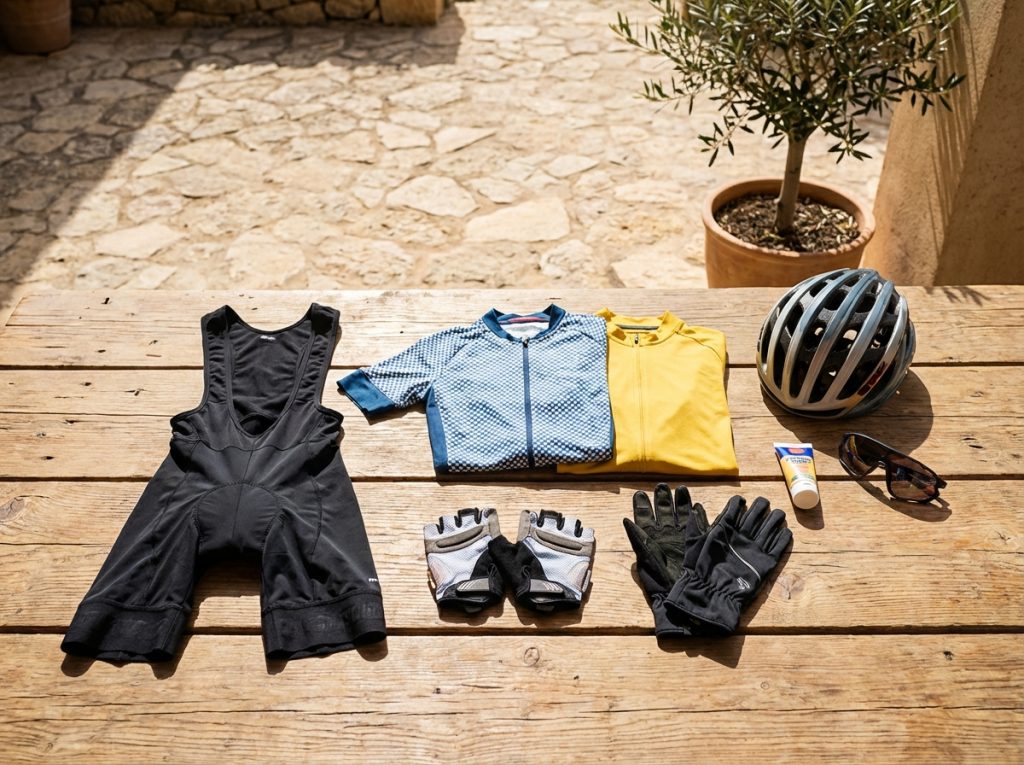
Let’s talk about the non-negotiables. First up – bib shorts with proper chamois padding. I can’t stress this enough. Regular athletic shorts might feel fine for your 20km weekend rides, but try wearing them on a 100km day with climbs like Cumbre del Sol and you’ll understand why every serious cyclist swears by bibs.
Pack two pairs minimum. Why two? Because you’ll want a clean pair while the other dries, and if one gets damaged or you have a chamois issue, you’re not stuck with regular shorts for the rest of your tour.
Your jersey selection matters just as much. Bring 2-3 breathable, quick-dry jerseys – preferably with good UV protection. Costa Blanca’s sun is intense, especially at altitude where you might not realize you’re getting burned until it’s too late. One long-sleeve jersey is worth its weight for sun protection on those exposed mountain climbs.
Cycling gloves are often overlooked but absolutely essential. Pack one fingerless pair for warm weather and one full-finger wind-resistant pair. Your hands take a beating on long rides, and blisters from poor grip can ruin your tour faster than a mechanical issue.
Don’t forget cycling shoes if you prefer clipless pedals. Most rental bikes come with basic platform pedals, but if you’re bringing your own pedals, make sure you have the right shoes to match.
Weather-Smart Layering for Variable Conditions
Costa Blanca’s weather variability is both a blessing and a challenge. Coastal temperatures range from 20-30°C, but head into the mountains and you might encounter 10-20°C with significant wind chill on descents.
Your rain jacket needs to be lightweight and packable – you don’t want bulk when it’s stuffed in a jersey pocket. Look for something with hi-vis elements too, because visibility matters when you’re navigating mountain roads with limited sight lines.
Arm and leg warmers are your secret weapons. They pack tiny but transform your comfort level when conditions change. I always bring two pairs because they’re so useful – you might want leg warmers for a cold morning start but arm warmers for a windy afternoon descent.
A lightweight fleece or vest works as your base layer for temperature regulation. Skip heavy jackets – they take up too much space and don’t offer the flexibility you need when conditions change rapidly.
For your extremities, pack waterproof overshoes (at least toe covers), a buff or neck warmer, and one pair of winter gloves. These small items make the difference between a comfortable ride and a miserable experience when weather turns.
Mechanical Preparedness for Remote Areas
Here’s where self-guided tours differ dramatically from supported ones. When you’re exploring routes like Mountain Biking Trails In Costa Blanca Finestrat Forest Trail, you might be hours from the nearest bike shop.
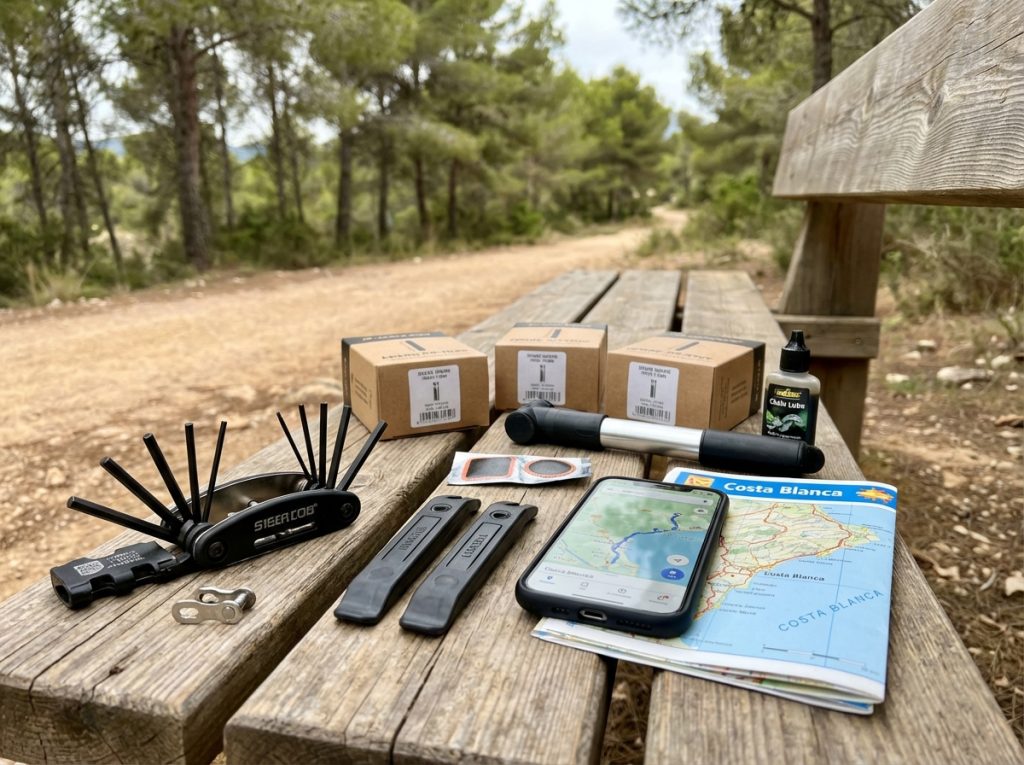
Your multitool should include all standard Allen keys plus a chain tool. Don’t rely on the basic tool provided by tour operators – it might not have everything you need for your specific bike setup.
Spare inner tubes are critical – pack 2-3 plus a patch kit. Costa Blanca’s roads can be rough, and mountain descents are hard on tires. Tire levers are essential too, because getting a tight tire off the rim with your hands alone is nearly impossible.
A quality mini pump or CO2 cartridges (bring 2-3) will save your ride. Test your pump with your valve type before you travel – there’s nothing worse than discovering incompatibility on a remote mountain road.
Chain lube and a quick-link are often overlooked but can save your tour if you have chain issues. Spare brake pads are worth considering too, especially for mountain routes where you’ll be doing a lot of braking on long descents.
Navigation and Safety for Independent Touring
Self-guided means exactly that – you’re responsible for finding your way. Your smartphone with a quality mount is essential, but don’t rely on it exclusively. Download offline GPS tracks before you ride, because cell signal can be spotty in mountain areas.
Apps like Komoot work well for Costa Blanca’s marked and unmarked routes. Having backup paper maps isn’t old-fashioned – it’s smart planning for when technology fails.
Safety equipment should include hi-vis elements, especially if you might be riding into dusk. Basic lights can be lifesavers if you’re caught out longer than expected.
Most tour operators provide bike locks, but verify this beforehand. You’ll want security when stopping for meals or sightseeing breaks.
For routes that require extra planning, check out guides like Self Guided Cycling Tours In Costa Blanca How To Plan A Self Guided Tour for detailed preparation tips.
Personal Care Essentials for Mediterranean Cycling
Costa Blanca’s intense Mediterranean sun demands serious protection. SPF50+ sunscreen isn’t overkill – it’s essential. Reapply every hour, especially on exposed climbs where the sun reflects off light-colored rocks.
Lip balm with UV protection is often forgotten but critical. Your lips are constantly exposed and burn easily at altitude.
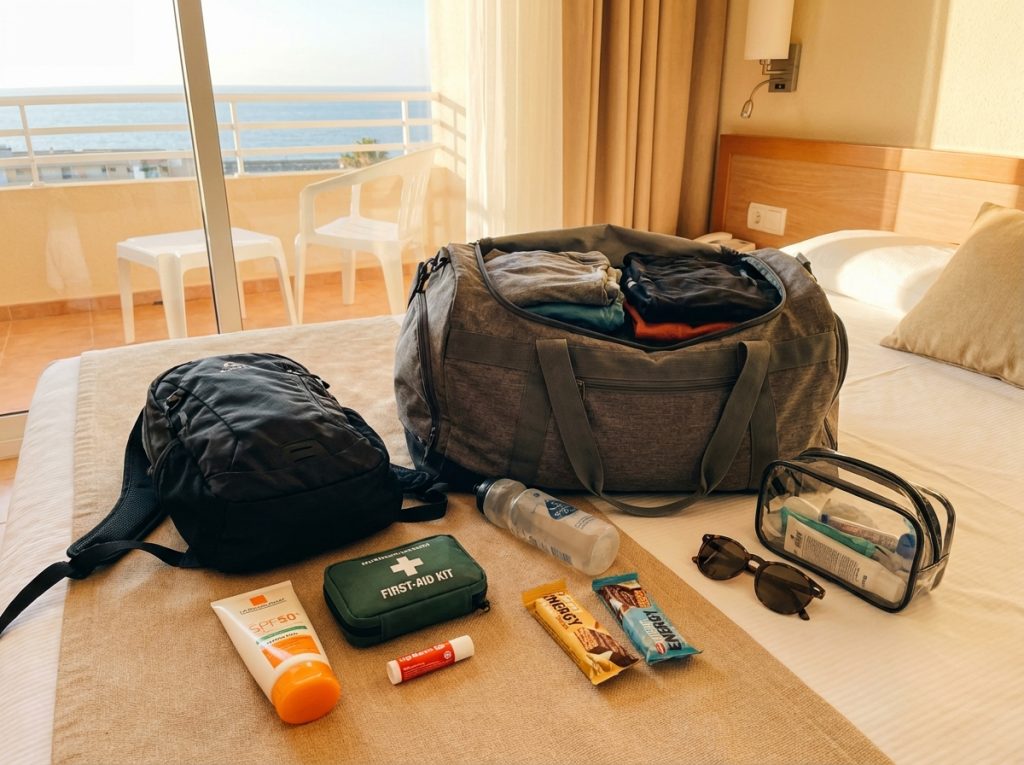
Pack a compact first aid kit with basics: bandages, antiseptic wipes, pain relievers, and definitely chamois cream. Saddle sores can develop quickly on multi-day tours, and prevention is much easier than treatment.
Keep your personal medications in your carry-on bag, not your transferred luggage. If there’s a delay or mix-up with transfers, you’ll still have access to essential medications.
Consider the altitude factor too. Even moderate climbs in Costa Blanca can affect some riders, and the intense sun at elevation increases burn risk significantly.
Smart Off-Bike Clothing Strategy
Your evening wardrobe needs to be minimalist but functional. Stick to 2-3 days’ worth of casual clothing and plan to wash frequently. Most cycling-friendly accommodations have laundry facilities or quick-wash services.
Pack 2-3 comfortable t-shirts or polos – one short-sleeve, one long-sleeve for variety. One or two pairs of casual trousers or shorts will cover dinner and sightseeing needs.
Your sweater should be lightweight but warm enough for cooler mountain evenings. Coastal areas stay warm, but inland towns can get chilly after sunset.
Underwear and socks should be quick-dry materials – pack about 5 pairs of each. This gives you flexibility for washing schedules and ensures you always have dry options.
Footwear should be minimal: flip-flops for easy slip-on comfort and one pair of walking shoes for sightseeing. Don’t pack multiple shoe options – they take up too much space and weight.
A bathing suit is worth including, especially for coastal routes where you’ll have opportunities for Mediterranean swims between ride days.
Hydration and Nutrition Strategy
Dehydration hits fast in Costa Blanca’s heat and climbs. Most tour operators provide basic water bottles, but consider bringing insulated bottles for better temperature control.
Electrolyte tabs or powder are essential – you’ll lose significant sodium through sweat, especially on climbs. Pack enough for 4-6 servings per day.
Energy gels and bars should be brands you’ve tested at home. Costa Blanca’s climbing demands quick energy, and you don’t want to discover digestive issues mid-tour. The elevation gains on routes like the Inland Scenic Cycling Routes Jalon Valley Scenic Loop require proper fueling strategy.
Plan for about 1 liter of fluid per hour in Costa Blanca’s heat. That might sound like a lot, but it’s realistic for summer riding with significant climbing.
Luggage Optimization for Transfer Tours
Tour operators handle daily luggage transfers, but they have weight and size restrictions. Most limit bags to 20kg and prefer duffel bags over hard suitcases for easier handling.
Your main bag should be 40L maximum – enough for 5-7 days of cycling gear without excess bulk. Duffel bags work better than rigid suitcases because they’re easier for transfer staff to handle and fit better in support vehicles.
The daily carry bag is usually provided – typically a handlebar bag or small frame bag. This should hold your phone, snacks, basic tools, and emergency cash. Keep the weight under 2kg to avoid affecting bike handling.
Pack a small carry-on with essential items: one change of clothes, medications, important documents, and basic toiletries. This protects you if there are transfer delays or luggage mix-ups.
Label everything clearly. Tour operators usually provide luggage tags, but having backup identification helps prevent mix-ups between groups.
Travel Documents and Emergency Planning
Keep your passport or ID in a waterproof document pouch, along with copies of important papers. Travel insurance is mandatory, but make sure it specifically covers cycling activities.
Your insurance should include coverage for bike rental damage, medical evacuation, and trip interruption. Some policies exclude “adventure sports” which might include cycling.
Emergency contacts should include your home contact, tour operator, local emergency services (112 in Spain), and your insurance company’s 24-hour claim line.
Power banks and charging cables are essential for keeping your navigation devices running on long ride days. Pack universal adapters for European outlets.
Keep digital copies of important documents on your phone, backed up to cloud storage. If physical documents are lost or damaged, you’ll still have access to key information.
Store emergency cash in multiple locations – some in your daily bag, some in your main luggage, and some on your person. Small denominations are most useful for roadside stops or emergencies.
Frequently Asked Questions
What’s the most important item to pack for Costa Blanca cycling tours? Proper bib shorts with quality chamois padding are absolutely essential. Without them, long rides with significant climbing become uncomfortable or even impossible to complete.
How much clothing should I pack for a 7-day self-guided tour? Pack for 2-3 days and plan to wash regularly. This means 2 pairs of bib shorts, 3 cycling jerseys, and 2-3 days of casual evening wear. The key is quick-dry materials and frequent washing.
Do I need to bring my own bike repair tools? Yes, beyond the basics provided by tour operators. Pack additional spare tubes, a quality multitool, chain lube, and CO2 cartridges. Bike shops are scarce in mountain areas.
What’s the biggest packing mistake cyclists make for Costa Blanca? Overpacking and not preparing for variable weather. The temperature difference between coast and mountains can be 15°C or more, and weather changes quickly in mountain areas.
Should I bring clipless pedals and shoes? Only if you’re committed to using them and have the right shoes. Most rental bikes come with platform pedals, and clipless systems add complexity for luggage transfers.
How important is sun protection in Costa Blanca? Critical. Pack SPF50+ sunscreen, UV-protective clothing, and lip balm. The Mediterranean sun is intense, especially at altitude, and you’ll be exposed for hours during long rides.